
Add real warmth to your Oxford-area home without a single flue.
With winters this mild, Lafayette County homes rarely need a full combustion heating system—just clean, instant warmth where you actually spend time. Find the right electric fireplace or insert and get matched with a trusted local dealer.
Every Project Starts From One of These Five Situations
Mild winters, maximum flexibility.
Lafayette County sits in climate zone 3A with an average winter low around 31°F and a mild, light winter heating load overall—a fraction of what a place like Duluth, MN or Burlington, VT logs each winter. Cold spells here tend to arrive in short bursts rather than settling in for months, which changes the math on home heating. Instead of sizing a system to survive a whole season of single digits, most Lafayette County homeowners just need something that takes the chill off a room during the handful of genuinely cold weeks between December and February.
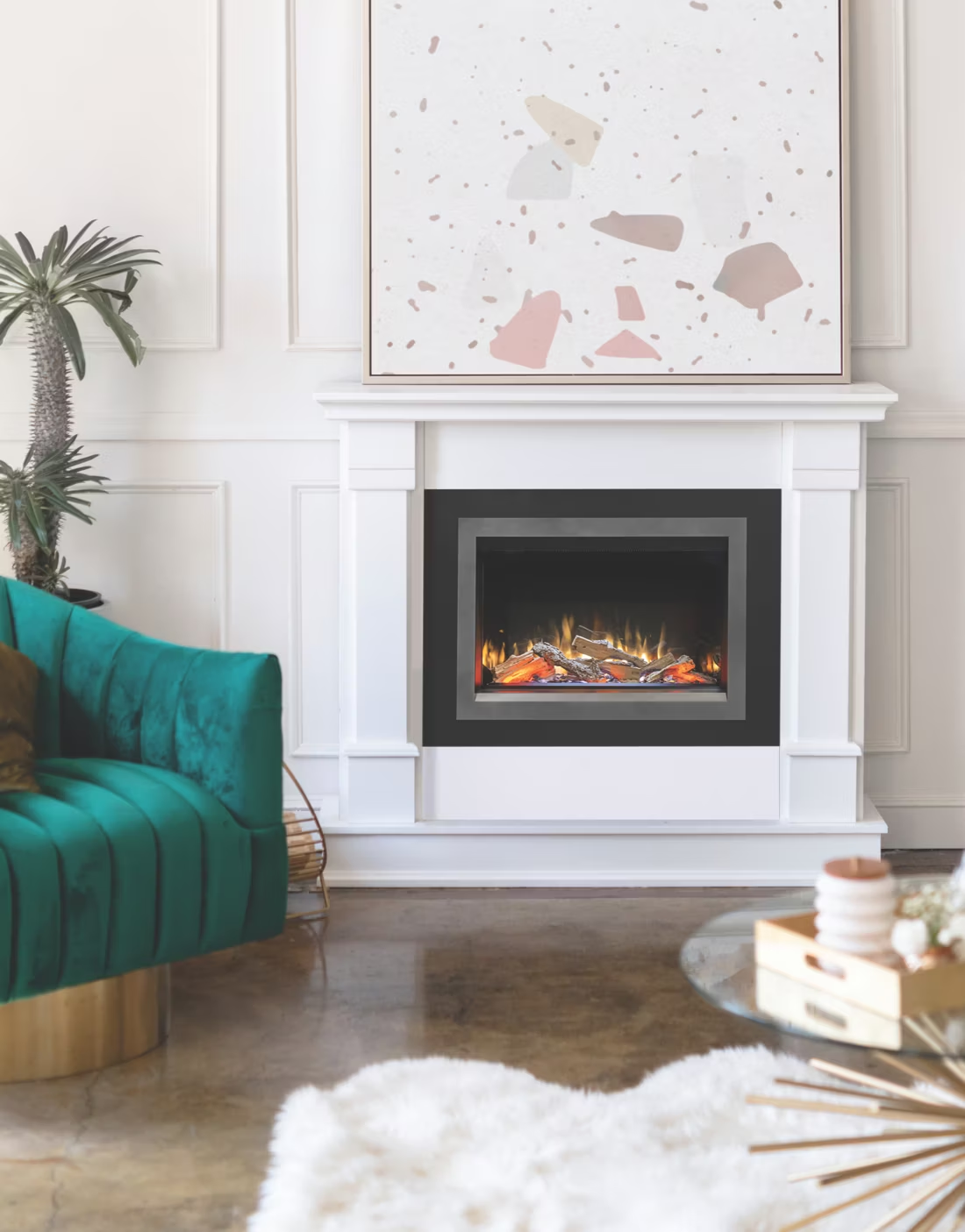
That's exactly where electric fireplaces earn their keep. Around the Oxford Square, plenty of the historic homes have masonry fireplaces that were never built for heavy wood use or have chimneys that would need real money to bring up to code—an electric insert drops into that opening with no venting, no gas line, and no combustion permitting. Out near the University of Mississippi, the county's large population of student rentals and newer subdivisions favor electric units for the same reason landlords like them: plug it in (or wire a dedicated 240V circuit for a larger built-in) and it works, with none of the liability that comes with an open flame or a gas appliance.
Three steps. No salesperson until you're ready.
Tell us about your project
Your zip code, your situation, and the fuel you're leaning toward—or let the answers point you to one.
See what's actually available
The brands dealers within 100 miles genuinely carry—real options, never a catalog mirage.
Get your dealer & Project Guide
A trusted local dealer, plus the free Project Guide & Parts List that names every component of the job.
Frequently Asked Questions
How much does an electric fireplace installation cost in Lafayette County?
Costs vary widely by unit type. A plug-in electric insert or freestanding stove that drops into an existing fireplace opening can run as little as a few hundred dollars for the unit itself, with little to no installation labor since it just needs a standard outlet. A built-in wall unit or a custom mantel surround with a dedicated 240V circuit run by an electrician typically lands in the $1,500-$3,500 range in Lafayette County, depending on the unit and whether wall framing or trim carpentry is involved. Because there's no venting or gas line to route, electric projects are consistently the least expensive hearth upgrade a local dealer will quote.
Is an electric fireplace better than a space heater?
For most Lafayette County homes, yes. A portable space heater is a safety liability left running overnight and produces zero ambiance. A quality electric fireplace insert delivers the same resistance or infrared heat output—enough to comfortably warm a living room or bedroom during the county's coldest stretches—while looking like a real hearth feature and, in most models, allowing you to run the flame effect with the heater off during Oxford's long mild shoulder seasons. Given how short the actual heating season is here, many homeowners use the fireplace for ambiance nine months a year and heat for the rest.
Do I need a permit to install an electric fireplace in Lafayette County?
Generally no, if you're installing a plug-in insert or freestanding unit into an existing fireplace opening or as a standalone appliance—there's no combustion, no venting, and no gas line, so it falls outside the building permit requirements that apply to wood and gas installations. If your project involves running a new dedicated 240V circuit for a larger built-in unit, that electrical work should be done by a licensed electrician and may require an electrical permit depending on scope. Local dealers who handle electric installs in the county can tell you upfront whether your specific project needs one.
Can an electric fireplace actually heat my whole home, or is it just for looks?
Most electric fireplaces are built as zone heaters, not whole-home furnaces—they typically put out 4,000-5,000 BTUs, enough to noticeably warm a single room or open living area. Given Lafayette County's mild, light winter heating load and winter lows that rarely dip much below the mid-20s, that's often plenty. Homeowners here commonly pair an electric fireplace with existing central HVAC, using the fireplace to heat the room they're actually in during a cold snap while leaving the furnace at a lower setpoint elsewhere in the house—a setup that works far better here than it would in a harsher climate.
Can I convert my existing masonry fireplace to electric?
Yes, and it's one of the most popular projects among the older homes around the Oxford Square and throughout the county's historic neighborhoods. An electric insert slides into your existing fireplace opening—no chimney liner, no venting modifications, and no need to address a chimney that may not have seen a cap or sweep in years. It's a straightforward way to get a working, attractive fireplace back without touching the masonry, and it sidesteps any concerns about an old flue that was never rated for wood-burning use in the first place.
What type of electric fireplace fits an older Oxford home versus new construction?
For the historic homes near the Square with existing fireplace openings, an insert sized to fit the existing masonry opening is the cleanest option—it uses the opening you already have and requires minimal trim work. For newer construction in the subdivisions farther out from town, a wall-mounted linear unit or a built-in with a custom surround is more common, since there's no existing opening to work around and homeowners often want the fireplace as a design centerpiece rather than a retrofit. Local dealers can walk your specific opening or wall space and recommend which format makes sense.
Does an electric fireplace need special wiring?
It depends on the unit. Smaller inserts and freestanding stoves typically run on a standard 120V household outlet—no electrician needed. Larger built-in units, especially those rated above 1,500 watts or installed with supplemental heating elements, often call for a dedicated 240V circuit to run at full output without tripping a breaker. If you're planning a larger installation, it's worth having a licensed electrician confirm your panel has capacity before you buy the unit—something any reputable local dealer will flag during the consultation.
Electric vs. wood or gas—which makes more sense in Lafayette County?
Wood still has a strong following here, with oak, pine, and pecan all common as local firewood, and pellet stoves are available through regional suppliers like Lignetics, Hamer Pellet Fuel, and Greenway Renewable Energy for homeowners who want a wood-adjacent option with easier loading. But given how mild the heating season is—average winter lows only around 31°F and a heating season that's genuinely short—a lot of homeowners decide the extra cost and complexity of a wood or gas installation isn't worth it for a handful of cold weeks. Electric wins on upfront cost, zero maintenance, and zero venting; wood and gas still have the edge if you want backup heat during a power outage or a heat output above what electric units can produce.
How long does an electric fireplace last, and what maintenance does it need?
Electric fireplaces are low-maintenance by design—there's no chimney to sweep, no gas line to inspect, and no combustion byproducts to worry about. Most units last 10-15 years with normal use, with LED light arrays and heating elements as the main components that eventually need replacement rather than the whole unit. Occasional dusting of the vents and an annual check that the fan isn't clogged with pet hair or dust is about the extent of it. It's a big part of why electric appeals to Lafayette County's student rental market and second-home owners who don't want a maintenance obligation.
Can I put a TV above my fireplace?
Yes—with an asterisk. Fireplaces are hot and TVs don't like heat. Either put a mantel between them to deflect rising warmth, or choose a fireplace with heat-management technology that creates a cool zone on the wall above—the wall stays around 125 degrees, barely warm, while the room still gets full heat. If you like clean lines and don't want a mantel, heat management is the answer.
Does an electric fireplace need a vent or chimney?
No—that's its superpower. An electric fireplace needs a wall and an outlet, period. No vent pipe, no gas line, no clearances to design around, which is why it works in bedrooms, offices, apartments, and walls where venting a gas or wood unit would be impractical or impossible. Installation is typically the simplest and least expensive of any fireplace type.
Does a fireplace add value to my home?
On average, a fireplace adds back to the home about the same amount you spent installing it. Add the monthly savings from heating the rooms you actually use instead of the whole house—often hundreds of dollars a year—and the value case is strong before you even count what a fire does for how your family uses the room.
How much should I budget for a fireplace?
For an average home—covering the fireplace, the vent pipe, and basic installation—a budget between $3,900 and $5,500 gives you a lot of options across wood, gas, and pellet. By the time you add finish work, gas line, and electrical, the average complete installation lands between $5,000 and $12,000 all-in. In a remodel or new build, a good rule is to put about 2.5% of the total project cost toward the fireplace.
Stove and Fireplace Dealers in Lafayette County
Find your electric fireplace in Lafayette County.
Tell us a bit about your home—whether it's a historic place near the Square or new construction outside town—and we'll put together a free Project Guide & Parts List with the right electric fireplace or insert and a trusted local dealer to install it.
Find Your Fireplace →