
Keep Your Family Warm and Safe—No Matter What
With winter lows averaging 38°F and only a short, mild heating season each year, Hinds County homes rarely depend on wood heat to survive winter. But from wooded acreage outside Raymond and Terry to backup heat during ice-storm outages in Jackson and Clinton, a wood-burning fireplace or stove still has a real place here. I'll match you with a trusted local dealer who can tell you honestly whether it's the right fit for your home.
Every Project Starts From One of These Five Situations
Wood heat here is the exception, not the rule.
Hinds County—home to Jackson, Clinton, Byram, Raymond, Terry, Bolton, and Edwards—sits in climate zone 3A, with a humid subtropical winter that rarely gets serious. An average winter low of 38°F and a short, mild heating season puts Hinds County in a different category than the cold-climate counties where wood stoves are load-bearing infrastructure. Compare that to Duluth, Minnesota, which has a long, brutal winter heating season and where a wood stove can mean the difference between a livable house and a frozen one. In Hinds County, central heat pumps and gas furnaces do the everyday work, and most homes never need supplemental heat at all.
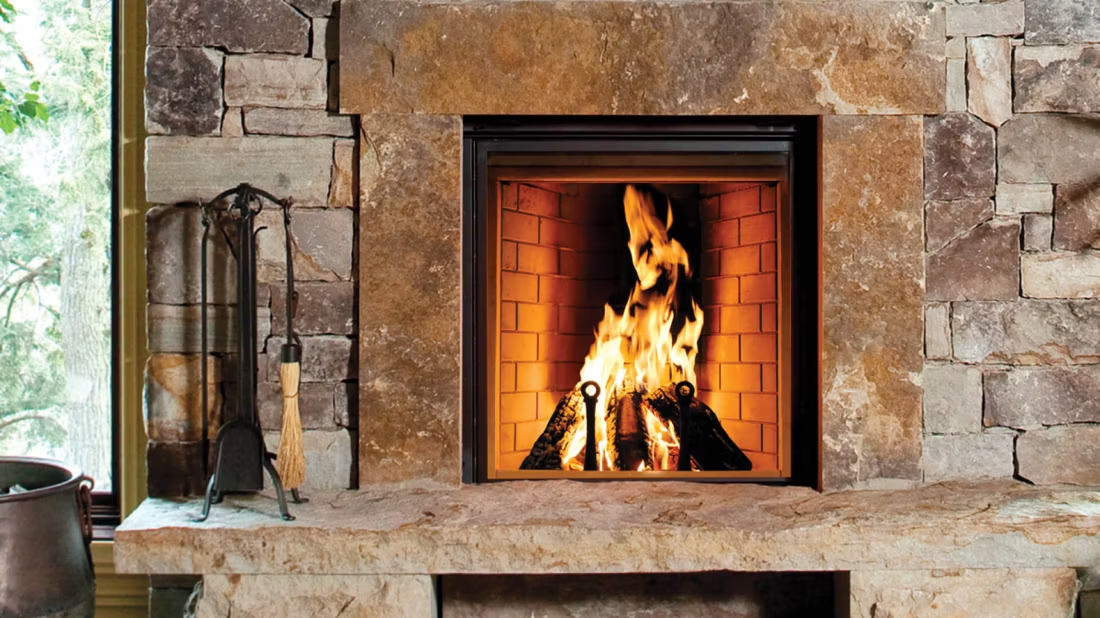
That doesn't mean wood-burning appliances are pointless here. Hinds County has plenty of wooded acreage—especially outside Jackson toward Raymond, Terry, Bolton, and Edwards—with oak, pine, and pecan readily available from land clearing and storm cleanup. Some homeowners want a wood stove or fireplace insert specifically as backup heat for the ice storms that occasionally knock out power across central Mississippi for days at a time. Others want the ambiance of a real fire in a den or camp house, without any expectation of it carrying the heating load. There's no air quality non-attainment status or winter inversion issue in Hinds County, so there's none of the burn-curtailment complexity you'd find in a valley or basin community—if you want a wood stove here, the main considerations are permitting, clearances, and whether it actually suits how you'll use the home.
Three steps. No salesperson until you're ready.
Tell us about your project
Your zip code, your situation, and the fuel you're leaning toward—or let the answers point you to one.
See what's actually available
The brands dealers within 100 miles genuinely carry—real options, never a catalog mirage.
Get your dealer & Project Guide
A trusted local dealer, plus the free Project Guide & Parts List that names every component of the job.
Frequently Asked Questions
How much does a wood stove installation cost in Hinds County?
Because wood stoves are installed far less often in Hinds County than in colder parts of the country, pricing here tends to track general national ranges rather than a deep local market—typically $3,000 to $7,000 for a freestanding stove with new venting, or somewhat less for an insert going into an existing masonry fireplace with a usable flue. Homes without an existing chimney will run higher once Class A pipe and roof penetration are factored in. A local dealer can give you a firm number after seeing the home, since so much depends on whether you're retrofitting an old fireplace in a Jackson bungalow or starting from scratch in a newer build near Byram.
Is wood heat actually necessary in Hinds County, or just for ambiance?
For the overwhelming majority of Hinds County homes, wood heat is not necessary. With an average winter low around 38°F and only a short, mild heating season each year, central HVAC comfortably handles the coldest stretches most winters. Where wood heat earns its keep is as backup during the occasional ice storm that knocks out power in Jackson, Clinton, or the rural parts of the county for a few days, or simply as a wanted feature—real flame, real warmth in a den or living room—rather than a load-bearing heat source. If you're installing one, it's worth being clear with your dealer about which of those two jobs you actually need it to do.
What firewood species are common in Hinds County?
Oak, pine, and pecan are the three species you'll run into most often around Hinds County. Oak is the workhorse—dense, long-burning, and widely available from land clearing across the county. Pecan, common given Mississippi's orchard history, burns hot with a pleasant aroma and is popular for both stoves and smokers. Pine is abundant and easy to source but burns faster and leaves more creosote, so it's better mixed with a hardwood like oak than burned exclusively. A local dealer or firewood supplier can help you find a seasoned mix suited to whichever stove you end up with.
What's the difference between a wood stove and a wood-burning fireplace insert?
A wood stove is a freestanding unit installed on its own hearth pad with new venting—it works in a den, a workshop, or a camp house with no existing masonry. An insert is built to slide into an existing masonry fireplace, using the current chimney (usually with a stainless liner) rather than requiring new venting from scratch. Many older homes in Jackson and Clinton already have a wood-burning fireplace that was rarely used for heat—an insert is often the more cost-effective upgrade in that situation, since it reuses the chimney you already have instead of starting over.
Do I need a permit to install a wood stove in Hinds County?
New wood-burning appliance installations typically require a building permit through the county or city building department, depending on whether the property sits inside Jackson, Clinton, Byram, or unincorporated Hinds County. There's no public forest land in the county requiring a cutting permit the way there is in western states—most local firewood comes from private property, land clearing, or storm cleanup, so sourcing wood is generally a matter of asking around rather than applying for anything. Most dealers who sell and install the stove will also handle the permitting paperwork.
Are there any burn restrictions or air quality rules in Hinds County?
No—Hinds County has no air quality non-attainment designation, winter inversion issue, or wildfire smoke concern, so there are no curtailment periods or burn bans tied to wood-burning appliances the way you'd find in a mountain valley or high-desert basin. That's one advantage of a mild, humid climate: once your stove or insert is installed to code, you're not going to get a call telling you it's a red-flag burn day. The only local restriction to be aware of is the usual outdoor open-burning rules that apply to yard debris, which are separate from an indoor wood-burning appliance.
When does a wood stove actually make sense in Hinds County?
The clearest case is backup heat: Mississippi ice storms have knocked out power across Jackson, Clinton, and the rest of Hinds County for days at a stretch, and a wood stove keeps running when the grid doesn't. The second case is rural or wooded property—homes outside Raymond, Terry, Bolton, or Edwards with their own oak and pine stands often have easy access to firewood and enough acreage to make a stove or a fireplace worthwhile just for the experience. The weakest case is a primary heating source in a well-insulated in-town home with reliable electric or gas service—there, a stove is really a lifestyle choice rather than a heating strategy, and it's worth going in with that expectation.
Where can I get firewood in Hinds County?
Firewood in Hinds County typically comes from land-clearing operations, tree removal services, and individual sellers rather than a large commercial firewood industry, since demand is lower here than in colder regions. Oak and pecan are the species worth seeking out for heat output; pine is easy to find and fine for kindling or mixed loads. If you're on wooded property near Terry, Bolton, or Edwards, self-supplying your own firewood from storm-fallen or cleared trees is common and inexpensive—just make sure it's properly seasoned (six months to a year, split and covered) before burning.
Should I get a wood stove or a gas fireplace in Hinds County?
Given how mild Hinds County winters are, gas is generally the more practical everyday choice—it lights instantly, needs no fuel storage, and doesn't require you to manage ash or creosote for a heat source you'll rarely need at full capacity. Wood makes more sense specifically as a resilience play: it keeps producing heat during a power outage, which gas units without battery backup or standing pilot systems won't always do. Some Hinds County homeowners split the difference—gas in the main living space for daily convenience, and a wood stove in a den, workshop, or camp house for backup and ambiance. A local dealer can walk through both options against your specific home and priorities.
Why won't my new wood stove get going like my old one?
New wood stoves are 70%+ efficient, so far less heat goes up the flue—which also means less draft to get a fire established. The rule: build a genuinely hot fire for about 45 minutes before you choke it down. Skip that and you get smoke in the room, creosote in the chimney, and a fire that never takes off. Most performance complaints trace straight back to this.
Why is my open fireplace making my house colder?
Open fireplaces suck—literally. As the fire burns, it consumes air your furnace already paid to heat and pulls it out through the chimney, so the house is actually colder after the fire goes out than before you lit it. An insert fixes this: it seals the chimney, puts fixed glass across the front, and turns that hole in your house into a real heat source.
Can I install a fireplace myself?
If you're putting a fire in your house on purpose, it's best to work with an expert. Unless you're genuinely experienced in framing, gas line, vent pipe, and the national code on clearances to combustibles, have a professional do it—and ideally the same company that sells you the fireplace, so warranty, service, and liability all live under one roof.
Should the dealer who sells my fireplace also install it?
Ideally, yes. A fireplace project involves vent pipe, gas line, electrical, and often tile or stone. Hire three or four separate trades and you own the liability and the game of telephone between them. One company selling and installing means one accountable party, start to finish—ask about factory training, on-time completion records, and what happens if an inspection fails.
Stove and Fireplace Dealers in Hinds County
Listings include WhyFire partner dealers, dealers we have verified as authorized for the brands we recommend, and established local businesses that carry hearth products. Every listing shows which one it is. The ones marked Preferred run on WhyFire's software, so they can show you real pricing and book your appointment right here. No manufacturer pays for placement. How we verify dealers →
Builder’s Specialties Inc.
Lampton-Love Gas Co., Inc.
Blossman Gas - Jackson
Neill Gas, Inc.
Ferrell Gas- Florence
Callaways Yard And Garden
Van's Sporting Goods
Blossman Gas - Crystal Springs
Lakeland Fireplaces LLC
Madison Fireplace
H&M Gas Company
Find your wood fireplace in Hinds County.
Tell me a bit about your home and how you'd actually use a wood stove or insert—ambiance, backup heat, or both—and I'll match you with a trusted local Hinds County dealer and send over a free Project Guide & Parts List with the exact parts, including the vent kit, for your project.
Find Your Fireplace →