
Keep Your Family Warm and Safe—No Matter What
With winter lows averaging 38°F, almost no Byram home needs wood as its primary heat source—but for backup heat during ice storms or a real hearth in a den, the right stove still earns its keep. We'll connect you with a local dealer who'll tell you straight whether it makes sense for your house.
Every Project Starts From One of These Five Situations
A mild Hinds County winter rarely asks for wood heat.
Byram sits at 280 feet in the Jackson metro area, with a climate zone of 3A and a short, mild heating season—a fraction of what a place like Duluth, MN endures in a single hard winter. The average winter low here is 38°F, and most heating loads in Hinds County are handled by heat pumps and central electric or gas systems, not cordwood. That's simply the reality of this climate, and it's why wood-burning appliances are far less common here than in colder parts of the country.
That said, a small number of Byram homeowners still install wood stoves—usually on larger rural lots around Hinds County where oak, pine, and pecan are already coming down and available to burn, or in homes that want backup heat for the ice storms that occasionally knock out power through Entergy Mississippi's grid for a day or two. Others simply want the look and feel of a real wood fire in a den or bonus room, used a handful of nights each winter rather than as daily heat. If that's your situation, a correctly sized stove from a dealer who understands this climate—not a national big-box catalog—makes the difference between a unit that gets used and one that becomes a very expensive shelf.
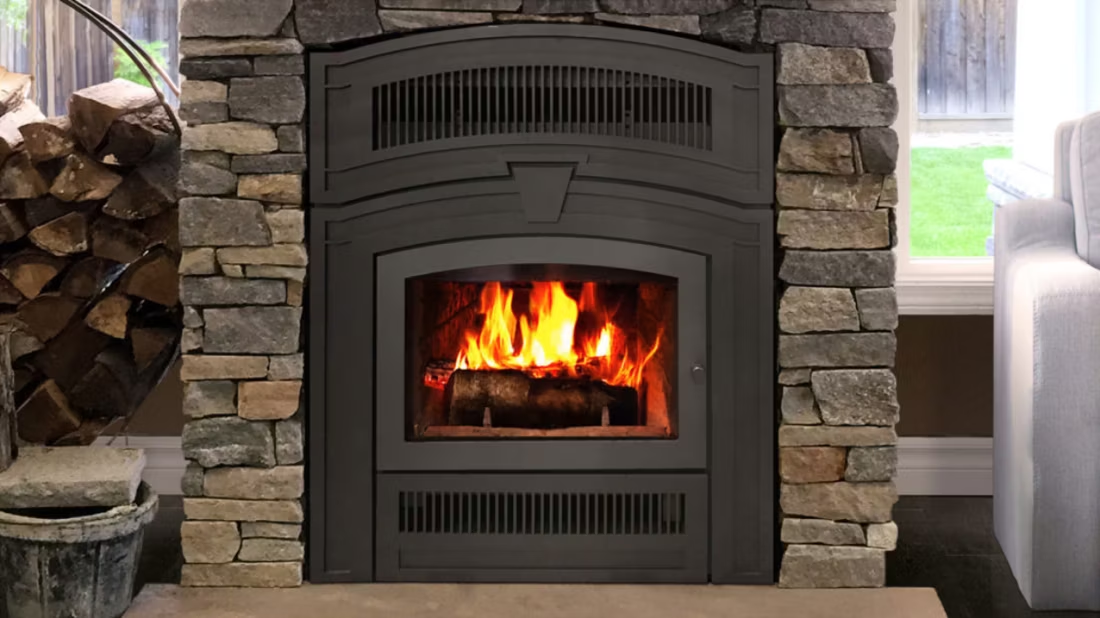
Three steps. No salesperson until you're ready.
Tell us about your project
Your zip code, your situation, and the fuel you're leaning toward—or let the answers point you to one.
See what's actually available
The brands dealers within 100 miles genuinely carry—real options, never a catalog mirage.
Get your dealer & Project Guide
A trusted local dealer, plus the free Project Guide & Parts List that names every component of the job.
Frequently Asked Questions
How much does a wood stove installation cost in Byram?
Expect somewhere in the $3,500 to $7,500 range for a typical freestanding wood stove installation in the Byram/Jackson area, depending on the unit, hearth pad requirements, and whether a new Class A chimney needs to be run through the roof. Because wood heat is uncommon here compared to gas and electric options, fewer local dealers specialize in wood-burning installs—plan on working with a Jackson-metro hearth retailer rather than expecting several competing bids from Byram itself.
Does a wood stove actually make sense in a climate this mild?
For most Byram homes, no—not as a primary heat source. With a short, mild heating season and winter lows averaging 38°F, a heat pump or gas furnace easily covers the heating season. Where a wood stove earns its cost here is backup heat during winter ice storms, when downed lines can leave parts of Hinds County without power from Entergy Mississippi for a day or more, or simply as a real fire in a den for the six or eight genuinely cold nights a typical Byram winter delivers. Be honest with yourself about which of those you're solving for before you buy.
What firewood species are available locally?
Oak, pine, and pecan are the three species most readily available around Byram and greater Hinds County. Oak and pecan are dense hardwoods that burn slow and hot once properly seasoned—plan on 9 to 12 months of drying time given central Mississippi's humidity. Pine is more common as a cheap, fast-burning option but has higher sap content and needs to be well-seasoned and cleaned out of the chimney more often to limit creosote buildup.
Do I need a permit to install a wood stove in Byram?
Yes—a building permit is typically required through the City of Byram Building Department, or through Hinds County directly if your property sits outside city limits. Unlike wildfire-prone Western states, Mississippi has no air-quality curtailment periods or non-attainment restrictions on wood burning here, so once the stove is installed and inspected, you can burn without seasonal blackout dates.
Will my homeowner's insurance cover a wood stove install?
Most Mississippi insurers will cover a wood stove, but many require documentation that the unit was installed to code with proper clearances, and some ask for a CSIA-certified chimney sweep inspection before writing or renewing a policy. Because wood stoves are relatively rare in this part of the state, it's worth calling your insurance agent before installation to confirm exactly what documentation they'll want—it can save you a second inspection trip later.
What size wood stove makes sense for a Byram home?
Given how few nights actually call for supplemental heat here, most Byram installs should lean smaller than what you'd see recommended in a cold-climate guide. A small to mid-size EPA-certified stove sized to zone-heat a single den, living room, or bonus room is usually the right call, rather than a large unit sized to carry an entire house—you'll get better, cleaner burns from a stove that isn't oversized for the load it's actually asked to handle on a 38°F evening.
Where can I get firewood in the Byram area?
Firewood is easy to come by locally—oak, pine, and pecan are all common on wooded lots throughout Hinds County, and several sellers around the Jackson metro sell seasoned cords by delivery, typically running $150 to $250 per cord depending on species and season. Because there's no national forest land nearby with cutting permits like you'd find out West, most Byram homeowners either buy seasoned wood outright or source it from their own property or a neighbor clearing land.
Should I go with wood, gas, or electric heat in Byram?
For most Byram homes, gas and electric are the standard, sensible choices—natural gas fireplaces and heat pumps handle the region's mild, short winters efficiently without any wood handling, and Entergy Mississippi's residential rate of roughly 13.2 cents per kWh keeps electric options reasonable. Wood makes sense as a supplemental or backup choice—particularly for storm-related outages—but it's rarely the primary heating decision here the way it would be in a colder climate.
How often does a wood stove need to be inspected in this climate?
Even with light, occasional use, an annual CSIA-certified inspection and sweep is worth scheduling before burning season starts in November. Mississippi's humidity can actually accelerate creosote formation in a chimney that only sees a handful of fires each winter, since the system doesn't get hot enough, often enough, to fully dry out between uses. A stove burned just a dozen nights a year still needs the same annual check as one used daily up north.
What's the difference between an insert and a zero-clearance fireplace?
An insert is a fireplace that slides into a pre-existing wood-burning fireplace—if you don't have one, there's nothing to insert it into. A zero-clearance fireplace is built into a framed wall, which makes it the answer for remodels and new construction. Simple test: existing masonry fireplace means insert; blank or framed wall means zero-clearance.
Why is a fireplace insert so efficient?
An insert does two things: it seals the chimney completely, so you stop losing air you already paid to heat, and it radiates warmth into the room through the firebox and glass. Most add a heat-exchange fan that pulls cool room air underneath, wraps it around the hot firebox, and pushes it back out warm. Your home is more efficient before you've even lit the first fire.
How much should I budget for a fireplace?
For an average home—covering the fireplace, the vent pipe, and basic installation—a budget between $3,900 and $5,500 gives you a lot of options across wood, gas, and pellet. By the time you add finish work, gas line, and electrical, the average complete installation lands between $5,000 and $12,000 all-in. In a remodel or new build, a good rule is to put about 2.5% of the total project cost toward the fireplace.
Can a fireplace actually lower my heating bill?
Yes—by creating a comfort zone. A furnace heats every square foot of the house just to warm the one room you're in; a gas fireplace on low burns roughly a sixth of the gas a typical furnace does. Set the furnace around 55–60 degrees as a baseline, then heat the rooms your family actually uses. Families who heat this way commonly save $20–$60 a month.
Nearby Dealers
Hearth shops serving Byram and the surrounding area. Every listing shows whether it is a WhyFire partner, a dealer we have verified as authorized for the brands we recommend, or a local business carrying hearth products. No manufacturer pays for placement. How we verify dealers →
Blossman Gas - Jackson
Lampton-Love Gas Co., Inc.
Builder’s Specialties Inc.
Neill Gas, Inc.
Ferrell Gas- Florence
Blossman Gas - Crystal Springs
Van's Sporting Goods
Callaways Yard And Garden
Lakeland Fireplaces LLC
Madison Fireplace
H&M Gas Company
Herring Gas Company- Hazelhurst
Find your wood fireplace in Byram.
Tell us about your home and how you'd actually use a wood stove—ambiance, backup heat, or both—and we'll match you with a trusted local dealer along with a free Project Guide & Parts List covering the exact stove, venting, and hearth components your Byram install needs.
Find Your Fireplace →