
Comfortable gas heat for Copiah County's short, mild winters.
From Hazlehurst to Crystal Springs and Wesson, propane and natural gas fireplaces give Copiah County homes clean, instant warmth without tending a woodpile. Find the right unit and connect with a trusted local dealer.
Every Project Starts From One of These Five Situations
Convenient heat for a county that rarely needs much of it.
Copiah County sits in climate zone 3A, with an average winter low around 37°F and a mild, short heating season—a fraction of what a place like Duluth, MN or Fargo, ND racks up in a single hard winter. The heating season here runs a few short months, and even then it's more about knocking the chill off a farmhouse or den than fighting single-digit nights. Plenty of homes around Hazlehurst and out toward the pecan orchards and pine timberland still burn oak, pine, or pecan in a wood stove for tradition and ambiance, but gas has become the practical default for day-to-day heat in a lot of Copiah County living rooms.
Natural gas service tends to be concentrated in and around town centers like Hazlehurst, where local utility infrastructure reaches; out in the surrounding unincorporated county, propane is the more common fuel, delivered and stored in a tank on the property. Either way, a direct-vent gas fireplace or insert gives you heat at the flip of a switch, no ash to haul, and—with the right ignition system—a source of warmth that keeps working even when the power doesn't. Permits for gas fireplace installation and any gas line work run through the Copiah County Building Department, or through the town if you're inside Hazlehurst city limits, and there are no local air quality restrictions to work around, unlike counties dealing with winter inversion or wood-smoke non-attainment issues.
Three steps. No salesperson until you're ready.
Tell us about your project
Your zip code, your situation, and the fuel you're leaning toward—or let the answers point you to one.
See what's actually available
The brands dealers within 100 miles genuinely carry—real options, never a catalog mirage.
Get your dealer & Project Guide
A trusted local dealer, plus the free Project Guide & Parts List that names every component of the job.
Frequently Asked Questions
How much does a gas fireplace installation cost in Copiah County?
A typical gas fireplace or insert installation in Copiah County runs roughly $3,500 to $8,500, depending on the unit, whether you're converting an existing masonry fireplace, and whether new gas line or propane tank work is needed. A direct-vent insert dropped into an existing fireplace with gas already run to the room sits toward the lower end. A new built-in unit in a room addition or remodel—with framing, venting, and a propane tank installation or gas line extension—lands higher. Because Copiah County's heating season is short, many homeowners here choose a mid-size unit sized more for ambiance and occasional warmth than for round-the-clock heating load.
Can I convert my existing wood fireplace to gas?
Yes—it's a common project for older homes around Hazlehurst and Crystal Springs that were built with a traditional masonry fireplace burning local oak or pine. A gas insert typically slides into the existing firebox and vents through the existing chimney with a stainless liner, usually running $3,500 to $7,000 depending on the model and whether the home is on natural gas or propane. It keeps the look of the original mantel and hearth while eliminating ash cleanup and the need to keep a woodpile stocked.
Should I plan for natural gas or propane in Copiah County?
It depends on where you are in the county. Homes within or near Hazlehurst may have access to natural gas service through the local utility; homes further out in unincorporated Copiah County—which is most of the county's land area—typically rely on propane, either from an existing tank or a new tank set by a regional propane supplier. Most gas fireplace models can be configured for either fuel with the correct orifice and regulator, so the choice of unit isn't limited by which fuel you have available.
Will my gas fireplace still work if the power goes out?
Most modern direct-vent gas fireplaces are built to operate during a power outage. Units with intermittent pilot ignition (IPI) run on a small battery backup that kicks in automatically, letting you light the fireplace on demand exactly as if the power were on. Valor units take it a step further—they generate their own electricity through the pilot's thermocouple, so there's no battery to remember at all. For Copiah County, where summer storms and occasional ice events can knock out power for a day or more, that battery backup (or Valor's self-powering design) is worth asking about when you're comparing units.
What's the difference between a gas fireplace, insert, and stove?
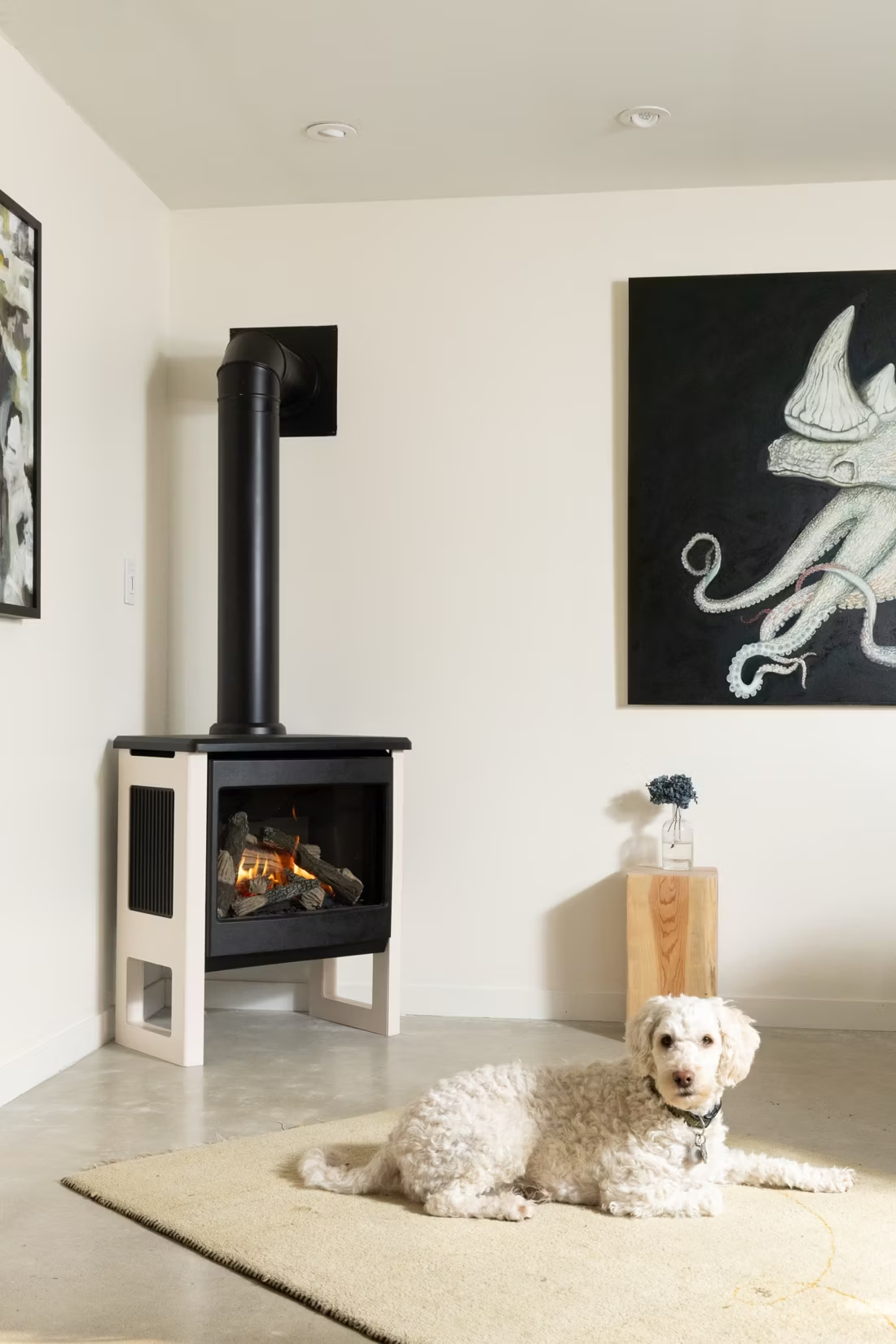
A gas fireplace is a fully built-in unit framed into a wall—the right choice for new construction or a room addition. A gas insert is sized to slide into an existing masonry fireplace opening, turning a drafty wood-burning hearth into a sealed, efficient gas unit using the existing chimney as the vent path. A gas stove is a freestanding unit that sits on the floor like a wood stove but burns gas instead. For most Copiah County homes with an older brick fireplace already in place, an insert is the simplest upgrade; homes without an existing fireplace usually go with a built-in unit or freestanding stove instead.
Do I need a permit to install a gas fireplace in Copiah County?
Generally yes—new gas fireplace installations require a building permit, and any new gas line work requires a licensed gas-fitter and its own permit. Inside Hazlehurst city limits, permits are handled through the town; in the unincorporated parts of the county, the Copiah County Building Department is the relevant office. Most established local dealers coordinate the permitting and gas line work as part of the installation, so you're not stuck managing multiple trades yourself.
Are vent-free gas fireplaces a good option in Copiah County?
Vent-free (ventless) gas fireplaces burn fuel directly into the room without exterior venting, and Mississippi permits their use as long as room-sizing rules and oxygen depletion sensor requirements are followed. Because Copiah County has no local air quality restrictions to navigate, a vent-free unit is a legitimate option for supplemental heat in a den or bonus room—particularly appealing given how mild and short the heating season here actually is. That said, direct-vent units remain the more universally recommended choice for a primary living space, since they vent combustion byproducts outside rather than into the room. A local dealer can walk you through both options for your specific room.
How often does a gas fireplace need to be serviced?
An annual inspection is recommended even though Copiah County's heating season is short—a technician checks the burner, pilot assembly, venting, and gas connections, and cleans the glass and interior. Given how few months a year the unit actually runs here, some homeowners stretch service to every other year for a lightly used secondary fireplace, but an annual check is still the safer call for a unit that sees regular winter use. Expect to pay in the $125–$225 range for a standard inspection from a local hearth service provider.
Gas vs. wood—which makes more sense in Copiah County?
With oak, pine, and even pecan available locally as firewood, wood heat still has a following in Copiah County, especially among homeowners who already cut or split their own. But with only a mild, short heating season and winter lows that rarely dip much below the high 30s, most households don't need a heavy-duty heat source—they want something that looks good and takes the edge off a cool evening without hauling ash or restocking a woodpile. That's where gas tends to win locally: instant on-off operation, consistent output, and a cleaner appearance, with the trade-off being an ongoing propane or natural gas cost instead of free or low-cost firewood. Plenty of homes here keep both—a gas unit in the main living area and a wood stove out at the hunting camp or shop.
Why is a fireplace insert so efficient?
An insert does two things: it seals the chimney completely, so you stop losing air you already paid to heat, and it radiates warmth into the room through the firebox and glass. Most add a heat-exchange fan that pulls cool room air underneath, wraps it around the hot firebox, and pushes it back out warm. Your home is more efficient before you've even lit the first fire.
What's the difference between an insert and a zero-clearance fireplace?
An insert is a fireplace that slides into a pre-existing wood-burning fireplace—if you don't have one, there's nothing to insert it into. A zero-clearance fireplace is built into a framed wall, which makes it the answer for remodels and new construction. Simple test: existing masonry fireplace means insert; blank or framed wall means zero-clearance.
Can I install a fireplace myself?
If you're putting a fire in your house on purpose, it's best to work with an expert. Unless you're genuinely experienced in framing, gas line, vent pipe, and the national code on clearances to combustibles, have a professional do it—and ideally the same company that sells you the fireplace, so warranty, service, and liability all live under one roof.
Can a fireplace actually lower my heating bill?
Yes—by creating a comfort zone. A furnace heats every square foot of the house just to warm the one room you're in; a gas fireplace on low burns roughly a sixth of the gas a typical furnace does. Set the furnace around 55–60 degrees as a baseline, then heat the rooms your family actually uses. Families who heat this way commonly save $20–$60 a month.
Stove and Fireplace Dealers in Copiah County
Find your gas fireplace in Copiah County.
Tell us a bit about your home and we'll match you with the right gas fireplace, insert, or stove—plus a free Project Guide & Parts List and a trusted local dealer to install it. ** Note: the leading space before cop_y_cta_eyebrow key above was a typo artifact; ensure key name matches schema exactly as 'copy_cta_eyebrow'. **
Find Your Fireplace →