
Heat your Copiah County home right—even in a short winter.
Wood, gas, pellet, and electric fireplace resources for every town in Copiah County—from Hazlehurst to Crystal Springs and Wesson. Find the right unit for a mild Mississippi winter and connect with a trusted local hearth retailer.
Every Project Starts From One of These Five Situations
Short, mild winters shape how Copiah County heats its homes.
Copiah County sits in southwest-central Mississippi, in climate zone 3A, where the average winter low is 37°F and the county sees a mild, short heating season each year—a fraction of what a place like Duluth, Minnesota racks up in a typical winter. The real heating season here runs roughly December through February, with occasional hard freezes and ice events standing in for the sustained cold that drives fireplace demand farther north. Oak, pine, and pecan are the wood species you'll find in most local woodpiles—pecan orchards sit alongside the pine and hardwood stands that supply the firewood burned in the county. There's no non-attainment designation and no winter burn-advisory program on the books here, so wood-burning households in Copiah County don't face the curtailment restrictions that some Western counties deal with.
What you'll find on this hub: hearth retailers, service technicians, and fuel suppliers covering every fuel type across the county—from the county seat in Hazlehurst to Crystal Springs, Wesson, and Gallman. Because Copiah is a small rural county without a large local hearth-retail base, several of the businesses that service it are based in the Jackson metro area, about 35 miles north, or in Brookhaven to the south. Pick your fuel below to see local dealers, typical installed costs, and the unit types that fit a mild-winter home—whether that's a wood-burning insert on a farmstead near Wesson or a gas fireplace in a Hazlehurst living room.
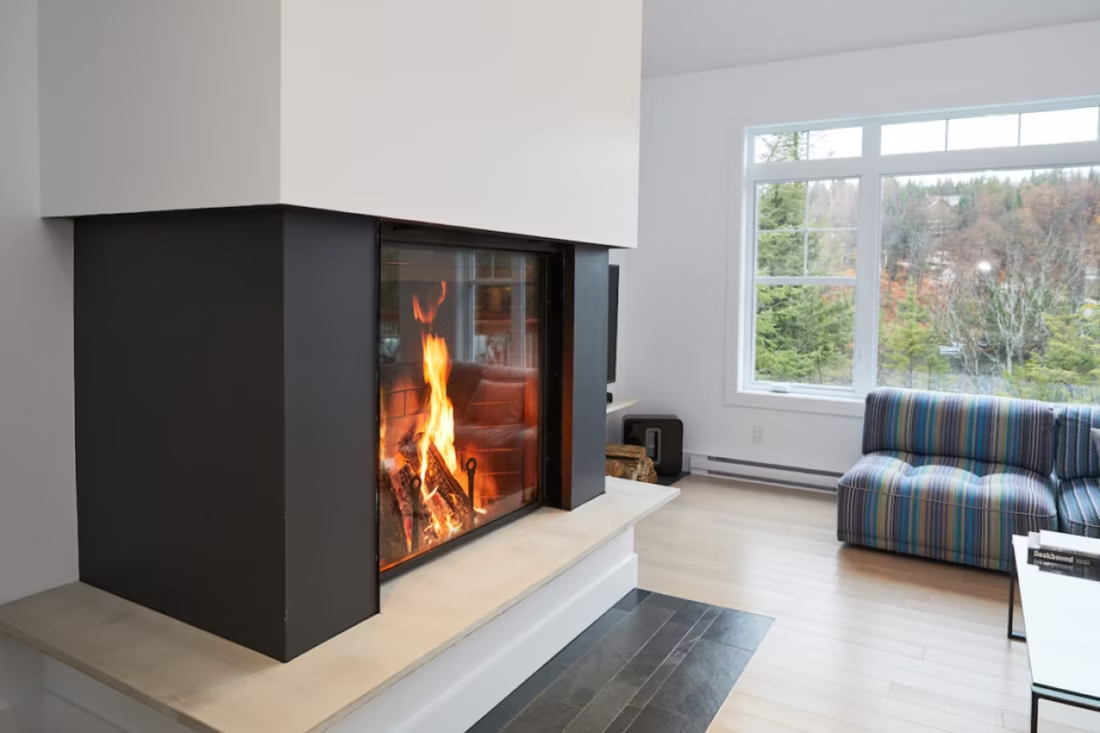
Four fuels. One honest answer for Copiah County.
Three steps. No salesperson until you're ready.
Tell us about your project
Your zip code, your situation, and the fuel you're leaning toward—or let the answers point you to one.
See what's actually available
The brands dealers within 100 miles genuinely carry—real options, never a catalog mirage.
Get your dealer & Project Guide
A trusted local dealer, plus the free Project Guide & Parts List that names every component of the job.
Frequently Asked Questions
Which fireplace fuel makes sense in Copiah County's mild climate?
With such a mild, short heating season each year and winter lows averaging 37°F, Copiah County doesn't need the same round-the-clock heating capacity as colder states—but the choice still matters. Wood remains popular here, fed by local oak, pine, and pecan, and it doubles as backup heat during the ice storms that occasionally knock out power in rural parts of the county. Gas (mostly propane, since natural gas mains don't reach much of rural Copiah) is the low-effort option for a Hazlehurst or Crystal Springs living room—instant on, no wood stacking. Pellet stoves are a middle ground, and Lignetics and Hamer Pellet Fuel keep supply local, though given the short season many homeowners burn less than a ton a year. Electric fireplaces do well here precisely because the climate is mild—a single electric unit can supply all the supplemental heat a room needs on the coldest nights, without any venting at all.
Do I need a permit to install a fireplace in Copiah County?
Generally yes for anything involving new venting, gas lines, or hardwired electrical work. New wood stoves, wood inserts, gas fireplaces, gas inserts, and pellet stoves typically require a building permit through the Copiah County Building Department, and gas installations need a licensed gas-fitter and a separate gas-line permit—especially relevant here since most rural gas installs run on propane rather than a utility main. A freestanding, plug-in electric fireplace usually doesn't need a permit; a built-in electric unit with a new circuit does. Most local retailers handle the permitting as part of the installation, so it's rarely something the homeowner has to navigate alone.
Are there wood-burning restrictions or air quality rules in Copiah County?
No. Copiah County has no non-attainment designation and no winter burn-advisory program, so there are no mandatory or voluntary curtailment days like counties in air-quality basins deal with. That said, an EPA-certified stove is still worth choosing—pine, which makes up a good share of the local firewood supply, burns hotter and dirtier with more creosote buildup than oak if it isn't well-seasoned, and a certified stove with better combustion handles that more cleanly and safely than an old uncertified unit.
Can one local retailer handle all four fuel types in Copiah County?
It depends on where the retailer is based. Copiah County itself doesn't have a dedicated multi-fuel hearth showroom, so most homeowners end up working with a dealer out of the Jackson metro or Brookhaven that carries wood, gas, and pellet units and can special-order electric fireplaces as well. Pure fuel suppliers—a propane company, a firewood seller, a pellet distributor like Greenway Renewable Energy—aren't retailers and won't sell or install a unit, but they're worth knowing separately for ongoing fuel. If you're comparing fuel types side by side, a Jackson-area multi-fuel dealer with working showroom displays is usually your best bet.
How does hearth service work in a rural county like Copiah?
Most technicians serving Copiah County are based in Jackson, Brookhaven, or McComb and drive in to cover Hazlehurst, Crystal Springs, Wesson, and the smaller unincorporated communities. Expect a modest trip fee for calls outside the main towns. Because the heating season here is short, the busiest service window is a narrow one—late fall, right before the first cold front, and again after any ice storm that's forced extra use of backup wood heat. Scheduling an annual chimney sweep or gas inspection in October, ahead of that rush, is easier than trying to book a mid-winter emergency call.
What does fireplace installation cost across fuel types in Copiah County?
Costs here tend to run a bit lower than in colder-climate counties, since venting and unit sizing are less extreme. Wood stove or insert: roughly $3,500–$7,000 installed, factoring in local oak, pine, and pecan supply. Gas fireplace, insert, or stove: about $4,000–$8,500, with propane conversions often on the lower end if a tank and line are already in place. Pellet stove or insert: typically $3,500–$6,000. Electric fireplace: $200–$2,500 for the unit itself, plus $300–$900 in labor for anything beyond a simple plug-in install. Exact pricing depends on the dealer and the specifics of your home—see the county-plus-fuel pages above for more detail.
Wood, gas, pellet, or electric—how do I choose?
Match the fuel to your life, not the other way around. Wood: lowest fuel cost and total power-outage independence, but you're hauling and stacking. Gas: press a button, set a thermostat, no maintenance to speak of. Pellet: wood economics with automatic feeding, in exchange for weekly cleaning and a need for electricity. Electric: plugs in anywhere with honest supplemental heat. Nobody regrets the fuel that fits how they actually live.
Can I install a fireplace myself?
If you're putting a fire in your house on purpose, it's best to work with an expert. Unless you're genuinely experienced in framing, gas line, vent pipe, and the national code on clearances to combustibles, have a professional do it—and ideally the same company that sells you the fireplace, so warranty, service, and liability all live under one roof.
How much should I budget for a fireplace?
For an average home—covering the fireplace, the vent pipe, and basic installation—a budget between $3,900 and $5,500 gives you a lot of options across wood, gas, and pellet. By the time you add finish work, gas line, and electrical, the average complete installation lands between $5,000 and $12,000 all-in. In a remodel or new build, a good rule is to put about 2.5% of the total project cost toward the fireplace.
Should the dealer who sells my fireplace also install it?
Ideally, yes. A fireplace project involves vent pipe, gas line, electrical, and often tile or stone. Hire three or four separate trades and you own the liability and the game of telephone between them. One company selling and installing means one accountable party, start to finish—ask about factory training, on-time completion records, and what happens if an inspection fails.
Stove and Fireplace Dealers in Copiah County
Listings include WhyFire partner dealers, dealers we have verified as authorized for the brands we recommend, and established local businesses that carry hearth products. Every listing shows which one it is. The ones marked Preferred run on WhyFire's software, so they can show you real pricing and book your appointment right here. No manufacturer pays for placement. How we verify dealers →
Herring Gas Company- Hazelhurst
Blossman Gas - Crystal Springs
Ferrell Gas- Brookhaven
The Chimney Man
Find your fireplace match in Copiah County.
Tell us about your home and we'll match you with a trusted local dealer and send a free Project Guide & Parts List—the exact parts, including the vent kit, and the recommended installer for your fuel and your Copiah County address.
Find Your Fireplace →