
Keep Your Family Warm and Safe—No Matter What
With winter lows averaging around 32°F and only a short, mild heating season overall, most Coahoma County homes get by on gas or electric heat. But a small number of homeowners around Clarksdale and the surrounding Delta still add a wood stove or fireplace—for backup warmth when ice storms knock out power, or simply for the fire itself.
Every Project Starts From One of These Five Situations
The Delta rarely gets cold enough to need it.
Coahoma County sits in the flat, low-lying Mississippi Delta, in climate zone 3A, where winters are short and generally mild—the average winter low hovers around 32°F, and the county has a short, mild heating season, a fraction of what cold-climate states see. That's not enough sustained cold for wood to function as a household's primary heat source the way it does farther north. Most homes in Clarksdale and the smaller Delta communities around it heat with central gas or electric systems, and wood-burning appliances are a minority choice rather than the default.
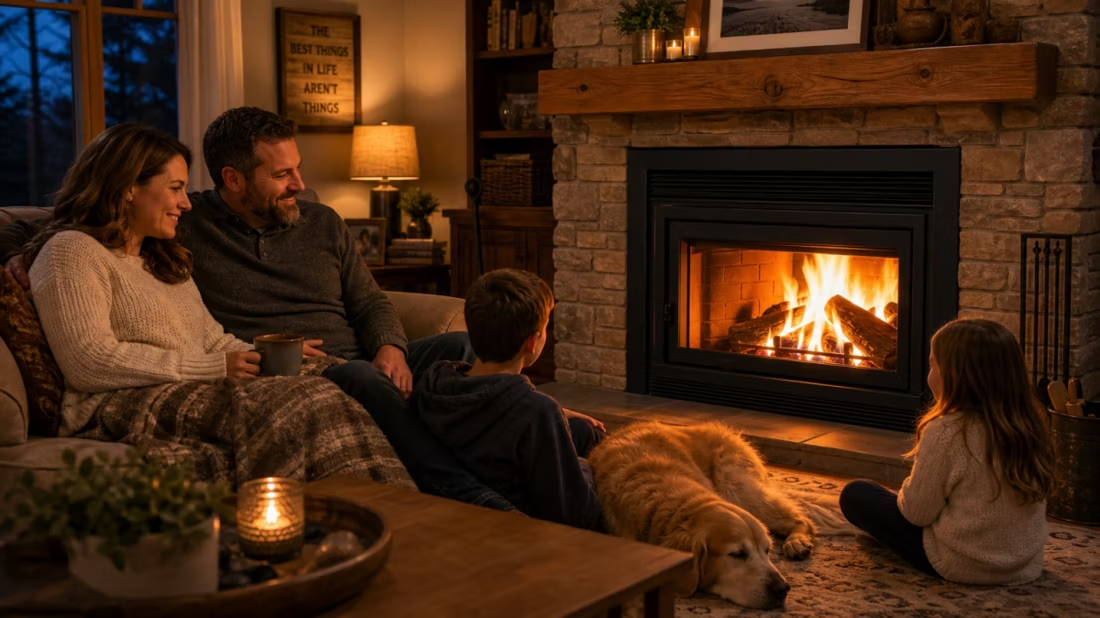
That said, wood heat hasn't disappeared from the county. Some older farmhouses still have a working fireplace or a wood stove installed decades ago, and a handful of newer homeowners add one specifically as a backup during the ice storms that occasionally sweep through the Delta and take down power lines for days at a time. Others simply want the look and feel of a real fire in a den or living room. Local oak, pecan, and pine are the common firewood species—much of it sourced from land-clearing and tree removal rather than public forest permits, since Coahoma County has little public timberland compared to the national forests farther north or east in the state.
Three steps. No salesperson until you're ready.
Tell us about your project
Your zip code, your situation, and the fuel you're leaning toward—or let the answers point you to one.
See what's actually available
The brands dealers within 100 miles genuinely carry—real options, never a catalog mirage.
Get your dealer & Project Guide
A trusted local dealer, plus the free Project Guide & Parts List that names every component of the job.
Frequently Asked Questions
How much does a wood stove installation cost in Coahoma County?
Because wood stoves are a niche request in Coahoma County, pricing varies more than it would in a colder market with dozens of established installers. A straightforward freestanding stove installation—hearth pad, Class A chimney pipe, and basic venting—typically runs somewhere in the $3,000 to $7,500 range depending on the model and how much chimney work is needed. Homes without an existing masonry fireplace or chimney chase will land toward the higher end. Because dealer density is thin locally, some Coahoma County homeowners end up working with hearth retailers based out of Memphis, about 75 miles north, who service the northern Delta.
Is a wood stove even practical in Coahoma County's climate?
For most homes, no—not as a primary heat source. With an average winter low around 32°F and a short, mild heating season overall, the county simply doesn't have the sustained cold that makes wood heat cost-effective the way it is in places like Bismarck, ND or Duluth, MN. Where a wood stove does make sense here is as supplemental or backup heat: something to run during a cold snap, or to keep a room warm if an ice storm takes out the power grid for a few days, which does happen periodically in the Delta. If you're heating a whole house day in and day out through winter, gas or electric will almost always be the more practical and cost-effective route in this climate.
What size wood stove do I need for a Coahoma County home?
Given how mild the winters are here, most homeowners who install a wood stove are sizing for a single room or as occasional backup heat rather than whole-home output. A small to mid-size stove (rated for 1,000 to 1,500 square feet) is usually more than enough to warm a living area or den on the coldest nights of the year, and it avoids the overheating and creosote buildup that comes from running an oversized stove on light, infrequent use. A local dealer can size a unit correctly for your specific room and insulation level during an in-home visit.
Should I get a wood stove or a fireplace insert?
If your Coahoma County home already has an older, open masonry fireplace—common in some of the county's older farmhouses—a wood-burning insert is often the better upgrade. It fits into the existing opening, uses the chimney you already have, and turns a drafty, inefficient fireplace into something that actually throws usable heat. If you don't have an existing fireplace, a freestanding stove is more straightforward to install and gives you more flexibility on placement. Either way, given how infrequently these units typically run in this climate, prioritize a model that's easy to start and reliable in short, occasional use rather than one built purely for marathon overnight burns.
Do I need a permit to install a wood stove in Coahoma County?
Yes—a new wood-burning appliance installation typically requires a building permit through the Coahoma County Building Department, and the stove itself needs to meet current EPA emissions standards. Most hearth dealers who install these units, including ones traveling in from Memphis, will handle the permitting as part of the job. Since air quality isn't a regulatory concern in Coahoma County the way it is in wildfire- or inversion-prone parts of the country, there are no curtailment periods or burn bans to worry about locally.
What's the best wood stove for a Delta home like mine?
For the way most Coahoma County homeowners actually use a wood stove—occasional fires, backup heat during outages, or evening ambiance rather than all-day burning—a mid-size non-catalytic stove is usually the practical choice. It's simpler to start and tend for short burns than a catalytic model built for 20-hour overnight loads in a much colder climate. Local firewood tends to be oak, pecan, or pine—oak burns hot and long, pecan burns clean with good aroma, and pine is fine for kindling or quick, low-effort fires. A local dealer can walk you through specific models once they know your room size and how often you actually plan to use it.
How often should my chimney be inspected if I only burn occasionally?
Even with light, occasional use, an annual inspection before the start of cool weather is still the right call—the CSIA recommends this regardless of how often a stove or fireplace is actually fired up. Creosote and animal nesting can build up in a flue that sits unused for most of the year just as easily as one used daily, and a chimney that only gets fired during an ice-storm power outage is exactly the kind of appliance you want to know is safe before you actually need it.
Where can I get firewood in Coahoma County?
Unlike counties with large tracts of national forest, Coahoma County has little public timberland, so most local firewood comes from land-clearing, storm cleanup, and tree removal rather than Forest Service cutting permits. Oak, pecan, and pine are the species you'll most commonly find from local sellers and landowners around Clarksdale, often sold by the truckload or partial cord rather than through a formalized permit system. Given how infrequently most local wood-burning appliances actually run, many homeowners buy a small amount seasoned and ready to burn rather than stockpiling a full winter's supply.
Wood stove or gas—which makes more sense for my home?
For the vast majority of Coahoma County homes, gas is the more practical everyday choice—it's instant, doesn't require sourcing or storing firewood, and matches the mild, short winters here far better than a wood-burning appliance sized for daily use. Where wood still earns its place is as backup heat that works without electricity, which matters during the ice storms that periodically hit the Delta and can leave homes without power for days. Some homeowners split the difference: a gas system for daily comfort, and a smaller wood stove kept in reserve for outages or for the occasional fire on a cold night.
What's the difference between an insert and a zero-clearance fireplace?
An insert is a fireplace that slides into a pre-existing wood-burning fireplace—if you don't have one, there's nothing to insert it into. A zero-clearance fireplace is built into a framed wall, which makes it the answer for remodels and new construction. Simple test: existing masonry fireplace means insert; blank or framed wall means zero-clearance.
Why is my open fireplace making my house colder?
Open fireplaces suck—literally. As the fire burns, it consumes air your furnace already paid to heat and pulls it out through the chimney, so the house is actually colder after the fire goes out than before you lit it. An insert fixes this: it seals the chimney, puts fixed glass across the front, and turns that hole in your house into a real heat source.
What is an in-home preview and do I need one?
It's a visit where a hearth professional measures your space, confirms the model you picked actually works in your home, and walks the specs—framing, gas line, venting, finish work—before anything is ordered. Some details you just can't know until you see the house. Never make a down payment without one; it's the single most-skipped step that burns buyers.
Can I install a fireplace myself?
If you're putting a fire in your house on purpose, it's best to work with an expert. Unless you're genuinely experienced in framing, gas line, vent pipe, and the national code on clearances to combustibles, have a professional do it—and ideally the same company that sells you the fireplace, so warranty, service, and liability all live under one roof.
Stove and Fireplace Dealers in Coahoma County
Find your wood stove in Coahoma County.
Tell us a bit about your home and how you'd actually use a wood stove—backup heat, occasional ambiance, or something else—and we'll match you with a trusted local or regional dealer and put together a free Project Guide & Parts List with the right unit and vent kit for your Coahoma County home.
Find Your Fireplace →