
Fireplace resources for every corner of Coahoma County.
From Clarksdale down through Friars Point, Jonestown, and Lula, this hub rolls up hearth retailers, service techs, and fuel suppliers for the whole county. Pick a fuel and we match you with a local dealer who actually installs it in the Delta.
Every Project Starts From One of These Five Situations
Mild Delta winters, 3,010 heating degree days, and a hearth market built around gas and electric.
Coahoma County sits in the flat cotton and soybean farmland of the Mississippi Delta, with Clarksdale as the county seat and blues-heritage anchor. Winter lows average a mild 32°F, and the county logs about 3,010 heating degree days a year—roughly a third of what a place like Duluth, Minnesota sees in a typical winter, and well short of a heating season that demands daily fire-tending. Oak, pine, and pecan grow throughout the county, but locally cut wood tends to end up in smokers and backyard pits for Delta barbecue rather than in home heating stoves.
That mild climate is exactly why wood stoves and pellet stoves are genuinely uncommon here—not a gap in this hub, but a reflection of how Coahoma County actually heats. Most homes run gas logs or gas inserts through Atmos Energy's service area, or lean on electric fireplaces for supplemental warmth and ambiance in older shotgun and Craftsman houses around Clarksdale and Friars Point. Permits for in-town projects run through City of Clarksdale Building Inspections, while unincorporated areas—Jonestown, Lula, Sherard, Dublin, Lyon—fall under the Coahoma County Building Department. Pick your fuel below for local dealers, install costs, and unit recommendations specific to your town.
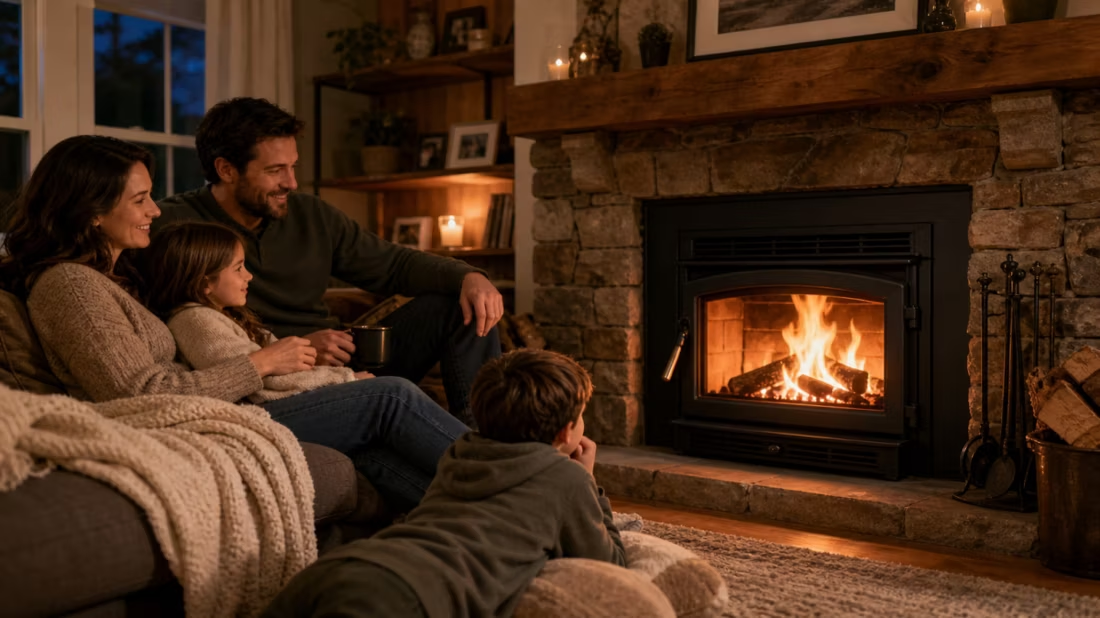
Four fuels. One honest answer for Coahoma County.
Three steps. No salesperson until you're ready.
Tell us about your project
Your zip code, your situation, and the fuel you're leaning toward—or let the answers point you to one.
See what's actually available
The brands dealers within 100 miles genuinely carry—real options, never a catalog mirage.
Get your dealer & Project Guide
A trusted local dealer, plus the free Project Guide & Parts List that names every component of the job.
Frequently Asked Questions
Which fireplace fuel makes the most sense in Coahoma County?
Gas is the default choice for most Coahoma County homes because Atmos Energy service reaches Clarksdale and the surrounding towns, and propane covers the rest of the county—a gas log set or insert handles the occasional hard freeze without any daily upkeep. Electric fireplaces are the other common pick, especially in older shotgun-style and Craftsman homes around Clarksdale and Friars Point, since they need no venting or chimney work. Wood-burning stoves are uncommon here: with winter lows averaging just 32°F and only 3,010 heating degree days a year—a fraction of a winter in Duluth or Bismarck—few households want the daily wood-loading routine, even though oak, pine, and pecan grow throughout the county. Pellet stoves are essentially not installed here for the same reason, though pellet brands like Lignetics and Hamer Pellet Fuel are sold regionally for grills and smokers rather than home heating.
Are wood-burning fireplaces or stoves an option here at all?
They exist, but they're the exception rather than the rule. A small number of Coahoma County homeowners keep a wood stove or working masonry fireplace for ambiance, holiday gatherings, or the handful of nights each winter when temperatures actually drop into the 20s. Because the county's heating load is so light, building a household's primary heat around wood rarely makes sense financially, and many older fireplaces in Clarksdale's historic district get converted to gas logs for convenience instead. If you do want a wood option, local oak and pecan are plentiful—they're just more commonly split for smokers and outdoor pits than for indoor heating.
Do I need a permit for a gas or electric fireplace install in Coahoma County?
Yes, in most cases. Gas fireplace and insert installs need a gas-line permit and a licensed gas fitter, filed through City of Clarksdale Building Inspections if you're inside city limits or the Coahoma County Building Department for Jonestown, Lula, Sherard, and other unincorporated communities. Electric fireplaces usually skip the permit process for a simple plug-in unit, but a hardwired built-in that requires a new circuit needs an electrical permit and inspection. Most retailers we match homeowners with handle this paperwork as part of the install.
What does a fireplace installation typically cost in Coahoma County?
Gas fireplace inserts and log sets generally run $3,500–$8,000, with the higher end reflecting a new gas line run to a room that doesn't already have service. Electric fireplaces are the more affordable option—$200–$2,500 for the unit, plus $300–$900 in labor if you're hardwiring a built-in rather than plugging in a freestanding unit. Wood stove installs, while rare, still run $4,000–$7,000 when a homeowner wants one, since there's less local competition driving pricing down compared to gas and electric.
Does an electric fireplace make sense in an older Delta home?
Often, yes. Many homes in Coahoma County—the shotgun houses and Craftsman bungalows around Clarksdale and Friars Point in particular—predate central gas lines to every room and have an old masonry firebox that's no longer safe to burn in. An electric insert drops into that existing opening without venting, chimney repair, or gas plumbing, and it holds up fine through the Delta's humid summers since there's no draft or flue to maintain. It's also a practical choice for rental properties where fire risk and upkeep both need to stay low.
When should I schedule a fireplace installation or service call in Coahoma County?
Late summer or early fall is the best window, before the county's hard freezes typically arrive between November and February. Service techs and installers are based mainly around Clarksdale but travel out to Jonestown, Lula, Sherard, Dublin, and Lyon on a regular circuit—booking ahead of the season's first cold snap gets you ahead of the rush that hits every propane and gas technician once temperatures actually drop.
Can a fireplace actually lower my heating bill?
Yes—by creating a comfort zone. A furnace heats every square foot of the house just to warm the one room you're in; a gas fireplace on low burns roughly a sixth of the gas a typical furnace does. Set the furnace around 55–60 degrees as a baseline, then heat the rooms your family actually uses. Families who heat this way commonly save $20–$60 a month.
What is an in-home preview and do I need one?
It's a visit where a hearth professional measures your space, confirms the model you picked actually works in your home, and walks the specs—framing, gas line, venting, finish work—before anything is ordered. Some details you just can't know until you see the house. Never make a down payment without one; it's the single most-skipped step that burns buyers.
How much should I budget for a fireplace?
For an average home—covering the fireplace, the vent pipe, and basic installation—a budget between $3,900 and $5,500 gives you a lot of options across wood, gas, and pellet. By the time you add finish work, gas line, and electrical, the average complete installation lands between $5,000 and $12,000 all-in. In a remodel or new build, a good rule is to put about 2.5% of the total project cost toward the fireplace.
Should the dealer who sells my fireplace also install it?
Ideally, yes. A fireplace project involves vent pipe, gas line, electrical, and often tile or stone. Hire three or four separate trades and you own the liability and the game of telephone between them. One company selling and installing means one accountable party, start to finish—ask about factory training, on-time completion records, and what happens if an inspection fails.
Stove and Fireplace Dealers in Coahoma County
Listings include WhyFire partner dealers, dealers we have verified as authorized for the brands we recommend, and established local businesses that carry hearth products. Every listing shows which one it is. The ones marked Preferred run on WhyFire's software, so they can show you real pricing and book your appointment right here. No manufacturer pays for placement. How we verify dealers →
Sayle Oil Company Inc.
Sayle Oil Company Inc.
Sayle Oil Company
Sayle Oil Company- Water Valley
Scott Petroleum
Get matched with a local Coahoma County dealer.
Pick your fuel below and we'll put together a free Project Guide & Parts List—the right unit, the parts it needs, and the local dealer we recommend for your project.
Find Your Fireplace →