
Keep Your Family Warm and Safe—No Matter What
From Port Gibson to the river bottoms, wood heat has stayed a fixture in Claiborne County long after gas lines and central air arrived—mostly because it works when the power doesn't. Find the right stove or insert and connect with a trusted local dealer.
Every Project Starts From One of These Five Situations
When the power goes out, wood keeps burning.
Claiborne County sits in climate zone 3A—mixed-humid, mild winters most years, with cold snaps that can still drop temperatures into the 20s for a few nights at a stretch. It's not a place where a home lives or dies on a wood stove the way a house in Bismarck ND or Duluth MN might. But with a population under 3,000 spread across a rural, heavily wooded county, wood heat has never gone out of style here—it's backup heat for ice storms and hurricane-season outages, supplemental heat for drafty older homes around Port Gibson, and, for a lot of families, simply the way the house has always been heated.
The county's oak, pecan, and pine stands mean good firewood is close at hand for anyone with family land, a neighbor with a woodlot, or a local sawmill connection—dense hardwoods like oak and pecan burn long and hot, while pine works well for quick starts and shoulder-season fires. With no air quality non-attainment issues or burn curtailment periods to navigate, the main considerations are picking the right size stove for a mild climate and getting it installed to code by someone who does this work regularly.
Three steps. No salesperson until you're ready.
Tell us about your project
Your zip code, your situation, and the fuel you're leaning toward—or let the answers point you to one.
See what's actually available
The brands dealers within 100 miles genuinely carry—real options, never a catalog mirage.
Get your dealer & Project Guide
A trusted local dealer, plus the free Project Guide & Parts List that names every component of the job.
Frequently Asked Questions
How much does a wood stove installation cost in Claiborne County?
Because Claiborne County is rural, most installers travel in from Vicksburg, Natchez, or Jackson, and a straightforward wood stove installation—into an existing hearth with a hearth pad and chimney already accounted for—typically runs $3,000 to $7,500. Homes without an existing masonry chimney, including many of the older frame houses around Port Gibson, will run higher once Class A chimney pipe and roof penetration are added in. Ask any installer for a firm quote after they've seen the home in person; travel distance from the nearest dealer can factor into the final number in a county this size.
What size wood stove do I need for a Claiborne County home?
Because winters here are mild compared to colder climate zones, most Claiborne County homes do fine with a small to medium stove—think 1,000 to 1,800 square feet of coverage—rather than the large, all-night catalytic units you'd see in a place like Fargo ND. If you're heating a single living area or using the stove mainly for backup heat during power outages, a smaller unit is usually plenty. Homes that plan to lean on wood as a primary heat source through the occasional hard freeze should size up slightly. A local dealer can walk through your square footage and insulation and recommend a specific model.
Where can I find a certified wood stove installer near me in Claiborne County?
Look for NFI (National Fireplace Institute) or CSIA-certified installers—with Claiborne County's small population, most certified hearth professionals are based in Vicksburg, Natchez, or Jackson and serve the county on a travel basis. That's normal for a county this size, and it's worth the drive time: proper clearances and venting are the difference between a safe installation and a chimney fire. Avoid a general handyman install for a wood-burning unit even if it's tempting given the distance—the liability and safety risk isn't worth the shortcut.
What's the difference between a wood stove and a wood insert?
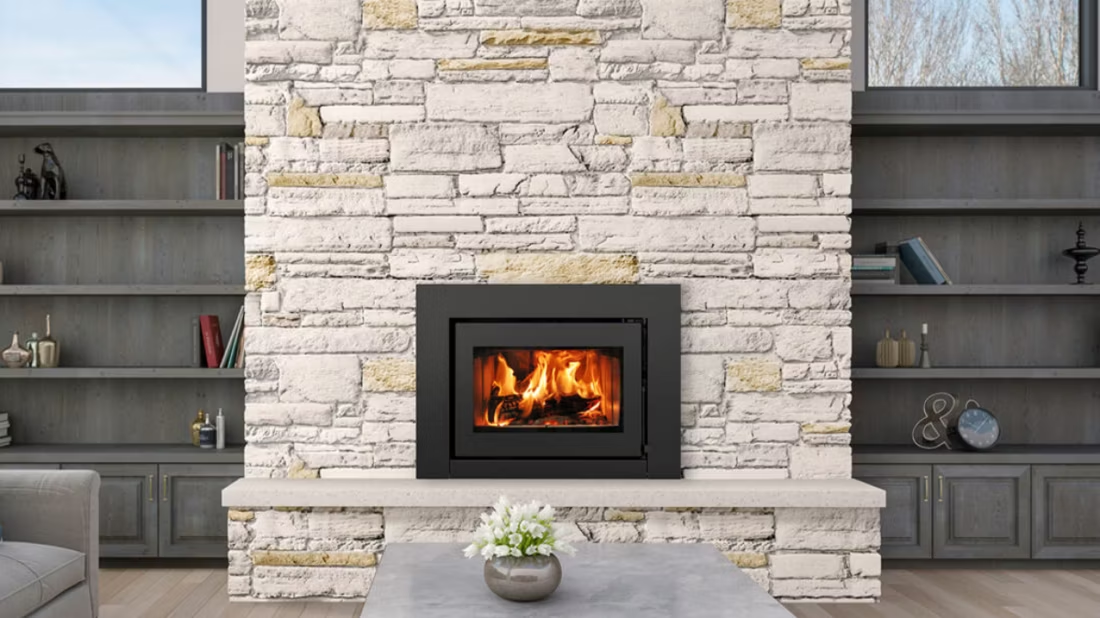
A wood stove is freestanding and sits on its own hearth pad, which makes it a good fit for a home without an existing fireplace. A wood insert slides into an existing masonry fireplace opening and uses that chimney, converting an old, drafty, low-efficiency fireplace into a real heat source. Given how many homes around Port Gibson and the rest of Claiborne County have older masonry fireplaces original to the house, an insert is often the more practical upgrade—it keeps the look of the existing hearth while turning it into something that actually heats the room instead of just looking nice.
Do I need a permit to install a wood stove in Claiborne County?
Yes, a building permit is required for a new wood stove or insert installation, and the unit needs to meet current EPA emissions standards. Most local installers handle the permitting paperwork as part of the job, so you're not usually dealing with the county building department directly. Claiborne County has no air quality non-attainment designation and no burn curtailment periods, so once your stove is installed and inspected, there are no seasonal burning restrictions to plan around.
What's the best wood stove for Claiborne County's climate?
Given the mild winters of climate zone 3A, most Claiborne County homes don't need a 20-plus-hour catalytic burner built for sustained subzero nights—a well-built non-catalytic stove from a brand like Pacific Energy, Lopi, or Vermont Castings is usually plenty, sized to the room or area you're heating. Locally, oak and pecan are the workhorse species—both are dense hardwoods that burn hot and long once seasoned, which pairs well with a medium stove used for supplemental heat or backup during outages. Pine is common too and burns hotter and faster, useful for quick starts but less ideal for an overnight load.
How often should my chimney be inspected and cleaned?
An annual inspection is the standard recommendation from the CSIA, ideally done in late summer before the first cold front rolls through in the fall. For a stove used mainly for backup heat and occasional cold nights—the typical pattern in Claiborne County—a yearly sweep is usually enough. Homes that burn more heavily through the winter, or that are heating with pine more than seasoned oak or pecan, may build creosote faster and benefit from a mid-season check.
Where can I get firewood in Claiborne County?
Firewood in Claiborne County is mostly a word-of-mouth market—family land, local timber operations, and neighbors selling seasoned oak, pecan, or pine by the truckload or the cord. There's no large-scale commercial cutting permit system like you'd find near western national forest land; most wood here comes from private timber or land-clearing rather than public land permits. If you're not cutting your own, ask a local hearth dealer—they often know which nearby sellers have good, well-seasoned hardwood on hand, which matters more for heat output than species alone.
Wood stove vs. pellet stove—which is right for Claiborne County?
Wood stoves work without electricity, which matters in a rural county where storms and hurricanes moving up from the Gulf can knock out power for days—a wood stove keeps burning regardless. Pellet stoves, fed by brands like Lignetics, Hamer Pellet Fuel, or Greenway Renewable Energy, are more convenient day to day—load the hopper, set it, and go, with less mess than cordwood—but they need electricity to run the auger and blower, so they go dark in the same outages a wood stove shrugs off. For a lot of Claiborne County homes, that reliability during storm season is what tips the decision toward wood, even with mild winters most of the year.
Why is a fireplace insert so efficient?
An insert does two things: it seals the chimney completely, so you stop losing air you already paid to heat, and it radiates warmth into the room through the firebox and glass. Most add a heat-exchange fan that pulls cool room air underneath, wraps it around the hot firebox, and pushes it back out warm. Your home is more efficient before you've even lit the first fire.
What do I measure to size a fireplace insert?
Four numbers tell you what fits: the front width, the front height, the back width, and the overall depth of your existing fireplace opening. Grab a tape measure, jot those down, and snap a photo of the wall—those two things do more to move your project forward than anything else you can do today.
Does a fireplace add value to my home?
On average, a fireplace adds back to the home about the same amount you spent installing it. Add the monthly savings from heating the rooms you actually use instead of the whole house—often hundreds of dollars a year—and the value case is strong before you even count what a fire does for how your family uses the room.
What is an in-home preview and do I need one?
It's a visit where a hearth professional measures your space, confirms the model you picked actually works in your home, and walks the specs—framing, gas line, venting, finish work—before anything is ordered. Some details you just can't know until you see the house. Never make a down payment without one; it's the single most-skipped step that burns buyers.
Find your wood fireplace in Claiborne County.
Tell us a bit about your home and we'll match you with the right wood stove or insert for Claiborne County's climate, plus a free Project Guide & Parts List—the exact parts, including the vent kit, and a trusted local dealer to install it.
Find Your Fireplace →