
Find a pellet stove that fits Claiborne County's mild winters.
From Port Gibson to Lorman and the farmland in between, pellet heat delivers clean, low-maintenance warmth for a short Mississippi heating season. Find the right unit and connect with a trusted local dealer.
Every Project Starts From One of These Five Situations
Convenient heat for a short, mild heating season.
Claiborne County sits along the Mississippi River in the southwest corner of the state, home to just under 2,900 people spread across Port Gibson—the county seat known for its Civil War-era buildings spared by Union troops as "too beautiful to burn"—and Lorman, site of Alcorn State University. This is Climate Zone 3A: humid, mixed heating, mild winters where lows typically sit in the upper 30s and 40s, with occasional cold snaps into the teens and 20s when an arctic front pushes down from the Plains. It's nothing like the sustained cold of Duluth or Fargo—the heating season here runs mostly December through February, and many homes only need supplemental heat a handful of weeks a year.
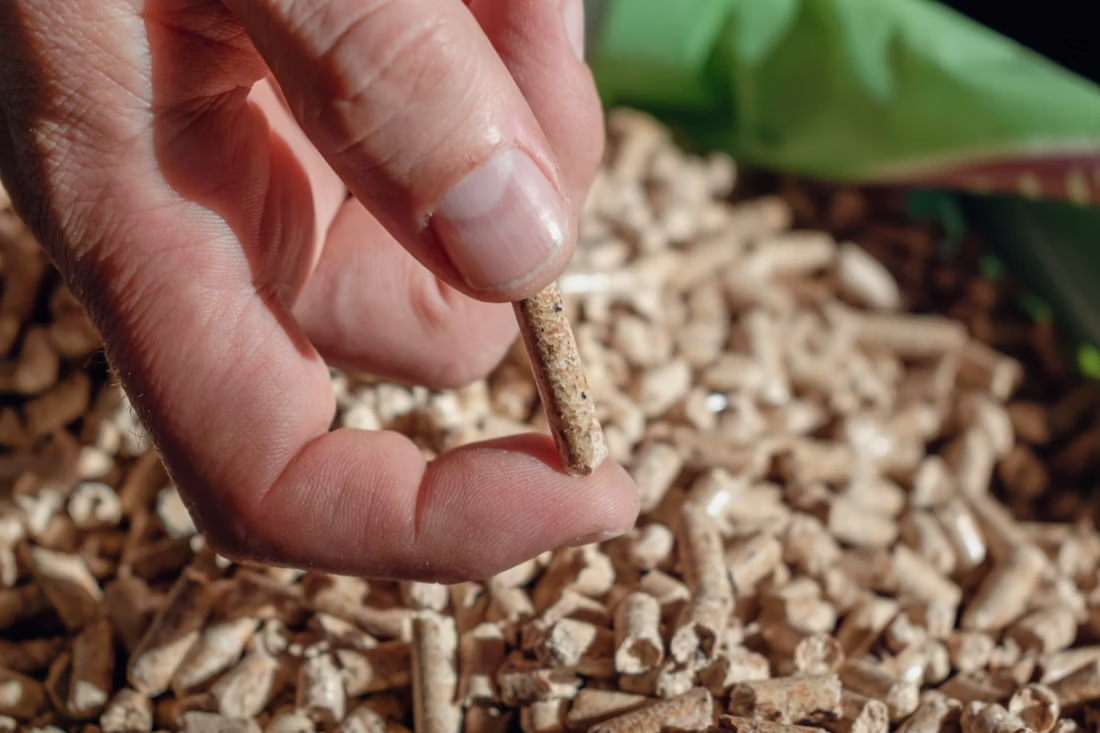
That's exactly the niche pellet appliances fill well. With no air quality non-attainment concerns in Claiborne County, there's no curtailment schedule to worry about—you load the hopper, set the thermostat, and the stove runs clean without the smoke management that wood-heavy counties in the West have to navigate. Regional suppliers like Lignetics, Hamer Pellet Fuel, and Greenway Renewable Energy draw on the same Southern yellow pine and hardwood timber that fills the county's oak, pine, and pecan stands, so fuel is regionally sourced rather than shipped in from out of state. For the mobile homes and modest-footprint farmhouses common across rural Claiborne County, a mid-size pellet stove or insert is often plenty—low ash, low creosote, and easy to walk away from once it's running.
Three steps. No salesperson until you're ready.
Tell us about your project
Your zip code, your situation, and the fuel you're leaning toward—or let the answers point you to one.
See what's actually available
The brands dealers within 100 miles genuinely carry—real options, never a catalog mirage.
Get your dealer & Project Guide
A trusted local dealer, plus the free Project Guide & Parts List that names every component of the job.
Frequently Asked Questions
How much does a pellet stove installation cost in Claiborne County?
A typical pellet stove or insert installation in Claiborne County runs roughly $3,000 to $6,000, depending on whether it's a freestanding unit on a new hearth pad or an insert going into an existing masonry fireplace, plus the length of PL-vent pipe needed to route through an exterior wall. Homes without an existing fireplace or hearth will run toward the higher end once framing and a code-compliant hearth pad are added. The Claiborne County Building Department requires a permit for the installation, and most dealers who sell the unit will handle that paperwork as part of the job.
What size pellet stove do I need for a home in Claiborne County?
Given the mild Zone 3A winters here, most Claiborne County homes don't need a large-capacity unit—a small to mid-size pellet stove (rated for 1,000 to 1,800 square feet) is usually enough, even for supplemental heat in an older farmhouse near Port Gibson or a manufactured home outside Lorman. Manufactured and mobile homes, which are common throughout the county, require a pellet stove specifically listed for mobile home installation along with additional clearance and anchoring—not every model qualifies, so this is worth confirming with a dealer before you buy. Homes used mainly for occasional cold snaps rather than daily heat can often go smaller than the square-footage chart suggests.
Where can I find a certified pellet stove installer near me?
Because Claiborne County's population is small and spread out, don't be surprised if the nearest hearth dealer with NFI-certified installers is based in Vicksburg or Natchez rather than in Port Gibson itself—that's normal for a county this size, and most dealers regularly service rural Mississippi River counties like this one. Expect a modest travel charge worked into the quote for jobs outside town limits. Look for NFI (National Fireplace Institute) certification specifically, since pellet appliance venting and hopper wiring differ from wood stove installation.
What's the difference between a pellet stove and a pellet insert?
A pellet stove is a freestanding unit that sits on a hearth pad and vents through an exterior wall with PL pipe—it can go almost anywhere in a room with the right clearances. A pellet insert is built to slide into an existing masonry fireplace opening, using a liner run up the existing chimney (or a through-wall vent kit) to convert an old wood-burning fireplace into an efficient, thermostatically controlled heat source. For the older homes around Port Gibson that still have a working masonry fireplace, an insert is often the cleaner option since it reuses what's already there.
Do I need a permit to install a pellet stove in Claiborne County?
Yes—a building permit is required through the Claiborne County Building Department for a new pellet stove or insert installation, mainly to confirm clearances, venting, and the hearth pad meet code. Unlike counties dealing with winter inversion or wildfire smoke non-attainment status, Claiborne County has no air quality restrictions on solid-fuel appliances, so there's no curtailment schedule or burn-ban season to plan around here. Most local dealers include the permit process as part of the installation.
What pellet brands are available in Claiborne County?
Lignetics, Hamer Pellet Fuel, and Greenway Renewable Energy are the regional brands most commonly stocked by dealers serving southwest Mississippi, and all three source from Southern pine and hardwood sawmill byproduct rather than trucking pellets in from the Northeast or Pacific Northwest. Softwood pellets (pine-based) burn hotter with more ash; hardwood pellets burn a bit cooler and cleaner. Given the oak, pine, and pecan mix that dominates local timber, either type is easy to source locally—ask your dealer which blend their stock stove is calibrated for, since burn settings vary by pellet density.
How do I buy and store pellet fuel in Claiborne County?
Pellets are sold by the 40-pound bag or by the ton (roughly fifty bags), with a ton typically covering most of a mild Claiborne County heating season for supplemental use. Given the region's humidity, store bags off the ground on pallets and under cover—moisture is the main enemy of pellet fuel, and swollen or crumbling pellets won't feed properly through the auger. A garage, carport, or covered porch works fine; an open, uncovered stack outdoors will absorb humidity even without direct rain.
Will my pellet stove work during a power outage?
No—pellet stoves rely on an electric auger to feed fuel and a blower to distribute heat, so they shut down when the power does. That matters in Claiborne County, where summer thunderstorms and the occasional ice event or hurricane remnant moving up from the Gulf can knock out power for a stretch. Some homeowners pair a pellet stove with a small battery backup or portable generator sized for the stove's low wattage draw (usually under 500 watts) specifically to keep heat running through an outage. If backup heat during outages is a priority, ask your dealer about a UPS or generator-ready hookup, or consider a wood-burning option as a supplement.
Pellet vs. wood—which is right for my Claiborne County home?
Wood stoves burning local oak, pine, or pecan cordwood work without electricity and give the classic fire experience, but they require cutting, splitting, stacking, and regular chimney sweeping. Pellet stoves are simpler day to day—load the hopper, set the thermostat, and let it run—with less ash and no chimney creosote buildup, which suits Claiborne County's short, mild heating season where most homeowners want occasional convenient warmth rather than a daily wood-tending routine. The tradeoff is that pellet stoves need grid power to operate, while wood doesn't. For a lot of homes in the county, wood remains the backup and pellet becomes the everyday choice.
How often does a pellet stove need cleaning?
A clean pellet stove is a happy pellet stove. Plan on cleaning the burn pot about once a week when you're burning regularly—ash and clinkers gum up the air holes just like a pellet barbecue. Most pellet stove problems trace back to skipped cleaning that nobody explained up front. Some designs make it easy with a trapdoor burn pot: pull a lever and the gunk drops into the ash pan.
Why is my open fireplace making my house colder?
Open fireplaces suck—literally. As the fire burns, it consumes air your furnace already paid to heat and pulls it out through the chimney, so the house is actually colder after the fire goes out than before you lit it. An insert fixes this: it seals the chimney, puts fixed glass across the front, and turns that hole in your house into a real heat source.
Can a fireplace actually lower my heating bill?
Yes—by creating a comfort zone. A furnace heats every square foot of the house just to warm the one room you're in; a gas fireplace on low burns roughly a sixth of the gas a typical furnace does. Set the furnace around 55–60 degrees as a baseline, then heat the rooms your family actually uses. Families who heat this way commonly save $20–$60 a month.
Does a fireplace add value to my home?
On average, a fireplace adds back to the home about the same amount you spent installing it. Add the monthly savings from heating the rooms you actually use instead of the whole house—often hundreds of dollars a year—and the value case is strong before you even count what a fire does for how your family uses the room.
Pellet Brands Stocked Around Claiborne County
Manufacturers will point you to the nearest stocking dealer.
Find your pellet stove in Claiborne County.
Tell us a bit about your home and we'll match you with a trusted local dealer and send over a free Project Guide & Parts List—the exact stove or insert, vent kit, and installation plan for your Claiborne County home.
Find Your Fireplace →