
Set it, forget it—pellet heat for Wright County's long winters.
With 8,174 heating degree days and average winter lows near 4°F, Wright County homes need heat that runs reliably for months at a stretch. Find the right pellet stove or insert, and connect with a trusted local dealer from Buffalo to Monticello to Delano.
Every Project Starts From One of These Five Situations
Thermostat-driven heat without the wood-splitting.
Wright County sits just west of the Twin Cities metro along the I-94 corridor, stretching from Rockford and Hanover in the east through Buffalo, the county seat, out to Annandale and Cokato in the west. It's a county of exurban growth, working farmland, and hundreds of lakes—Buffalo Lake, Pelican Lake, John Lake—that draw both year-round residents and seasonal cabin owners. Winters here are long and genuinely cold: Climate Zone 6A, 8,174 heating degree days, and average lows around 4°F, with arctic outbreaks that push well below zero for days at a time, similar to what International Falls sees further north.
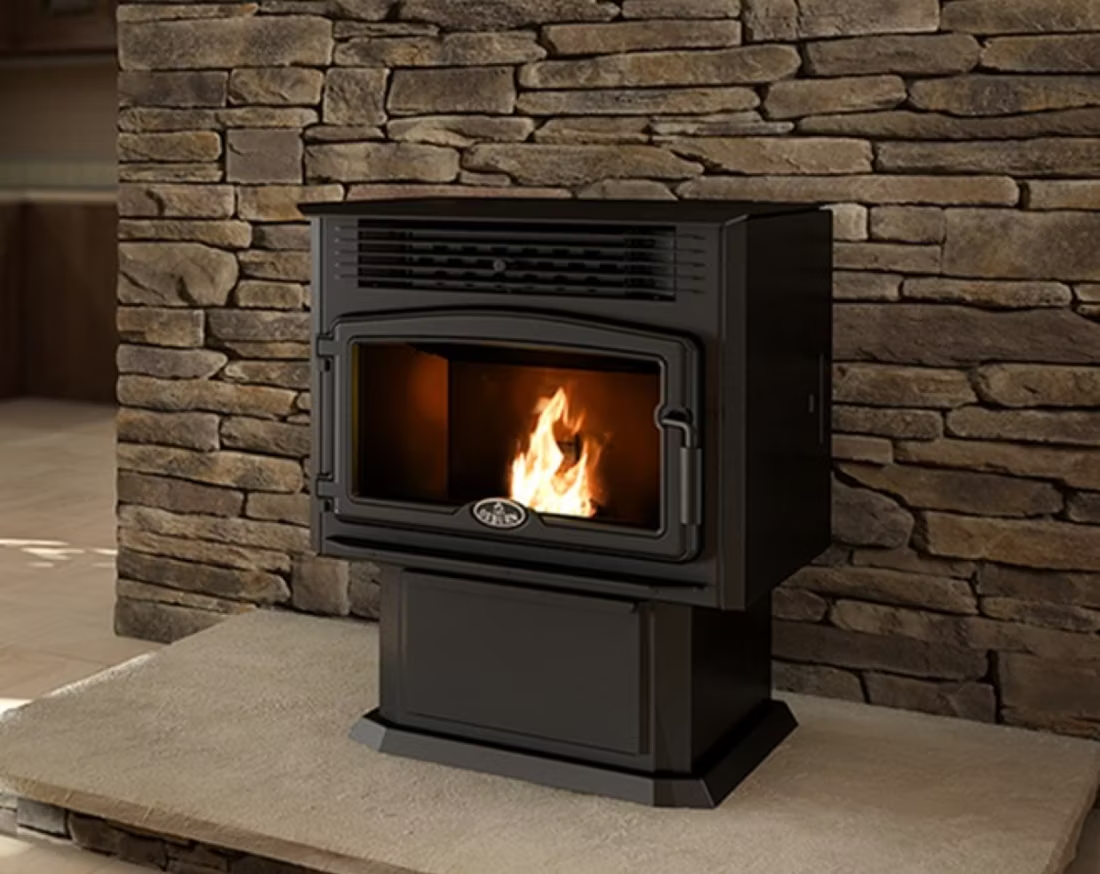
Pellet stoves have found a real foothold in Wright County because they match how people actually live here—commuting to the Cities, juggling kids' schedules, wanting heat that runs itself. Load the hopper, set the thermostat, and the auger and blower do the rest—no splitting oak or maple, no middle-of-the-night reloads. Regional pellet supply is solid too: Somerset Pellet Fuel is manufactured just across the St. Croix in Wisconsin, and brands like Lignetics and Indeck Energy Services are stocked at hearth shops and farm stores throughout the county. With no local air quality restrictions on solid-fuel burning, pellet stoves here are chosen for convenience and efficiency rather than to get around a burn ban.
Three steps. No salesperson until you're ready.
Tell us about your project
Your zip code, your situation, and the fuel you're leaning toward—or let the answers point you to one.
See what's actually available
The brands dealers within 100 miles genuinely carry—real options, never a catalog mirage.
Get your dealer & Project Guide
A trusted local dealer, plus the free Project Guide & Parts List that names every component of the job.
Frequently Asked Questions
How much does a pellet stove installation cost in Wright County?
Most pellet stove and insert installations in Wright County run somewhere between $3,000 and $6,000, depending on the unit, whether you're venting through an existing chimney or need a new through-wall vent kit, and whether a dedicated electrical circuit is required for the auger and blower motor. A pellet insert going into an existing masonry fireplace is usually on the lower end since it reuses the chimney chase; a freestanding stove in a new location, especially one needing a wall penetration and hearth pad, runs higher. Local dealers will give you a firm number after seeing your home.
What size pellet stove do I need for a Wright County home?
Sizing depends on square footage, insulation, and whether the stove is your primary or supplemental heat. With winter lows around 4°F and stretches that dip well below zero, Wright County homeowners generally want a stove with a hopper large enough to run 24-30 hours between loads—that matters when an arctic outbreak keeps temperatures in the negative teens for several days running. A small stove (up to 1,000 sq ft) suits a single room, cabin, or lake home used mainly on weekends; medium units (1,000-2,000 sq ft) cover most main living areas in Buffalo, Monticello, or Delano homes; larger units handle bigger, less-insulated farmhouses common in the county's rural townships.
Where can I find certified pellet stove installers near me?
Look for installers who handle both the venting and the electrical work—pellet stoves need a dedicated 110-volt circuit for the auger and blower, which is a step wood stoves don't require. Hearth dealers serving Wright County typically pull the local building permit as part of the job, whether that's through the city (Buffalo, Monticello, Otsego, and St. Michael each have their own building departments) or Wright County directly for rural township addresses. Ask any installer for proof of manufacturer training on the specific brand you're buying—pellet stove electronics and auger mechanisms vary more between brands than wood stoves do.
What's the difference between a pellet stove and a pellet insert?
A pellet stove is a freestanding unit that sits on a hearth pad and vents through an exterior wall or existing chimney chase—it can go almost anywhere in a room with the right clearances. A pellet insert is built to slide into an existing masonry fireplace opening, turning an old wood-burning fireplace into an automated, hopper-fed heat source. For Wright County's older farmhouses and lake cabins that already have a masonry fireplace, an insert is often the simpler retrofit. Homes without an existing fireplace, or new construction, are better suited to a freestanding stove.
Do I need a permit to install a pellet stove in Wright County?
Yes, in nearly every case. A pellet stove installation typically requires both a building permit and an electrical permit, since the unit needs a dedicated circuit. Depending on where you live, that permit is pulled through your city (Buffalo, Monticello, Otsego, St. Michael, Delano, and the other incorporated cities in the county each run their own building department) or through Wright County's building department for rural addresses outside city limits. Most hearth dealers handle the permit paperwork as part of the installation, so you're rarely the one filing it.
What's the best pellet stove for Wright County's climate?
For a climate with 8,174 heating degree days and regular sub-zero stretches, prioritize hopper capacity and BTU output over price alone. Larger-hopper units from brands like Harman and Quadra-Fire are common choices in the Upper Midwest because they can run 24 hours or more without a reload, which matters overnight when temperatures are in the negative teens. If the stove is your primary heat rather than a supplement to forced-air, size up rather than down—an undersized unit will run at maximum output constantly during Wright County's coldest weeks, which shortens component life. Ask your local dealer about hopper size and auger feed rate relative to your home's square footage before deciding.
Where can I buy pellet fuel in Wright County?
Wood pellets are widely available at farm supply stores, hardware stores, and hearth dealers throughout the county, with Lignetics and Somerset Pellet Fuel among the most common brands on shelves—Somerset's mill is just across the St. Croix River in Wisconsin, which keeps supply reliable and freight costs down for Minnesota dealers. Indeck Energy Services pellets also show up regionally. Expect to pay somewhere in the $250 to $320 per ton range depending on brand, bag size, and time of year—prices are typically lowest if you buy a season's supply (roughly 100-150 bags for an average heating season) in late summer before demand picks up.
Pellet stove vs. wood stove—which is right for my home?
Wood stoves burn cordwood—oak, maple, birch, and aspen are the common local species—and keep working during a power outage, which matters when a winter storm knocks out electricity across rural Wright County. Pellet stoves need electricity to run the auger and blower, so they go dark in an outage unless you add a battery backup. In exchange, pellet stoves offer thermostat control, longer unattended burn times, less mess, and no splitting or stacking. For Wright County's exurban commuter households and lake homes used intermittently, that convenience is usually the deciding factor. For rural properties where storm-related outages are a real concern, some homeowners keep a wood stove as backup alongside a pellet stove for daily use.
How much maintenance does a pellet stove need?
Pellet stoves need more frequent light maintenance than wood stoves but less deep cleaning. Plan on emptying the ash pan every few days during heavy use, cleaning the burn pot weekly to keep the auger feeding properly, and a full professional service once a year—checking the auger motor, blower, gaskets, and venting. Because pellet stoves have moving mechanical parts (auger motor, combustion blower, convection blower) that wood stoves don't, an annual service by a dealer familiar with your specific brand catches wear issues before they cause a mid-winter breakdown, which is the last thing you want during a Wright County cold snap.
How often does a pellet stove need cleaning?
A clean pellet stove is a happy pellet stove. Plan on cleaning the burn pot about once a week when you're burning regularly—ash and clinkers gum up the air holes just like a pellet barbecue. Most pellet stove problems trace back to skipped cleaning that nobody explained up front. Some designs make it easy with a trapdoor burn pot: pull a lever and the gunk drops into the ash pan.
Why is my open fireplace making my house colder?
Open fireplaces suck—literally. As the fire burns, it consumes air your furnace already paid to heat and pulls it out through the chimney, so the house is actually colder after the fire goes out than before you lit it. An insert fixes this: it seals the chimney, puts fixed glass across the front, and turns that hole in your house into a real heat source.
Can I install a fireplace myself?
If you're putting a fire in your house on purpose, it's best to work with an expert. Unless you're genuinely experienced in framing, gas line, vent pipe, and the national code on clearances to combustibles, have a professional do it—and ideally the same company that sells you the fireplace, so warranty, service, and liability all live under one roof.
What is an in-home preview and do I need one?
It's a visit where a hearth professional measures your space, confirms the model you picked actually works in your home, and walks the specs—framing, gas line, venting, finish work—before anything is ordered. Some details you just can't know until you see the house. Never make a down payment without one; it's the single most-skipped step that burns buyers.
Stove and Fireplace Dealers in Wright County
Pellet Brands Stocked Around Wright County
Manufacturers will point you to the nearest stocking dealer.
Find your pellet stove in Wright County.
Tell us about your home and heating goals, and we'll match you with a trusted local Wright County dealer plus a free Project Guide & Parts List—the exact parts, including the vent kit, for your pellet project.
Find Your Fireplace →