
Plug-in warmth for Wright County's long, cold winters.
With a long, demanding heating season and winter lows averaging 4°F, Wright County homeowners from Buffalo to Monticello use electric fireplaces to add real ambiance and zone heat to finished basements, bonus rooms, and primary suites—no gas line, no chimney, no permit headaches. Find the right unit and connect with a trusted local dealer.
Every Project Starts From One of These Five Situations
Instant ambiance for a genuinely cold climate.
Wright County sits in climate zone 6A on the northwest edge of the Twin Cities metro, and its winters are no joke—a long, demanding heating season and an average winter low of 4°F put it in the same company as Fargo, ND, for sustained cold. Homes in Buffalo, Monticello, Otsego, St. Michael, Delano, and Annandale have grown fast over the past two decades, and a lot of that new construction comes with finished basements, bonus rooms over garages, and primary suites that the main furnace doesn't quite reach evenly. That's where electric fireplaces have found their footing here—not as a replacement for the furnace, but as targeted supplemental heat and a focal point that doesn't require masonry work or a flue.
Electricity in Wright County runs through a mix of providers—Wright-Hennepin Cooperative Electric Association serves much of the county's rural and residential base, and Xcel Energy (headquartered a stone's throw from the Monticello Nuclear Generating Plant) covers parts of the eastern county. Either way, an electric fireplace plugs into a standard outlet or a dedicated 120V/240V circuit depending on size—no venting, no gas hookup, no annual chimney sweep. The tradeoff worth understanding upfront: electric units need power to run, so during the ice storms and grid outages that occasionally hit central Minnesota in January, an electric fireplace goes dark right along with the furnace. Homeowners who want backup heat for outages typically pair an electric unit for daily ambiance with a wood or gas appliance elsewhere in the house.
Three steps. No salesperson until you're ready.
Tell us about your project
Your zip code, your situation, and the fuel you're leaning toward—or let the answers point you to one.
See what's actually available
The brands dealers within 100 miles genuinely carry—real options, never a catalog mirage.
Get your dealer & Project Guide
A trusted local dealer, plus the free Project Guide & Parts List that names every component of the job.
Frequently Asked Questions
How much does an electric fireplace installation cost in Wright County?
Plug-in electric fireplaces and stoves—the kind that just need a standard 120V outlet—typically run $300 to $1,500 installed, with most of that being the unit itself and a couple hours of a handyman or homeowner's time to mount or set it. Built-in electric fireplaces or wall inserts that require a dedicated 240V circuit run higher, generally $1,500 to $3,500, once you factor in a licensed electrician to run the new circuit and any framing or trim carpentry. Because there's no venting or chimney involved, electric installs in Wright County are consistently the least expensive of any fuel type—a fraction of what a wood or gas install costs in the same house.
What size electric fireplace do I need for my room?
Electric fireplaces are rated for supplemental heat, not whole-home heating, so sizing is about the room, not the house. A typical 1,500-watt unit will comfortably supplement a 300 to 400 square foot room—enough for most finished basement rec rooms or primary suites common in newer Wright County subdivisions around Otsego, St. Michael, and Albertville. Larger open-concept spaces or rooms with vaulted ceilings may need two units or a higher-wattage built-in insert. Given how cold Wright County gets in January, don't expect an electric fireplace to keep a drafty bonus room warm on its own—it's meant to take the edge off, not replace the furnace run.
Do I need a permit to install an electric fireplace in Wright County?
Most plug-in electric fireplaces don't require any permit—they're treated like any other appliance you plug into an existing outlet. If your installation involves adding a new dedicated electrical circuit, relocating an outlet, or hardwiring a built-in unit into a wall, that electrical work does require a permit, typically pulled by your licensed electrician through the building department for whichever city you're in—Buffalo, Monticello, Otsego, and the other incorporated cities each handle their own permitting, while unincorporated parts of the county go through Wright County. A reputable installer will handle this as part of the job.
What's the difference between an electric fireplace, insert, and stove?
An electric fireplace is typically a built-in unit set into a wall or mantel surround, often with a realistic flame display and a heater rated for a specific room size. An electric insert is designed to slide into an existing masonry fireplace opening—a popular option for older Wright County farmhouses with a wood fireplace nobody uses anymore, since it converts the opening to clean, on-demand heat without any chimney work. An electric stove is a freestanding cabinet-style unit that can go anywhere near an outlet, similar in footprint to a wood stove but with none of the venting requirements. For most homeowners here, the choice comes down to whether you're filling an existing fireplace opening (insert) or adding heat and ambiance somewhere new (fireplace or stove).
Will my electric fireplace work during a power outage?
No—electric fireplaces require power to run both the heater and the flame effect, so they shut down the moment the grid does. This matters in Wright County, where winter ice storms and high-wind events occasionally knock out power for Wright-Hennepin Cooperative Electric Association and Xcel Energy customers for hours at a time. If backup heat during an outage is a priority for your household, an electric fireplace should be a secondary or ambiance-focused purchase, paired with a wood stove, wood insert, or battery-backed gas unit elsewhere in the home for actual emergency heat.
What's the best electric fireplace for a cold Minnesota home?
Look for units rated at the full 1,500-watt heater output (the practical maximum for a standard 120V circuit) if you want the fireplace to meaningfully supplement a room's heat, not just provide flame ambiance. Brands like Dimplex, Napoleon, and Amantii are common choices among Wright County dealers and offer realistic flame technology alongside genuinely useful heat output. For larger rooms or open floor plans typical of newer construction in Monticello and Otsego, a built-in insert on a dedicated 240V circuit will outperform a plug-in unit for actual heat delivery, though at a higher install cost.
How much does it cost to run an electric fireplace in Wright County?
A 1,500-watt electric fireplace running on high draws about 1.5 kWh per hour. At typical Wright-Hennepin Cooperative Electric Association and Xcel Energy residential rates in Minnesota, that works out to roughly 15 to 25 cents an hour of run time—noticeably cheaper per hour than most people expect, though it adds up if you run it as primary heat rather than supplemental. Most electric fireplaces also let you run the flame effect alone with the heater off, which uses only a few watts—useful for ambiance on the county's milder shoulder-season evenings without racking up a heating cost at all.
Electric vs. gas fireplace—which is right for my Wright County home?
Gas fireplaces put out considerably more heat—enough to genuinely offset furnace use in a room—and CenterPoint Energy natural gas service covers much of the county's more developed areas, with propane filling in for rural properties. Gas requires venting and a gas line, which means a real installation cost and a permit. Electric fireplaces cost far less to install, need no venting, and can go in literally any room with an outlet, but they're heat-limited and won't help you during a power outage. For a rec room or primary suite where you mainly want ambiance and light supplemental warmth, electric usually wins on cost and simplicity. For a main living area where you want the fireplace to actually carry some of the heating load through a Wright County winter, gas is the stronger choice.
Where can I get an electric fireplace installed near me in Wright County?
Several hearth and home retailers serve Wright County out of the Buffalo, Monticello, and Twin Cities metro area, and most carry electric fireplace lines alongside wood and gas options. For plug-in units, some homeowners handle the mounting themselves and just have a retailer deliver; for built-in inserts or anything needing a dedicated circuit, you'll want both a hearth dealer for the unit and a licensed electrician for the wiring—many local retailers coordinate both as part of the sale. A trusted local dealer will also be able to tell you honestly whether an electric unit will meet your heat expectations for the specific room, or whether gas is the better call.
Can I put a TV above my fireplace?
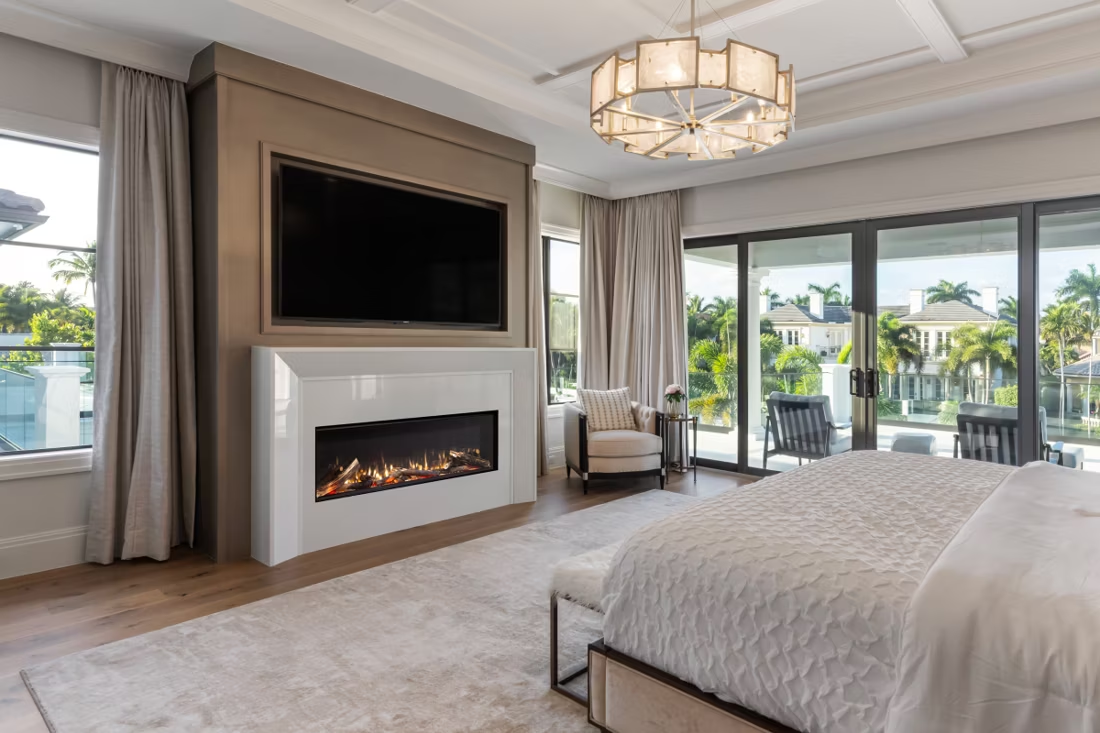
Yes—with an asterisk. Fireplaces are hot and TVs don't like heat. Either put a mantel between them to deflect rising warmth, or choose a fireplace with heat-management technology that creates a cool zone on the wall above—the wall stays around 125 degrees, barely warm, while the room still gets full heat. If you like clean lines and don't want a mantel, heat management is the answer.
How much does an electric fireplace cost to run?
With the heater on, a typical unit draws about 1,500 watts—at average electric rates that's roughly 20 cents an hour. Run the flame effect alone and it costs pennies; the flames are LED-driven and use about as much power as a light bulb. There's no pilot light, no fuel delivery, and essentially no maintenance.
Can I install a fireplace myself?
If you're putting a fire in your house on purpose, it's best to work with an expert. Unless you're genuinely experienced in framing, gas line, vent pipe, and the national code on clearances to combustibles, have a professional do it—and ideally the same company that sells you the fireplace, so warranty, service, and liability all live under one roof.
Can a fireplace actually lower my heating bill?
Yes—by creating a comfort zone. A furnace heats every square foot of the house just to warm the one room you're in; a gas fireplace on low burns roughly a sixth of the gas a typical furnace does. Set the furnace around 55–60 degrees as a baseline, then heat the rooms your family actually uses. Families who heat this way commonly save $20–$60 a month.
Stove and Fireplace Dealers in Wright County
Find your electric fireplace in Wright County.
Tell us a bit about your home and where you want added warmth, and we'll match you with a trusted local dealer and put together a free Project Guide & Parts List—the right electric fireplace, insert, or stove for your space, with the parts you need and who locally can install it.
Find Your Fireplace →