
Warm your Winona home with clean-burning pellet heat.
Thermostat-controlled warmth for the bluff-country winters along the Mississippi—without hauling firewood. Find the right pellet stove and connect with a trusted local dealer.
Every Project Starts From One of These Five Situations
Convenient heat for river-valley winters.
Winona sits low along the Mississippi River between the bluffs of southeastern Minnesota, at just 661 feet of elevation but squarely in Climate Zone 6A—with roughly 6,780 heating degree days a year and winter lows that average around 11°F. That's a milder profile than Fargo or Bismarck to the west, but still cold enough that supplemental heat matters for months at a stretch, especially in the older homes near downtown and the college neighborhoods where drafts are common.
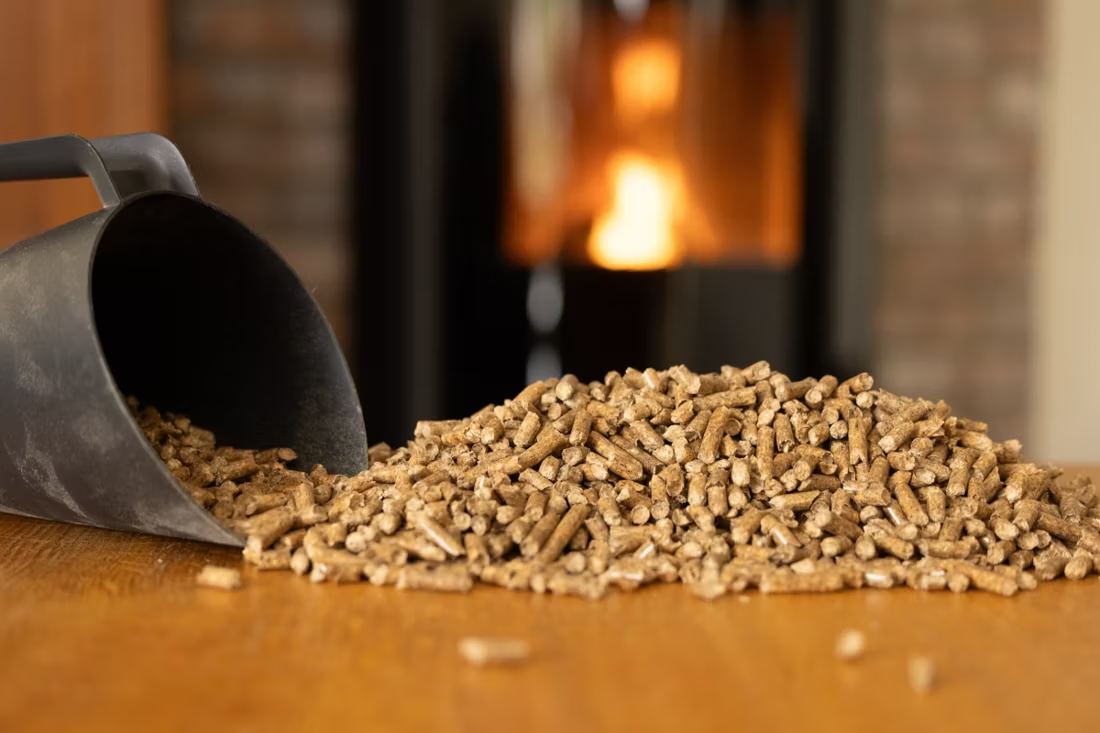
Pellet stoves have become a popular middle path for Winona homeowners who want real heat output without the wood-splitting, stacking, and chimney maintenance that comes with a traditional wood stove. Regional pellet producers including Lignetics and Wisconsin-based Somerset Pellet Fuel keep hardwood pellets reasonably accessible in the area, and a pellet stove's automated hopper and thermostat control make it a practical fit for a working household that wants set-it-and-forget-it warmth through a long Minnesota winter.
Three steps. No salesperson until you're ready.
Tell us about your project
Your zip code, your situation, and the fuel you're leaning toward—or let the answers point you to one.
See what's actually available
The brands dealers within 100 miles genuinely carry—real options, never a catalog mirage.
Get your dealer & Project Guide
A trusted local dealer, plus the free Project Guide & Parts List that names every component of the job.
Frequently Asked Questions
How much does a pellet stove installation cost in Winona?
Most pellet stove installations run in the range of $3,000 to $6,000 in this part of Minnesota, which is typically less than a comparable wood stove install because pellet stoves vent through a simple PL-rated through-wall pipe rather than a full masonry chimney. The exact number depends on the unit itself, whether you're installing into an existing fireplace opening as an insert, and how far the vent run has to travel through an exterior wall. A local dealer can give you a firm number after walking your space, but the lack of chimney work is usually the biggest cost saver for Winona homes without an existing flue.
What size pellet stove do I need for my Winona home?
With around 6,780 heating degree days and winter lows averaging 11°F, most Winona homes do well with a mid-size pellet stove rated for 1,200 to 2,000 square feet as a primary heat source, or a smaller unit if you're just supplementing a furnace in one drafty room. Older homes near the bluffs and closer to the river often have less insulation than newer construction farther from downtown, so a dealer walking through your actual square footage, ceiling height, and window count will get you a more accurate number than a size chart alone.
Will my pellet stove work during a power outage?
Not without backup power. Unlike a wood stove, a pellet stove's auger and combustion blower run on electricity supplied by Northern States Power (Xcel Energy) here in Winona, so a grid outage shuts the stove down even with a full hopper. The draw itself is modest—typically 100 to 400 watts—which means a small portable generator or a battery backup unit can keep a pellet stove running through most outages without much strain. If reliable heat during ice storms or extended power loss is a priority, ask your local dealer about battery backup options, or consider a wood stove as a secondary appliance.
Where can I buy pellets locally near Winona?
Hardwood pellets are generally available through hearth retailers and farm supply stores in and around Winona, with regional brands like Lignetics and Wisconsin-based Somerset Pellet Fuel common on shelves in this part of the Upper Midwest. Premium hardwood pellet pricing in the region typically runs somewhere in the $250 to $300 per ton range, though it fluctuates with wood pellet demand each winter. Buying a season's supply—usually 2 to 3 tons for an average home—in late summer or early fall before demand spikes is the standard local strategy for avoiding shortages in January.
Pellet stove vs. wood stove—which is right for my Winona home?
Wood stoves burn local hardwoods like oak, maple, birch, and aspen—species that are widely available around Winona and the surrounding bluff country—and they keep working with zero electricity, which matters if a winter storm knocks out power for days. Pellet stoves trade that off-grid resilience for real convenience: load the hopper, set the thermostat, and the stove maintains a steady temperature without the daily tending a wood stove needs. For a household without easy access to split firewood or storage space for a woodpile, pellet is usually the simpler fit. For a rural property near the bluffs with room to stack wood and a priority on power-outage backup, wood is worth a serious look.
What's the difference between a pellet stove and a pellet insert?
A pellet stove is a freestanding unit that sits on the floor and vents through an exterior wall or existing chimney—it can go almost anywhere with a nearby outside wall. A pellet insert is built to slide into an existing masonry fireplace opening, using your current chimney as the vent path while sealing off the old open hearth for much better efficiency. For Winona homes with an existing wood-burning fireplace that rarely gets used because of the hassle of tending it, an insert is often the more straightforward upgrade. For homes without a fireplace already in place, a freestanding stove is the more common route.
Do I need a permit to install a pellet stove in Winona?
Yes—a building permit through the City of Winona's building inspections office (or Winona County if you're outside city limits) is standard for a new pellet stove installation, mainly to confirm the venting and clearances meet code. Most local hearth dealers handle this paperwork as part of the installation, so it's rarely something homeowners have to navigate on their own. Unlike some wood-burning regions, Winona has no air quality non-attainment designation or winter burn restrictions, so there's no curtailment schedule to worry about once the stove is installed.
How much maintenance does a pellet stove need?
Pellet stoves need more regular attention than a furnace but far less than a wood-burning chimney. Expect to empty the ash pan every few days to weekly depending on use, clean the burn pot and glass every week or two during the heating season, and have a full professional cleaning and inspection of the venting and combustion blower once a year—typically before the season starts in early fall. Because pellet fuel burns cleaner than cordwood, there's no chimney creosote to worry about, but the mechanical components (auger motor, blower, igniter) do wear over years of daily use and benefit from that annual once-over.
What's the best pellet stove for Winona's climate?
For a winter climate that regularly sits at or below freezing for months, look for an EPA-certified pellet stove with a hopper large enough to run 24 to 40 hours between refills—brands like Harman and Lopi are common choices among local dealers for exactly that reason, since nobody wants to refill a hopper at 2 a.m. during a January cold snap. A stove with a reliable auto-ignition system and a real thermostat (rather than just a heat-level dial) makes the biggest practical difference for day-to-day comfort in a Winona home through a long heating season with 6,780-plus degree days.
How often does a pellet stove need cleaning?
A clean pellet stove is a happy pellet stove. Plan on cleaning the burn pot about once a week when you're burning regularly—ash and clinkers gum up the air holes just like a pellet barbecue. Most pellet stove problems trace back to skipped cleaning that nobody explained up front. Some designs make it easy with a trapdoor burn pot: pull a lever and the gunk drops into the ash pan.
What's the difference between an insert and a zero-clearance fireplace?
An insert is a fireplace that slides into a pre-existing wood-burning fireplace—if you don't have one, there's nothing to insert it into. A zero-clearance fireplace is built into a framed wall, which makes it the answer for remodels and new construction. Simple test: existing masonry fireplace means insert; blank or framed wall means zero-clearance.
How much should I budget for a fireplace?
For an average home—covering the fireplace, the vent pipe, and basic installation—a budget between $3,900 and $5,500 gives you a lot of options across wood, gas, and pellet. By the time you add finish work, gas line, and electrical, the average complete installation lands between $5,000 and $12,000 all-in. In a remodel or new build, a good rule is to put about 2.5% of the total project cost toward the fireplace.
Should the dealer who sells my fireplace also install it?
Ideally, yes. A fireplace project involves vent pipe, gas line, electrical, and often tile or stone. Hire three or four separate trades and you own the liability and the game of telephone between them. One company selling and installing means one accountable party, start to finish—ask about factory training, on-time completion records, and what happens if an inspection fails.
Pellet Brands Stocked Around Winona
Manufacturers will point you to the nearest stocking dealer.
Find your pellet stove in Winona.
Tell us a bit about your home and we'll match you with a trusted local dealer and send you a free Project Guide & Parts List—the exact stove, vent kit, and install plan for your Winona pellet project.
Find Your Fireplace →