
Instant warmth for Winona homes, no venting required.
From historic Victorians near downtown to newer builds on the bluffs, electric fireplaces give Winona homeowners real ambiance and zone heat without a chimney, gas line, or cordwood supply.
Every Project Starts From One of These Five Situations
Ambiance first, easy heat second.
Winona sits along the Mississippi River at just 661 feet of elevation, tucked between bluffs that give the city its distinct look—but they don't do much to soften the winters. With an average winter low around 11°F and a long, demanding heating season typical of the Upper Midwest, Winona sees a real cold season, on par with Madison or Duluth. Wood and gas remain common heating choices here, but electric fireplaces have carved out a solid niche, especially in the city's many historic homes, downtown apartments, and newer condo developments where running a chimney or gas line isn't practical.
Winona is served by Northern States Power Co – Minnesota (Xcel Energy), with a residential rate around $0.17 per kWh—a bit above the national average, but still cheap enough that an electric fireplace on flame-only mode costs pennies an hour to run. The tradeoff is heat output: most units draw around 1,500 watts and are built for zone heating one room, not replacing a furnace during a January cold snap. For a lot of Winona homeowners—renters who can't touch the chimney, owners of a Victorian with a bricked-up firebox, or anyone who wants a fireplace in a bedroom or basement without new gas plumbing—that tradeoff is an easy one to make.
Three steps. No salesperson until you're ready.
Tell us about your project
Your zip code, your situation, and the fuel you're leaning toward—or let the answers point you to one.
See what's actually available
The brands dealers within 100 miles genuinely carry—real options, never a catalog mirage.
Get your dealer & Project Guide
A trusted local dealer, plus the free Project Guide & Parts List that names every component of the job.
Frequently Asked Questions
How much does an electric fireplace installation cost in Winona?
Plug-in electric inserts and freestanding stoves are the cheapest option, often landing between $200 and $600 installed, since most just need a standard outlet—no permit, no electrician. Built-in wall units and mantel-style electric fireplaces run higher, typically $1,500 to $4,000, because they usually call for a dedicated 20-amp circuit, some framing or wall recessing, and an electrician to bring the line to code. There's no chimney or gas line work to budget for either way, which is the main reason electric installs come in well under wood or gas projects in Winona. A local dealer can give you a firm number after seeing your wall and electrical panel.
Can an electric fireplace actually heat my Winona home through the winter?
Not as a primary heat source—not with an average winter low of 11°F and a long, demanding heating season on the books. Most electric fireplaces top out around 1,500 watts, which works out to roughly 5,000 BTU—enough to comfortably warm a single room or open living area, but nowhere close to what's needed to carry a Winona home through a stretch of sub-zero nights the way a furnace or a wood stove can. Think of it the same way you would in Fargo or Duluth: electric fireplaces are excellent supplemental heat and full-time ambiance, but they're not a substitute for your home's primary heating system.
What's the difference between an electric insert, a built-in, and a wall-mount unit?
An electric insert is sized to slide into an existing masonry firebox—a common project in Winona's older homes near the Historic District, where a bricked-up or unused wood fireplace gets a second life without touching the chimney. A built-in electric fireplace is framed into a wall like a traditional fireplace, giving you a full mantel surround in a room that never had a fireplace before. A wall-mount unit hangs directly on the wall like a large TV and needs the least construction of the three. For a Victorian with an existing firebox, an insert is usually the simplest and most cost-effective route; for a new build or a room with no existing masonry, built-in or wall-mount makes more sense.
Do I need a permit or an electrician to install an electric fireplace in Winona?
A simple plug-in unit that runs off a standard 120-volt outlet doesn't require a permit or an electrician—it's no different than plugging in a space heater. Built-in and wall-mount units that need a dedicated circuit are a different story: that work falls under the National Electrical Code and typically requires a licensed electrician, and depending on scope, an electrical permit through the City of Winona or Winona County. Most local hearth dealers either employ a licensed electrician or coordinate directly with one, so you're not left tracking down separate trades yourself.
How much does it cost to run an electric fireplace with Xcel Energy rates?
At Winona's residential rate of roughly $0.17 per kWh through Northern States Power – Minnesota, running a 1,500-watt heater on high costs about 25 cents an hour. Most units let you run the flame effect alone, without the heater engaged, which draws only 30 to 100 watts—a few cents an hour for ambiance with no heat output at all. That's the appeal for a lot of Winona homeowners who want a fireplace look in a bedroom, den, or basement year-round without worrying about the electric bill.
Can I convert an old wood-burning fireplace to electric in my Winona Victorian?
Yes, and it's one of the more common electric projects in Winona's older housing stock, especially in homes near the Historic District built with ornate mantels and masonry fireboxes that haven't seen a real fire in decades. An electric insert slides into the existing opening, uses the outlet or new dedicated circuit for power, and requires no chimney liner, no venting, and no cleanout work. The original mantel and surround stay exactly as they are—you're just swapping what sits inside the firebox. It's a popular way to bring a non-functional fireplace back to life without the cost of a full masonry restoration.
Electric vs. wood or gas—which fuel makes sense for my Winona home?
Wood has deep roots here—oak, maple, birch, and aspen are all common local species, and plenty of Winona homes still burn wood as a serious supplemental or backup heat source through the cold months. Gas offers instant, higher-output heat for homes already plumbed for it. Electric wins out when you don't have gas service to the room, don't want the upkeep of a chimney, or you're in a rental, condo, or apartment where venting simply isn't an option—Winona has plenty of all three, from downtown apartments to newer developments on the bluffs. If your priority is real ambiance with minimal installation hassle rather than serious heat output, electric is usually the right call.
What should I look for in an electric fireplace for a Minnesota home?
Look for a model with a separate flame-only setting (so you can run it year-round without heat), a thermostat rather than a simple on/off heater, and realistic flame technology—brands like Dimplex, Napoleon, and Touchstone all make units with LED flame effects that hold up well next to a real fire visually. If you're installing in a finished basement or a room with lower ceilings, check the unit's clearance requirements and BTU rating against the room's square footage so you're not disappointed by weak heat output on a genuinely cold Winona evening.
Will my electric fireplace work if the power goes out?
No—electric fireplaces are entirely dependent on power, so during an outage they shut off completely, unlike a wood stove or a battery-backed gas unit. Northern States Power – Minnesota's service in Winona is generally reliable, but winter ice storms and high-wind events can still knock out power for hours at a time. If backup heat during outages matters to you, it's worth pairing an electric fireplace for everyday ambiance with a wood stove or gas unit elsewhere in the house for the nights when the grid actually goes down.
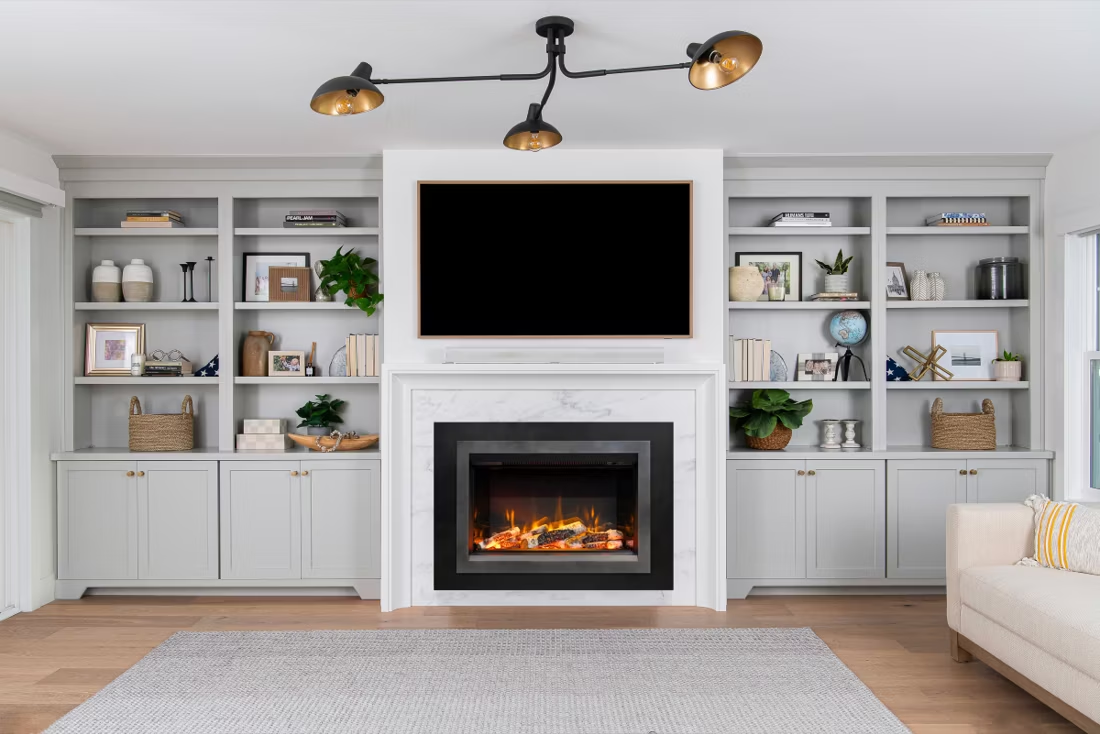
Can I put a TV above my fireplace?
Yes—with an asterisk. Fireplaces are hot and TVs don't like heat. Either put a mantel between them to deflect rising warmth, or choose a fireplace with heat-management technology that creates a cool zone on the wall above—the wall stays around 125 degrees, barely warm, while the room still gets full heat. If you like clean lines and don't want a mantel, heat management is the answer.
Does an electric fireplace need a vent or chimney?
No—that's its superpower. An electric fireplace needs a wall and an outlet, period. No vent pipe, no gas line, no clearances to design around, which is why it works in bedrooms, offices, apartments, and walls where venting a gas or wood unit would be impractical or impossible. Installation is typically the simplest and least expensive of any fireplace type.
Can I install a fireplace myself?
If you're putting a fire in your house on purpose, it's best to work with an expert. Unless you're genuinely experienced in framing, gas line, vent pipe, and the national code on clearances to combustibles, have a professional do it—and ideally the same company that sells you the fireplace, so warranty, service, and liability all live under one roof.
Can a fireplace actually lower my heating bill?
Yes—by creating a comfort zone. A furnace heats every square foot of the house just to warm the one room you're in; a gas fireplace on low burns roughly a sixth of the gas a typical furnace does. Set the furnace around 55–60 degrees as a baseline, then heat the rooms your family actually uses. Families who heat this way commonly save $20–$60 a month.
Electric Service in Winona
An electric fireplace's heater draws about 1,500 watts—pennies per hour at local rates.
Northern States Power Co - Minnesota
Find your electric fireplace in Winona.
Tell us about your room, your wall, and your electrical setup, and we'll match you with a trusted local Winona dealer and send over a free Project Guide & Parts List for your project.
Find Your Fireplace →