
Keep Your Family Warm and Safe—No Matter What
Vadnais Heights sees brutal winters—a long, hard heating season and average lows near 8°F—but most homes here heat with gas, not wood. For the homeowners who still want a stove, we'll connect you with a local dealer who knows how to do it right.
Every Project Starts From One of These Five Situations
Gas heat, not wood, defines winter here.
Vadnais Heights is a Twin Cities suburb in Ramsey County, built out mostly in the postwar and later decades with forced-air natural gas as the default heating system. The cold here is real—winters run about as long and harsh as Fargo or Duluth—but the housing stock and utility infrastructure were built around gas furnaces, not site-built masonry chimneys or wood stoves. Smaller suburban lots also make cutting, splitting, and storing a winter's worth of cordwood less practical than it would be on a rural acreage further out in Minnesota.
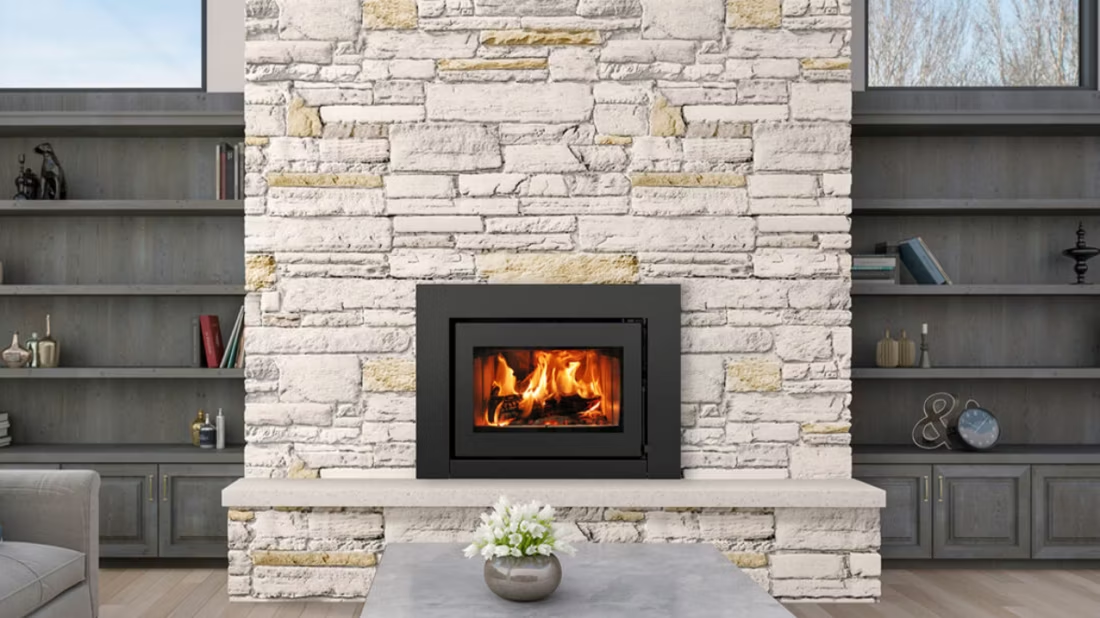
That said, wood heat hasn't disappeared entirely. A handful of homeowners in older sections of Vadnais Heights with existing masonry fireplaces install wood inserts for backup heat during ice storms and extended power outages, or simply because they like tending a real fire on a January night. Local hardwoods—oak, maple, birch, and aspen—are widely available from Minnesota firewood suppliers, so fuel isn't the obstacle. If you're one of the homeowners who wants wood heat despite the trend, a local dealer can walk you through what's actually feasible for your specific house.
Three steps. No salesperson until you're ready.
Tell us about your project
Your zip code, your situation, and the fuel you're leaning toward—or let the answers point you to one.
See what's actually available
The brands dealers within 100 miles genuinely carry—real options, never a catalog mirage.
Get your dealer & Project Guide
A trusted local dealer, plus the free Project Guide & Parts List that names every component of the job.
Frequently Asked Questions
Are wood stoves common in Vadnais Heights?
No—they're the exception rather than the rule. Most homes in Vadnais Heights heat with natural gas forced-air systems, and that's reflected in what local hearth dealers stock and install most often. When wood stoves do go in, it's usually one of two situations: an older home with an existing masonry fireplace getting a wood insert, or a homeowner specifically wanting backup heat that doesn't depend on the electrical grid. If that's you, it's still a straightforward project—it's just not the default around here the way it might be in a more rural part of Minnesota.
Why don't more homes in Vadnais Heights have wood-burning fireplaces?
A few factors line up against it. The suburb's housing stock was largely built with forced-air gas heat already standard, so far fewer homes have an existing chimney to work with. Lot sizes here are typical suburban dimensions—enough for a yard, not usually enough to comfortably store and season several cords of firewood year over year. And with reliable, relatively affordable gas service throughout the area, there's less of the self-sufficiency motivation that drives wood heat adoption in more rural or off-grid parts of the state.
If I still want a wood stove installed, what does it cost and who handles the permit?
Twin Cities-area installers typically quote somewhere in the $4,000 to $8,500 range for a full wood stove installation with proper Class A chimney venting, though costs run higher if there's no existing masonry chimney and one has to be built or a full new chase installed. Any new wood-burning appliance needs a building permit—for Vadnais Heights that runs through the City of Vadnais Heights Building Department, working in coordination with Ramsey County code requirements. Most local hearth dealers handle the permit paperwork as part of the installation, so it's not something you have to navigate alone.
What wood species should I plan to burn if I install a stove here?
Minnesota hardwoods are excellent stove fuel, and oak and maple are the standouts for a climate this cold—both are dense, burn long and hot, and hold coals well for a morning restart after an overnight burn. Birch lights easily and burns hot but faster, making it a good complement for shoulder-season fires. Aspen is lighter and burns quickly, useful as kindling or for a quick evening fire rather than an overnight load. With average winter lows around 8°F, you'll want oak or maple as your primary overnight fuel.
Is firewood easy to find near Vadnais Heights?
Yes. Minnesota has extensive hardwood forest cover, and firewood suppliers throughout Ramsey and neighboring counties sell seasoned oak, maple, birch, and aspen by the cord, generally in the range of $250 to $300 per cord for well-seasoned hardwood. Because wood heat is a minority choice here rather than the norm, you won't find the dense concentration of wood suppliers you'd see in a more rural Minnesota county—but sourcing a season's worth of dry cordwood is not a problem.
Does a wood stove make sense as backup heat for power outages?
This is actually the strongest case for wood heat in a suburb like Vadnais Heights. A standard gas furnace still needs electricity to run its blower and ignition system, so a power outage during a sub-zero cold snap or ice storm leaves a gas-heated home without heat too. A wood stove—the mechanical kind, not one with electronic controls—burns and radiates heat with zero electrical dependency. For homeowners who've been through a multi-day outage during a Minnesota winter storm, that's often the deciding factor for installing one even though most neighbors don't have one.
Are there smoke or air quality restrictions on wood burning in Vadnais Heights?
Vadnais Heights doesn't carry the air quality non-attainment designations or winter inversion issues you see in some western states—there are no listed local burn-ban or smoke advisory concerns tied to this area. That said, an EPA-certified stove is still worth choosing on its own merits: it burns more efficiently, uses less wood per BTU, and produces far less visible smoke, which matters in a suburban setting where houses sit closer together than in the country.
Wood vs. gas—which makes more sense for a home in Vadnais Heights?
For the vast majority of homes here, gas is the practical answer—it's what the housing stock and utility infrastructure were built around, it requires no fuel storage, and it heats a whole house evenly through the existing ductwork. Wood makes sense in narrower cases: a backup heat source that survives a power outage, an existing masonry fireplace you want to actually use for heat rather than ambiance, or simply a preference for real fire that a furnace can't replicate. Most homeowners who add a wood stove here are doing it alongside their gas system, not instead of it.
Where do I get a permit for a wood stove installation in Vadnais Heights?
New wood-burning installations require a building permit through the City of Vadnais Heights Building Department, in line with Ramsey County code requirements for solid-fuel appliances and chimney construction. A trusted local hearth dealer will typically pull the permit, size the venting correctly for your chimney height and home layout, and schedule the required inspection—which is one more reason to work with an installer who does this regularly rather than a general contractor for whom it's a rare job.
Why is a fireplace insert so efficient?
An insert does two things: it seals the chimney completely, so you stop losing air you already paid to heat, and it radiates warmth into the room through the firebox and glass. Most add a heat-exchange fan that pulls cool room air underneath, wraps it around the hot firebox, and pushes it back out warm. Your home is more efficient before you've even lit the first fire.
Why won't my new wood stove get going like my old one?
New wood stoves are 70%+ efficient, so far less heat goes up the flue—which also means less draft to get a fire established. The rule: build a genuinely hot fire for about 45 minutes before you choke it down. Skip that and you get smoke in the room, creosote in the chimney, and a fire that never takes off. Most performance complaints trace straight back to this.
How much should I budget for a fireplace?
For an average home—covering the fireplace, the vent pipe, and basic installation—a budget between $3,900 and $5,500 gives you a lot of options across wood, gas, and pellet. By the time you add finish work, gas line, and electrical, the average complete installation lands between $5,000 and $12,000 all-in. In a remodel or new build, a good rule is to put about 2.5% of the total project cost toward the fireplace.
Does a fireplace add value to my home?
On average, a fireplace adds back to the home about the same amount you spent installing it. Add the monthly savings from heating the rooms you actually use instead of the whole house—often hundreds of dollars a year—and the value case is strong before you even count what a fire does for how your family uses the room.
Nearby Dealers
Hearth shops serving Vadnais Heights and the surrounding area. Every listing shows whether it is a WhyFire partner, a dealer we have verified as authorized for the brands we recommend, or a local business carrying hearth products. No manufacturer pays for placement. How we verify dealers →
Fireside Hearth & Home - Roseville
The Chimney Pro’s Mn
Condor Fireplace & Stone
Custom Fireplace & Chimney Care
Fireside Hearth & Home - Eagan
Ferguson Enterprises
Glowing Hearth & Home - Coon Rapids
Fireplace Gallery, Inc.
Fireside Hearth & Home - Maple Grove
Fireside Hearth & Home - Minnetonka
Minnesota Gas Grills & Fireplaces
Pure Design Environments
2nd Generation Chimneys
Fireside Hearth & Home - Eden Prairie
Find your wood stove in Vadnais Heights.
Wood heat isn't the default in Vadnais Heights, but a trusted local dealer can tell you exactly what's feasible for your home. Tell us a bit about your project and we'll send you a free Project Guide & Parts List—the exact parts, including the vent kit, and our recommended local dealer.
Find Your Fireplace →