
Heat Your Home Through the Twin Cities' Coldest Nights.
Fireplace resources for Saint Paul and every city in Ramsey County—from Roseville to White Bear Lake. Find the right unit and connect with a trusted local hearth retailer.
Every Project Starts From One of These Five Situations
Gas heat runs Ramsey County through Twin Cities winters.
Ramsey County is Minnesota's smallest county by land area but its most densely built—anchored by Saint Paul, the state capital, and ringed by Roseville, Maplewood, White Bear Lake, Shoreview, Little Canada, North St. Paul, New Brighton, Arden Hills, Vadnais Heights, Mounds View, and a handful of smaller cities. Winters here average a 9°F overnight low with a heavy winter heating load in the same range as Fargo, ND. But unlike rural cold-climate counties that lean on wood heat, Ramsey County sits almost entirely within CenterPoint Energy's natural gas service territory, and its neighborhoods are built on small urban lots without room for woodpiles or pellet storage. Gas is the default fireplace fuel here, with electric filling in for supplemental warmth and ambiance in condos, secondary rooms, and newer multi-family buildings.
What you'll find on this hub: gas and electric hearth retailers, service technicians, and fuel suppliers serving every community in the county. Wood-burning fireplaces still exist as a legacy feature in older Ramsey County housing stock—Summit Avenue, Crocus Hill, and Como Park homes built in the early 1900s often retain original masonry fireplaces used occasionally for ambiance—but new wood stove installations are uncommon countywide. Pellet stoves see similarly little local demand for the same reason: full gas infrastructure and tight urban lots. Regional pellet suppliers like Lignetics and Somerset Pellet Fuel serve more rural corners of Minnesota and Wisconsin rather than the metro core. Pick your fuel below for dealer specifics, installation costs, and recommended units.
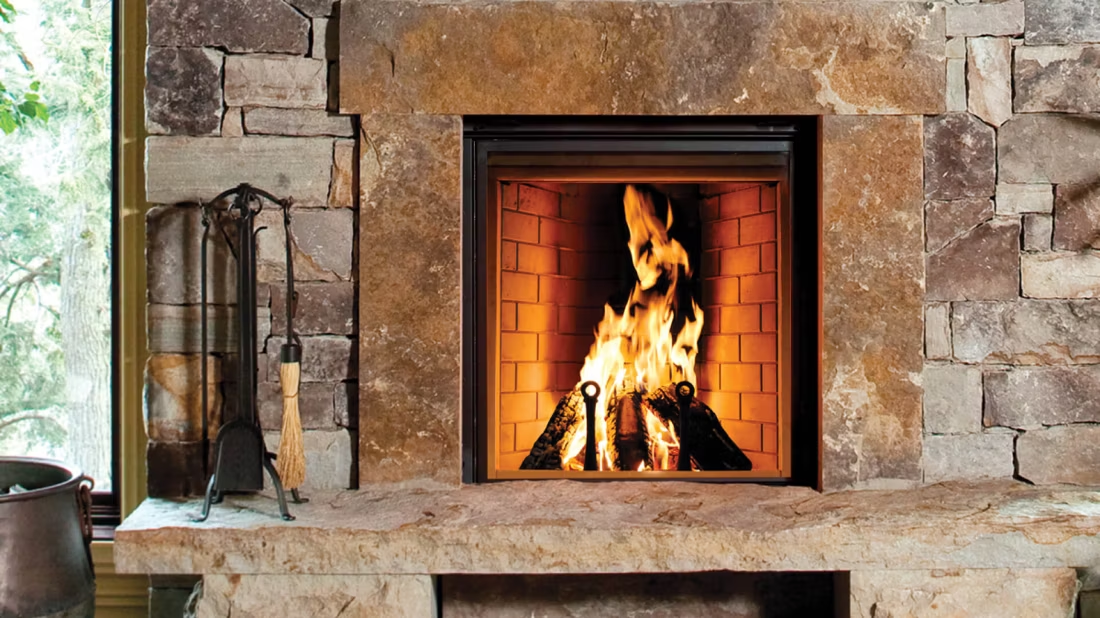
Four fuels. One honest answer for Ramsey County.
Three steps. No salesperson until you're ready.
Tell us about your project
Your zip code, your situation, and the fuel you're leaning toward—or let the answers point you to one.
See what's actually available
The brands dealers within 100 miles genuinely carry—real options, never a catalog mirage.
Get your dealer & Project Guide
A trusted local dealer, plus the free Project Guide & Parts List that names every component of the job.
Frequently Asked Questions
Which fuel works best in Ramsey County?
For most Ramsey County homes, gas is the practical default. CenterPoint Energy's natural gas network covers nearly the entire county, and a direct-vent gas fireplace or insert delivers reliable heat through the 9°F average winter lows without any wood handling or ash cleanup. Electric fireplaces work well as supplemental heat and ambiance—common in condos, apartments, and secondary rooms across Saint Paul, Roseville, and Maplewood—but they're not a primary heat source in a climate with such a heavy winter heating load. Wood-burning fireplaces still exist in older homes, particularly in Saint Paul neighborhoods like Crocus Hill and Como Park where original masonry fireplaces remain, but new wood installations are uncommon given lot sizes and the near-universal gas access. Pellet stoves see even less local uptake for the same reasons.
Are wood-burning fireplaces still installed in Ramsey County homes?
Rarely as new construction. Many of Ramsey County's older homes—especially in Saint Paul's Summit Avenue, Crocus Hill, and Highland Park areas, built in the early-to-mid 1900s—still have original masonry wood fireplaces, and homeowners there sometimes keep them functional for occasional ambiance burns using local oak, maple, birch, or aspen. But new wood stove or wood insert installations are uncommon across the county: lots are small, most homes are already on natural gas through CenterPoint Energy, and there's little of the rural wood-cutting infrastructure you'd find in a forested county further north. If you're restoring an existing masonry fireplace rather than installing new, a local chimney sweep can inspect the flue and advise on a compatible insert.
What about pellet stoves—are they available in Ramsey County?
Pellet stoves aren't a common home-heating choice in Ramsey County. With CenterPoint Energy gas service reaching nearly every neighborhood and most homes on small urban or suburban lots without space for pellet bag storage, there's little local demand for pellet appliances as primary heat. Regional pellet producers like Lignetics and Somerset Pellet Fuel supply the broader Minnesota-Wisconsin market, but that demand is concentrated in more rural counties, not the Twin Cities core. If you're set on pellet heat despite the fit, a hearth retailer that also handles gas can usually special-order a unit, but installation and fuel logistics will take more planning than a standard gas fireplace project here.
Do I need a permit for a gas or electric fireplace installation in Ramsey County?
Yes, in most cases. Gas fireplace, insert, and stove installations require a building permit plus a gas line permit, and the gas connection itself must be done by a licensed gas fitter—CenterPoint Energy requires this for any new gas appliance tie-in. Within Saint Paul, permits are issued through the Department of Safety and Inspections; in Roseville, Maplewood, White Bear Lake, and the county's other cities, permits go through each city's own building department. Electric fireplace installs typically don't need a permit for plug-in units, but built-in electric fireplaces that require new wiring or a dedicated circuit do need an electrical permit. Most local hearth retailers coordinate the permitting as part of the installation.
How cold does it get in Ramsey County, and does that affect fireplace choice?
Ramsey County averages a 9°F winter low with a heavy winter heating load comparable to Fargo, ND. That kind of cold is exactly why direct-vent gas fireplaces are popular here: sealed combustion units draw outside air and vent directly through an exterior wall, so they perform reliably regardless of wind or stack-effect issues that can affect older masonry chimneys in extreme cold. Electric fireplaces are unaffected by outdoor temperature since they don't vent at all, but they're realistically a supplemental-heat or ambiance choice given how much heating load the winters here demand—your furnace and gas fireplace are doing the real work.
What's the typical cost range for gas and electric fireplace installation in Ramsey County?
Gas fireplace, insert, or stove: roughly $4,500–$11,000 installed, with the lower end for homes already on CenterPoint Energy gas service near an existing appliance, and the higher end for new gas line runs or full masonry-to-gas conversions. Electric fireplace: $200–$3,000 for the unit itself, plus $400–$1,200 in labor for anything beyond a plug-and-play install—Xcel Energy service is standard throughout the county, so electric installs rarely involve utility upgrades. Restoring or servicing an existing wood-burning masonry fireplace runs separately and depends on chimney condition; ask a local sweep for an inspection quote before budgeting for any insert work.
What is an in-home preview and do I need one?
It's a visit where a hearth professional measures your space, confirms the model you picked actually works in your home, and walks the specs—framing, gas line, venting, finish work—before anything is ordered. Some details you just can't know until you see the house. Never make a down payment without one; it's the single most-skipped step that burns buyers.
Can a fireplace actually lower my heating bill?
Yes—by creating a comfort zone. A furnace heats every square foot of the house just to warm the one room you're in; a gas fireplace on low burns roughly a sixth of the gas a typical furnace does. Set the furnace around 55–60 degrees as a baseline, then heat the rooms your family actually uses. Families who heat this way commonly save $20–$60 a month.
Does a fireplace add value to my home?
On average, a fireplace adds back to the home about the same amount you spent installing it. Add the monthly savings from heating the rooms you actually use instead of the whole house—often hundreds of dollars a year—and the value case is strong before you even count what a fire does for how your family uses the room.
Can I install a fireplace myself?
If you're putting a fire in your house on purpose, it's best to work with an expert. Unless you're genuinely experienced in framing, gas line, vent pipe, and the national code on clearances to combustibles, have a professional do it—and ideally the same company that sells you the fireplace, so warranty, service, and liability all live under one roof.
Stove and Fireplace Dealers in Ramsey County
Listings include WhyFire partner dealers, dealers we have verified as authorized for the brands we recommend, and established local businesses that carry hearth products. Every listing shows which one it is. The ones marked Preferred run on WhyFire's software, so they can show you real pricing and book your appointment right here. No manufacturer pays for placement. How we verify dealers →
Fireside Hearth & Home - Roseville
Condor Fireplace & Stone
The Chimney Pro’s Mn
Custom Fireplace & Chimney Care
Fireside Hearth & Home - Eagan
Ferguson Enterprises
Glowing Hearth & Home - Coon Rapids
Fireside Hearth & Home - Minnetonka
Fireside Hearth & Home - Maple Grove
Fireplace Gallery, Inc.
Pure Design Environments
Minnesota Gas Grills & Fireplaces
Fireside Hearth & Home - Eden Prairie
2nd Generation Chimneys
Find your fireplace in Ramsey County.
Pick your fuel below and I'll match you with a trusted local dealer plus a free Project Guide & Parts List—the exact parts, vent kit, and recommended installer for your project in Ramsey County.'
Find Your Fireplace →