
Steady, automated heat for Steele County's long winters.
With winters comparable to Fargo, North Dakota and winter lows that regularly sit around 5°F, Steele County homes from Owatonna to Blooming Prairie need heat that doesn't quit. A pellet stove or insert delivers thermostat-set, hands-off warmth—matched to a trusted local dealer who can install it right.
Every Project Starts From One of These Five Situations
Consistent warmth built for a farm-country climate that doesn't let up.
Steele County sits in climate zone 6A, in the rolling farmland of south-central Minnesota—Owatonna at the county seat, with Medford, Blooming Prairie, and Ellendale spread across the surrounding townships. With an average winter low near 5°F, Steele County's cold season runs comparable to Fargo, North Dakota—long, and the kind of climate where a heating appliance either performs or it doesn't. Oak, maple, birch, and aspen fill the woodlots and shelterbelts across the county, and that same hardwood supply feeds the regional pellet industry many local homeowners now rely on.
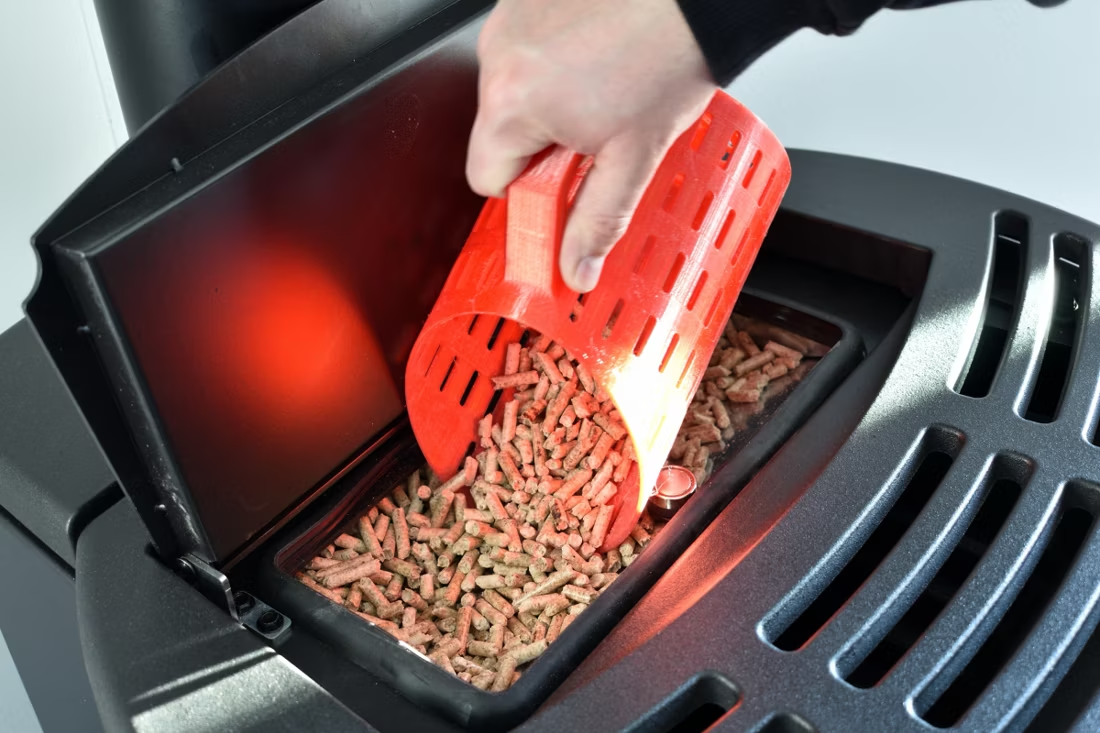
Pellet stoves have become a practical fit here because they solve a specific problem: consistent heat without babysitting a fire. Load the hopper, set the thermostat, and the auger feeds pellets automatically for hours at a stretch—useful on the farm, at a job in Owatonna, or through a stretch of subzero nights when nobody wants to be up at 2 a.m. reloading a firebox. Regional pellet brands including Indeck Energy Services, Lignetics, and Somerset Pellet Fuel supply the upper Midwest, and Steele County dealers typically carry stock or can order seasonally. With no local air quality non-attainment issues to navigate, pellet appliances here are chosen for convenience and steady output rather than burn restrictions.
Three steps. No salesperson until you're ready.
Tell us about your project
Your zip code, your situation, and the fuel you're leaning toward—or let the answers point you to one.
See what's actually available
The brands dealers within 100 miles genuinely carry—real options, never a catalog mirage.
Get your dealer & Project Guide
A trusted local dealer, plus the free Project Guide & Parts List that names every component of the job.
Frequently Asked Questions
How much does a pellet stove installation cost in Steele County?
Cost depends on the stove or insert model, whether you're venting through an existing masonry chimney or need a new through-wall pellet vent, and whether any electrical work is needed for the auger and blower motor. Because pellet stoves require a dedicated electrical outlet near the unit, homes without one nearby may need a small electrical run added to the job. Your local Steele County dealer will walk your home and give you a firm number—that's part of the free Project Guide & Parts List we put together once you're matched.
What size pellet stove do I need for a Steele County home?
Sizing depends on square footage, insulation, and whether the stove is your primary or supplemental heat. Steele County's climate—average winter lows around 5°F and winters comparable to Fargo, North Dakota—means most homes here need a mid-to-large capacity unit rather than a small supplemental stove, especially older farmhouses with less insulation than newer builds around Owatonna. A stove sized for a milder climate will run its auger constantly and still fall behind on the coldest nights; a local dealer will size to your actual square footage and construction, not a rule of thumb.
Do pellet stoves work during a power outage?
This is worth planning for in Steele County, where winter storms occasionally knock out rural power for hours or longer. Pellet stoves need electricity to run the auger, igniter, and blower—unlike a wood stove, they won't operate on their own during an outage. Some homeowners pair a pellet stove with a small battery backup or generator specifically to keep it running through a storm; a local dealer can tell you which models draw the least power and what backup setup makes sense for your situation.
Where do Steele County pellet stove owners buy pellets?
Regional producers including Indeck Energy Services, Lignetics, and Somerset Pellet Fuel supply much of the upper Midwest, and bags or bulk totes are typically available through local hardware stores, farm supply retailers, and hearth dealers around Owatonna and the surrounding towns. Pricing shifts with the season—buying in late summer or early fall before the first cold snap generally beats waiting until January when demand tightens up. A ton of pellets typically lasts a heating season for supplemental use, or considerably less if you're running the stove as primary heat through a Minnesota winter.
What's the difference between a pellet stove and a pellet insert?
A pellet stove is a freestanding unit that sits on its own hearth pad and vents through a wall or existing chimney—it can go almost anywhere in the house with the right clearances. A pellet insert is built to slide into an existing masonry fireplace, turning an old wood-burning fireplace into a sealed, thermostat-controlled heat source. For Steele County's older farmhouses with existing masonry fireplaces, an insert often makes sense because it reuses the chimney; for newer homes or rooms without a fireplace already in place, a freestanding stove is usually the simpler installation.
Do I need a permit to install a pellet stove in Steele County?
Most pellet stove and insert installations require a building permit, issued through your local city or township building department—Owatonna, Medford, Blooming Prairie, and the surrounding townships each handle their own permitting. The stove itself needs to carry EPA certification, and the vent run needs to meet manufacturer clearance specs. Most established hearth dealers handle the permit application as part of the installation, so you're not the one tracking down paperwork.
How often does a pellet stove vent need to be cleaned?
Pellet stove venting runs cooler and produces less creosote than a wood stove flue, but the vent pipe and exhaust still need an annual cleaning, along with regular ash removal from the burn pot and hopper. Plan on a professional inspection once a year—typically before the heating season starts in fall—and expect to clean the burn pot yourself every few days to weekly during heavy winter use. Skipping vent cleaning is the most common cause of reduced heat output and error codes on pellet units.
Why do pellet stoves make sense in a hardwood county like Steele?
Steele County's woodlots and shelterbelts are heavy with oak, maple, birch, and aspen—the same species that regional pellet manufacturers process into fuel. That local supply chain keeps pellets reasonably available in south-central Minnesota compared to regions that have to ship pellets in from farther away. It also means homeowners who already appreciate wood heat's efficiency but want to skip splitting, stacking, and hauling cordwood have a natural, locally-supplied alternative in pellet fuel.
Pellet stove vs. wood stove—which is right for my Steele County home?
Wood stoves work without electricity, which matters during winter power outages in rural Steele County, and cordwood—especially the oak and maple common here—burns hot and long once you've got a bed of coals going. But wood stoves require splitting, stacking, seasoning, and regular tending. Pellet stoves trade that manual work for thermostat control and a steady, even burn, at the cost of needing electricity to run the auger and blower. For a household that wants set-and-forget heat through a long Minnesota winter and doesn't mind an occasional generator backup, pellet often wins. For a household prioritizing outage-proof heat above all else, wood is the safer bet. Some Steele County homes end up with both.
Why is a fireplace insert so efficient?
An insert does two things: it seals the chimney completely, so you stop losing air you already paid to heat, and it radiates warmth into the room through the firebox and glass. Most add a heat-exchange fan that pulls cool room air underneath, wraps it around the hot firebox, and pushes it back out warm. Your home is more efficient before you've even lit the first fire.
What do I measure to size a fireplace insert?
Four numbers tell you what fits: the front width, the front height, the back width, and the overall depth of your existing fireplace opening. Grab a tape measure, jot those down, and snap a photo of the wall—those two things do more to move your project forward than anything else you can do today.
Can I install a fireplace myself?
If you're putting a fire in your house on purpose, it's best to work with an expert. Unless you're genuinely experienced in framing, gas line, vent pipe, and the national code on clearances to combustibles, have a professional do it—and ideally the same company that sells you the fireplace, so warranty, service, and liability all live under one roof.
What is an in-home preview and do I need one?
It's a visit where a hearth professional measures your space, confirms the model you picked actually works in your home, and walks the specs—framing, gas line, venting, finish work—before anything is ordered. Some details you just can't know until you see the house. Never make a down payment without one; it's the single most-skipped step that burns buyers.
Stove and Fireplace Dealers in Steele County
Pellet Brands Stocked Around Steele County
Manufacturers will point you to the nearest stocking dealer.
Find your pellet stove in Steele County.
Tell us about your home and we'll match you with a trusted local Steele County dealer and a free Project Guide & Parts List—the exact parts, vent kit, and installer recommendation for your pellet project.
Find Your Fireplace →