
Find the right electric fireplace for your Steele County home.
With a winter heating load nearly as heavy as Fargo or Bismarck and winter lows averaging 5°F, Steele County homes need heat that turns on instantly and doesn't ask you to think twice. We'll match you with a local dealer who knows what actually fits your space.
Every Project Starts From One of These Five Situations
Zone heat that works the moment you flip the switch.
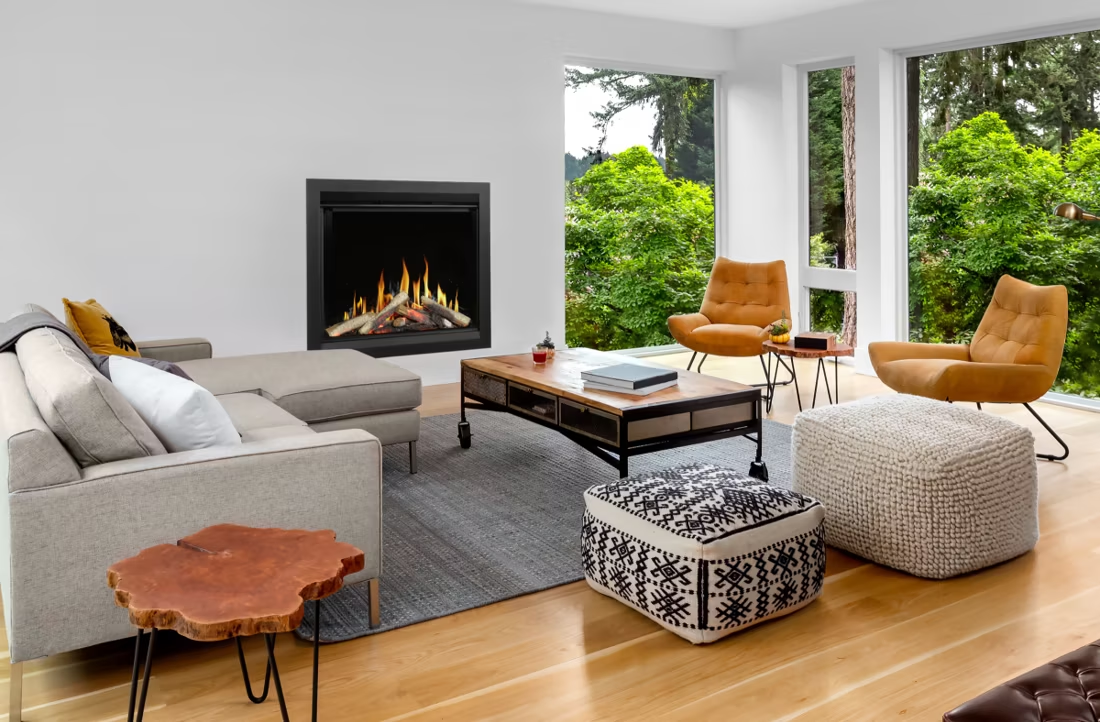
Steele County sits in climate zone 6A, with a winter heating load in the same range as Fargo or Bismarck, not the mild upper Midwest people picture. Winter lows average 5°F, and Owatonna, Blooming Prairie, and the smaller townships around them see long stretches where the furnace runs nearly nonstop. Electric fireplaces don't replace that furnace, but they're an increasingly common way to add supplemental warmth to a bonus room, finished basement, or bedroom without opening a wall for gas line or venting.
There's no chimney, no combustion byproducts, and no permit headaches tied to venting—most electric fireplace installs in Steele County are more electrical work than construction project, which keeps the typical install cost well below wood, gas, or pellet options. For a county without natural gas service in every township, an electric insert or built-in is often the simplest way to get real supplemental heat and fireplace ambiance into a room that a central system struggles to keep comfortable on the coldest January nights.
Three steps. No salesperson until you're ready.
Tell us about your project
Your zip code, your situation, and the fuel you're leaning toward—or let the answers point you to one.
See what's actually available
The brands dealers within 100 miles genuinely carry—real options, never a catalog mirage.
Get your dealer & Project Guide
A trusted local dealer, plus the free Project Guide & Parts List that names every component of the job.
Frequently Asked Questions
How much does an electric fireplace installation cost in Steele County?
Most electric fireplace installations in Steele County run between $400 and $1,200. A plug-in unit that simply sits in an existing opening or against a wall is on the low end—no electrician needed. A built-in electric fireplace or insert that requires a dedicated 120V or 240V circuit, wall framing, or a mantel surround runs toward the higher end, since that work typically calls for a licensed electrician. Compared to wood or gas installs in Owatonna, which routinely run $4,500 or more, electric is the budget option by a wide margin—which is part of why it's a popular add for finished basements and bonus rooms across the county.
Can an electric fireplace actually heat a room in a Steele County winter?
Most electric fireplaces put out 4,000-5,000 BTUs—enough to noticeably warm a single room of 400-1,000 square feet, but not enough to serve as primary heat in a county with winter lows averaging 5°F and a winter heating load nearly as heavy as Fargo or Bismarck. Think of it as zone heat: it's a strong assist for a home office over an unheated garage, a finished basement in Blooming Prairie, or a bedroom that runs cold at night, layered on top of your furnace rather than replacing it. If you're hoping to heat a whole living area as a backup during a furnace outage, a wood or pellet stove is a better fit for this climate.
Do I need a permit for an electric fireplace in Steele County?
Typically no, if you're installing a plug-in unit into an existing outlet—there's no combustion, no venting, and nothing that touches the county building code in the same way a wood or gas appliance does. If your installation requires a new dedicated circuit, most local electricians will pull an electrical permit as a matter of course, since that's standard practice for any new circuit work, not something specific to fireplaces. Built-ins set into a wall cavity may also involve a quick check with local building code if load-bearing framing is altered, but for the vast majority of Steele County installs, this is a same-day project without the permitting timeline that wood or gas requires.
What's the difference between an electric insert and an electric built-in?
An electric insert is sized to slide into an existing fireplace opening—including an old masonry firebox that's no longer used for wood burning—and typically just needs a nearby outlet. An electric built-in is designed to be framed into a wall like a real fireplace, often wider and with more finish options, and usually calls for a dedicated circuit run by an electrician. For Steele County homes with an existing but unused fireplace, an insert is the fast, low-cost route. For a new build or remodel in Owatonna where there's no existing firebox, a built-in gives you more design flexibility.
Is an electric fireplace a good option if the power goes out?
No—this is the one real tradeoff. Electric fireplaces are entirely dependent on grid power, so during a winter outage in Steele County, they provide no heat at all, unlike a wood stove that keeps working regardless. If backup heat during outages matters to your household, especially given how cold outages can get here, a wood stove or a gas unit with battery-backed ignition is a better fit as at least one heat source in the house. Many Steele County homeowners run electric for everyday convenience in a secondary room and keep a wood or gas appliance as the resilient option elsewhere.
What electric fireplace brands and features should I look for?
Look for units with a true heater rating (most quality electric fireplaces list 4,000-5,000 BTU/5,000 watts on the spec sheet, not just flame-effect wattage), a thermostat rather than just a high/low switch, and, for basements or bedrooms, a model with a quiet-running fan since these units get near-constant use in a long, hard winter climate like Steele County's. Local dealers typically carry a range of insert and built-in options and can tell you which models have held up well in regional cold-climate homes versus ones that are mostly flame-effect novelty pieces.
Will an electric fireplace lower my heating bill in Steele County?
It can, modestly, if used correctly—the savings come from zone heating, not from the unit being more efficient than your furnace. If you close the door to a home office or bonus room and run an electric fireplace there instead of heating that whole zone with the furnace, you can trim overall energy use during the shoulder seasons and milder cold snaps. But during Steele County's coldest stretches, when outdoor temps sit near or below 5°F, your furnace still needs to run to protect the rest of the house, so the fireplace is additive comfort rather than a wholesale replacement for the heating bill.
How does electric compare to wood heat for a Steele County home?
Wood heat, burning local oak, maple, birch, or aspen, delivers far more raw heat output and keeps working when the power's out—a real consideration given how cold outages get here. It also comes with chimney maintenance, ash cleanup, and a materially higher install cost, often $4,500 or more. Electric skips all of that: no venting, no combustion byproducts, an install that can run under $1,000, and instant on/off control, but it's strictly grid-dependent and limited to zone heating rather than whole-home backup. Many households in Owatonna and the surrounding townships use wood or pellet as their resilient heat source and add electric to rooms where running the woodstove doesn't make sense.
How long does an electric fireplace installation take?
A plug-in insert or freestanding unit is typically a same-day job—unbox, position, plug in. A built-in unit requiring a new dedicated circuit usually takes a full day once an electrician is scheduled, covering the circuit run, any wall framing, and the final fireplace mount. Compare that to a wood stove install in Steele County, which often involves permitting and chimney work stretched over one to two weeks, and electric is by far the fastest path to a working fireplace if timeline is your main constraint.
Can I put a TV above my fireplace?
Yes—with an asterisk. Fireplaces are hot and TVs don't like heat. Either put a mantel between them to deflect rising warmth, or choose a fireplace with heat-management technology that creates a cool zone on the wall above—the wall stays around 125 degrees, barely warm, while the room still gets full heat. If you like clean lines and don't want a mantel, heat management is the answer.
Do electric fireplaces actually produce heat?
Yes—most put out around 4,800–5,000 BTUs from a standard outlet, which comfortably warms a bedroom, office, or den as a comfort-zone heater. What they won't do is carry a whole house the way wood, gas, or pellet can. Think of electric as ambiance-first with honest supplemental heat: flames on with no heat in July, flames plus warmth in January.
How much should I budget for a fireplace?
For an average home—covering the fireplace, the vent pipe, and basic installation—a budget between $3,900 and $5,500 gives you a lot of options across wood, gas, and pellet. By the time you add finish work, gas line, and electrical, the average complete installation lands between $5,000 and $12,000 all-in. In a remodel or new build, a good rule is to put about 2.5% of the total project cost toward the fireplace.
What is an in-home preview and do I need one?
It's a visit where a hearth professional measures your space, confirms the model you picked actually works in your home, and walks the specs—framing, gas line, venting, finish work—before anything is ordered. Some details you just can't know until you see the house. Never make a down payment without one; it's the single most-skipped step that burns buyers.
Stove and Fireplace Dealers in Steele County
Get matched with a Steele County electric fireplace dealer.
Tell us about your room and we'll put together a free Project Guide & Parts List for your electric fireplace project, plus a match with a trusted local dealer in Steele County.
Find Your Fireplace →