
Steady Heat for the Iron Range's Long Winters.
From Duluth's hillside neighborhoods to Hibbing, Virginia, and Ely, St. Louis County runs one of the longest, coldest heating seasons in the country. Find the right pellet stove or insert, and get matched with a trusted local dealer who can actually install it.
Every Project Starts From One of These Five Situations
Consistent warmth without babysitting a fire.
St. Louis County is the largest county in Minnesota by land area, stretching from Lake Superior at Duluth up through the Iron Range towns of Hibbing, Virginia, Eveleth, and Chisholm, to Ely and the edge of the Boundary Waters. At Climate Zone 7 with a winter heating load nearly double that of a mild climate and an average winter low near 4°F, this county sits in the same cold-climate tier as International Falls just to the north—the kind of place where a heating appliance either performs through a full six-month season or it doesn't earn its keep.
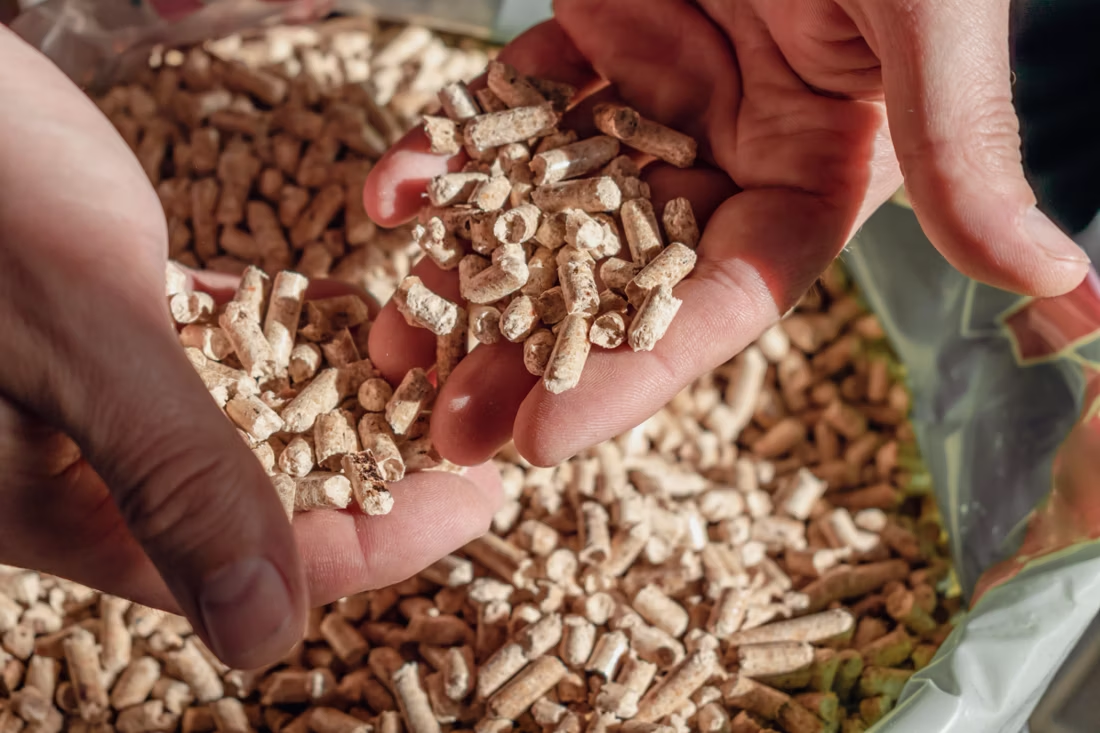
That's part of why pellet stoves have a real foothold here alongside traditional wood heat. Regional pellet manufacturers—Indeck Energy Services, Lignetics, and Somerset Pellet Fuel among them—keep hardwood pellets made from local oak, maple, birch, and aspen readily available across the Iron Range, so supply isn't the obstacle it can be in other parts of the country. With no local air quality restrictions or burn curtailment periods to navigate, a pellet stove here is mostly a question of fit: hopper size, burn time, and whether you want the thermostat-controlled convenience of auto-feed heat for a house that's cold from October into April.
Three steps. No salesperson until you're ready.
Tell us about your project
Your zip code, your situation, and the fuel you're leaning toward—or let the answers point you to one.
See what's actually available
The brands dealers within 100 miles genuinely carry—real options, never a catalog mirage.
Get your dealer & Project Guide
A trusted local dealer, plus the free Project Guide & Parts List that names every component of the job.
Frequently Asked Questions
How much does a pellet stove installation cost in St. Louis County?
Pricing depends on the unit, the venting path, and whether your home already has a dedicated 120V circuit for the auger and blower—most pellet stoves need one, and older Iron Range homes built during the mining era sometimes don't have the electrical capacity in place without an upgrade. A straightforward install into a home with an existing hearth pad and accessible exterior wall for venting is on the lower end; a full pellet insert conversion into an existing masonry fireplace, or new electrical work, pushes the total higher. Because exact costs vary by home, a local dealer will walk your space and give you a firm number—that's part of what we help arrange.
What size pellet stove do I need for a St. Louis County home?
With a winter heating season that runs long and hard, this county's cold stretch is long enough that undersizing a stove shows up fast—you'll be running it wide open for months instead of cycling comfortably. Smaller units work for a single room or a cabin near Ely or the Boundary Waters, but most primary living spaces in Duluth, Hibbing, or Virginia call for a mid-to-large stove with enough hopper capacity to hold a full overnight burn without a 2 a.m. refill. Older, less-insulated homes on the Range typically need to size up compared to newer construction with the same square footage—a local dealer can walk your home and get this right the first time.
Where can I find pellet stove dealers near me in St. Louis County?
Coverage runs the length of the county, from Duluth's hearth retailers down to shops serving Hibbing, Virginia, and Eveleth, with some dealers also reaching Ely and the more remote North Shore and Iron Range communities. Look for installers who handle both the stove sale and the venting/electrical work, since pellet stoves need correctly sized vent runs and a dedicated circuit—a mismatch on either front is the most common source of nuisance shutdowns. We match you with a trusted dealer covering your specific part of the county rather than pointing you at a general list.
What's the difference between a pellet stove and a pellet insert?
A pellet stove is a freestanding unit that sits on a hearth pad and vents through an exterior wall or existing chimney—it can go almost anywhere with the right clearances. A pellet insert is built to slide into an existing masonry fireplace opening, which is common in older Duluth and Iron Range homes that already have a wood-burning fireplace they no longer use. For those homes, an insert reuses the existing masonry and chimney chase, often with a shorter, simpler installation than a full freestanding stove in a new location.
Do I need a permit to install a pellet stove in St. Louis County?
In most cases, yes—a building permit and, if new wiring is involved, an electrical permit. Whether that goes through your city or the county depends on where you live: incorporated cities like Duluth, Hibbing, and Virginia issue their own permits, while unincorporated parts of the county go through St. Louis County's building and permitting office. Most established local dealers handle this paperwork as part of the installation, which is one of the practical advantages of working with a dealer over a DIY install.
What's the best pellet stove for St. Louis County's climate?
Look for a stove with a large hopper and a heat output rated for cold-climate, whole-home or near-whole-home use—at 4°F average winter lows and long stretches well below zero, a marginal unit will struggle to keep up. Because pellet stoves depend on electricity for the auger and blower, a battery backup or a small inverter setup is worth asking your dealer about, since ice and wind events do knock out power in this county during winter. Pellet availability isn't a concern here—hardwood pellets from Indeck Energy Services, Lignetics, and Somerset Pellet Fuel are sold widely across the region—so the decision mostly comes down to matching hopper size and BTU output to your home's actual heat loss.
How often should a pellet stove be cleaned and serviced?
Plan on emptying and vacuuming the ash pan and burn pot weekly during heavy use, and scheduling a full professional service—including the exhaust vent, hopper, and auger mechanism—at least once a year. Given how long the heating season runs here (October into April in most years), St. Louis County stoves see more cumulative burn hours than in most of the country, which means ash and clinker buildup happen faster than the owner's manual timeline might suggest for a milder climate. Staying ahead of it keeps the auto-ignition and feed system running reliably on the coldest nights, when you need it most.
Where can I buy pellets in St. Louis County?
Regional producers including Indeck Energy Services, Lignetics, and Somerset Pellet Fuel supply hardwood pellets—often milled from local oak, maple, birch, and aspen—to hearth shops and hardware stores throughout the county, from Duluth down through the Iron Range. Buying by the ton ahead of the season is standard practice here, both for pricing and to make sure you're not scrambling for pellets during a January cold snap. If you'd rather burn cordwood instead, Superior National Forest issues cutting permits for $10 to $20 per cord during the May-to-October season—a common backup or supplement for rural households in the county.
Pellet stove vs. wood stove—which is right for my St. Louis County home?
Wood stoves work without electricity, which matters here given how winter storms can take down power lines across the county's rural stretches—a real consideration when overnight lows sit near 4°F. They also pair naturally with Superior National Forest cutting permits for households willing to cut and season their own oak, maple, birch, or aspen. Pellet stoves trade that off-grid independence for consistent, thermostat-controlled heat and far less day-to-day tending—no splitting, stacking, or feeding logs by hand. For primary heat in town, where power is reliable, pellet is often the easier long-term choice; for rural properties near Ely or the Range where outages run longer, many households keep a wood-burning option as backup even if pellet is their daily driver.
Why is a fireplace insert so efficient?
An insert does two things: it seals the chimney completely, so you stop losing air you already paid to heat, and it radiates warmth into the room through the firebox and glass. Most add a heat-exchange fan that pulls cool room air underneath, wraps it around the hot firebox, and pushes it back out warm. Your home is more efficient before you've even lit the first fire.
Why is my open fireplace making my house colder?
Open fireplaces suck—literally. As the fire burns, it consumes air your furnace already paid to heat and pulls it out through the chimney, so the house is actually colder after the fire goes out than before you lit it. An insert fixes this: it seals the chimney, puts fixed glass across the front, and turns that hole in your house into a real heat source.
Can I install a fireplace myself?
If you're putting a fire in your house on purpose, it's best to work with an expert. Unless you're genuinely experienced in framing, gas line, vent pipe, and the national code on clearances to combustibles, have a professional do it—and ideally the same company that sells you the fireplace, so warranty, service, and liability all live under one roof.
How much should I budget for a fireplace?
For an average home—covering the fireplace, the vent pipe, and basic installation—a budget between $3,900 and $5,500 gives you a lot of options across wood, gas, and pellet. By the time you add finish work, gas line, and electrical, the average complete installation lands between $5,000 and $12,000 all-in. In a remodel or new build, a good rule is to put about 2.5% of the total project cost toward the fireplace.
Stove and Fireplace Dealers in St. Louis County
Pellet Brands Stocked Around St. Louis County
Manufacturers will point you to the nearest stocking dealer.
Find your pellet stove in St. Louis County.
Tell us about your home and heating goals, and we'll match you with a trusted local dealer serving your part of St. Louis County—plus a free Project Guide & Parts List with the exact components, including your vent kit, for your pellet stove project.
Find Your Fireplace →