
Warmth you can flip on, even when Embarrass hits 40 below.
No chimney, no venting, no wood to split—just clean supplemental heat for homes and cabins across St. Louis County, from downtown Duluth to Lake Vermilion. Tell us about your space and we'll connect you with a trusted local dealer.
Every Project Starts From One of These Five Situations
Clean, ash-free heat for the Iron Range's brutal winters.
St. Louis County is the largest county east of the Mississippi—nearly 6,900 square miles stretching from the Duluth waterfront on Lake Superior up through the Iron Range towns of Hibbing and Virginia to Ely and the edge of the Boundary Waters Canoe Area Wilderness. It sits in IECC Climate Zone 7, the coldest zone assigned to any part of the Lower 48, with an average winter low of 4°F and one of the longest, most demanding heating seasons in the country. The unincorporated community of Embarrass, also in St. Louis County, regularly posts some of the coldest overnight readings in the continental United States. This is not a climate where any single heat source does all the work.
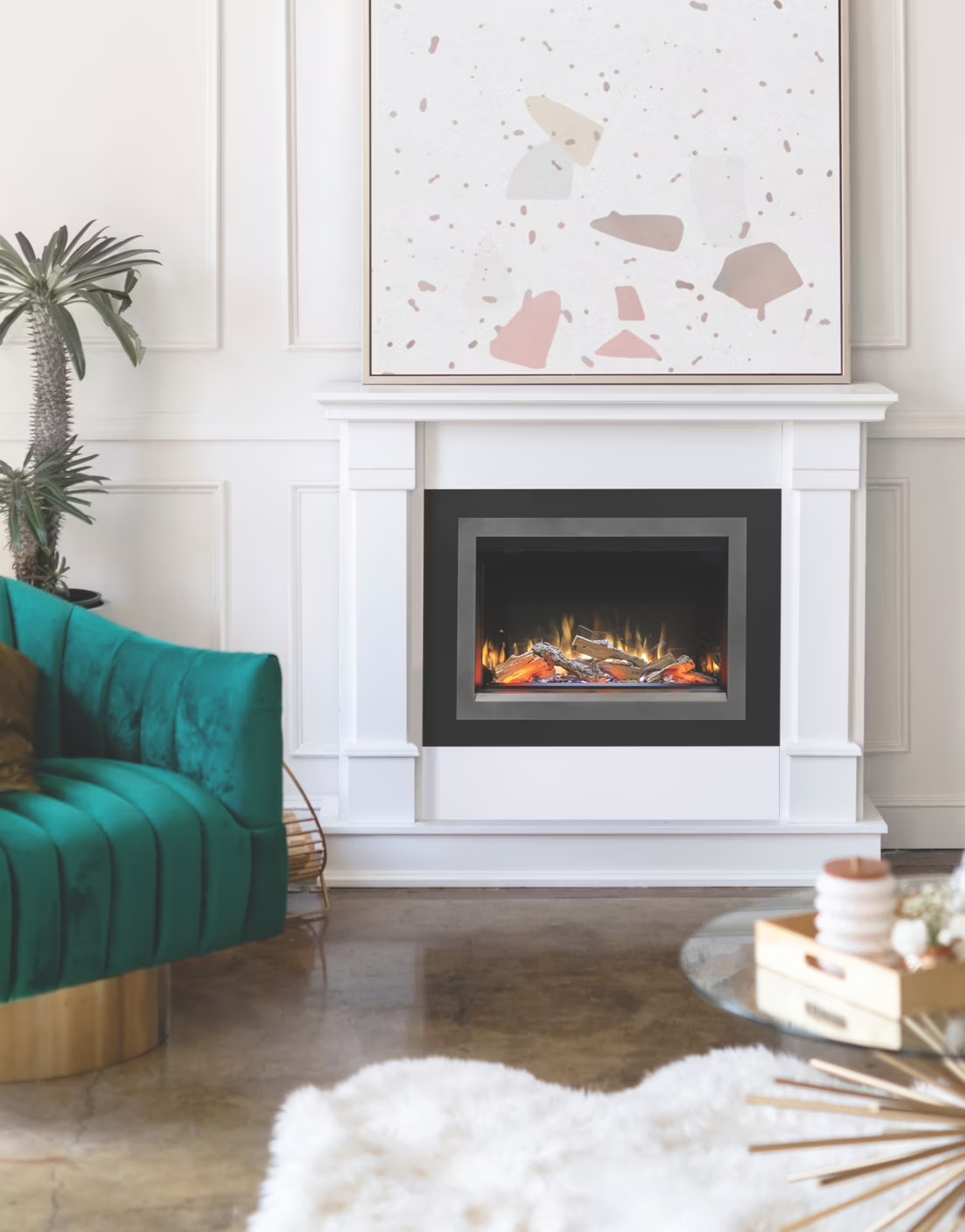
That's where electric fireplaces earn their place. Across the county's older Iron Range housing stock, Duluth apartments and condos without masonry chimneys, and seasonal cabins on Lake Vermilion or along the North Shore, an electric insert or built-in adds zoned, on-demand warmth without a permit fight, a venting project, or a wood supply to manage. Minnesota Power serves electric customers throughout the Duluth and Iron Range service area, and most homeowners here pair an electric fireplace with a primary heat source—propane, wood, or a forced-air furnace—rather than asking it to carry the whole house through a Zone 7 winter.
Three steps. No salesperson until you're ready.
Tell us about your project
Your zip code, your situation, and the fuel you're leaning toward—or let the answers point you to one.
See what's actually available
The brands dealers within 100 miles genuinely carry—real options, never a catalog mirage.
Get your dealer & Project Guide
A trusted local dealer, plus the free Project Guide & Parts List that names every component of the job.
Frequently Asked Questions
How much does an electric fireplace installation cost in St. Louis County?
Plug-in electric inserts and mantel units typically run $300 to $1,200 for the unit itself and can be set up in an afternoon with no permit or venting work—you're plugging into a standard outlet. Hardwired built-in units, wall-mount linear fireplaces, or units requiring a dedicated 240-volt circuit run higher, often $1,500 to $3,500 including electrical work, especially in older Iron Range homes where panel capacity may need to be checked first. Because there's no chimney, gas line, or Class A venting involved, electric is consistently the least expensive hearth upgrade available in the county. A local dealer can give you a firm number after seeing your electrical panel and the room.
What's the difference between an electric insert, electric stove, and built-in electric fireplace?
An electric insert is sized to slide into an existing masonry fireplace opening—common in older Duluth and Hibbing homes that already have a firebox but no interest in maintaining a wood chimney. A freestanding electric stove sits on the floor like a wood stove and works in homes or cabins with no existing fireplace at all. A built-in or wall-mount unit is framed into a wall, often as part of a remodel, and gives the cleanest, most modern look. For seasonal cabins around Lake Vermilion or the Boundary Waters edge, a simple plug-in stove or insert is usually the practical choice since there's no wiring infrastructure to build around.
Will an electric fireplace actually heat a room in a climate this cold?
Most electric fireplaces are built around a 1,500-watt heating element, which translates to roughly 5,000 BTUs—enough to comfortably warm a single room, but not enough to serve as primary heat in a county with one of the longest, most demanding heating seasons in the country. Think of it as supplemental, zoned warmth: a family room, a finished basement, or a bedroom that runs cold relative to the rest of the house. For whole-home heat through a St. Louis County winter, homeowners here still rely on a furnace, boiler, wood stove, or propane system as the backbone, with the electric fireplace adding comfort and ambiance where it's used most.
Do I need a permit to install an electric fireplace in St. Louis County?
A plug-in unit that runs off an existing outlet generally doesn't require a permit anywhere in the county. A hardwired built-in or wall-mount unit that needs new circuit work does typically require an electrical permit, pulled through your municipality's building department if you're inside city limits—Duluth, Hibbing, Virginia, and other incorporated towns each handle their own—or through the county for homes in unincorporated St. Louis County. Most dealers who handle hardwired installs will pull the electrical permit as part of the job.
What's the best electric fireplace for a cabin on Lake Vermilion or the North Shore?
For seasonal camps and cabins, look for a simple plug-in electric insert or stove rather than a hardwired built-in—it survives being powered off all winter without freeze concerns since there's no water or fuel line involved, and it can be up and running the moment you arrive for the weekend. Units with a realistic flame effect and a standalone heat-off setting are popular for cabin owners who want the visual warmth in summer without running the heater. Given the remoteness of much of the county's cabin country near the Superior National Forest and the Boundary Waters, the appeal is straightforward: no chimney to maintain, no wood to haul in, nothing that needs annual sweeping.
Can an electric fireplace serve as backup heat during a power outage?
No—and this is worth being direct about. Electric fireplaces run entirely on grid power, so if St. Louis County loses electricity during an ice storm or blizzard, the fireplace goes dark along with everything else. For genuine backup heat in a Zone 7 climate where outages can coincide with the coldest stretches of winter, most homeowners here pair their electric fireplace with a wood stove or propane heater that doesn't depend on the grid. Wood is a realistic option in this county—Superior National Forest issues personal-use cutting permits for $10 to $20 per cord during the May-through-October season, and local species like oak, maple, birch, and aspen all burn well.
Electric vs. wood—which makes more sense for my St. Louis County home?
Wood remains a serious heating option here, not a novelty—cordwood is affordable through Superior National Forest permits, local species like birch and maple burn hot and long, and a wood stove keeps working when the power doesn't. Electric can't compete with that in a true emergency-heat scenario. But electric wins on convenience and cleanliness: no ash, no chimney sweep, no wood storage, and it can go into a condo or apartment in Duluth where a chimney isn't an option at all. Many households in the county end up with both—wood or propane for real heat load and outage security, electric for the rooms where a fire's ambiance matters more than its BTUs.
Electric vs. propane fireplace—which fits better outside Duluth?
Much of St. Louis County outside the city of Duluth relies on propane rather than piped natural gas, and a propane fireplace or insert can genuinely contribute to whole-home heat, run during a power outage with the right battery-backup ignition, and put out real BTUs on a sub-zero night. Electric can't match that heat output or outage resilience. What electric offers instead is simplicity—no tank, no delivery schedule, no combustion byproducts, and a lower upfront cost. If you're weighing the two for a rural property, propane is the stronger choice for supplemental whole-room heat; electric is the stronger choice for a low-maintenance ambiance unit in a space that's already covered by your main heating system.
What does it cost to run an electric fireplace through a St. Louis County winter?
A typical 1,500-watt electric fireplace costs somewhere around 15 to 25 cents an hour to run at full heat, depending on Minnesota Power's current residential rate, which puts a few hours of evening use most days in the range of $15 to $30 a month. That's reasonable for supplemental use in one room, but it's not a substitute for the primary heating system doing the heavy lifting through one of the longest, most demanding heating seasons in the country—running an electric fireplace as a whole-home heat source would get expensive fast compared to propane or wood. Most owners here run it for a few hours in the evening in the room they actually occupy, which keeps the cost modest.
Can I put a TV above my fireplace?
Yes—with an asterisk. Fireplaces are hot and TVs don't like heat. Either put a mantel between them to deflect rising warmth, or choose a fireplace with heat-management technology that creates a cool zone on the wall above—the wall stays around 125 degrees, barely warm, while the room still gets full heat. If you like clean lines and don't want a mantel, heat management is the answer.
Do electric fireplaces actually produce heat?
Yes—most put out around 4,800–5,000 BTUs from a standard outlet, which comfortably warms a bedroom, office, or den as a comfort-zone heater. What they won't do is carry a whole house the way wood, gas, or pellet can. Think of electric as ambiance-first with honest supplemental heat: flames on with no heat in July, flames plus warmth in January.
Does a fireplace add value to my home?
On average, a fireplace adds back to the home about the same amount you spent installing it. Add the monthly savings from heating the rooms you actually use instead of the whole house—often hundreds of dollars a year—and the value case is strong before you even count what a fire does for how your family uses the room.
What is an in-home preview and do I need one?
It's a visit where a hearth professional measures your space, confirms the model you picked actually works in your home, and walks the specs—framing, gas line, venting, finish work—before anything is ordered. Some details you just can't know until you see the house. Never make a down payment without one; it's the single most-skipped step that burns buyers.
Stove and Fireplace Dealers in St. Louis County
Find your electric fireplace in St. Louis County.
Tell us about your home or cabin and we'll match you with a trusted local dealer and send over a free Project Guide & Parts List—the exact unit, wiring needs, and parts for your electric fireplace project in St. Louis County.
Find Your Fireplace →