
Instant Heat for Duluth's Coldest Rooms.
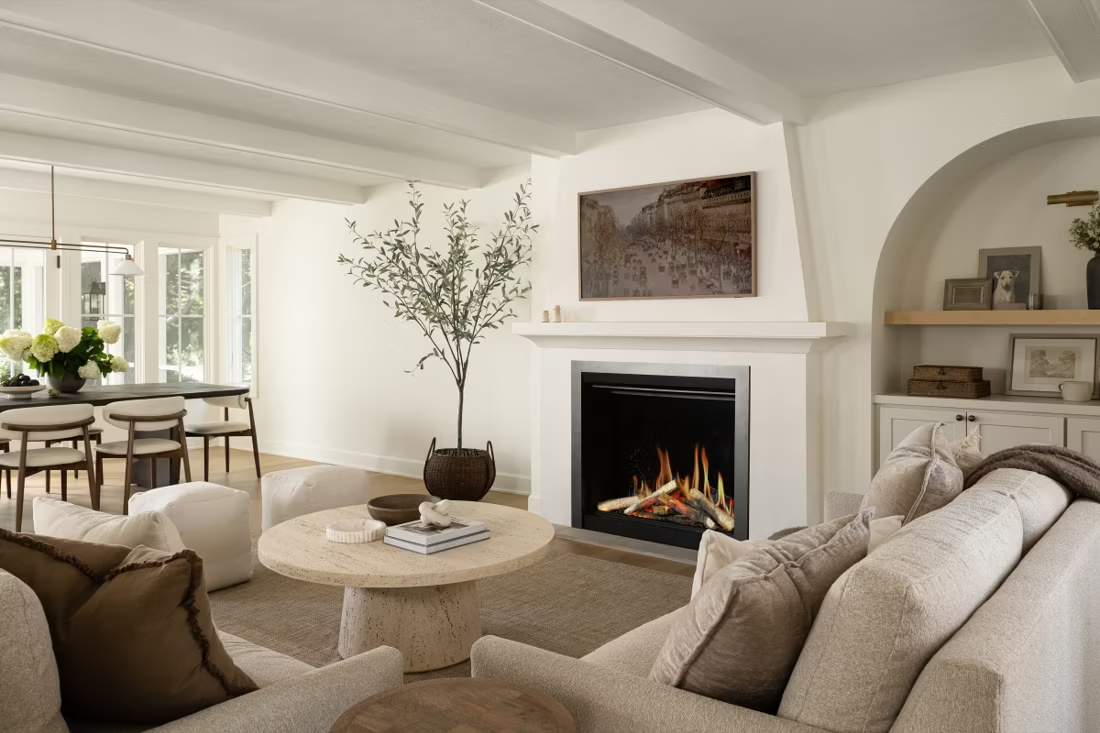
No venting, no chimney, no wood to split—just plug-in warmth and ambiance for a city with one of the longest, coldest heating seasons in the Lower 48. Find the right unit and connect with a trusted local dealer.
Every Project Starts From One of These Five Situations
Simple heat for a Lake Superior winter.
Duluth sits on the shore of Lake Superior at just over 1,000 feet elevation, in climate zone 7—putting it among the coldest cities in the Lower 48. Winter lows average 4°F, and the city has a long, demanding heating season on par with Fargo, ND and International Falls, MN. In a climate this demanding, most homeowners lean on a furnace or boiler for primary heat and wood for backup, but electric fireplaces have carved out a real role here for ambiance, supplemental zone heat, and installations where venting simply isn't practical—condos along London Road, apartments downtown, or finished basements without an existing chimney.
ALLETE, operating locally as Minnesota Power, serves Duluth at a residential rate around $0.1566 per kWh—a bit above the national average, which is one reason whole-home electric resistance heating is uncommon here. But for a single room, a rental unit, or a space where running gas or wood isn't an option, an electric fireplace delivers real, adjustable heat with none of the permitting, chimney maintenance, or combustion air requirements that come with burning fuel.
Three steps. No salesperson until you're ready.
Tell us about your project
Your zip code, your situation, and the fuel you're leaning toward—or let the answers point you to one.
See what's actually available
The brands dealers within 100 miles genuinely carry—real options, never a catalog mirage.
Get your dealer & Project Guide
A trusted local dealer, plus the free Project Guide & Parts List that names every component of the job.
Frequently Asked Questions
How much does it cost to install an electric fireplace in Duluth?
Costs vary widely by type. A freestanding or wall-mount plug-in electric fireplace—the kind you can put in an apartment near downtown or a Lakeside bungalow without any electrical work—runs $150 to $900 for the unit itself, plugged into an existing outlet. A built-in electric fireplace or insert that needs a dedicated 20-amp circuit, typically installed by a licensed electrician pulling a permit through the City of Duluth Building Safety Division (or St. Louis County outside city limits), runs $1,500 to $4,500 including labor, wiring, and any surround or mantel carpentry. Because there's no chimney, no venting, and no combustion air requirement, electric is consistently the least expensive fireplace fuel to install in Duluth.
Will an electric fireplace actually heat my Duluth home?
Not on its own, and it's worth being honest about that. Duluth has a long, demanding heating season on par with Fargo, ND, with winter lows averaging 4°F. Most electric fireplace heaters top out around 5,000-9,000 BTU (1,500-2,500 watts), enough to noticeably warm a single room but not enough to carry a whole house through a January cold snap off Lake Superior. Most Duluth homeowners install electric units as zone heat for a specific room—a den, a finished basement, a condo without chimney access—while a furnace, boiler, or wood stove handles the rest of the house.
What does it cost to run an electric fireplace in Duluth?
At ALLETE's (Minnesota Power's) residential rate of about $0.1566 per kWh, a typical 1,500-watt electric fireplace heater costs roughly $0.23 per hour to run on high, or about $0.06 per hour with the heater off and just the flame effect running. Left on for supplemental evening heat through a Duluth winter—say 4 hours a night over five cold months—that adds up to roughly $140 in electricity, still far less than heating that same room with baseboard electric alone.
Can I put an electric insert into my existing fireplace?
Yes, and it's one of the more common electric projects in Duluth's older neighborhoods—Congdon, Chester Park, Lakeside—where many houses still have a masonry wood fireplace that's rarely used. A plug-in or hardwired electric insert slides into the existing firebox opening, needs no chimney liner or venting, and can often be installed in an afternoon. It won't match the radiant heat of the original wood fireplace, but it eliminates the draft problem an unused masonry fireplace usually creates, since the firebox gets sealed off behind the insert.
Do I need a permit for an electric fireplace in Duluth?
A plug-in unit that runs off an existing standard outlet needs no permit at all. If your installer is running a new dedicated circuit—standard for larger built-in units—that electrical work requires a permit, typically pulled by the licensed electrician through the City of Duluth Building Safety Division, or St. Louis County's building department if you're outside city limits. There's no combustion appliance inspection involved, since electric units don't burn fuel or produce exhaust, which is part of why the permitting process is simpler than wood or gas.
What's the best electric fireplace for a Duluth winter?
Look for a unit with a real heater rated for at least 400-500 square feet if you want it to meaningfully warm a room and not just look good—brands like Dimplex, Touchstone, and Napoleon all make models with this level of heat output paired with a flame effect that runs independent of the heater, so you can enjoy the look in July without warming the room. For a finished basement or three-season porch that gets genuinely cold, a linear built-in with a higher-wattage heater is worth the extra electrician cost over a cheaper plug-in unit.
Electric vs. wood—which makes more sense in Duluth?
Wood remains a serious primary or backup heat option here—oak, maple, birch, and aspen are all common local species, and Superior National Forest sells cutting permits for $10 to $20 per cord during the May-through-October season. Wood also keeps working when the power goes out, which matters through a Lake Superior winter storm. Electric can't do that—no power, no flame, no heat. But electric wins on convenience: no wood handling, no ash, no chimney to maintain, and instant on-off operation. Many Duluth homeowners run both—wood or a wood stove for real heat and outage backup, electric for ambiance and easy supplemental warmth in a room without chimney access.
Electric vs. pellet stove—what's the difference for a Duluth home?
Pellet stoves burn compressed wood pellets—regional brands like Indeck Energy Services, Lignetics, and Somerset Pellet Fuel are all available in the area—and produce substantial heat output, often enough to serve as a primary heat source. But like electric fireplaces, pellet stoves need electricity to run the auger and blower, so both fail together in a power outage. The real difference is heat output: a pellet stove can genuinely offset a furnace, while an electric fireplace is realistically a room-by-room supplement. If your goal is meaningfully lower heating bills, pellet is the stronger candidate. If your goal is ambiance and easy zone heat with zero venting or fuel storage, electric wins.
Does Find My Fireplace sell electric fireplaces directly?
No—we're a matchmaker, not a retailer. Tim Reed's team matches Duluth homeowners with a trusted local dealer who actually stocks and installs electric fireplaces suited to your space, then sends over a free Project Guide & Parts List so you walk into that conversation already knowing what you need. We don't take manufacturer money to push a brand, and we don't ship product—we just make sure you're talking to someone local who can actually get the job done correctly.
Can I put a TV above my fireplace?
Yes—with an asterisk. Fireplaces are hot and TVs don't like heat. Either put a mantel between them to deflect rising warmth, or choose a fireplace with heat-management technology that creates a cool zone on the wall above—the wall stays around 125 degrees, barely warm, while the room still gets full heat. If you like clean lines and don't want a mantel, heat management is the answer.
How much does an electric fireplace cost to run?
With the heater on, a typical unit draws about 1,500 watts—at average electric rates that's roughly 20 cents an hour. Run the flame effect alone and it costs pennies; the flames are LED-driven and use about as much power as a light bulb. There's no pilot light, no fuel delivery, and essentially no maintenance.
Can a fireplace actually lower my heating bill?
Yes—by creating a comfort zone. A furnace heats every square foot of the house just to warm the one room you're in; a gas fireplace on low burns roughly a sixth of the gas a typical furnace does. Set the furnace around 55–60 degrees as a baseline, then heat the rooms your family actually uses. Families who heat this way commonly save $20–$60 a month.
What is an in-home preview and do I need one?
It's a visit where a hearth professional measures your space, confirms the model you picked actually works in your home, and walks the specs—framing, gas line, venting, finish work—before anything is ordered. Some details you just can't know until you see the house. Never make a down payment without one; it's the single most-skipped step that burns buyers.
Nearby Dealers
Hearth shops serving Duluth and the surrounding area.
Electric Service in Duluth
An electric fireplace's heater draws about 1,500 watts—pennies per hour at local rates.
Allete, Inc.
Find your electric fireplace in Duluth.
Tell us about your space and we'll match you with a trusted local Duluth dealer and send over a free Project Guide & Parts List—the exact parts, circuit requirements, and installer recommendation for your project.
Find Your Fireplace →