
Pellet heat built for Sibley County's long, cold winters.
A winter heating load on par with the coldest parts of the Upper Midwest, farmhouses and acreages spread across Gaylord, Arlington, Winthrop, and Henderson—pellet heat gives Sibley County homes steady warmth without a woodpile. Get matched with a trusted local dealer.
Every Project Starts From One of These Five Situations
Consistent heat, without the chainsaw work.
Sibley County sits in south-central Minnesota's farm country, where winter arrives early and doesn't let go—average lows hover around 6°F and the county faces a winter heating load on par with Fargo, ND or International Falls. Older farmhouses and acreage homes around Gaylord, Arlington, Winthrop, Henderson, and New Auburn were often built before modern insulation standards, and a lot of those homes rely on supplemental heat to get through January and February stretches where overnight temperatures drop well below zero.
Sibley County's oak, maple, birch, and aspen woodlots have supported firewood heating for generations, but many homeowners here—especially those without the time, equipment, or storage space for cordwood—are turning to pellet stoves instead. A pellet hopper loads once a day, the auger feeds itself, and the thermostat holds a steady output through a cold front without anyone getting up at 2 a.m. to reload. With no local air quality restrictions or burn curtailment periods to worry about, pellet appliances here are chosen for convenience and consistent heat rather than regulatory necessity. Regional pellet producers including Lignetics, Somerset Pellet Fuel, and Indeck Energy Services keep bagged pellets reasonably accessible across the county, which matters when you're heating through a Minnesota winter.
Three steps. No salesperson until you're ready.
Tell us about your project
Your zip code, your situation, and the fuel you're leaning toward—or let the answers point you to one.
See what's actually available
The brands dealers within 100 miles genuinely carry—real options, never a catalog mirage.
Get your dealer & Project Guide
A trusted local dealer, plus the free Project Guide & Parts List that names every component of the job.
Frequently Asked Questions
How much does a pellet stove installation cost in Sibley County?
Most pellet stove installations run in the $3,000 to $6,500 range depending on the unit, whether you're venting through an exterior wall or an existing chimney, and whether electrical work is needed for the auger and blower circuit. Freestanding stoves installed against an exterior wall with a short horizontal vent run tend to land on the lower end; pellet inserts going into an existing masonry fireplace, or installations requiring a new dedicated electrical outlet, run higher. Rural properties around Gaylord, Arlington, or Winthrop may see a modest travel charge added to the quote if the dealer is based farther out—worth asking about up front.
What size pellet stove do I need for my Sibley County home?
Sizing comes down to square footage, ceiling height, insulation, and how much of the heating load you want the stove to carry. Many homes in Sibley County are older farmhouses with less insulation than newer construction, which pushes sizing up a notch compared to a similarly sized new-build home. As a rough guide: smaller stoves (under 1,000 sq ft) suit a single large room or a well-insulated addition, mid-size units (1,000–1,800 sq ft) cover most main living areas, and larger stoves can carry a significant share of the heating load in an open-concept farmhouse layout. Given how cold Sibley County gets—average lows around 6°F with regular stretches below zero—it's worth erring toward a stove with a larger hopper capacity so you're not refilling every few hours during a cold snap. A local dealer can size this properly during an in-home visit.
Where can I find certified pellet stove installers near me?
Look for installers with NFI (National Fireplace Institute) pellet specialist certification, which covers proper venting, electrical hookup, and clearance requirements specific to pellet appliances. Because pellet stoves have both a fuel-burning component and an electrical component (the auger motor, igniter, and combustion blower), installation quality matters more than it might seem—a poorly wired or improperly vented unit can trip breakers, jam the feed, or worse. Hearth dealers serving Sibley County typically cover Gaylord, Arlington, Winthrop, Henderson, and the surrounding townships, with a small travel fee for more remote farm properties.
What's the difference between a pellet stove and a pellet insert?
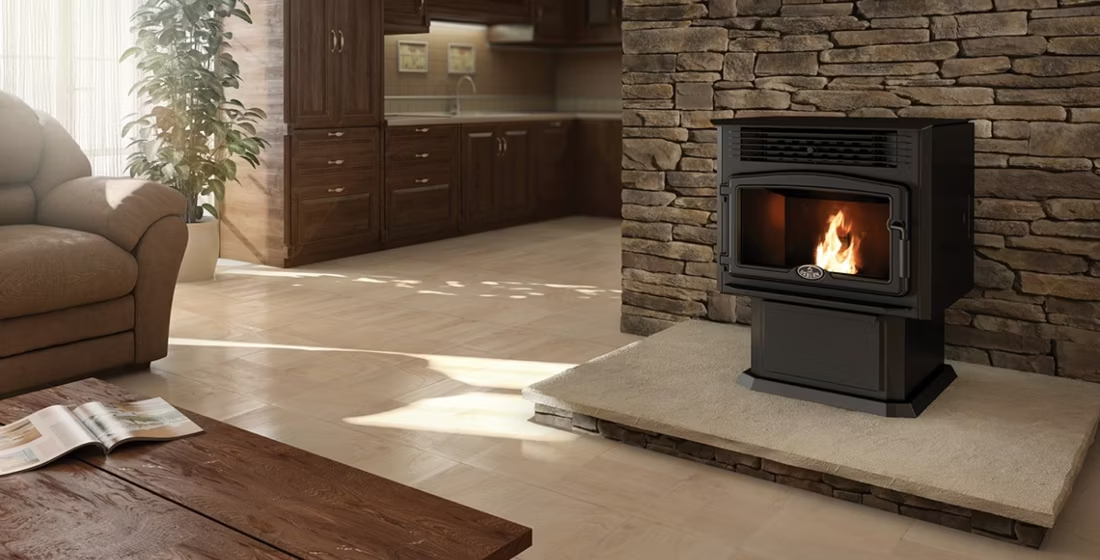
A pellet stove is a freestanding unit that sits on its own hearth pad and vents through a wall or an existing chimney chase—it can go almost anywhere with a clear path to the outside. A pellet insert is built to slide into an existing masonry fireplace opening, converting an old wood-burning fireplace into an automated, thermostat-controlled heat source while reusing the chimney (typically relined with a stainless vent). For Sibley County homes with an existing but underused wood fireplace, an insert is often the more efficient upgrade. Homes without an existing fireplace opening are usually better matched to a freestanding stove.
Do I need a permit to install a pellet stove in Sibley County?
Most municipalities in Sibley County—including Gaylord, Arlington, Winthrop, and Henderson—require a building permit for new pellet stove installations, along with an electrical permit if a new circuit is being run for the appliance. Requirements can vary slightly between incorporated cities and unincorporated townships, so it's worth confirming with your local building department before work starts. In practice, most local hearth dealers handle the permitting as part of the installation quote, so it's rarely something homeowners have to manage themselves.
What's the best pellet stove for Sibley County's climate?
For a climate where average lows sit around 6°F and cold snaps regularly push well below zero, look for a pellet stove with a larger hopper (40+ lb capacity) and a robust auto-ignition system rather than a manual-light model—you don't want to be relighting a stove by hand during a January cold front. Brands like Harman and Enviro are common choices in Midwest dealer showrooms and hold up well to daily winter use. Whichever model you choose, ask your local dealer about pellet supply—regional producers like Lignetics and Somerset Pellet Fuel keep bagged pellets in reasonable supply across south-central Minnesota, which matters more than the stove brand once winter settles in for good.
How much maintenance does a pellet stove need?
Pellet stoves need more frequent attention than a wood stove but far less than people expect: emptying the ash pan every few days to weekly depending on use, a quick glass and burn-pot cleaning, and a full inspection and vent cleaning once a year—ideally before the heating season starts in Sibley County, since a fall service appointment is easier to schedule than one in the middle of a December cold spell. Because the auger, igniter, and blowers are mechanical and electrical components, an annual check by a qualified technician catches wear issues before they turn into a stove that quits during a cold week.
Where can I buy pellet fuel in Sibley County?
Bagged pellets are typically available through local hearth dealers, farm supply stores, and hardware stores serving Gaylord, Arlington, and Winthrop, with regional producers Lignetics, Somerset Pellet Fuel, and Indeck Energy Services supplying much of the upper Midwest market. Premium hardwood pellets (lower ash content, cleaner burn) generally run somewhat higher than standard softwood blends, and buying a season's supply early—before cold weather drives up local demand—is a common strategy for Sibley County homeowners who heat with pellets through the winter. Ask your dealer which brand burns cleanest in your specific stove model.
Pellet stove vs. wood stove—which is right for my Sibley County home?
Wood stoves burn cordwood—plentiful in this part of Minnesota given the local oak, maple, birch, and aspen—cost less to fuel if you're cutting your own, and keep working during a power outage, which matters given how often winter storms knock out rural electric service around Sibley County. Pellet stoves trade some of that off-grid resilience for convenience: load the hopper, set the thermostat, and let the auger do the rest, with less ash and no chimney creosote buildup to manage. The tradeoff worth being honest about is that pellet stoves need electricity to run the auger, igniter, and blowers—without a small backup power source (even a modest generator or battery inverter), a pellet stove goes cold in an outage exactly when you need heat most. For homes with reliable power and a preference for low-maintenance daily operation, pellet wins. For homes prioritizing storm resilience or already set up to process firewood, wood is worth a closer look.
Why is my open fireplace making my house colder?
Open fireplaces suck—literally. As the fire burns, it consumes air your furnace already paid to heat and pulls it out through the chimney, so the house is actually colder after the fire goes out than before you lit it. An insert fixes this: it seals the chimney, puts fixed glass across the front, and turns that hole in your house into a real heat source.
What does it take to replace an existing fireplace?
Fireplaces are like icebergs—bigger behind the wall than in front of it. Replacement means removing the surrounding tile or stone (the finish material laps onto the fireplace face), pulling the old unit, setting the new one in the same enclosure, and re-finishing the wall. A hearth professional can determine what's behind your wall without demolition during an in-home preview.
Can a fireplace actually lower my heating bill?
Yes—by creating a comfort zone. A furnace heats every square foot of the house just to warm the one room you're in; a gas fireplace on low burns roughly a sixth of the gas a typical furnace does. Set the furnace around 55–60 degrees as a baseline, then heat the rooms your family actually uses. Families who heat this way commonly save $20–$60 a month.
Does a fireplace add value to my home?
On average, a fireplace adds back to the home about the same amount you spent installing it. Add the monthly savings from heating the rooms you actually use instead of the whole house—often hundreds of dollars a year—and the value case is strong before you even count what a fire does for how your family uses the room.
Pellet Brands Stocked Around Sibley County
Manufacturers will point you to the nearest stocking dealer.
Find your pellet stove in Sibley County.
Tell us about your home and heating goals, and we'll match you with a trusted local dealer serving Sibley County—plus a free Project Guide & Parts List covering the exact parts, including the vent kit, for your pellet stove project.
Find Your Fireplace →