
Add electric heat and ambiance to your Sibley County home.
Zone heat for farmhouses, additions, and finished basements across Gaylord, Arlington, Winthrop, and the rest of Sibley County—no chimney, no venting, installed by a local pro.
Every Project Starts From One of These Five Situations
Zone heat and ambiance, without new venting.
Sibley County sits in the flat farm country of south-central Minnesota, with the county seat in Gaylord and communities like Arlington, Winthrop, Henderson, and Green Isle spread across roughly 585 square miles of cropland. Winters here are long and genuinely cold—Climate Zone 6A, an average winter low near 6°F, and a long, deep heating season nearly as demanding as Minneapolis up the road, and not far off Fargo, North Dakota. Most farmhouses and rural homes in the county rely on propane or LP furnaces for primary heat, since natural gas lines don't reach far outside town limits.
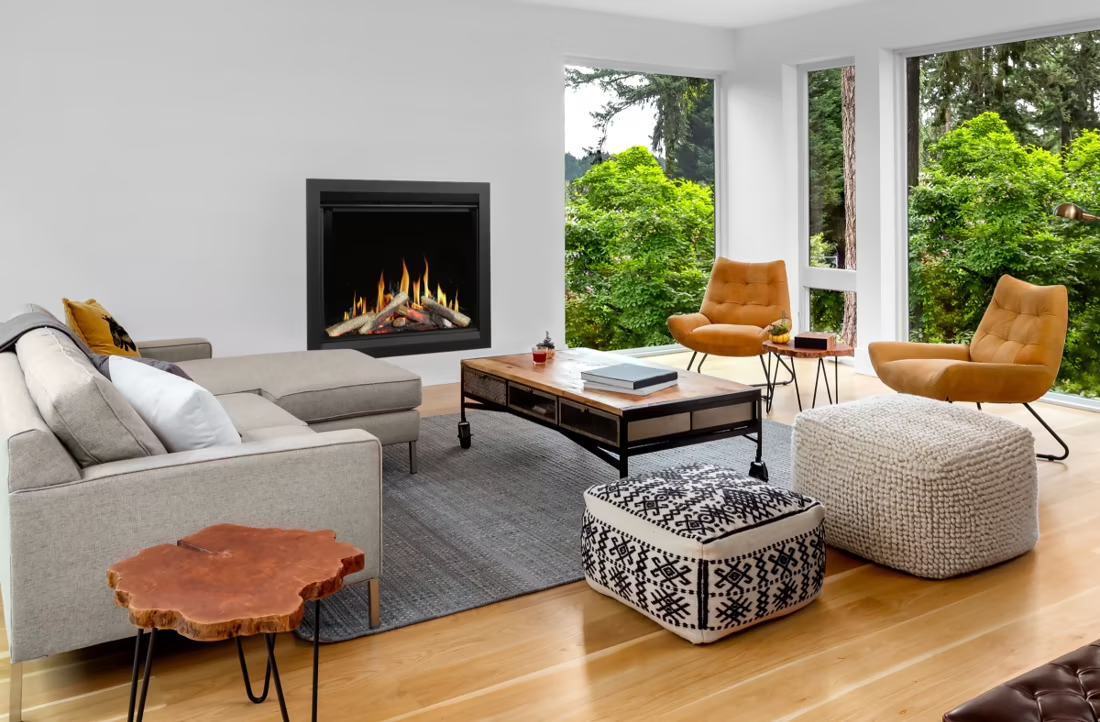
That's where electric fireplaces earn their place. Installed in a finished basement, a living room addition, or a bedroom in an older farmhouse without a second flue, an electric insert or built-in unit adds real supplemental warmth and instant ambiance without cutting into a wall for venting or running a chimney liner. Because Sibley County's coldest stretches push well below zero, we don't recommend an electric unit as your only heat source—resistance heat gets expensive fast when you're fighting sub-zero degree days—but as a zone heater that takes the edge off in a room your furnace struggles to reach, or as a low-maintenance focal point in a remodel, electric fireplaces are a genuinely good fit for a lot of Sibley County homes.
Three steps. No salesperson until you're ready.
Tell us about your project
Your zip code, your situation, and the fuel you're leaning toward—or let the answers point you to one.
See what's actually available
The brands dealers within 100 miles genuinely carry—real options, never a catalog mirage.
Get your dealer & Project Guide
A trusted local dealer, plus the free Project Guide & Parts List that names every component of the job.
Frequently Asked Questions
How much does an electric fireplace installation cost in Sibley County?
Most electric fireplace projects in Sibley County run $300 to $1,500 depending on the unit. A simple plug-in insert or wall-mounted unit that uses an existing outlet is on the low end and can often be set in an afternoon. A built-in electric fireplace or a larger insert that needs a dedicated 20-amp circuit costs more once an electrician is involved—expect to add $200 to $500 for that wiring work if your home's panel doesn't already have capacity nearby. Cabinetry or surround work for a built-in look adds to the total. Local dealers will walk your specific room and give you a firm number before any work starts.
Will an electric fireplace heat my whole house in Sibley County winters?
No—and any dealer who tells you otherwise isn't being straight with you. With Sibley County facing a long, deep heating season and winter lows around 6°F, most electric fireplaces (typically rated around 4,600–5,000 BTU) are built for zone heating, not whole-house duty. They're excellent for taking the chill off a single room—a finished basement, a sunroom, a bedroom over an unheated garage—but your propane furnace or LP system should stay your primary heat source through a Minnesota winter. Think of the electric unit as targeted comfort and a lower utility bill in the room you actually live in, not a furnace replacement.
Do I need a permit to install an electric fireplace in Sibley County?
It depends on the installation. A plug-in electric insert or freestanding unit that runs off an existing standard outlet typically doesn't require a permit. If you're adding a built-in unit that needs a new dedicated circuit or any panel work, that electrical work falls under Sibley County's building permit process, handled through the Sibley County Planning & Zoning Office, and needs to be pulled by a licensed electrician. Most local dealers coordinate this as part of the installation so you're not chasing paperwork yourself.
Electric fireplace vs. wood stove—which makes sense for my Sibley County home?
Sibley County has plenty of oak, maple, birch, and aspen from windbreaks and farm woodlots, and a wood stove burning that mix can genuinely carry a home through a power outage when a January storm takes down lines—something an electric unit can't do. But wood stoves need a chimney, regular cleaning, and a supply of split, seasoned wood. Electric fireplaces install with no venting at all, run at the flip of a switch, and are a much simpler fit for a finished basement remodel or an addition where running a flue isn't practical. A lot of Sibley County homes end up with both: wood or propane for real cold-weather backup, electric for the rooms where convenience matters more.
What's the best type of electric fireplace for an older Sibley County farmhouse?
For farmhouses with thick plaster walls and no existing masonry fireplace, a wall-mounted or built-in electric unit set into a stud-bay opening is usually the cleanest option—it doesn't require the structural work a full fireplace conversion would. If your farmhouse does have an old, unused masonry fireplace, an electric insert can drop into that opening and give you usable heat and a real flame-effect look without touching the chimney. Freestanding electric stoves are also popular in mudrooms and additions where you want something that looks like a classic stove but plugs straight into the wall.
Will my electric fireplace still work if the power goes out?
No—and that's worth planning around in Sibley County, where ice storms and heavy snow do take down rural electric lines some winters. An electric fireplace, like any electric appliance, goes dark the moment power drops. If backup heat during outages matters to you, keep a propane heater, wood stove, or generator-fed circuit as your outage plan, and treat the electric fireplace as the everyday comfort option rather than your emergency heat source.
Will running an electric fireplace raise my electric bill much?
It depends on how often you run it and your rate. Most of Sibley County is served by a mix of Xcel Energy and rural electric cooperatives such as Federated Rural Electric Association, and typical residential rates put a 1,500-watt electric fireplace running on high at roughly 15-20 cents an hour. Used a few hours an evening in one room, that's a modest add to a monthly bill—far cheaper than heating that same room by cranking up a whole-house propane furnace. Running it as a primary heat source for hours a day, every day, through a Minnesota winter, is where costs add up quickly.
Where can I buy and install an electric fireplace in Sibley County?
A handful of hearth retailers serve Sibley County out of the Highway 19 and Highway 5 corridors connecting Gaylord, Arlington, and Winthrop to the broader New Ulm and Hutchinson markets. Working with a local dealer—rather than ordering blind online—means someone actually measures your space, checks your electrical capacity, and installs the unit to code. That's the matching service we provide: tell us about your project and we'll connect you with a trusted local dealer who carries units that are actually available and installable near you.
Electric fireplace vs. pellet stove—which is right for my home?
Pellet stoves, using bagged pellets from regional suppliers like Lignetics or Somerset Pellet Fuel, put out real heat—often 40,000+ BTU—and can supplement or replace a furnace for whole rooms or small homes, but they need a vent, a hopper to load, and periodic ash cleanout. Electric fireplaces put out a fraction of that heat, need no venting at all, and run maintenance-free, but they're strictly a zone-heat and ambiance option, not a furnace replacement. If you want a genuine secondary heat source that can offset propane costs through a Sibley County winter, look at pellet. If you want low-maintenance warmth and a good-looking flame in a specific room, electric is the simpler answer.
Can I put a TV above my fireplace?
Yes—with an asterisk. Fireplaces are hot and TVs don't like heat. Either put a mantel between them to deflect rising warmth, or choose a fireplace with heat-management technology that creates a cool zone on the wall above—the wall stays around 125 degrees, barely warm, while the room still gets full heat. If you like clean lines and don't want a mantel, heat management is the answer.
Do electric fireplaces actually produce heat?
Yes—most put out around 4,800–5,000 BTUs from a standard outlet, which comfortably warms a bedroom, office, or den as a comfort-zone heater. What they won't do is carry a whole house the way wood, gas, or pellet can. Think of electric as ambiance-first with honest supplemental heat: flames on with no heat in July, flames plus warmth in January.
Can I install a fireplace myself?
If you're putting a fire in your house on purpose, it's best to work with an expert. Unless you're genuinely experienced in framing, gas line, vent pipe, and the national code on clearances to combustibles, have a professional do it—and ideally the same company that sells you the fireplace, so warranty, service, and liability all live under one roof.
What is an in-home preview and do I need one?
It's a visit where a hearth professional measures your space, confirms the model you picked actually works in your home, and walks the specs—framing, gas line, venting, finish work—before anything is ordered. Some details you just can't know until you see the house. Never make a down payment without one; it's the single most-skipped step that burns buyers.
Find your electric fireplace in Sibley County.
Tell us about your room and we'll match you with a trusted local dealer and send over a free Project Guide & Parts List—the exact parts and your recommended installer for an electric fireplace project in Sibley County.
Find Your Fireplace →