
Pellet heat built for Rock County's long, cold winters.
With 7,624 heating degree days and winter lows averaging 6°F across the open prairie around Luverne, Rock County homes need heat that runs steady for months. Find the right pellet stove or insert and get matched with a trusted local dealer.
Every Project Starts From One of These Five Situations
Consistent warmth without the wood pile.
Rock County sits in the far southwest corner of Minnesota along the South Dakota border, out on the Buffalo Ridge—flat, wind-swept farm country with just over 7,100 residents spread between Luverne and small communities like Hills, Beaver Creek, and Kanaranzi. With 7,624 heating degree days and winter lows averaging 6°F, the cold here runs closer to Fargo or Bismarck than to the Twin Cities—long stretches of the season sit well below freezing, and the open ground offers little windbreak for older farmhouses and rural properties.
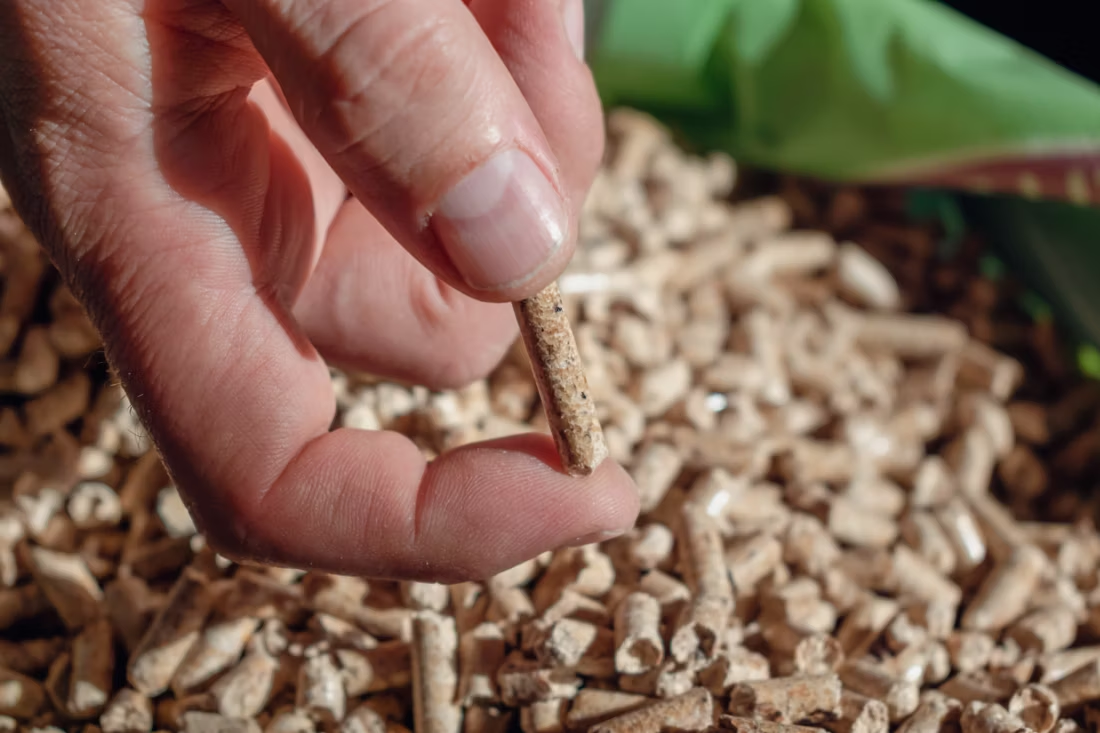
Pellet stoves have found real traction here because they deliver the steady, thermostatically controlled output a long prairie winter demands, without the daily labor of splitting and hauling cordwood—even though oak, maple, birch, and aspen are all common locally for those who still burn wood. Regional pellet suppliers including Indeck Energy Services, Lignetics, and Somerset Pellet Fuel keep bagged fuel accessible without long hauls, and Rock County has no local air quality restrictions or winter burn curtailment periods, so pellet appliances run without the seasonal limitations you'd find in more urbanized parts of the state.
Three steps. No salesperson until you're ready.
Tell us about your project
Your zip code, your situation, and the fuel you're leaning toward—or let the answers point you to one.
See what's actually available
The brands dealers within 100 miles genuinely carry—real options, never a catalog mirage.
Get your dealer & Project Guide
A trusted local dealer, plus the free Project Guide & Parts List that names every component of the job.
Frequently Asked Questions
How much does a pellet stove installation cost in Rock County?
Cost depends mainly on the stove itself, the venting path, and whether your home already has a suitable spot for a small-diameter sidewall vent. Pellet stoves generally cost less to install than wood stoves because they vent through a compact PL-rated pipe run through an exterior wall rather than a full masonry or Class A chimney—a real advantage for older Rock County farmhouses that were never built with a chimney in the right location. You'll also need a dedicated electrical outlet nearby for the hopper auger and combustion blower. A local dealer can walk your home and give you a firm number, but expect the venting simplicity to work in your favor compared to a wood or gas retrofit.
Do I need a permit to install a pellet stove in Rock County?
Most jurisdictions in Rock County require a building permit for a new solid-fuel appliance installation, including pellet stoves, since it involves new wall penetration and combustion venting. Whether you're inside Luverne city limits or in unincorporated Rock County, your installer should pull the permit as part of the job and coordinate the final inspection. Skipping this step can create problems down the road with insurance or resale, so it's worth confirming with whichever dealer you choose that permitting is included in their quote.
What venting does a pellet stove need compared to a wood stove?
Pellet stoves use forced-draft PL vent pipe that runs horizontally through an exterior wall, rather than the vertical Class A chimney a wood stove requires. That makes pellet units a practical retrofit choice for Rock County homes without an existing chimney—a common situation in older farmhouses and ranch-style homes across the county. Because the venting is mechanically drafted by a blower rather than relying on natural draft, pellet stoves are also less picky about exact chimney height and placement, which simplifies the install in tight utility rooms or additions.
How do I buy and store pellet fuel in Rock County?
Bagged pellets from regional producers like Indeck Energy Services, Lignetics, and Somerset Pellet Fuel are available through farm supply and hardware retailers throughout southwest Minnesota, and many households order by the pallet (roughly a ton) ahead of the heating season rather than buying bag by bag. Given Rock County's 7,624 heating degree days, a home using a pellet stove as a primary heat source can burn through two to three tons over a full winter, more for larger or older, less-insulated homes. Store pellets somewhere dry and off the ground—a garage or mudroom works, but a damp basement can cause pellets to swell and jam the auger, so moisture control matters more here than the storage location itself.
How much maintenance does a pellet stove need?
Pellet stoves need more routine attention than a gas unit but less than a wood stove overall. Plan on emptying the ash pan and cleaning the burn pot every few days during heavy winter use, wiping the glass as needed, and vacuuming the hopper and auger area periodically. An annual professional service—checking the blowers, gaskets, and venting—is worth scheduling before the heating season starts given how many hours these stoves run through a Rock County winter. Owners who treat weekly ash removal as routine tend to get more consistent heat output and fewer service calls.
When should I install a pellet stove before winter hits?
Given how early and how hard winter sets in across southwest Minnesota, late summer through early fall is the ideal window to install—before the first hard frost and well ahead of the coldest stretch. Waiting until December means competing for installer schedules right when demand peaks and homes need heat most. Getting a stove installed and broken in by October also gives you a chance to dial in thermostat settings before you're relying on it during a sub-zero cold snap.
What size pellet stove do I need for my home?
Sizing depends on square footage, insulation quality, and whether the stove is your primary heat source or supplemental. In a climate with 7,624 heating degree days, older Rock County farmhouses with less insulation typically need a stove sized up from what the square footage alone would suggest—a home that might get by on a smaller unit in a milder climate often needs a mid-to-large pellet stove here to keep pace through January and February. A local dealer will size your space based on layout, ceiling height, and how the house holds heat, not just floor area.
Are there rebates available for pellet stoves in Rock County?
Pellet stoves meeting a minimum 75% efficiency rating currently qualify for the federal biomass stove tax credit (up to $2,000, claimed through IRS Form 5695) alongside other qualifying wood and pellet appliances. Most manufacturer spec sheets state whether a given model qualifies, and a local dealer can confirm eligibility and provide the documentation you'll need at tax time. It's worth checking state and utility programs periodically as well, since eligibility and incentive amounts change from year to year.
Pellet stove vs. wood stove—which makes more sense in Rock County?
Wood stoves burn locally available oak, maple, birch, and aspen, run without electricity, and offer lower fuel costs if you have access to your own woodlot—a real option for many rural Rock County properties. But they require cutting, hauling, and splitting, plus a full chimney system. Pellet stoves offer thermostatic, hands-off heat and cleaner burning, but the auger and blower need electricity to run, which matters given how exposed Rock County's open prairie is to winter storms and wind-related outages. Homeowners who go pellet in this area often pair the stove with a small battery backup or generator plan so a power outage doesn't leave the house without heat at the worst possible time.
Why is a fireplace insert so efficient?
An insert does two things: it seals the chimney completely, so you stop losing air you already paid to heat, and it radiates warmth into the room through the firebox and glass. Most add a heat-exchange fan that pulls cool room air underneath, wraps it around the hot firebox, and pushes it back out warm. Your home is more efficient before you've even lit the first fire.
Are pellet stoves loud?
They make some noise—there are two fans running plus an auger motor that turns as it feeds pellets. But there's a real range: premium models are engineered quiet, and the best offer a whisper-quiet mode you can comfortably watch TV next to. If noise matters in your room, ask to hear a stove running before you buy—it's a five-minute test that saves years of annoyance.
Can a fireplace actually lower my heating bill?
Yes—by creating a comfort zone. A furnace heats every square foot of the house just to warm the one room you're in; a gas fireplace on low burns roughly a sixth of the gas a typical furnace does. Set the furnace around 55–60 degrees as a baseline, then heat the rooms your family actually uses. Families who heat this way commonly save $20–$60 a month.
What is an in-home preview and do I need one?
It's a visit where a hearth professional measures your space, confirms the model you picked actually works in your home, and walks the specs—framing, gas line, venting, finish work—before anything is ordered. Some details you just can't know until you see the house. Never make a down payment without one; it's the single most-skipped step that burns buyers.
Pellet Brands Stocked Around Rock County
Manufacturers will point you to the nearest stocking dealer.
Find your pellet stove in Rock County.
Tell us about your home and we'll match you with a trusted local dealer and put together a free Project Guide & Parts List—sized to your space, with the venting and parts your pellet stove project actually needs.
Find Your Fireplace →