
Find the right fireplace for Rock County's prairie winters.
Wood, gas, pellet, and electric fireplace resources for every town in Rock County—from Luverne on I-90 to Hills near the South Dakota line. Find the right unit for a windswept winter with a long, hard heating season and connect with a trusted local hearth retailer.
Every Project Starts From One of These Five Situations
Cold, windswept winters across Rock County, Minnesota.
Rock County sits atop the Buffalo Ridge in the far southwest corner of Minnesota, where the land rises just enough to catch some of the hardest prairie wind in the Upper Midwest—the same wind that powers the turbine farms visible from nearly every road in the county. With an average winter low of 6°F and a long, hard winter heating season, the cold here runs comparable to Fargo, North Dakota, just a couple hours northwest. There's little tree cover to break the wind, so wind chill matters as much as the thermometer. Oak, maple, birch, and aspen from farmstead windbreaks and the Rock River bottoms have kept woodstoves burning here for generations, and with only 7,122 residents spread across a mostly agricultural county, most homes rely on a mix of fuels rather than one system for everything.
What you'll find on this hub: hearth retailers, service technicians, and fuel suppliers covering every community in the county—Luverne, Hardwick, Beaver Creek, Kanaranzi, Magnolia, Steen, and Hills. Pick your fuel below to see local dealers, typical installation costs, and the units that hold up to a Buffalo Ridge winter. Whether you're heating a farmhouse outside Beaver Creek or a home in town in Luverne, this page is the starting point.
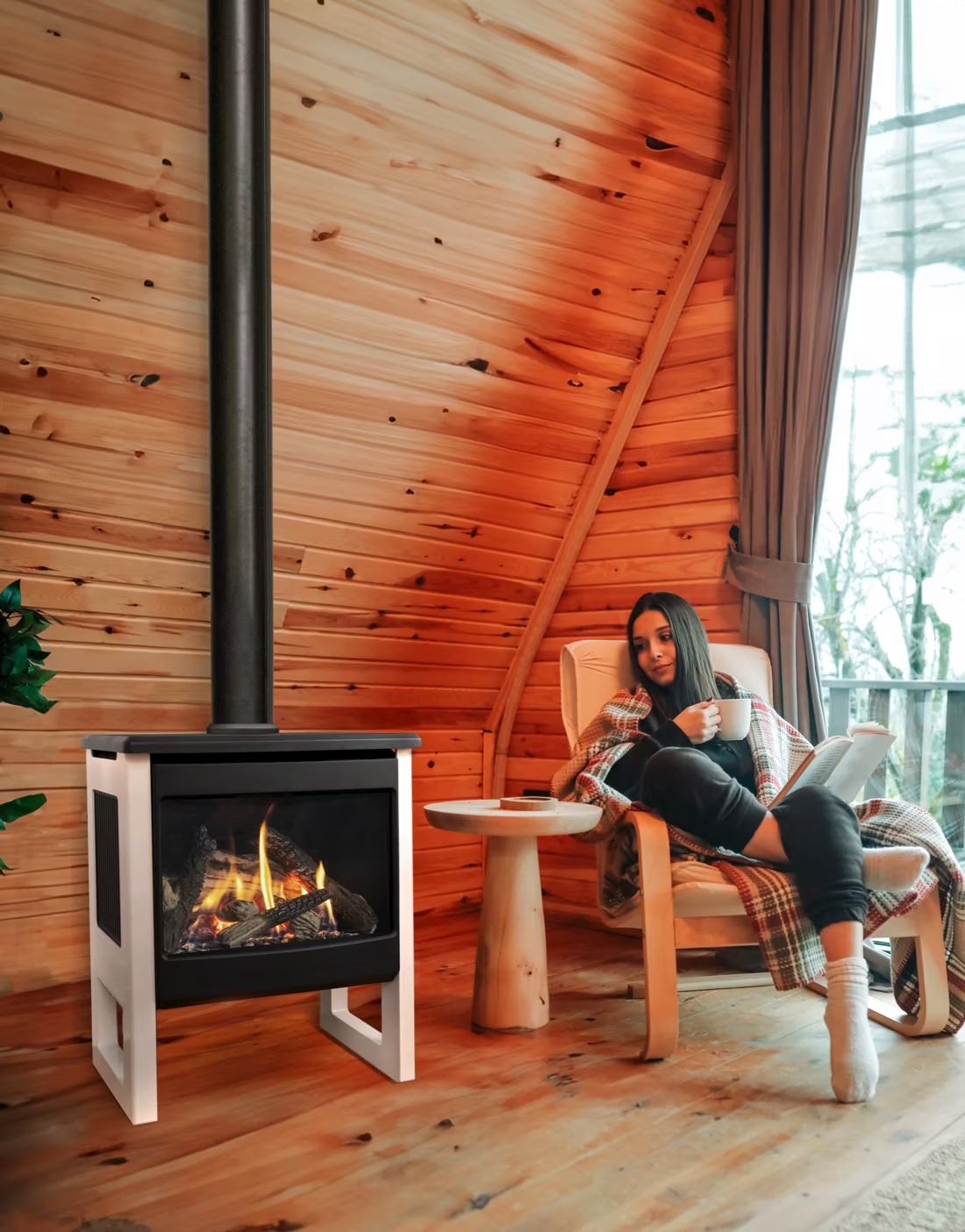
Four fuels. One honest answer for Rock County.
Three steps. No salesperson until you're ready.
Tell us about your project
Your zip code, your situation, and the fuel you're leaning toward—or let the answers point you to one.
See what's actually available
The brands dealers within 100 miles genuinely carry—real options, never a catalog mirage.
Get your dealer & Project Guide
A trusted local dealer, plus the free Project Guide & Parts List that names every component of the job.
Frequently Asked Questions
Which fuel works best in Rock County?
It depends on your home and how exposed it is to the wind up on the Buffalo Ridge. Wood is the traditional choice for farmhouses with a windbreak to supply oak, maple, birch, or aspen—a catalytic or non-cat stove can hold a long, steady burn through the single-digit overnight lows that are typical here. Gas, almost always propane in this rural county rather than piped natural gas, is the low-maintenance choice—no wood to split or stack, and it keeps running through a power outage if you have a battery-backed valve. Pellet stoves are the middle ground, and local supply is solid with brands like Lignetics and Somerset Pellet Fuel available through regional dealers. Electric fireplaces are mostly supplemental here—good for a bedroom or a finished basement, but not a serious answer to a 6°F average winter low on their own. Most Rock County homes end up running two fuels together, often wood or pellet as the workhorse with propane or electric filling in the gaps.
Do I need a permit to install a fireplace in Rock County?
Generally, yes. New wood stoves, wood inserts, gas appliances, and pellet stoves typically require a building permit, and propane installations also need the gas line work signed off by a licensed installer. Inside the city limits of Luverne, permits are issued by the city; in the townships and unincorporated parts of the county—around Hardwick, Beaver Creek, Kanaranzi, and Steen—permits run through the Rock County Planning & Zoning office. Wood-burning appliances installed new should meet current EPA emissions standards regardless of jurisdiction. Most local retailers handle the permit paperwork as part of the installation, so you're not usually filing it yourself.
Are there air quality restrictions on wood burning in Rock County?
No—unlike basin or valley communities that trap winter smoke, Rock County's open prairie topography and constant wind mean there's no history of inversion events or mandatory burn curtailment here. There are no county-level air quality advisories tied to wood smoke. That said, an EPA-certified stove is still worth choosing for efficiency's sake: in a county with such a long, hard winter heating season, a cleaner-burning stove gets more heat out of the same cord of oak or maple, which matters when you're heating through a full Minnesota winter.
Can one local hearth retailer handle all four fuel types?
In a county this size, it's common for one dealer to carry most of the fuel range rather than specializing narrowly. A Luverne-based retailer serving Rock County typically stocks wood and gas (propane) units with pellet stoves as a secondary line, and can special-order electric inserts for homeowners who want one. For a wider side-by-side comparison, some Rock County residents cross the border to dealers in Sioux Falls, South Dakota, or head northeast toward Pipestone. If you're deciding between fuels, ask your local dealer to run through the trade-offs for your specific house and windbreak situation rather than assuming a catalog answer applies.
How does service work in rural areas of Rock County?
Most chimney sweeps and gas/pellet technicians serving Rock County are based in Luverne or make regular trips out from the Sioux Falls metro area, about 30 minutes west. Expect a modest travel fee for service calls out to Hardwick, Beaver Creek, Kanaranzi, Magnolia, or Steen—usually $40–$80 depending on distance from Luverne. Because the wind here makes venting integrity especially important, it's worth scheduling annual chimney and flue inspections in late summer or early fall, before the first cold snap off the Buffalo Ridge, rather than waiting for a mid-winter problem.
What's the typical cost range for fireplace installation across all fuel types in Rock County?
Costs run in line with rural Upper Midwest pricing. Wood stove or insert installation: roughly $4,000–$8,500 for a typical retrofit, more for new masonry chimney work. Propane fireplace, insert, or stove: roughly $4,000–$10,000 depending on tank setup and venting, less if you're converting an existing propane line. Pellet stove or insert: roughly $4,000–$7,000 installed. Electric fireplace: $200–$3,000 for the unit itself, plus $300–$1,000 in labor unless it's a simple plug-and-play placement. Exact numbers depend on your home's chimney or venting situation—a local dealer can price your specific project.
Does a fireplace add value to my home?
On average, a fireplace adds back to the home about the same amount you spent installing it. Add the monthly savings from heating the rooms you actually use instead of the whole house—often hundreds of dollars a year—and the value case is strong before you even count what a fire does for how your family uses the room.
What are the biggest mistakes people make buying a fireplace?
Five come up constantly: budgeting for the unit but not the full job (vent, gas line, electrical, finish work); drowning in options instead of starting from style and fuel; buying without an in-home preview; handing installation to a handyman instead of a pro; and giving up out of sheer indecision. Every one is avoidable with a clear plan—step one, step two, step three.
Wood, gas, pellet, or electric—how do I choose?
Match the fuel to your life, not the other way around. Wood: lowest fuel cost and total power-outage independence, but you're hauling and stacking. Gas: press a button, set a thermostat, no maintenance to speak of. Pellet: wood economics with automatic feeding, in exchange for weekly cleaning and a need for electricity. Electric: plugs in anywhere with honest supplemental heat. Nobody regrets the fuel that fits how they actually live.
How much should I budget for a fireplace?
For an average home—covering the fireplace, the vent pipe, and basic installation—a budget between $3,900 and $5,500 gives you a lot of options across wood, gas, and pellet. By the time you add finish work, gas line, and electrical, the average complete installation lands between $5,000 and $12,000 all-in. In a remodel or new build, a good rule is to put about 2.5% of the total project cost toward the fireplace.
Stove and Fireplace Dealers in Rock County
Listings include WhyFire partner dealers, dealers we have verified as authorized for the brands we recommend, and established local businesses that carry hearth products. Every listing shows which one it is. The ones marked Preferred run on WhyFire's software, so they can show you real pricing and book your appointment right here. No manufacturer pays for placement. How we verify dealers →
Fireplace Professionals, Inc
Hjellming Construction
Find your fireplace in Rock County.
Pick your fuel below and I'll match you with a trusted local dealer plus a free Project Guide & Parts List—the exact parts, including the vent kit, for your Rock County home.
Find Your Fireplace →