
Steady pellet heat for Red River Valley winters that hit single digits below zero.
With 9,314 heating degree days and average winter lows near -1°F, Polk County's flat, wind-exposed farmland makes for some of the hardest heating conditions in Minnesota. I'll match you with a trusted local dealer who can size a pellet appliance correctly and handle the venting, permits, and hopper setup—not just sell you a box.
Every Project Starts From One of These Five Situations
Automated warmth for one of Minnesota's coldest counties.
Polk County sits in the Red River Valley of northwestern Minnesota, a wide, nearly treeless stretch of former glacial lakebed running from Crookston to East Grand Forks and out to Fosston and McIntosh. The land is flat farm country—sugar beets, wheat, potatoes—with little natural windbreak, so a -1°F average winter low often feels far colder once the prairie wind gets moving. At 9,314 heating degree days, the county runs colder than most of the Upper Midwest, in the same range as International Falls. That's a season, not a cold spell, and it's why homeowners here lean toward heating appliances that hold a consistent output for months without daily hands-on tending.
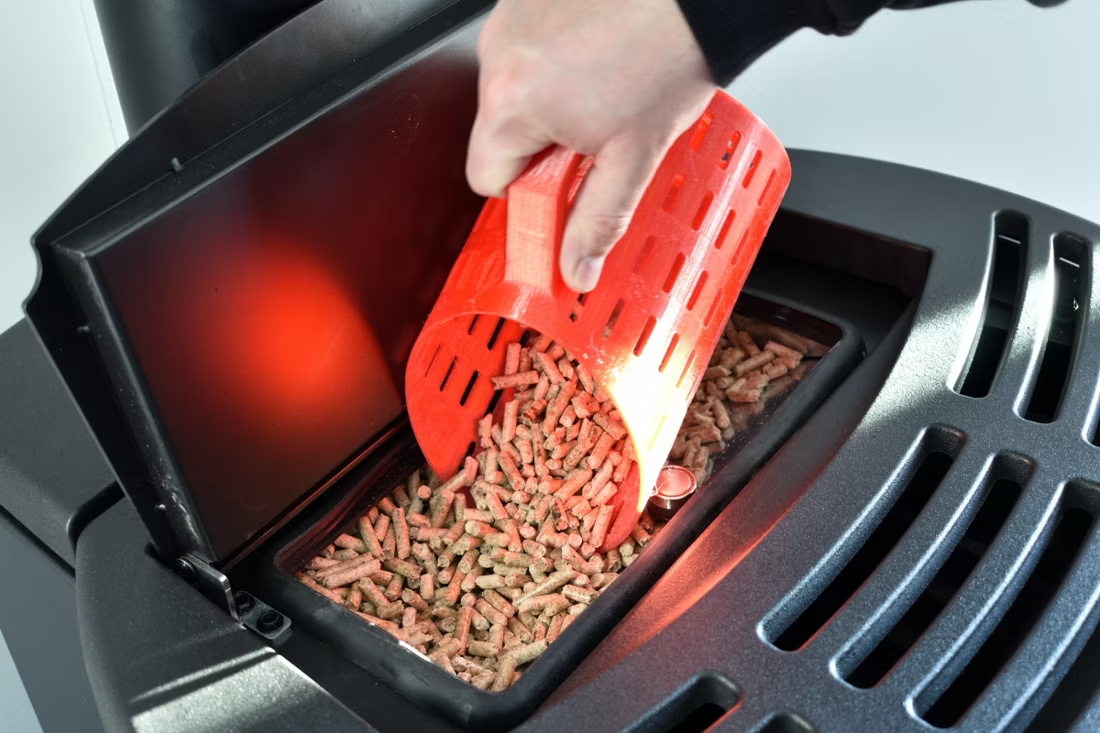
Pellet stoves fit that need well. A hopper-fed unit runs on a thermostat, holds heat overnight without reloading, and burns cleaner than cordwood—useful in a farming county where the woodlots along the Red Lake River and its tributaries produce mostly oak, maple, birch, and aspen, good firewood but labor-intensive to process during planting and harvest seasons. Regional pellet supply comes through mills and distributors including Indeck Energy Services, Lignetics, and Somerset Pellet Fuel, all of which serve Upper Midwest dealers, so fuel availability generally holds up even in a hard winter. The tradeoff is that a pellet stove needs electricity to run its auger and blower, which matters here—rural electric cooperative outages during blizzards and ice storms aren't rare in the valley, and a battery backup is worth planning for at install time.
Three steps. No salesperson until you're ready.
Tell us about your project
Your zip code, your situation, and the fuel you're leaning toward—or let the answers point you to one.
See what's actually available
The brands dealers within 100 miles genuinely carry—real options, never a catalog mirage.
Get your dealer & Project Guide
A trusted local dealer, plus the free Project Guide & Parts List that names every component of the job.
Frequently Asked Questions
How much does a pellet stove installation cost in Polk County?
Most pellet stove and insert installations in this part of Minnesota run in the $3,000 to $6,000 range, depending on whether the unit vents through an existing masonry chimney or needs a new through-wall vent kit. A pellet insert dropping into an old wood fireplace in a Crookston or East Grand Forks home is usually on the lower end since the chimney chase already exists. A freestanding stove in a rural farmhouse without any existing venting, or a home requiring a longer horizontal run through a thick exterior wall built for a 9,314-HDD climate, tends to land higher. A local dealer will confirm the number after walking the space.
What size pellet stove do I need for a Polk County home?
Sizing has to account for both square footage and the fact that Polk County's average winter low sits around -1°F with almost no windbreak across the open valley floor. A stove rated for 1,500 to 2,000 square feet is a common fit for a well-insulated main living area, but older farmhouses with less insulation or exposed north- and west-facing walls toward the open prairie often need to size up a step to keep pace on the coldest, windiest nights. An undersized unit will run at max output constantly and still fall short in a January cold snap; an oversized one cycles on and off more than it should. A dealer visit beats guessing off a square-footage chart alone.
Do I need a permit to install a pellet stove in Polk County?
Generally yes. If you're inside Crookston or East Grand Forks, the city building department handles the permit and inspection; in unincorporated parts of the county, that falls to the county planning and zoning office. Either way, most established local dealers pull the permit as part of the installation and coordinate the inspection, which is one reason to go through a full-service hearth dealer rather than a DIY install—improperly permitted venting can become a real problem at resale or with a homeowner's insurance claim.
Where do pellets come from and how do I keep enough on hand for a Polk County winter?
Pellets sold through local and regional dealers here typically come from mills like Indeck Energy Services, Lignetics, and Somerset Pellet Fuel, sold in 40-pound bags, usually by the ton pallet. Given a 9,314-HDD heating season that runs from October into April, a home using a pellet stove as a primary or major supplemental heat source can burn through 2 to 3 tons over a winter, more in an older farmhouse. Buying your ton or more in late summer or early fall—before demand and price both climb with the first cold snap—is standard practice for households here, and you'll want dry, rodent-proof storage, whether that's a garage, mudroom, or outbuilding.
Will my pellet stove still work if the power goes out?
Not on its own. Pellet stoves rely on electricity to run the auger that feeds fuel and the blower that distributes heat, so a power outage stops the stove even with a full hopper. That matters in Polk County, where blizzards and ice storms can knock out rural electric cooperative service for a stretch, especially outside Crookston and East Grand Forks. Many local homeowners pair a pellet stove with a battery backup unit or a small generator sized to run the stove's electronics, and some keep a wood stove or fireplace elsewhere in the house as a true off-grid fallback for the worst storms.
Pellet stove vs. wood stove—which makes more sense for my Polk County home?
Wood—cut from local oak, maple, birch, or aspen along the river bottoms—works with zero electricity and costs less if you're processing your own firewood, which appeals to farm households with the equipment and time to do it. Pellet stoves trade that self-sufficiency for convenience: automated feed, longer unattended burn times, and cleaner combustion, which matters if nobody in the house wants to split, stack, and load wood through a Minnesota winter. A lot of Polk County homes end up choosing based on lifestyle rather than climate—both fuels handle the cold here just fine, but pellet suits a household that wants set-and-forget heat, while wood suits one that wants to keep fuel cost as low as possible and doesn't mind the labor.
How much maintenance does a pellet stove actually need?
Expect to empty the ash pan every few days to weekly depending on how hard you're running it, and to clean the burn pot, glass, and hopper on a regular schedule through a long heating season like Polk County's. Most manufacturers recommend a full professional service—checking the auger motor, exhaust blower, gaskets, and venting—once a year, ideally before the season starts in September or October. Homes running the stove as a near-daily heat source from October through April will put more hours on the components than a supplemental-use setup, so don't skip the annual check even if the unit seems to be running fine.
What pellet stove brands are actually available through local dealers here?
Dealers serving northwestern Minnesota commonly carry Harman, Lopi, and Napoleon pellet stoves and inserts, all of which are built to handle sustained cold-climate use rather than occasional mild-winter burning. Availability varies by dealer and season, and the honest answer is that what's actually in stock and installable near Crookston or East Grand Forks matters more than any brand name—a matched local dealer can tell you what they carry, service, and can get parts for quickly, which counts for more over a 9,314-HDD winter than a spec sheet.
Are there rebates or tax credits for installing a pellet stove in Minnesota?
High-efficiency wood and pellet stoves rated at 75% efficiency or higher currently qualify for a federal residential energy credit worth 30% of the equipment and installation cost, up to $2,000, under the current biomass stove tax credit. Most EPA-certified pellet stoves sold today meet that efficiency threshold, but confirm with your dealer that the specific model and installation cost are documented properly, since you'll need that paperwork at tax time. Check for any additional state or utility rebates as well—these programs change from year to year, and a local dealer who does these installs regularly will usually know what's currently active.
What's the difference between an insert and a zero-clearance fireplace?
An insert is a fireplace that slides into a pre-existing wood-burning fireplace—if you don't have one, there's nothing to insert it into. A zero-clearance fireplace is built into a framed wall, which makes it the answer for remodels and new construction. Simple test: existing masonry fireplace means insert; blank or framed wall means zero-clearance.
Why is my open fireplace making my house colder?
Open fireplaces suck—literally. As the fire burns, it consumes air your furnace already paid to heat and pulls it out through the chimney, so the house is actually colder after the fire goes out than before you lit it. An insert fixes this: it seals the chimney, puts fixed glass across the front, and turns that hole in your house into a real heat source.
How much should I budget for a fireplace?
For an average home—covering the fireplace, the vent pipe, and basic installation—a budget between $3,900 and $5,500 gives you a lot of options across wood, gas, and pellet. By the time you add finish work, gas line, and electrical, the average complete installation lands between $5,000 and $12,000 all-in. In a remodel or new build, a good rule is to put about 2.5% of the total project cost toward the fireplace.
Can I install a fireplace myself?
If you're putting a fire in your house on purpose, it's best to work with an expert. Unless you're genuinely experienced in framing, gas line, vent pipe, and the national code on clearances to combustibles, have a professional do it—and ideally the same company that sells you the fireplace, so warranty, service, and liability all live under one roof.
Pellet Brands Stocked Around Polk County
Manufacturers will point you to the nearest stocking dealer.
Get your free Polk County pellet stove Project Guide & Parts List.
Tell me about your home, its heating setup, and how you plan to use the stove, and I'll match you with a trusted local Polk County dealer and send over a free Project Guide & Parts List—the exact equipment, vent kit, and recommended installer for your pellet heat project.
Find Your Fireplace →