
Zone heat and real ambiance for Polk County's brutal winters.
With winter lows averaging -1°F and more than 9,300 heating degree days a year, Polk County homes need serious primary heat first. Electric fireplaces earn their spot as no-venting zone heat and everyday ambiance in bedrooms, basements, and rooms the furnace never quite reaches. Find the right unit and connect with a trusted local dealer.
Every Project Starts From One of These Five Situations
Electric fireplaces fill a specific role in a zone 7 climate.
Polk County stretches across the Red River Valley in northwestern Minnesota, from the county seat in Crookston to East Grand Forks, sitting directly across the river from Grand Forks, ND, and roughly 75 miles from Fargo—territory where 9,314 heating degree days and average winter lows near -1°F aren't the exception, they're the baseline. That kind of cold means the primary heating decision in most Polk County homes is wood, pellet, or propane, not electric. Electric fireplaces aren't a whole-home heat strategy here, and it's worth being honest about that upfront.
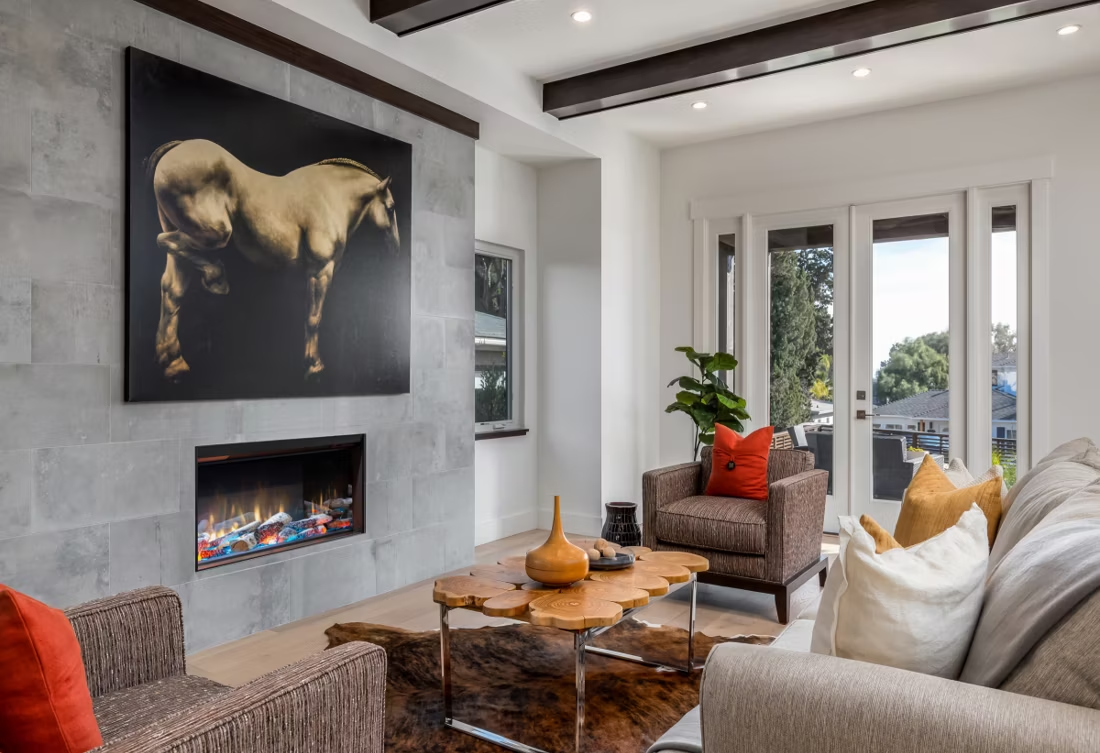
What electric does well in this climate is fill the gaps: a finished basement rec room with no chimney access, a bedroom that stays cold no matter what the furnace does, a rental or apartment in Crookston where a masonry install isn't an option, or simple ambiance in a living room that already has adequate forced-air or propane heat. No flue, no gas line, and in most cases just a standard outlet—which is why electric is often the fastest and least disruptive fireplace project a Polk County homeowner can take on, even if it's never the only heat source in the room.
Three steps. No salesperson until you're ready.
Tell us about your project
Your zip code, your situation, and the fuel you're leaning toward—or let the answers point you to one.
See what's actually available
The brands dealers within 100 miles genuinely carry—real options, never a catalog mirage.
Get your dealer & Project Guide
A trusted local dealer, plus the free Project Guide & Parts List that names every component of the job.
Frequently Asked Questions
How much does an electric fireplace installation cost in Polk County?
Cost depends almost entirely on the unit type. A plug-in freestanding or wall-mount electric fireplace typically runs a few hundred dollars installed, since it just needs a standard 120-volt outlet and takes an electrician (or a handy homeowner) very little time. Built-in electric fireplaces or inserts set into an existing masonry opening cost more—often requiring a dedicated 20-amp circuit run by a licensed electrician, plus surround and trim carpentry to finish the opening cleanly. In older Crookston and East Grand Forks homes with existing masonry fireplaces, that conversion work is usually the bigger line item, not the unit itself.
Will an electric fireplace actually heat my house in Polk County?
Not as a primary source, no. Most electric fireplace inserts top out around 5,000 to 9,000 BTU/hr of supplemental heat—enough to warm a single room comfortably, but nowhere near enough to carry a Polk County home through a stretch of -1°F nights and 9,300-plus heating degree days a year. Think of electric as zone heat for one room, paired with a furnace, boiler, or wood/pellet stove doing the real work elsewhere in the house. Homeowners who want backup heat for outages should look at wood or pellet instead, since electric units go dark the moment the power does.
Do I need a permit to install an electric fireplace in Polk County?
For a plug-in unit, generally no—it's no different than plugging in a space heater. For a built-in electric fireplace or insert that requires a new dedicated circuit, an electrical permit is typically required, and a licensed electrician should pull it as part of the job. If the install also involves opening up a wall or altering an existing masonry fireplace, check with Polk County's building permitting office before work starts. Most local dealers who sell built-in units can walk you through exactly what's required for your specific project.
What happens to my electric fireplace during a power outage?
It stops working entirely—no flame effect, no heat, nothing. That's an important consideration in a rural county where winter storms along the Red River Valley can knock out power for hours at a time. If backup heat during outages matters to you, an electric fireplace shouldn't be your only appliance in the room; a wood stove or pellet insert that runs independent of the grid is the better safety net. Many Polk County homeowners install electric for daily convenience and ambiance while keeping a wood or pellet unit elsewhere in the house for real emergency heat.
What's the difference between a wall-mount, freestanding, and built-in electric fireplace?
A wall-mount unit hangs on the wall like a flat-screen TV and plugs into a standard outlet—fast to install and easy to move if you change your mind. A freestanding electric stove or fireplace sits on the floor, often styled to look like a traditional wood stove, and also runs on a standard outlet in most cases. A built-in electric insert is designed to slide into an existing masonry fireplace opening or a custom-framed wall cavity, giving a more finished, permanent look but usually requiring a dedicated circuit and some carpentry to trim it out. For older Polk County homes with an existing but unused masonry fireplace, the built-in insert is the most popular route because it reuses the opening you already have.
What should I look for in an electric fireplace for a Minnesota winter?
Since heat output is inherently limited on any electric unit, prioritize BTU rating if you want real supplemental warmth rather than just flame effect—look for units rated closer to 9,000 BTU/hr if the room is drafty or poorly insulated, which is common in Polk County's older farmhouses. Also check whether the heater and flame effect can run independently; on cold-but-sunny days you may want the visual without the extra heat, and on the coldest nights you'll want both running. A dedicated 20-amp circuit (rather than sharing a circuit with other household loads) also matters if you plan to run the heater regularly through a long Red River Valley winter.
Can I convert an existing wood fireplace to electric in Polk County?
Yes—it's a common project in Crookston and East Grand Forks homes with older masonry fireplaces that no one uses anymore. An electric insert slides into the existing opening, and since there's no venting requirement, you don't need to touch the chimney at all (though many homeowners cap it for draft control). The main work is running a dedicated circuit if the unit calls for one and fitting a surround or faceplate to the opening. It's a much lower-cost, lower-disruption project than converting that same fireplace to gas or upgrading it to an EPA-certified wood insert.
What does it cost to run an electric fireplace regularly?
Electric heaters convert electricity to heat at roughly 100% efficiency, so operating cost comes down to the unit's wattage and local electricity rates—running a typical 1,500-watt heater element for several hours a day adds a modest but real amount to a winter power bill, more if you're relying on it heavily as zone heat in a cold room. In a county where many households are served by rural electric cooperatives, actual rates vary by provider, so it's worth checking your specific rate before assuming an electric fireplace will be cheaper to run than propane or wood for the same room.
Electric vs. wood or pellet—which should I choose for my Polk County home?
Wood and pellet stoves are the workhorses in this climate—oak, maple, birch, and aspen are all common local firewood species, and regional pellet suppliers like Indeck Energy Services, Lignetics, and Somerset Pellet Fuel keep pellet stoves well stocked through the winter. Both can genuinely heat a home through a Polk County winter and both keep working if the power goes out. Electric can't do either of those things, but it wins on installation simplicity, cleanliness, and cost for a supplemental room—no ash, no chimney, no fuel deliveries. Most Polk County homeowners who choose electric are adding a second heat source to a specific room, not replacing their primary wood, pellet, or propane setup.
Can I put a TV above my fireplace?
Yes—with an asterisk. Fireplaces are hot and TVs don't like heat. Either put a mantel between them to deflect rising warmth, or choose a fireplace with heat-management technology that creates a cool zone on the wall above—the wall stays around 125 degrees, barely warm, while the room still gets full heat. If you like clean lines and don't want a mantel, heat management is the answer.
Do electric fireplaces actually produce heat?
Yes—most put out around 4,800–5,000 BTUs from a standard outlet, which comfortably warms a bedroom, office, or den as a comfort-zone heater. What they won't do is carry a whole house the way wood, gas, or pellet can. Think of electric as ambiance-first with honest supplemental heat: flames on with no heat in July, flames plus warmth in January.
Can I install a fireplace myself?
If you're putting a fire in your house on purpose, it's best to work with an expert. Unless you're genuinely experienced in framing, gas line, vent pipe, and the national code on clearances to combustibles, have a professional do it—and ideally the same company that sells you the fireplace, so warranty, service, and liability all live under one roof.
Can a fireplace actually lower my heating bill?
Yes—by creating a comfort zone. A furnace heats every square foot of the house just to warm the one room you're in; a gas fireplace on low burns roughly a sixth of the gas a typical furnace does. Set the furnace around 55–60 degrees as a baseline, then heat the rooms your family actually uses. Families who heat this way commonly save $20–$60 a month.
Find your electric fireplace in Polk County.
Tell us about your space and what you're trying to heat, and we'll match you with a trusted local dealer and send over a free Project Guide & Parts List—the exact parts and recommended dealer for your electric fireplace project in Polk County.
Find Your Fireplace →