
Keep Your Family Warm and Safe—No Matter What
With an average winter low of 8°F and stretches of sub-zero nights most Januarys, Little Canada homes lean on wood heat for real warmth, not just ambiance. I'll match you with a trusted local dealer who can size and install it right.
Every Project Starts From One of These Five Situations
A dependable backup for metro winters, not a decorative extra.
Little Canada sits just north of St. Paul in Ramsey County at about 905 feet of elevation, and its heating load is no joke: a long, demanding heating season with an average winter low of 8°F put it in the same heating-demand range as Fargo, North Dakota, even though it's tucked inside the Twin Cities metro. Unlike parts of the country where wood burning gets restricted during winter inversions, Little Canada has no listed air quality nonattainment concerns, so there's no curtailment schedule to work around—just straightforward EPA 2020 NSPS certification requirements that apply to new stoves everywhere.
Oak, maple, birch, and aspen are the firewood species most common in this part of Minnesota, and because Little Canada is a built-out inner-ring suburb rather than a rural forest community, most homeowners buy seasoned, split cordwood from local firewood dealers and tree services rather than cutting their own—the nearest national forest land with cutting permits, Chippewa and Superior National Forest, is several hours north. That local-supply reality, paired with a real risk of ice-storm power outages and electric rates from Xcel Energy (Northern States Power Co) running close to 17 cents per kWh, keeps a wood stove attractive as a heat source that works with or without the grid.
Three steps. No salesperson until you're ready.
Tell us about your project
Your zip code, your situation, and the fuel you're leaning toward—or let the answers point you to one.
See what's actually available
The brands dealers within 100 miles genuinely carry—real options, never a catalog mirage.
Get your dealer & Project Guide
A trusted local dealer, plus the free Project Guide & Parts List that names every component of the job.
Frequently Asked Questions
How much does a wood stove installation cost in Little Canada?
Most Twin Cities-area wood stove installs run roughly $4,000 to $8,500, with the range driven mainly by whether you're working with an existing masonry chimney or starting from scratch. Little Canada's housing stock includes a lot of 1950s-70s ramblers and split-levels that often already have a working masonry fireplace, which makes an insert install cheaper than adding full Class A chimney pipe through a roof for a freestanding stove in a home without one. A local dealer will give you a firm number once they've seen your framing and existing venting, if any.
What size wood stove do I need for a Little Canada home?
With average winter lows around 8°F and plenty of nights that drop below zero during a Ramsey County cold snap, undersizing is the more common regret. A small stove rated under 1,000 square feet is fine as supplemental heat in a den or basement rec room, but for a main living space in an older rambler with less insulation than newer construction, most homeowners here do better with a stove in the 1,500-2,200 square foot range so it can carry an overnight burn on dense oak or maple without constant reloading.
Do I need a permit to install a wood stove in Little Canada?
Yes. New installations need a building permit, which in Little Canada runs through the city's building inspections department, working from the Minnesota State Building Code. The stove itself needs to meet EPA 2020 NSPS emissions standards regardless of jurisdiction. Most established Twin Cities hearth retailers handle the permit application and schedule the inspection as part of the installation, so you're not filing paperwork solo.
What's the difference between a wood stove and a wood insert for my house?
A freestanding wood stove sits on a hearth pad and vents through new Class A pipe, which works well in newer construction or additions without an existing chimney. A wood insert slides into an existing masonry firebox and reuses the chimney you've already got—the more common route in Little Canada's older rambler and split-level neighborhoods, where open masonry fireplaces built in the 1950s and 60s are still standing but rarely used efficiently. Inserts also tend to land toward the lower end of the local install cost range since the chimney structure is already in place.
Where do I buy firewood near Little Canada?
Because Little Canada is a built-out Ramsey County suburb rather than a rural forest community, almost nobody here is cutting their own firewood under a public land permit—the nearest options for that, Chippewa National Forest and Superior National Forest, sit several hours north. Instead, most local burners buy seasoned, split cordwood by delivery from Twin Cities-area firewood dealers and tree services, with oak and maple prized for long, hot overnight burns and birch and aspen commonly used as easier-to-split shoulder-season wood.
What's the best wood stove for a Minnesota winter like this?
Given how many nights drop below zero here, a stove that can hold a long, steady overnight burn matters more than one that just looks good in the living room. Catalytic stoves from Blaze King are popular in this climate for their extended 20+ hour burn times, while non-catalytic units from Jøtul or Pacific Energy offer solid heat output with less maintenance for households running wood as a supplemental rather than primary heat source. Either way, EPA 2020 NSPS certification is required on new installs, and it also means better efficiency out of dense local hardwoods like oak.
How often should my chimney be swept in Little Canada?
An annual sweep and inspection before the heating season starts—ideally in September or October, ahead of the first hard freeze—is the standard recommendation from the Chimney Safety Institute of America, and it matters here given how long the Twin Cities burning season runs, often October through April. Households burning several cords a winter, or burning less-seasoned birch or aspen that tends to build creosote faster than well-dried oak, should plan on a mid-season check as well.
Are there any rebates or tax credits for a new wood stove in Little Canada?
Minnesota doesn't run a state-level wood stove rebate program the way some Western states do, but the federal biomass stove tax credit (Section 25(C)) offers 30% of the cost of a qualifying high-efficiency wood or pellet stove, up to $2,000, for units with a thermal efficiency rating of 75% or higher. Most manufacturers publish which models qualify, and a local dealer can point you to a certified unit that clears the threshold before you buy.
Wood stove vs. pellet stove—which makes more sense in Little Canada?
Wood has the edge during outages: a wood stove needs no electricity to run, which matters given how ice storms periodically knock out power across Ramsey County, and oak or maple firewood is easy to source locally year-round. Pellet stoves burning regional brands like Indeck Energy Services, Lignetics, or Somerset Pellet Fuel tend to run cleaner and are easier to load and regulate day to day, but they need electricity for the auger and blower—a real consideration when residential power here runs about 17 cents per kWh and outages aren't rare. Many households in this climate keep a wood stove specifically for outage resilience and use pellet or gas heat for everyday convenience.
Why won't my new wood stove get going like my old one?
New wood stoves are 70%+ efficient, so far less heat goes up the flue—which also means less draft to get a fire established. The rule: build a genuinely hot fire for about 45 minutes before you choke it down. Skip that and you get smoke in the room, creosote in the chimney, and a fire that never takes off. Most performance complaints trace straight back to this.
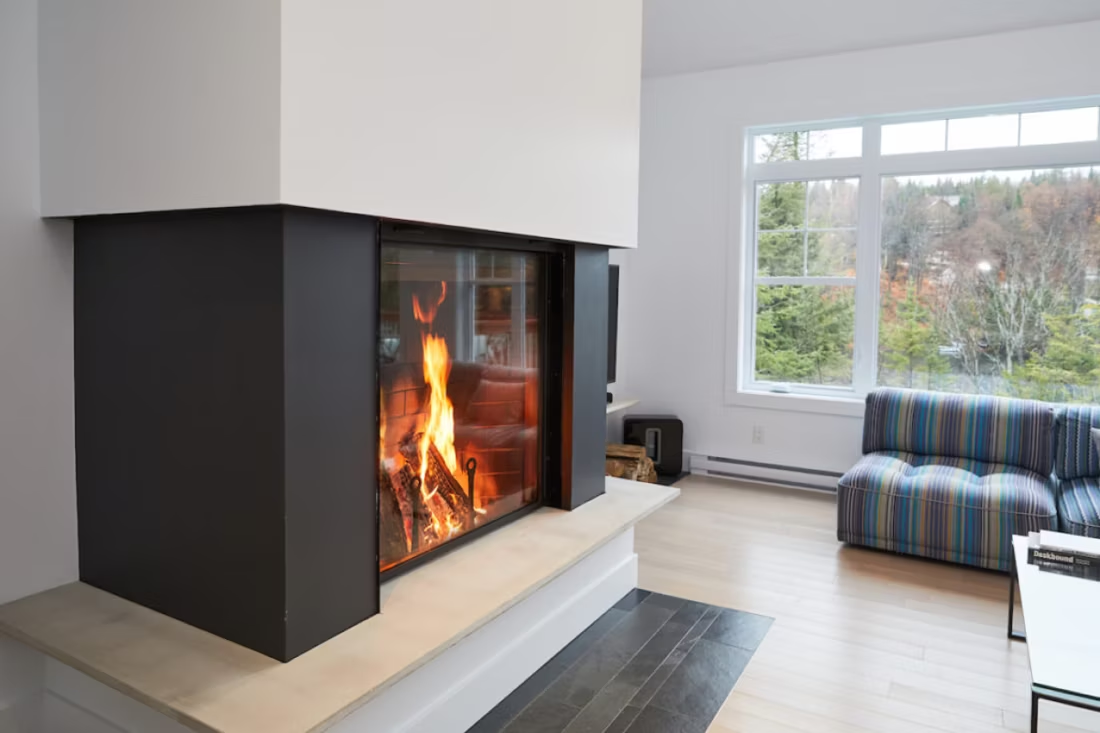
What does it take to replace an existing fireplace?
Fireplaces are like icebergs—bigger behind the wall than in front of it. Replacement means removing the surrounding tile or stone (the finish material laps onto the fireplace face), pulling the old unit, setting the new one in the same enclosure, and re-finishing the wall. A hearth professional can determine what's behind your wall without demolition during an in-home preview.
Can a fireplace actually lower my heating bill?
Yes—by creating a comfort zone. A furnace heats every square foot of the house just to warm the one room you're in; a gas fireplace on low burns roughly a sixth of the gas a typical furnace does. Set the furnace around 55–60 degrees as a baseline, then heat the rooms your family actually uses. Families who heat this way commonly save $20–$60 a month.
Can I install a fireplace myself?
If you're putting a fire in your house on purpose, it's best to work with an expert. Unless you're genuinely experienced in framing, gas line, vent pipe, and the national code on clearances to combustibles, have a professional do it—and ideally the same company that sells you the fireplace, so warranty, service, and liability all live under one roof.
Nearby Dealers
Hearth shops serving Little Canada and the surrounding area. Every listing shows whether it is a WhyFire partner, a dealer we have verified as authorized for the brands we recommend, or a local business carrying hearth products. No manufacturer pays for placement. How we verify dealers →
Fireside Hearth & Home - Roseville
The Chimney Pro’s Mn
Condor Fireplace & Stone
Custom Fireplace & Chimney Care
Fireside Hearth & Home - Eagan
Ferguson Enterprises
Fireside Hearth & Home - Minnetonka
Glowing Hearth & Home - Coon Rapids
Minnesota Gas Grills & Fireplaces
Fireside Hearth & Home - Maple Grove
Fireplace Gallery, Inc.
Pure Design Environments
Fireside Hearth & Home - Eden Prairie
2nd Generation Chimneys
Comfort By Design
Get your Little Canada wood heat project mapped out.
Tell me about your home and I'll match you with a trusted local dealer and send a free Project Guide & Parts List—sized for sub-zero Ramsey County nights, with the vent kit and parts specified so nothing gets guessed at.
Find Your Fireplace →