
Steady, low-maintenance heat for Lincoln County's coldest nights.
Automated, thermostat-controlled heat for the wind-scoured farmhouses and small towns of Lincoln County—Ivanhoe, Lake Benton, Tyler, and Hendricks. Find the right pellet stove and connect with a trusted local dealer.
Every Project Starts From One of These Five Situations
Reliable warmth without the woodpile.
Lincoln County sits on the Buffalo Ridge in southwest Minnesota—high, open, and among the windiest stretches of the state, which is why it hosts one of Minnesota's largest wind farms. That same wind that spins the turbines also strips heat out of farmhouses fast, and with only about 2,961 residents spread across Ivanhoe, Lake Benton, Tyler, and Hendricks, a lot of homes here are older, rural, and heated with whatever combination of propane, wood, and electric baseboard has worked for decades. Zone 6A winters run cold and long, with wind chills that can rival what you'd see in Fargo, and a pellet stove gives those homes a heat source that doesn't require splitting oak or hauling wood from the shelterbelt every day.
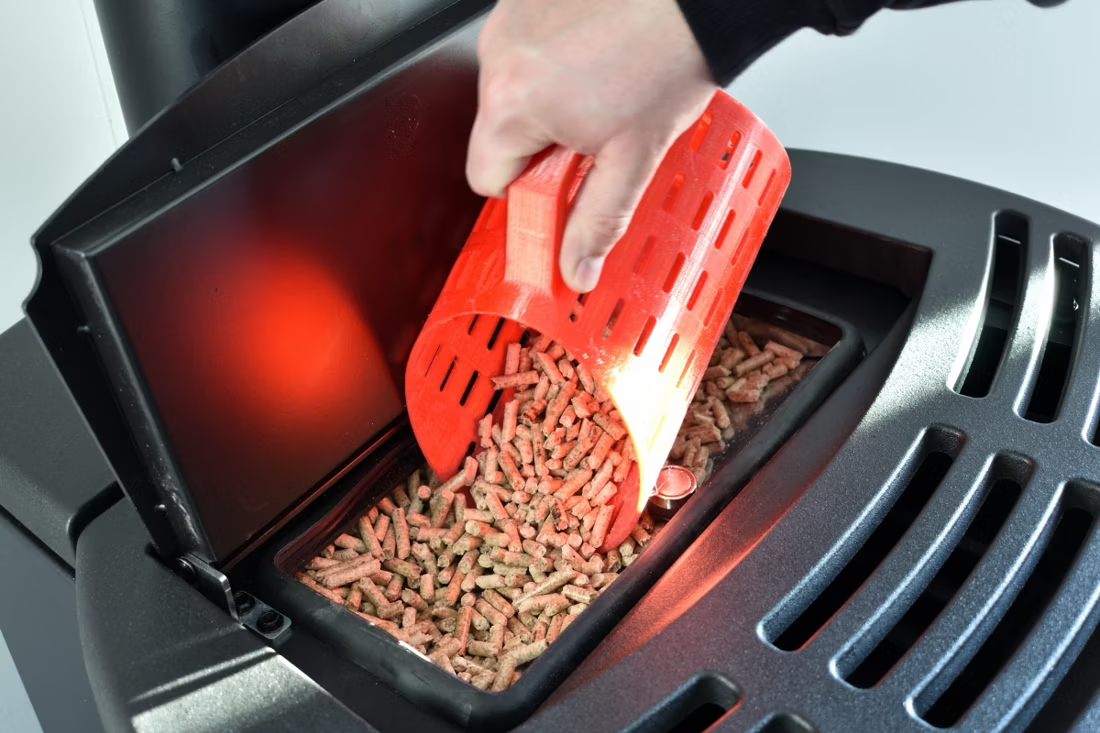
Local hardwood species—oak, maple, birch, and aspen—are still the backbone of wood heat in the county, but pellet stoves solve a different problem: consistent, hopper-fed heat that runs on a thermostat and doesn't demand daily tending. Regional pellet suppliers including Indeck Energy Services, Lignetics, and Somerset Pellet Fuel keep bagged pellets moving through southwest Minnesota's farm-and-feed stores, so fuel supply isn't the obstacle it can be in more remote parts of the country. Lincoln County also has no air quality non-attainment issues or winter burn restrictions, so pellet stoves here are a heating decision, not a regulatory one—the question is convenience and efficiency, not whether you're allowed to burn.
Three steps. No salesperson until you're ready.
Tell us about your project
Your zip code, your situation, and the fuel you're leaning toward—or let the answers point you to one.
See what's actually available
The brands dealers within 100 miles genuinely carry—real options, never a catalog mirage.
Get your dealer & Project Guide
A trusted local dealer, plus the free Project Guide & Parts List that names every component of the job.
Frequently Asked Questions
How much does a pellet stove installation cost in Lincoln County?
Across rural southwest Minnesota, a typical pellet stove installation runs roughly $3,000 to $6,000, depending on the unit, whether you're venting through an exterior wall or an existing chimney, and whether electrical work is needed for the hopper motor and blower. Freestanding pellet stoves installed in a farmhouse living room or converted mudroom tend toward the lower end; pellet inserts fitted into an existing masonry fireplace, which need a stainless liner run, cost more. Given Lincoln County's small, spread-out population, expect a modest travel charge if your installer is coming from Marshall or another regional hub outside the county.
Pellet stove or wood stove—which makes more sense for a Lincoln County farmhouse?
Wood stoves burn local oak, maple, birch, and aspen, run without electricity, and are the traditional choice for supplemental heat on Lincoln County farms—a real advantage when a Buffalo Ridge windstorm knocks out power. Pellet stoves trade that off-grid reliability for convenience: load the hopper, set the thermostat, and the auger and igniter do the rest, with far less ash and no splitting or hauling. For households with reliable electric service who want low-maintenance daily heat, pellet is often the better fit. For those who want a heat source that still works when the lines go down during an ice storm, wood remains the more resilient option—and plenty of local homes run both.
Where can I buy pellets in or near Lincoln County?
Regional pellet brands including Indeck Energy Services, Lignetics, and Somerset Pellet Fuel are distributed through farm supply and hardware stores across southwest Minnesota, and most rural homeowners buy by the ton or in bulk bag pallets ahead of winter rather than one bag at a time. Given Lincoln County's small population and rural layout, stocking up in fall—rather than making repeat trips into Marshall or Pipestone County for fuel—is the common approach among local pellet-stove owners.
Do I need a permit to install a pellet stove in Lincoln County?
Most pellet stove installations require a building permit through your local jurisdiction, and the unit itself needs to meet current EPA emissions certification. In Lincoln County's smaller towns and unincorporated townships, that typically means a call to the county building or zoning office before installation begins. Most local dealers handle the permit paperwork as part of the install, so you generally don't have to navigate it yourself—but it's worth confirming before work starts, especially if you're retrofitting an older farmhouse.
What size pellet stove do I need for a Lincoln County home?
Sizing depends on square footage, insulation, and ceiling height, but Lincoln County's exposure on the Buffalo Ridge means wind-driven heat loss is a real factor even in a well-built house—older farmhouses with single-pane windows and minimal insulation lose heat faster than the square footage alone would suggest. As a rough guide, small pellet stoves (under 1,000 sq ft) suit a single room or addition, while medium units (1,000–2,000 sq ft) handle most main living areas in town homes in Tyler or Lake Benton. For drafty rural farmhouses exposed to open prairie wind, it's often worth sizing up one step from what square footage alone would suggest. A local dealer can size your specific home during an in-home visit.
Will my pellet stove work if the power goes out?
No—this is the tradeoff to understand before buying. Pellet stoves rely on an electric auger to feed pellets and a blower to distribute heat, so a power outage shuts the unit down even with a full hopper. On the Buffalo Ridge, where wind storms and ice events can take out power for hours or longer, that's worth planning around. Some homeowners pair a pellet stove with a small backup generator or battery inverter sized for the auger motor; others keep a wood stove or fireplace as backup heat specifically because it doesn't need electricity. Ask your local dealer about the wattage draw on any model you're considering if outage backup matters to you.
What's the best pellet stove for Lincoln County's climate?
For zone 6A winters with regular sub-zero wind chills, look for a pellet stove with a larger hopper capacity—40 to 60 pounds—so it can run overnight without refilling, and a heat output in the 40,000 to 50,000 BTU range for whole-room or supplemental whole-house heat in an older farmhouse. Models with a variable-speed auger and thermostat-based control hold steadier temperatures through the wide swings common on open prairie. A local dealer can match hopper size and BTU output to your specific square footage and how exposed your home is to wind.
How much maintenance does a pellet stove need?
Pellet stoves need more routine attention than a gas unit but less than a wood stove: emptying the ash pan every few days to weekly depending on use, wiping the glass, and vacuuming the burn pot regularly during heavy winter use. Most manufacturers recommend a professional inspection and deeper cleaning of the exhaust venting and hopper mechanism once a year, ideally before the first cold snap. For a Lincoln County home running the stove daily through a long Minnesota winter, staying on top of ash removal keeps the auger and burn pot feeding pellets efficiently and avoids the smoky, inefficient burn that comes from a clogged pot.
Pellet stove vs. propane—which is right for my Lincoln County home?
Propane is the default heating fuel for a lot of rural Lincoln County homes without access to municipal natural gas, delivered by tank and burned in a furnace or freestanding heater. Pellet stoves offer a hedge against rising propane prices, since pellets are bought and stored in bulk rather than delivered by a fuel truck, and many homeowners run a pellet stove as zone heat in the main living area while propane handles the rest of the house. Pellet also brings visible, radiant fire—something a propane furnace doesn't offer—without the daily hauling that comes with wood. For homes looking to reduce propane consumption without giving up the reliability of a central heating system, a pellet stove as supplemental heat is a common and effective combination.
Why is a fireplace insert so efficient?
An insert does two things: it seals the chimney completely, so you stop losing air you already paid to heat, and it radiates warmth into the room through the firebox and glass. Most add a heat-exchange fan that pulls cool room air underneath, wraps it around the hot firebox, and pushes it back out warm. Your home is more efficient before you've even lit the first fire.
Why is my open fireplace making my house colder?
Open fireplaces suck—literally. As the fire burns, it consumes air your furnace already paid to heat and pulls it out through the chimney, so the house is actually colder after the fire goes out than before you lit it. An insert fixes this: it seals the chimney, puts fixed glass across the front, and turns that hole in your house into a real heat source.
How much should I budget for a fireplace?
For an average home—covering the fireplace, the vent pipe, and basic installation—a budget between $3,900 and $5,500 gives you a lot of options across wood, gas, and pellet. By the time you add finish work, gas line, and electrical, the average complete installation lands between $5,000 and $12,000 all-in. In a remodel or new build, a good rule is to put about 2.5% of the total project cost toward the fireplace.
Can I install a fireplace myself?
If you're putting a fire in your house on purpose, it's best to work with an expert. Unless you're genuinely experienced in framing, gas line, vent pipe, and the national code on clearances to combustibles, have a professional do it—and ideally the same company that sells you the fireplace, so warranty, service, and liability all live under one roof.
Pellet Brands Stocked Around Lincoln County
Manufacturers will point you to the nearest stocking dealer.
Find your pellet stove in Lincoln County.
Tell us a bit about your home and we'll match you with a trusted local dealer and a free Project Guide & Parts List—sized for your Lincoln County home, wind exposure included.
Find Your Fireplace →