
Stay Warm Across Lincoln County's Buffalo Ridge Winters.
Wood, gas, pellet, and electric fireplace resources for every town along Buffalo Ridge—from Ivanhoe to Tyler, Hendricks, Lake Benton, and Arco. Find the right unit and connect with a trusted local hearth retailer.
Every Project Starts From One of These Five Situations
Prairie heat for a Zone 6A county on the South Dakota line.
Lincoln County sits atop Buffalo Ridge, the windswept upland along Minnesota's border with South Dakota that hosts one of the state's largest wind farms—a landscape as exposed as it is productive. With fewer than 3,000 residents spread across farmsteads and five small cities, this is Zone 6A country, where winters run long and the open prairie wind pushes wind chill well past what the thermometer alone suggests. Oak, maple, birch, and aspen grow here mostly in scattered groves, shelterbelts, and CRP plantings rather than dense public forest, so most wood-burning households source cordwood from private land or local sellers rather than a Forest Service permit desk. A tight, well-sealed stove or insert matters more here than in a sheltered valley—Buffalo Ridge's wind will find every draft in a chimney chase.
What you'll find on this hub: hearth retailers, service technicians, and fuel suppliers covering every community in the county—from the county seat in Ivanhoe out to Tyler, Hendricks, Lake Benton, and Arco. Because Lincoln County is small, some of the businesses serving it are based in nearby regional hubs like Marshall or Pipestone and travel in for installs and service calls. Pick your fuel below to see local dealers, installation costs, and recommended units for a Zone 6A farmhouse or a home right on the ridge.
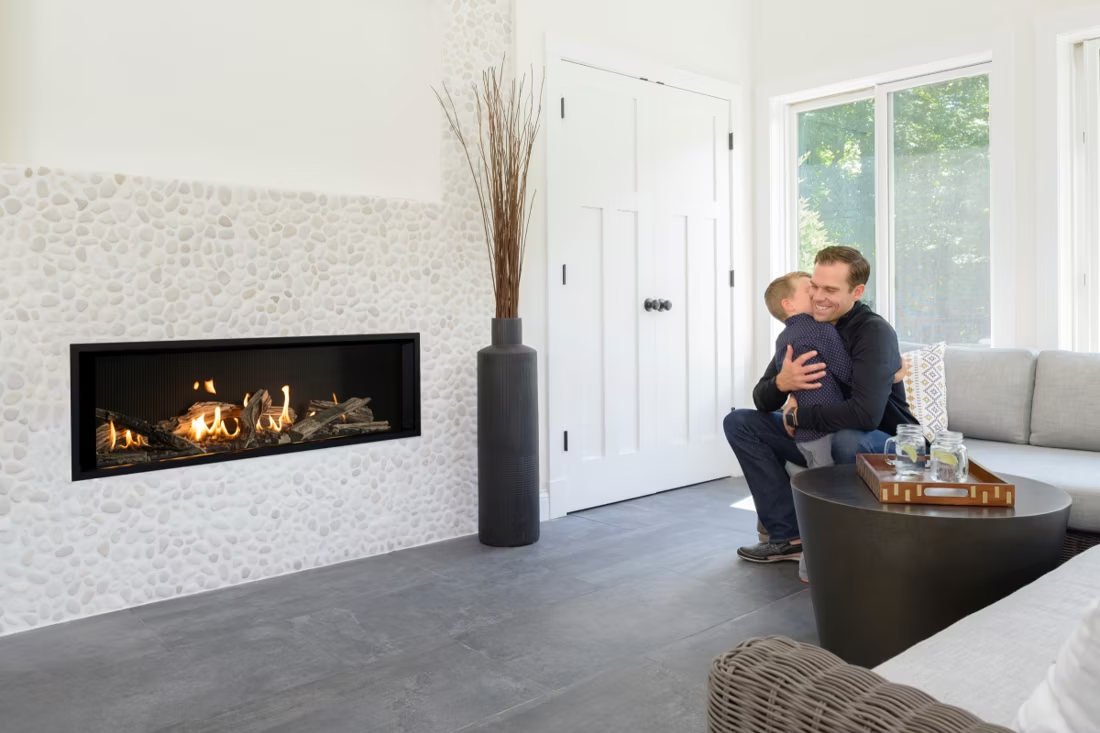
Four fuels. One honest answer for Lincoln County.
Three steps. No salesperson until you're ready.
Tell us about your project
Your zip code, your situation, and the fuel you're leaning toward—or let the answers point you to one.
See what's actually available
The brands dealers within 100 miles genuinely carry—real options, never a catalog mirage.
Get your dealer & Project Guide
A trusted local dealer, plus the free Project Guide & Parts List that names every component of the job.
Frequently Asked Questions
Which fuel works best in Lincoln County?
It depends on the home and how exposed it is up on the ridge. Wood remains a practical primary or backup heat source for farmhouses near shelterbelts of oak, maple, birch, and aspen—a well-sealed, EPA-certified stove can hold a fire through a Zone 6A cold snap the way a Fargo, ND homeowner would expect. Gas is the convenience pick where natural gas mains reach—mostly within Ivanhoe, Tyler, and the other small cities—while propane fills that role for the farmsteads and rural stretches between towns. Pellet stoves are a solid middle ground: with Lignetics, Somerset Pellet Fuel, and Indeck Energy Services all supplying the region, fuel availability isn't the constraint it can be in more remote counties. Electric is best treated as supplemental heat for a bedroom or a room over an unheated garage—it won't carry a Lincoln County home through a January windchill event on its own. Most homes here end up pairing a wood or pellet unit for primary heat with gas or propane as backup.
Do I need a permit to install a fireplace in Lincoln County?
In most cases, yes. New wood stoves, inserts, gas appliances, and pellet stoves typically require a building permit, and gas installations need a separate gas-line permit handled by a licensed installer. Inside Ivanhoe, Tyler, Hendricks, Lake Benton, or Arco, permits are usually pulled through that city's office; on the unincorporated township land that makes up most of the county, they go through the Lincoln County zoning and building office. Wood-burning appliances need to meet current EPA emissions standards to be installed new. Most local hearth retailers—whether based in the county or driving in from Marshall or Pipestone—handle the permit paperwork as part of the installation, so you're rarely filing it yourself.
Are there air quality restrictions on wood burning in Lincoln County?
No—Lincoln County has no wood-smoke non-attainment designation, winter inversion advisories, or curtailment periods like the ones you'll find in some western basin counties. The open, windswept prairie geography of Buffalo Ridge disperses smoke quickly rather than trapping it. That said, an EPA-certified stove is still worth choosing for the practical reason, not a regulatory one: less creosote buildup, less firewood burned per BTU, and cleaner glass over a heating season that runs many months longer than most of the country's.
Can one local hearth retailer handle all four fuel types?
With under 3,000 residents spread across the county, Lincoln County doesn't support the density of hearth showrooms you'd find in a larger market—many homeowners end up working with a multi-fuel dealer based in a regional hub like Marshall, about a 20-30 minute drive from Ivanhoe, or Pipestone. These regional retailers typically carry wood, gas, and pellet units, with electric fireplaces as a smaller line, and they're used to traveling out to farmsteads and small towns across the ridge for both sales visits and installation. If you're comparing fuels, ask up front whether the dealer will travel to your specific town—most do, but travel radius and scheduling windows vary.
How does service work in rural areas of Lincoln County?
Most chimney sweeps and gas technicians serving Lincoln County are based outside it—commonly in Marshall or Pipestone—and drive in on a route basis to reach Ivanhoe, Tyler, Hendricks, Lake Benton, and Arco. Expect a modest trip fee for service calls to outlying farmsteads, and expect fall (September–October) to book up fastest, since that's when most Zone 6A households get their annual chimney sweep or gas inspection done before the first hard freeze. If you're on a farmstead well off the highway, it's worth scheduling early and keeping a backup heat source on hand for the stretch of winter when Buffalo Ridge wind can complicate a mid-January service call.
What's the typical cost range for fireplace installation across all fuel types in Lincoln County?
Costs vary by fuel and by how much venting or gas-line work a home needs. Wood stove or insert installation: roughly $4,000-$9,000 for most homes, more where new masonry or a full chimney liner is involved. Gas fireplace, insert, or stove: roughly $4,000-$10,000, with cost driven mainly by how far the gas line has to run—homes already on a natural gas main in Ivanhoe or Tyler tend to land on the lower end; propane conversions on farmsteads can run higher. Pellet stove or insert: roughly $4,000-$7,000 for a typical install, with fuel cost kept reasonable by regional suppliers like Somerset Pellet Fuel and Lignetics. Electric fireplace: $200-$3,000 for the unit itself, plus $400-$1,200 in labor for anything beyond a plug-and-play install. A local dealer can give you a firm number once they've seen your chimney chase, gas access, and electrical panel.
Can a fireplace actually lower my heating bill?
Yes—by creating a comfort zone. A furnace heats every square foot of the house just to warm the one room you're in; a gas fireplace on low burns roughly a sixth of the gas a typical furnace does. Set the furnace around 55–60 degrees as a baseline, then heat the rooms your family actually uses. Families who heat this way commonly save $20–$60 a month.
How much should I budget for a fireplace?
For an average home—covering the fireplace, the vent pipe, and basic installation—a budget between $3,900 and $5,500 gives you a lot of options across wood, gas, and pellet. By the time you add finish work, gas line, and electrical, the average complete installation lands between $5,000 and $12,000 all-in. In a remodel or new build, a good rule is to put about 2.5% of the total project cost toward the fireplace.
Can I install a fireplace myself?
If you're putting a fire in your house on purpose, it's best to work with an expert. Unless you're genuinely experienced in framing, gas line, vent pipe, and the national code on clearances to combustibles, have a professional do it—and ideally the same company that sells you the fireplace, so warranty, service, and liability all live under one roof.
Wood, gas, pellet, or electric—how do I choose?
Match the fuel to your life, not the other way around. Wood: lowest fuel cost and total power-outage independence, but you're hauling and stacking. Gas: press a button, set a thermostat, no maintenance to speak of. Pellet: wood economics with automatic feeding, in exchange for weekly cleaning and a need for electricity. Electric: plugs in anywhere with honest supplemental heat. Nobody regrets the fuel that fits how they actually live.
Stove and Fireplace Dealers in Lincoln County
Listings include WhyFire partner dealers, dealers we have verified as authorized for the brands we recommend, and established local businesses that carry hearth products. Every listing shows which one it is. The ones marked Preferred run on WhyFire's software, so they can show you real pricing and book your appointment right here. No manufacturer pays for placement. How we verify dealers →
Today's Fireplace & Spa
Ramsdell F&m Ltd.
Cozy Home & Lighting, LLC
Andor Inc.
Larry's Lumber
Hometown Building Center
Find your fireplace project in Lincoln County.
Tell us your fuel and your town—Ivanhoe, Tyler, Hendricks, Lake Benton, Arco, or the farmstead between them—and we'll match you with a trusted local dealer and send a free Project Guide & Parts List: the exact parts, including the vent kit, sized for a Zone 6A home on Buffalo Ridge.
Find Your Fireplace →