
Find a pellet stove built for Lake County's 8,778 heating degree days.
From Two Harbors and Silver Bay to Finland and Isabella near the Superior National Forest boundary, Lake County winters push deep below zero for months at a stretch. We'll match you with a trusted local dealer who can size and install the right pellet stove or insert for your home, plus hand you a free planning packet with the exact parts list.
Every Project Starts From One of These Five Situations
Automated heat built for one of the coldest counties in the Lower 48.
Lake County sits in DOE Climate Zone 7—a designation shared with only a handful of counties in the continental U.S., including places like International Falls to the west. With an average winter low of 7°F and 8,778 heating degree days a year, this stretch of Minnesota's North Shore, from Two Harbors down through Silver Bay, Beaver Bay, and out to Finland and Isabella along the Superior National Forest boundary, asks more of a heating system than almost anywhere else in the country. With just 5,682 residents spread across a large, forested county, many homes are older lake cabins or rural properties where a steady, unattended heat source matters as much as raw BTU output.
Pellet stoves earn their place here because they run on a thermostat and a hopper instead of a constant feeding schedule—useful for households where someone works shifts at Silver Bay's taconite operations or spends long days out on the water or in the woods and can't tend a fire every few hours. Regional producers like Indeck Energy Services, Lignetics, and Somerset Pellet Fuel supply the pellets that stock local dealers, so you're not depending on big-box shipments arriving up the Highway 61 corridor during a snow event. The one honest tradeoff: a pellet stove's auger and blower need electricity, which matters in a county where lake-effect storms can knock out power for a day or more—something worth discussing with your dealer if you want a battery backup or a wood stove as a companion heat source.
Three steps. No salesperson until you're ready.
Tell us about your project
Your zip code, your situation, and the fuel you're leaning toward—or let the answers point you to one.
See what's actually available
The brands dealers within 100 miles genuinely carry—real options, never a catalog mirage.
Get your dealer & Project Guide
A trusted local dealer, plus the free Project Guide & Parts List that names every component of the job.
Frequently Asked Questions
How much does a pellet stove or insert installation cost in Lake County?
Most pellet stove and insert installations in Lake County run in the neighborhood of $3,000 to $6,500, depending on the unit, whether you're venting through an exterior wall or converting an existing masonry fireplace with an insert, and any hearth pad work needed for code clearances. Homes closer to Two Harbors typically see the lowest travel costs since that's where most dealer service territory is centered; installs out toward Finland, Isabella, or other rural pockets bordering the Superior National Forest may carry a small travel surcharge. Ask your local dealer for a firm quote after an in-home visit—venting path and electrical access (a standard outlet is required) are the two biggest cost drivers.
What size pellet stove do I need for a Lake County home?
Sizing in Lake County has to account for the county's Climate Zone 7 rating and 8,778 annual heating degree days—noticeably more demanding than most of the Midwest, closer to conditions in International Falls than to Duluth just down the shore. A stove sized for a moderate climate will likely underperform here on the coldest January nights. Small units (rated for 1,000–1,300 sq ft) suit a single-story cabin or supplemental use; medium units (1,300–2,000 sq ft) cover most year-round homes; larger hopper-capacity units are worth considering for older, less-insulated lake homes where heat loss is higher. A local dealer will factor in your insulation, ceiling height, and whether the stove needs to serve as primary or backup heat before recommending a model.
Will my pellet stove still work if the power goes out?
Not without a backup power source. Pellet stoves rely on an electric auger to feed fuel and a blower to circulate heat, so a standard unit shuts down the moment power fails—a real consideration in a county where North Shore storms off Lake Superior can take out power for extended stretches. Some homeowners pair a pellet stove with a small battery backup or generator sized to run the auger and blower; others keep a wood stove as a no-electricity fallback, which is a common setup in Lake County given the ready supply of oak, maple, birch, and aspen in the surrounding forest. Ask your dealer about UPS battery options built for specific pellet stove models if outage resilience matters to you.
Where do I buy pellets in Lake County, and how much should I stock up?
Local dealers in and around Two Harbors typically carry bagged pellets from regional producers including Indeck Energy Services, Lignetics, and Somerset Pellet Fuel, so you're buying fuel that's produced and distributed in the upper Midwest rather than shipped long-distance. Because Lake County's heating season stretches from roughly October through April, most households buy their season's supply—commonly 2 to 3 tons for a primary-heat home—in the fall before snow makes travel along Highway 61 and the county's back roads more difficult. Buying early also avoids the regional pellet shortages that can hit hardest during the coldest stretches of January and February.
Do I need a permit to install a pellet stove in Lake County?
Yes—new venting work for a pellet stove or insert generally requires a building permit through your local jurisdiction, whether that's the City of Two Harbors, Silver Bay, or the county's building department for unincorporated areas like Finland and Isabella. Because pellet appliances vent through a smaller, sidewall-friendly pipe rather than a full masonry chimney, the permitting process is usually simpler and faster than a wood stove install. Most local dealers handle the permit application and inspection scheduling as part of the installation, so you're not coordinating it yourself. Confirm requirements with your specific township before work begins, since Lake County's rural townships sometimes handle permitting differently than the incorporated cities.
What should I look for in a pellet stove for this climate?
Given Lake County's average winter low of 7°F and long heating season, prioritize a larger-hopper model that can run 24 to 40+ hours on a full load without a refill—helpful on nights when temperatures fall well below zero and you don't want to be up at 2 a.m. feeding fuel. Look for a stove with a reliable auto-ignition system and a thermostat mode, since consistent, unattended operation is the whole point of choosing pellet over wood in a county this cold. Local dealers stocking pellets from Indeck Energy Services, Lignetics, or Somerset Pellet Fuel can also tell you which stove models on their floor run cleanest on the specific pellet blends available regionally, which affects ash buildup and how often you'll need to empty the burn pot.
How often does a pellet stove need cleaning or service in Lake County?
Pellet stoves need less maintenance than wood stoves, but regular use through a Lake County winter still calls for attention. Plan to empty the ash pan every few days during heavy use, clean the burn pot and glass weekly, and schedule a full professional service—including the venting, auger mechanism, and gaskets—once a year, typically before the season starts in early fall. Homes running a pellet stove as primary heat through the full 8,778-degree-day season will see more wear on the auger motor and igniter than homes using it for supplemental warmth, so factor that into how closely you watch for service needs.
Can I use wood as a backup to pellet heat, and how do local cutting permits work?
Many Lake County households pair a pellet stove with a wood-burning backup, since wood doesn't require electricity and the county sits right against the Superior National Forest, where cutting permits are issued through the Superior National Forest office. Permits typically run $10 to $20 per cord and are valid during the May-through-October cutting season, letting you build up a supply of oak, maple, birch, or aspen before winter. It's a practical hedge in a county where storms off Lake Superior can knock out power for days—your pellet stove handles the day-to-day convenience, and a wood stove or fireplace insert covers you if the grid goes down.
Pellet stove or wood stove—which makes more sense for a Lake County home?
Pellet stoves win on convenience: load the hopper, set the thermostat, and let the stove run for a day or more without attention—a real advantage across a season with 8,778 heating degree days. Wood stoves win on independence: no electricity required, and abundant local oak, maple, birch, and aspen mean fuel is cheap or free if you hold a Superior National Forest cutting permit. Many Lake County homeowners end up with both—a pellet stove for daily comfort and a wood stove or insert as backup heat when winter storms take out power along the North Shore. If you can only choose one and your home has reliable power, pellet is usually the lower-maintenance choice for this climate; if outages are a real concern for your property, lean wood.
How often does a pellet stove need cleaning?
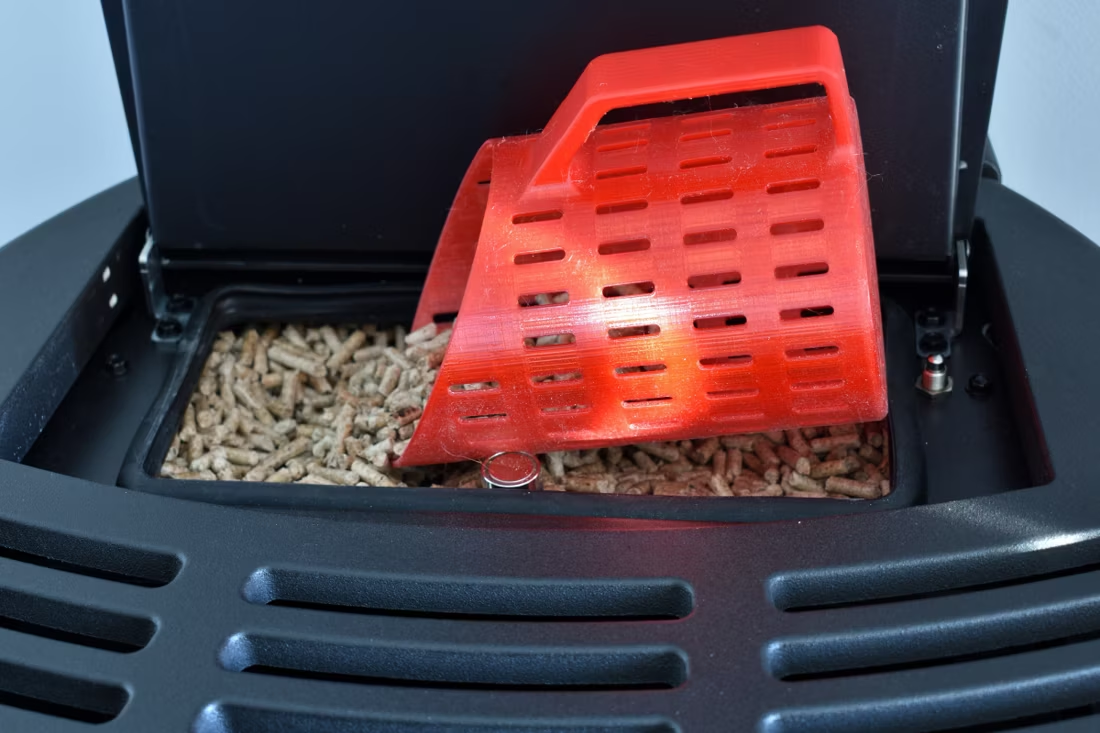
A clean pellet stove is a happy pellet stove. Plan on cleaning the burn pot about once a week when you're burning regularly—ash and clinkers gum up the air holes just like a pellet barbecue. Most pellet stove problems trace back to skipped cleaning that nobody explained up front. Some designs make it easy with a trapdoor burn pot: pull a lever and the gunk drops into the ash pan.
What's the difference between an insert and a zero-clearance fireplace?
An insert is a fireplace that slides into a pre-existing wood-burning fireplace—if you don't have one, there's nothing to insert it into. A zero-clearance fireplace is built into a framed wall, which makes it the answer for remodels and new construction. Simple test: existing masonry fireplace means insert; blank or framed wall means zero-clearance.
Can I install a fireplace myself?
If you're putting a fire in your house on purpose, it's best to work with an expert. Unless you're genuinely experienced in framing, gas line, vent pipe, and the national code on clearances to combustibles, have a professional do it—and ideally the same company that sells you the fireplace, so warranty, service, and liability all live under one roof.
Does a fireplace add value to my home?
On average, a fireplace adds back to the home about the same amount you spent installing it. Add the monthly savings from heating the rooms you actually use instead of the whole house—often hundreds of dollars a year—and the value case is strong before you even count what a fire does for how your family uses the room.
Pellet Brands Stocked Around Lake County
Manufacturers will point you to the nearest stocking dealer.
Find your pellet stove in Lake County.
Tell us a bit about your home and we'll match you with a trusted local dealer who can size the right pellet stove or insert for Lake County's long, cold winters—plus a free Project Guide & Parts List with the exact parts, including the vent kit, for your project.
Find Your Fireplace →