
Find gas heat built for Lake County's coldest nights.
From the Lake Superior shoreline in Two Harbors to the deep interior cold near Isabella, propane-fed gas heat delivers instant warmth without tending a fire. Find the right unit and connect with a trusted local dealer.
Every Project Starts From One of These Five Situations
Propane heat for a county with no natural gas grid.
Lake County runs from Two Harbors up the North Shore of Lake Superior through Silver Bay, Beaver Bay, and Finland, then inland through the Superior National Forest to Isabella—a stretch of Minnesota that regularly logs some of the coldest overnight lows in the Lower 48. At Climate Zone 7 with roughly 8,778 heating degree days and an average winter low near 7°F, the county sits in the same cold-climate tier as International Falls and Duluth's colder inland neighborhoods, though Lake Superior's moderating effect softens the shoreline compared to what Isabella sees just a few miles inland.
With a population under 6,000 spread across a lot of ground, natural gas mains don't reach Lake County—propane is the fuel behind essentially every gas fireplace, insert, and stove installed here. That matters for the North Shore's substantial cabin and second-home market, where owners want reliable, low-upkeep heat for a place they visit on weekends rather than a wood stove that needs daily attention. A well-chosen gas unit also gives year-round residents backup heat during the ice storms and power interruptions that come with a long Superior winter, provided it's paired with a battery-backup or self-powered ignition system.
Three steps. No salesperson until you're ready.
Tell us about your project
Your zip code, your situation, and the fuel you're leaning toward—or let the answers point you to one.
See what's actually available
The brands dealers within 100 miles genuinely carry—real options, never a catalog mirage.
Get your dealer & Project Guide
A trusted local dealer, plus the free Project Guide & Parts List that names every component of the job.
Frequently Asked Questions
How much does a gas fireplace installation cost in Lake County?
Most gas fireplace and insert installations in Lake County land in the $4,000 to $9,500 range, with the spread driven mainly by propane tank status, venting complexity, and whether you're retrofitting an existing masonry fireplace or building new. Homes that already have a propane tank and regulator in place for a furnace or water heater come in on the lower end, since the installer is just tapping into existing service. Cabins or new-construction homes that need a fresh propane tank set and buried line run higher. Local dealers will walk your specific site—including shoreline vs. inland distance from the propane supplier—before giving a firm number.
Can I convert my existing wood fireplace to gas?
Yes, and it's a common project in the older lake homes and cabins scattered from Two Harbors to Beaver Bay. A gas insert typically drops into the existing masonry opening and vents through a stainless liner run up the original chimney, so you keep the look of the fireplace while gaining push-button heat. Since Lake County runs on propane rather than natural gas, the installer will also confirm your tank capacity and line sizing can support the added appliance—a detail that matters more here than in areas with utility gas service.
Do I need natural gas to install a gas fireplace, or can I use propane?
In Lake County, propane is effectively the only option—there's no natural gas utility infrastructure serving Two Harbors, Silver Bay, or the more rural parts of the county. Every gas fireplace, insert, or stove installed here runs on propane, either from an existing tank shared with a furnace or water heater, or a dedicated tank set up specifically for the fireplace. Regional propane suppliers deliver throughout the county, including to seasonal cabins along the North Shore. Your local dealer can size the tank and regulator correctly so the unit performs at full output even during the coldest stretches of an Isabella-area winter.
Will my gas fireplace work during a power outage?
Most modern gas fireplaces will, provided you choose the right ignition system. Units with IPI (intermittent pilot ignition) run on a small battery backup that kicks in the moment power drops, so the fireplace still lights on demand. Valor's gas fireplaces go a step further—the pilot's thermocouple generates its own electricity, so there are no batteries to remember at all. That distinction is worth asking about directly for a North Shore property, where winter storms off Lake Superior can knock out power for hours or longer, and a wood-burning backup isn't always practical at a cabin nobody's staying in that weekend.
What's the difference between a gas fireplace, gas insert, and gas stove?
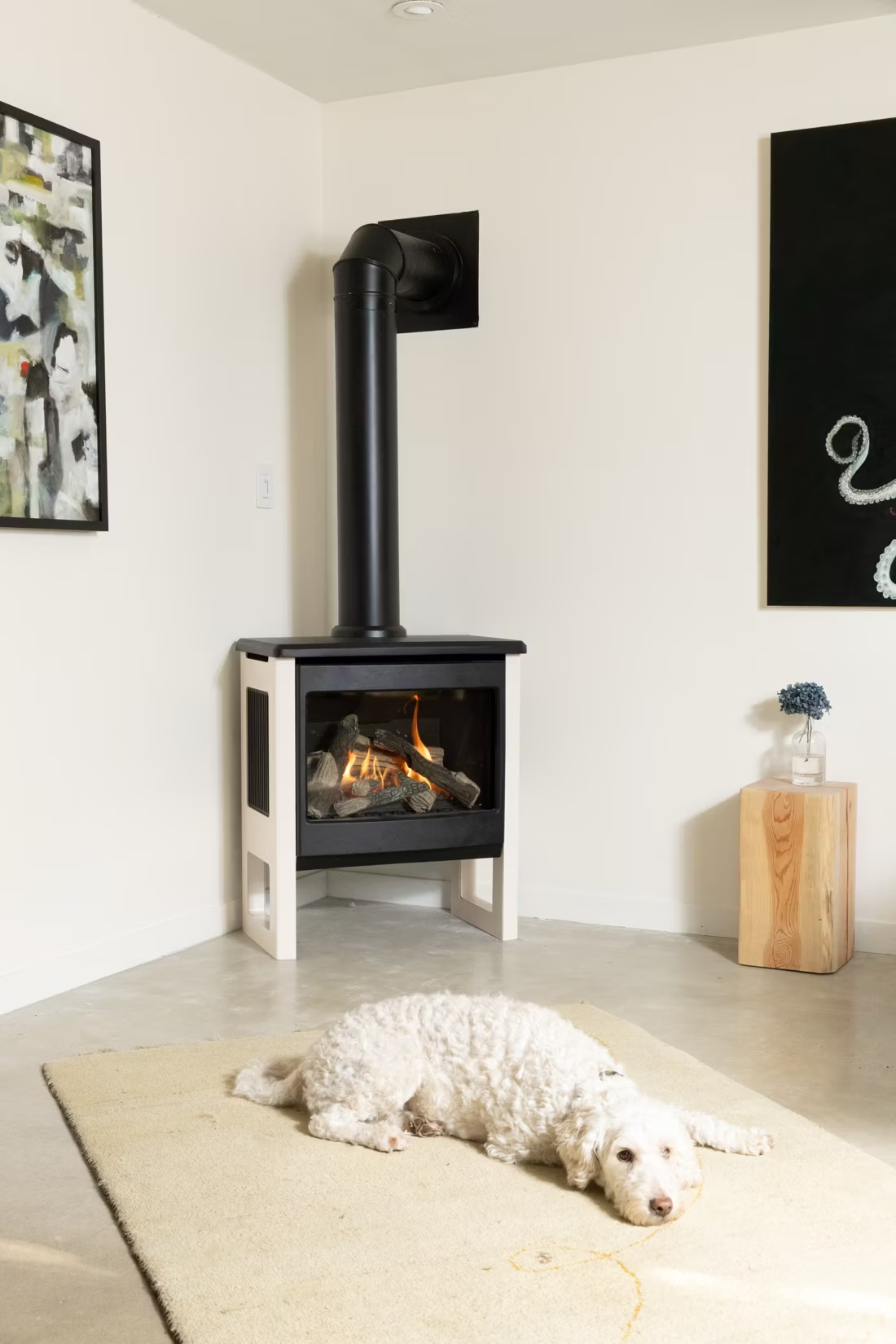
A gas fireplace is a fully built-in unit framed into a wall—the right choice for new construction or a remodel without an existing hearth. A gas insert slides into an existing masonry fireplace opening, which fits a lot of the older lake homes and cabins around Two Harbors and Finland that already have a chimney but want to stop hauling wood. A gas stove is a freestanding cabinet-style unit that sits on the floor like a wood stove but runs on propane—a good fit for a cabin room or addition without an existing fireplace. A local dealer can tell you which fits your specific structure after seeing the space.
Do I need a permit to install a gas fireplace in Lake County?
Yes—new gas fireplace installations require a building permit through the Lake County building department, and the propane line work should be done by a licensed gas-fitter or propane technician, not a general handyman. Most hearth dealers who sell and install these units handle the permitting and coordinate the propane line and venting together, which is worth the peace of mind given how spread out service providers can be across a rural county this size.
What's the difference between vented and vent-free gas fireplaces?
Vented gas fireplaces (direct-vent) pull combustion air from outside and exhaust it back outside through a sealed pipe—they're the safer, more universally recommended choice and deliver real, sustained heat output, which matters when you're trying to actually offset an 8,778-heating-degree-day winter. Vent-free units burn propane directly into the room without external venting; they're legal in Minnesota under specific room-size and ventilation rules but release some combustion byproducts indoors. For Lake County's genuinely cold winters, most local dealers steer homeowners toward direct-vent units for both heat performance and indoor air quality, especially in tightly sealed modern cabins.
How often should my gas fireplace be serviced?
Plan on an annual inspection, ideally in early fall before the heating season ramps up. A technician checks the burner, pilot assembly, venting, and gas connections, and cleans the glass and interior—quick work compared to a wood chimney sweep, but just as important, since propane systems in a county without natural gas utility oversight rely more heavily on individual maintenance. Expect to pay roughly $150 to $250 for a standard annual visit from a local hearth or propane service provider.
Gas vs. wood—which is right for my home?
Wood has deep roots in Lake County—oak, maple, birch, and aspen are all common locally, and Superior National Forest cutting permits run just $10 to $20 per cord during the May-through-October season, making self-cut firewood a genuinely cheap heat source for full-time residents. Wood also keeps burning with no power at all, which matters for remote, year-round homes. Gas wins on convenience: no splitting, hauling, or ash cleanup, and instant heat that's ideal for a North Shore cabin you only visit some weekends, or for a primary living space where you want zone heat without tending a fire daily. Many county homeowners run both—wood for the cabin's woodstove tradition, propane gas for the everyday living room unit.
Why is a fireplace insert so efficient?
An insert does two things: it seals the chimney completely, so you stop losing air you already paid to heat, and it radiates warmth into the room through the firebox and glass. Most add a heat-exchange fan that pulls cool room air underneath, wraps it around the hot firebox, and pushes it back out warm. Your home is more efficient before you've even lit the first fire.
What's the difference between an insert and a zero-clearance fireplace?
An insert is a fireplace that slides into a pre-existing wood-burning fireplace—if you don't have one, there's nothing to insert it into. A zero-clearance fireplace is built into a framed wall, which makes it the answer for remodels and new construction. Simple test: existing masonry fireplace means insert; blank or framed wall means zero-clearance.
How much should I budget for a fireplace?
For an average home—covering the fireplace, the vent pipe, and basic installation—a budget between $3,900 and $5,500 gives you a lot of options across wood, gas, and pellet. By the time you add finish work, gas line, and electrical, the average complete installation lands between $5,000 and $12,000 all-in. In a remodel or new build, a good rule is to put about 2.5% of the total project cost toward the fireplace.
Does a fireplace add value to my home?
On average, a fireplace adds back to the home about the same amount you spent installing it. Add the monthly savings from heating the rooms you actually use instead of the whole house—often hundreds of dollars a year—and the value case is strong before you even count what a fire does for how your family uses the room.
Find your gas fireplace in Lake County.
Tell us a bit about your home or cabin and we'll put together a free Project Guide & Parts List—the right gas fireplace or insert, the exact parts including the vent kit, and a trusted local dealer to install it.
Find Your Fireplace →