
Reliable gas heat for the coldest corner of Minnesota.
Koochiching County racks up more than 10,000 heating degree days a year—among the highest totals in the Lower 48. Find a gas fireplace, insert, or stove built for that kind of winter, and get matched with a trusted local dealer serving International Falls, Rainer, Littlefork, and the rest of the county.
Every Project Starts From One of These Five Situations
Instant heat when the thermometer bottoms out.
International Falls has earned its nickname—'the Icebox of the Nation'—honestly. With an average winter low around -6°F and a climate zone 7 designation shared with places like International Falls's own longtime rival Fargo and northern outposts like Duluth and Caribou, Koochiching County sees stretches where a fire needs to be reliable, not just pretty. A gas fireplace or insert that fires on demand, holds a steady output for hours, and doesn't need anyone to feed it at 2 a.m. is a real asset here, not a luxury.
Natural gas service tends to run along International Falls and the immediately surrounding area, while propane is the standard fuel for the rest of this sparsely populated, heavily forested county—Rainy River, Littlefork, Big Falls, and the townships in between. Either fuel works fine in a modern gas fireplace or insert; your local dealer will set the unit up for whichever service reaches your address. With no air quality non-attainment issues on record for the county, there's no curtailment schedule to work around here—gas or wood, you burn on your own schedule.
Three steps. No salesperson until you're ready.
Tell us about your project
Your zip code, your situation, and the fuel you're leaning toward—or let the answers point you to one.
See what's actually available
The brands dealers within 100 miles genuinely carry—real options, never a catalog mirage.
Get your dealer & Project Guide
A trusted local dealer, plus the free Project Guide & Parts List that names every component of the job.
Frequently Asked Questions
How much does a gas fireplace installation cost in Koochiching County?
Costs vary more here than in a lot of counties because of the natural gas vs. propane split. A direct-vent gas insert into an existing masonry fireplace, with fuel service already run to the house, typically lands in the $4,000-$7,500 range. A new built-in gas fireplace for a remodel or new construction—including framing, venting, and a fresh gas or propane line—usually runs higher, especially in the outlying townships where a new propane tank installation adds to the bill. Given the distances involved in a county this size, expect your local dealer's estimate to include some allowance for travel to more remote addresses like Big Falls or Northome.
Can I convert my existing wood fireplace to gas?
Yes, and it's a common request in older homes around International Falls with a masonry fireplace that was never a great heat source to begin with. A gas insert slides into the existing firebox and vents through a stainless liner run up your current chimney, which keeps costs down since you're not adding new masonry. Whether you're on natural gas in town or propane out in the county, most insert models can be configured for either—your dealer sets the orifice and regulator to match your fuel source.
Do I need natural gas, or does propane work fine?
Propane is the more common answer across most of Koochiching County. Natural gas infrastructure is concentrated in and around International Falls; outside that footprint—Rainy River, Littlefork, Big Falls, and the rural townships—propane tanks are the norm for home heating appliances, including gas fireplaces. Nearly every gas fireplace, insert, or stove on the market today is available in either a natural gas or propane configuration, so fuel availability at your address shouldn't limit your options much.
Will my gas fireplace still work if the power goes out?
Most will, which matters in a county where winter storms can knock out power for hours at temperatures well below zero. Units with an IPI (intermittent pilot ignition) system run on a small battery backup that kicks in automatically when the power drops, so the fireplace lights and operates normally. Valor's gas fireplaces go a step further—the pilot's thermocouple generates the electricity the unit needs to run, so there's no battery to remember or replace. Ask your local dealer about the ignition system on any unit you're considering, especially if you're planning on this fireplace as backup heat during outages.
What's the difference between a gas fireplace, gas insert, and gas stove?
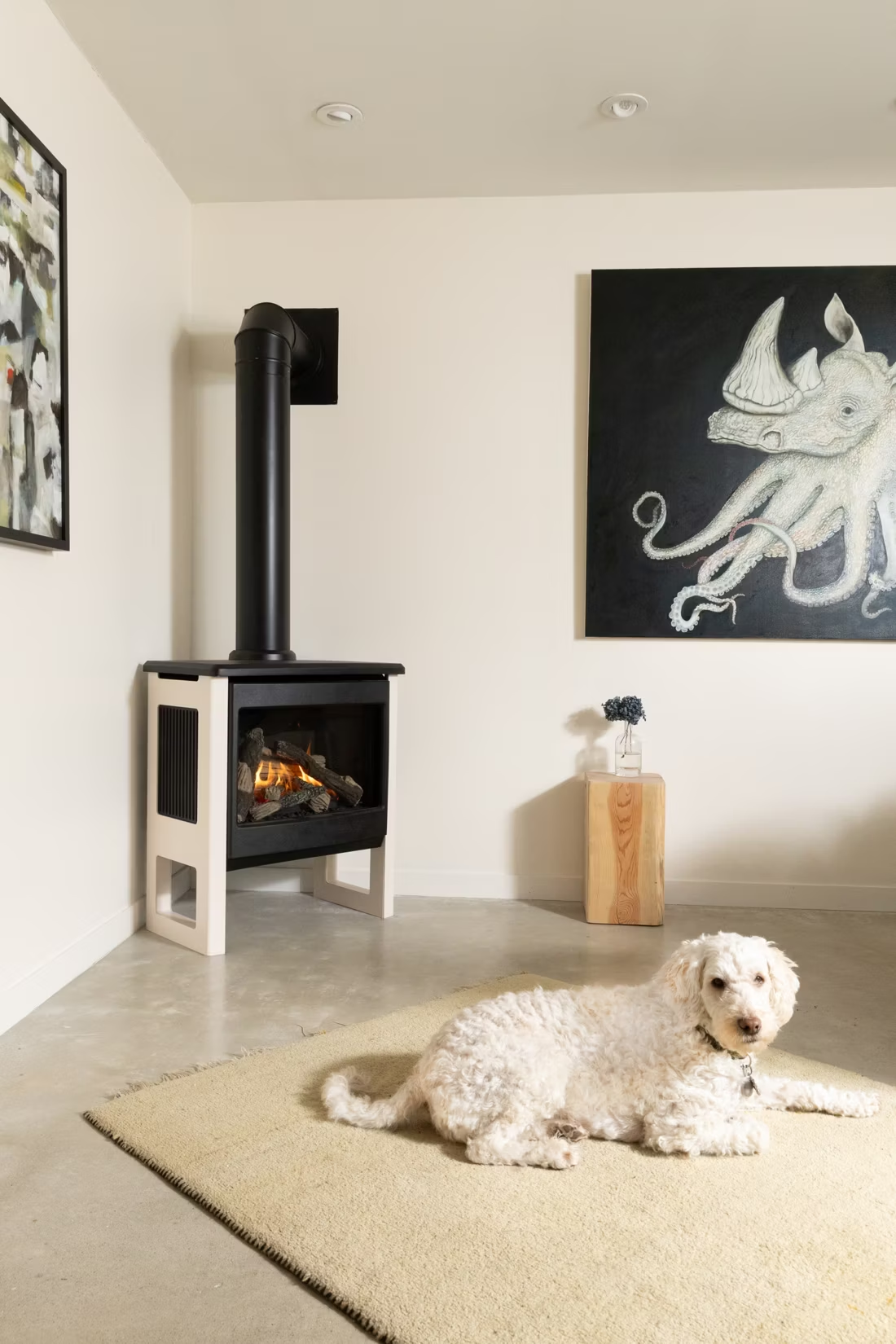
A gas fireplace is a fully built-in unit framed into a wall—the right choice for new construction or a major remodel. A gas insert drops into an existing masonry fireplace and uses the existing chimney as a vent chase, which is the common upgrade path for older International Falls and Littlefork homes with a fireplace that never put out much heat. A gas stove is a freestanding cabinet unit, similar in footprint to a wood stove, that works well in a cabin or a room without an existing fireplace opening. Local dealers can walk through which fits your floor plan.
Do I need a permit to install a gas fireplace in Koochiching County?
Generally yes—a building permit and a gas or propane line permit are standard for a new gas fireplace installation, whether you're inside International Falls city limits (through the city's building department) or in one of the townships (through the county's permitting office). The gas or propane connection itself needs to be handled by a licensed installer, which is one reason working with an established local dealer simplifies things—they coordinate the appliance install, the fuel line work, and the inspection instead of leaving you to juggle separate trades.
Should I get a vented or vent-free gas fireplace?
For a climate zone 7 county with winters like this one, vented (direct-vent) units are the clear recommendation. Vent-free fireplaces release combustion byproducts—water vapor, small amounts of CO and NO₂—directly into the room, and in a tightly sealed, well-insulated home built for -6°F average lows, that moisture has nowhere to go. Direct-vent units draw combustion air from outside and exhaust it back outside through a sealed pipe, which keeps indoor air quality clean regardless of how tight or how cold the house is. Local dealers install direct-vent units almost exclusively here for that reason.
How often should a gas fireplace be serviced?
Plan on an annual inspection, ideally in late summer or early fall before the county's long heating season kicks in. A technician checks the burner, pilot assembly, venting, and gas or propane connections, and cleans the glass and interior. It's a quicker visit than a wood chimney sweep, but with a heating season that stretches from September through May here, it's worth staying current—a fireplace that's running near-daily for eight months a year sees more wear than one used a few weekends a winter.
Gas vs. wood—which makes more sense in Koochiching County?
Wood has deep roots here—oak, maple, birch, and aspen are all common locally, and with no air quality non-attainment restrictions on the books, there's no curtailment schedule limiting when you can burn. Wood also keeps working during a power outage, which matters given how remote parts of this county are. Gas wins on convenience: no wood to split, haul, or store, no ash to clean, and heat at the flip of a switch or the press of a remote button—a real advantage for anyone who's away from the house for stretches, has mobility limitations, or just wants zone heat in the main living area without the daily tending. Plenty of homes here run both: gas for the living room, wood for backup and for the cabin or garage.
Why is a fireplace insert so efficient?
An insert does two things: it seals the chimney completely, so you stop losing air you already paid to heat, and it radiates warmth into the room through the firebox and glass. Most add a heat-exchange fan that pulls cool room air underneath, wraps it around the hot firebox, and pushes it back out warm. Your home is more efficient before you've even lit the first fire.
What's the difference between an insert and a zero-clearance fireplace?
An insert is a fireplace that slides into a pre-existing wood-burning fireplace—if you don't have one, there's nothing to insert it into. A zero-clearance fireplace is built into a framed wall, which makes it the answer for remodels and new construction. Simple test: existing masonry fireplace means insert; blank or framed wall means zero-clearance.
Can I install a fireplace myself?
If you're putting a fire in your house on purpose, it's best to work with an expert. Unless you're genuinely experienced in framing, gas line, vent pipe, and the national code on clearances to combustibles, have a professional do it—and ideally the same company that sells you the fireplace, so warranty, service, and liability all live under one roof.
Can a fireplace actually lower my heating bill?
Yes—by creating a comfort zone. A furnace heats every square foot of the house just to warm the one room you're in; a gas fireplace on low burns roughly a sixth of the gas a typical furnace does. Set the furnace around 55–60 degrees as a baseline, then heat the rooms your family actually uses. Families who heat this way commonly save $20–$60 a month.
Find your gas fireplace in Koochiching County.
Tell us a bit about your home and fuel source—natural gas or propane—and we'll match you with a trusted local dealer and send over a free Project Guide & Parts List: the exact parts, including the vent kit, for your gas fireplace project in Koochiching County.
Find Your Fireplace →