
Add electric warmth to the icebox of the nation.
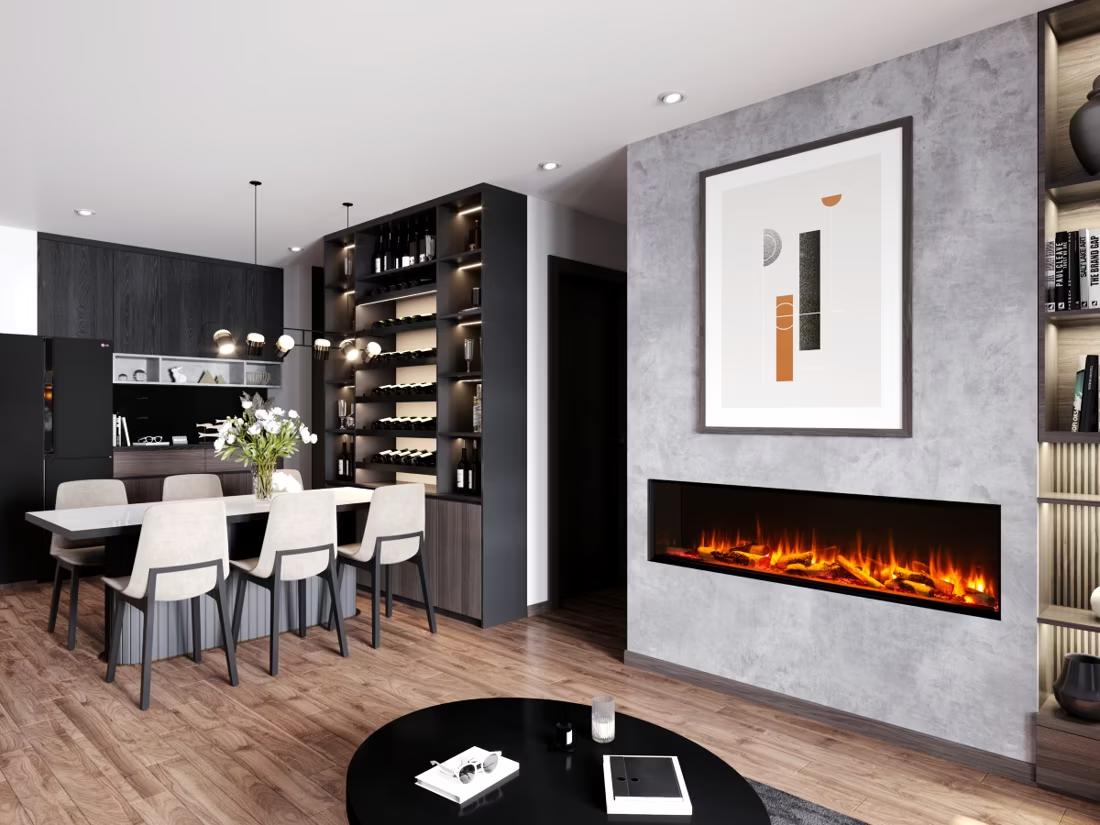
International Falls has earned its nickname honestly—Koochiching County runs some of the harshest winters in the Lower 48. Electric fireplaces here add fast, no-venting zone heat and real ambiance to living rooms, additions, and cabins, alongside whatever's already keeping the furnace company. Find the right unit and get matched with a trusted local dealer.
Every Project Starts From One of These Five Situations
Convenient warmth for the coldest corner of Minnesota.
Koochiching County sits along the Rainy River on the Ontario border, home to about 7,400 residents spread across International Falls, Big Falls, Northome, and the forested stretches near Voyageurs National Park. It's rated IECC Climate Zone 7—the coldest zone recognized in the continental U.S.—with roughly 10,181 heating degree days a year and an average winter low around -6°F. Cold snaps well below zero are routine, not exceptional. In a county this cold, wood remains a serious primary or backup heat source (oak, maple, birch, and aspen are all abundant locally), and propane fills in where wood isn't practical. Electric resistance heat as a sole whole-home source gets expensive fast at these temperatures, so most electric fireplace installs here are targeted zone heat and ambiance rather than a stand-alone furnace replacement.
That said, electric fireplaces have a real place in Koochiching County homes: a bedroom or three-season addition that doesn't need a chimney, a cabin near Rainy Lake where a full wood-burning install isn't in the budget, or a living room where you want visible flame and instant heat without running gas line. They plug into a standard outlet or a dedicated 20-amp circuit, need no venting, and install in a fraction of the time a wood or gas unit requires. Power in the area is served by Minnesota Power and local rural electric cooperatives—reliable most of the year, but worth pairing with a wood stove or propane heater for the ice-storm outages that do happen. A local dealer can help you figure out where an electric unit makes sense in your specific home and where it doesn't.
Three steps. No salesperson until you're ready.
Tell us about your project
Your zip code, your situation, and the fuel you're leaning toward—or let the answers point you to one.
See what's actually available
The brands dealers within 100 miles genuinely carry—real options, never a catalog mirage.
Get your dealer & Project Guide
A trusted local dealer, plus the free Project Guide & Parts List that names every component of the job.
Frequently Asked Questions
How much does an electric fireplace installation cost in Koochiching County?
A basic plug-in electric insert or mantel unit runs $300 to $1,200 installed, since it just needs an existing outlet and a bit of trim carpentry. A built-in wired unit—recessed into a wall, tied to a dedicated circuit, and finished with surround material—typically runs $1,500 to $3,500 once an electrician is involved. Rural addresses outside International Falls (Big Falls, Northome, the Rainy River corridor) sometimes see a modest trip charge added by electricians and installers covering longer drive times across the county.
Can an electric fireplace actually heat my home through a Koochiching County winter?
Not on its own, in most cases. With average winter lows around -6°F and over 10,000 heating degree days a year, this county asks a lot of any heat source. Electric fireplaces typically max out around 5,000-1,500 watts of heater output—enough to comfortably warm a single room or small addition, but not a whole house against a January cold snap. Most local homeowners run electric fireplaces as supplemental zone heat in a specific room while wood, propane, or a forced-air furnace carries the rest of the house. Be honest with your installer about which room you're trying to heat and how well-insulated it is.
Do I need a permit for an electric fireplace install in Koochiching County?
A simple plug-in unit generally doesn't require a permit. If your installer is adding a new dedicated circuit or doing any wiring work, that falls under electrical permitting through Koochiching County's building and zoning office, and the work should be done by a licensed electrician regardless of whether you pull a formal permit. Most local hearth dealers either employ a licensed electrician or coordinate directly with one, so the permitting and inspection side is handled as part of the install rather than left to you.
What's the difference between an electric insert, a mantel package, and a wall-mounted unit?
An electric insert is built to slide into an existing masonry fireplace opening or a fireplace-shaped cavity, which makes it a common choice for older homes around International Falls with an unused wood fireplace. A mantel package is a freestanding cabinet with the electric firebox built in—no fireplace opening required, good for a room addition or a house that never had a hearth. A wall-mounted or built-in linear unit recesses into a framed wall for a more modern look, common in newer builds and remodels near the lake. For most Koochiching County homes without an existing chimney, a mantel package or wall-mounted unit is the simplest path.
Will my electric fireplace still work if the power goes out?
No—electric fireplaces have no function without grid power, which matters in a county where ice storms and heavy snow load occasionally take down lines for hours or longer. If you're relying on an electric fireplace as your only backup heat in a room, you have no backup during an outage. This is the main reason so many Koochiching County homes pair electric units with a wood stove, wood insert, or propane heater somewhere in the house—something that keeps working when Minnesota Power or your local co-op has a line down in a February storm.
What should I look for in an electric fireplace for this climate?
Look for a unit with a strong heater output (many quality models hit the standard 4,600 BTU / 1,500-watt ceiling), a built-in thermostat so it doesn't run full-blast constantly, and a realistic flame display if ambiance matters to you as much as heat—LED flame quality varies a lot between budget and mid-range models. For a well-insulated addition or a smaller bedroom, that standard output is usually enough; for a larger, older, draftier room typical of many Koochiching County farmhouses, treat the electric unit as a supplement and keep expectations modest.
Electric vs. wood vs. propane—what's actually right for my Koochiching County home?
Wood is the traditional backbone here, and it makes sense—oak, maple, birch, and aspen are all locally available, and a wood stove keeps running with zero electricity during outages. Propane is the common choice for whole-home heat where natural gas lines don't reach, which is most of the county outside the immediate International Falls area. Electric fireplaces don't compete with either for primary heat; their advantage is simplicity—no venting, no fuel storage, no chimney maintenance—for a specific room where you want supplemental warmth and visual flame. Many local homes end up with two fuels: wood or propane for the house, electric for a bonus room or cabin bunkhouse.
What does it cost to run an electric fireplace day to day?
A 1,500-watt electric fireplace running on high draws about 1.5 kWh per hour. At typical rural Minnesota electric cooperative rates, that works out to roughly 15 to 25 cents an hour of runtime—inexpensive for occasional evening use in a single room, but it adds up quickly if you're trying to lean on it as a primary heat source through a long Koochiching County winter. Most owners run theirs on the thermostat setting rather than full blast, which cuts the draw considerably once the room reaches temperature.
Are there rebates available for electric fireplace or heating upgrades in Koochiching County?
Minnesota Power and several rural electric cooperatives in northern Minnesota periodically offer rebates tied to efficient electric heating equipment, though programs and amounts shift year to year and rarely apply to fireplace units specifically—they're more common for heat pumps and efficient space heaters. It's worth asking your utility directly before you buy, and worth asking your local dealer whether any current program applies to the specific model you're considering.
Can I put a TV above my fireplace?
Yes—with an asterisk. Fireplaces are hot and TVs don't like heat. Either put a mantel between them to deflect rising warmth, or choose a fireplace with heat-management technology that creates a cool zone on the wall above—the wall stays around 125 degrees, barely warm, while the room still gets full heat. If you like clean lines and don't want a mantel, heat management is the answer.
Do electric fireplaces actually produce heat?
Yes—most put out around 4,800–5,000 BTUs from a standard outlet, which comfortably warms a bedroom, office, or den as a comfort-zone heater. What they won't do is carry a whole house the way wood, gas, or pellet can. Think of electric as ambiance-first with honest supplemental heat: flames on with no heat in July, flames plus warmth in January.
Does a fireplace add value to my home?
On average, a fireplace adds back to the home about the same amount you spent installing it. Add the monthly savings from heating the rooms you actually use instead of the whole house—often hundreds of dollars a year—and the value case is strong before you even count what a fire does for how your family uses the room.
Can a fireplace actually lower my heating bill?
Yes—by creating a comfort zone. A furnace heats every square foot of the house just to warm the one room you're in; a gas fireplace on low burns roughly a sixth of the gas a typical furnace does. Set the furnace around 55–60 degrees as a baseline, then heat the rooms your family actually uses. Families who heat this way commonly save $20–$60 a month.
Find your electric fireplace in Koochiching County.
Tell us about your home and which room you're trying to warm, and we'll match you with a trusted local dealer plus a free Project Guide & Parts List—the exact components for your electric fireplace project in Koochiching County, sized honestly for a Zone 7 winter.
Find Your Fireplace →