
Fireplaces built for the Icebox of the Nation.
Wood, gas, pellet, and electric fireplace resources for every community in Koochiching County, from International Falls to Big Falls and Northome. Find the right unit for -6°F average winter lows and a long, demanding heating season, then connect with a trusted local hearth retailer.
Every Project Starts From One of These Five Situations
Serious cold heat for Minnesota's northern edge.
Koochiching County sits on Minnesota's northern border along the Rainy River, anchored by International Falls—long nicknamed the 'Icebox of the Nation' for its brutal, reliable cold. This is IECC climate zone 7, one step colder than most of the Upper Midwest, with an average winter low of -6°F and a winter heating load more than double what Madison, Wisconsin sees, and colder on average than Fargo, North Dakota. The heating season here typically runs from September through May. Oak, maple, birch, and aspen from the surrounding forest have heated homes in this county for generations, and wood heat remains a genuine primary heat source, not just a backup, for a large share of the roughly 7,400 residents spread across the county's sparse 3,100 square miles.
What you'll find on this hub: hearth retailers, service technicians, and fuel suppliers covering Koochiching County—International Falls on the Rainy River, Big Falls and Northome to the south, Rainier and the smaller unincorporated communities along the border. Pick your fuel below for the specifics—local dealers, installation costs, and what actually holds up through a Koochiching County winter. Whether you're heating a lake cabin near Rainy Lake or a year-round home in town, this is the starting point.
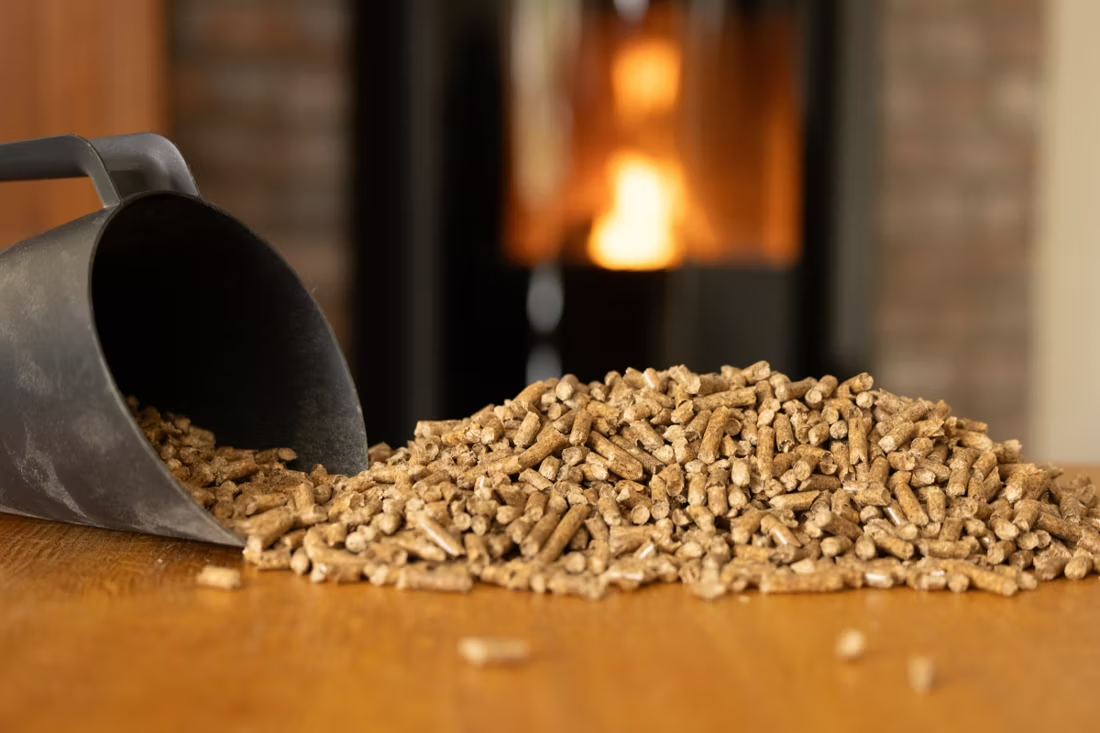
Four fuels. One honest answer for Koochiching County.
Wood
66 models available near Koochiching County.
Find your wood stove →Gas
See what's available near Koochiching County.
Find your gas fireplace →Pellet
See what's available near Koochiching County.
Find your pellet stove →Electric
See what's available near Koochiching County.
Find your electric fireplace →Three steps. No salesperson until you're ready.
Tell us about your project
Your zip code, your situation, and the fuel you're leaning toward—or let the answers point you to one.
See what's actually available
The brands dealers within 100 miles genuinely carry—real options, never a catalog mirage.
Get your dealer & Project Guide
A trusted local dealer, plus the free Project Guide & Parts List that names every component of the job.
Frequently Asked Questions
Which fuel works best in Koochiching County?
It depends on your home and how remote you are. Wood is the traditional backbone fuel here—oak, maple, birch, and aspen are all locally abundant, and a well-loaded catalytic or non-catalytic stove can hold an overnight burn through the county's average -6°F lows and a winter heating load more than double what a place like Madison, WI sees. Gas is workable in and around International Falls where piped gas or reliable bulk propane delivery exists, but most rural homes outside city limits run on propane rather than natural gas. Pellet is a solid middle option—Indeck Energy Services, Lignetics, and Somerset Pellet Fuel all supply this part of northern Minnesota, and a pellet stove or insert gives wood-like heat without daily splitting and stacking. Electric fireplaces are supplemental only up here—at -6°F average lows, an electric unit alone won't carry a Koochiching County home through winter, but it's a fine secondary heat source or ambiance unit in a bedroom or den. Most homes run wood or pellet as primary heat with propane or electric as backup.
Do I need a permit to install a fireplace in Koochiching County?
In most cases, yes. In unincorporated Koochiching County—which is most of the county's land area given a population under 7,500 spread across roughly 3,100 square miles—permits for new wood stoves, inserts, gas appliances, and pellet stoves typically go through the county's zoning and building office. Within International Falls city limits, the city handles permitting directly. Either way, new wood-burning appliances need to meet EPA 2020 NSPS emissions standards, and gas installations require a licensed gas-fitter for the line connection whether you're on piped gas or a propane tank. Electric fireplaces usually skip the permit process unless you're hardwiring a built-in unit into a new circuit. Most local hearth retailers pull the permit for you as part of the installation.
Are there air quality restrictions on wood burning in Koochiching County?
No—Koochiching County doesn't carry a nonattainment designation or winter inversion advisories like some western basin counties do. With under 7,500 residents spread across roughly 3,100 square miles, there's little of the wood-smoke density that triggers burn advisories elsewhere. That said, EPA 2020 NSPS certification still applies to any new wood stove or insert you install, regardless of local air quality—it's a federal requirement, and certified units burn noticeably more efficiently, which matters when you're feeding a stove through six-plus months of heating season here.
Can one local hearth retailer handle all four fuel types?
Given the county's population—just over 7,400 people—the number of hearth retailers physically located in Koochiching County is small, and most are based in or near International Falls. A retailer stocking working displays across wood, gas, pellet, and electric is the exception rather than the rule at this scale; more commonly a local dealer specializes in two or three fuel types and can special-order the rest. For a full side-by-side comparison, some homeowners drive to larger hearth retailers in Bemidji or Grand Rapids, roughly 1.5-2 hours south. Either way, a trusted local dealer who knows how to size venting for -6°F ambient temperatures and pulls permits correctly is worth more than the distance to a bigger showroom.
How does service work in rural areas of Koochiching County?
Technicians serving Koochiching County generally work out of International Falls and travel to Big Falls, Northome, Rainier, and the township roads along the Rainy River. Given the distances and winter driving conditions, expect a trip charge for calls beyond roughly 20-30 miles, and expect scheduling to fill fast in September and October before the real cold sets in—a chimney sweep or gas inspection booked in summer is far easier to land than one requested in December. If wood is your primary heat source, having a backup fuel—propane, pellet, or electric—matters more here than in most of Minnesota, since a mechanical failure during a cold snap isn't something you want to ride out.
What's the typical cost range for fireplace installation across all fuel types in Koochiching County?
Ranges vary by fuel. Wood stove or insert installation: roughly $4,000-$8,500 for a typical retrofit, more for new masonry chimney work in new construction. Gas fireplace, insert, or stove: $4,500-$10,000, with propane tank and line work pushing toward the higher end in areas without piped gas. Pellet stove or insert: $4,000-$7,000 for most installs. Electric fireplace: $200-$3,000 for the unit itself, plus $400-$1,000 in labor for anything beyond a plug-and-play install. Rural service calls in Koochiching County sometimes carry a modest travel surcharge given the distances involved—ask your local dealer up front.
What is an in-home preview and do I need one?
It's a visit where a hearth professional measures your space, confirms the model you picked actually works in your home, and walks the specs—framing, gas line, venting, finish work—before anything is ordered. Some details you just can't know until you see the house. Never make a down payment without one; it's the single most-skipped step that burns buyers.
Does a fireplace add value to my home?
On average, a fireplace adds back to the home about the same amount you spent installing it. Add the monthly savings from heating the rooms you actually use instead of the whole house—often hundreds of dollars a year—and the value case is strong before you even count what a fire does for how your family uses the room.
Can I install a fireplace myself?
If you're putting a fire in your house on purpose, it's best to work with an expert. Unless you're genuinely experienced in framing, gas line, vent pipe, and the national code on clearances to combustibles, have a professional do it—and ideally the same company that sells you the fireplace, so warranty, service, and liability all live under one roof.
Wood, gas, pellet, or electric—how do I choose?
Match the fuel to your life, not the other way around. Wood: lowest fuel cost and total power-outage independence, but you're hauling and stacking. Gas: press a button, set a thermostat, no maintenance to speak of. Pellet: wood economics with automatic feeding, in exchange for weekly cleaning and a need for electricity. Electric: plugs in anywhere with honest supplemental heat. Nobody regrets the fuel that fits how they actually live.
Stove and Fireplace Dealers in Koochiching County
Listings include WhyFire partner dealers, dealers we have verified as authorized for the brands we recommend, and established local businesses that carry hearth products. Every listing shows which one it is. The ones marked Preferred run on WhyFire's software, so they can show you real pricing and book your appointment right here. No manufacturer pays for placement. How we verify dealers →
Ryan's Rustic Railings And Furniture
Firelight Galleries
Marvin Home Center
Find your fireplace in Koochiching County.
Get matched with a trusted local hearth dealer serving Koochiching County and receive a free Project Guide & Parts List—the exact parts, including the vent kit, and the local dealer we recommend for your project.
Find Your Fireplace →