
Set the thermostat and let the pellets do the work in Itasca County.
With winters that rival International Falls and average lows near -2°F, Itasca County homes need heat that doesn't quit at 2 a.m. Find the right pellet stove or insert and connect with a trusted local dealer.
Every Project Starts From One of These Five Situations
Automated heat built for zone 7 winters.
Itasca County sits in USDA climate zone 7, one of the coldest heating zones in the Lower 48, with roughly 9,319 heating degree days a year and average winter lows around -2°F—numbers that put Grand Rapids and Deer River in the same company as International Falls, just up the road. Families here have burned oak, maple, birch, and aspen for generations, much of it cut under permit from the Chippewa and Superior National Forests during the May-to-October season. That wood tradition runs deep, but a growing number of Itasca County homeowners are adding pellet stoves and inserts as a cleaner, lower-maintenance way to hold steady heat through a Grand Rapids winter without tending a firebox every few hours.
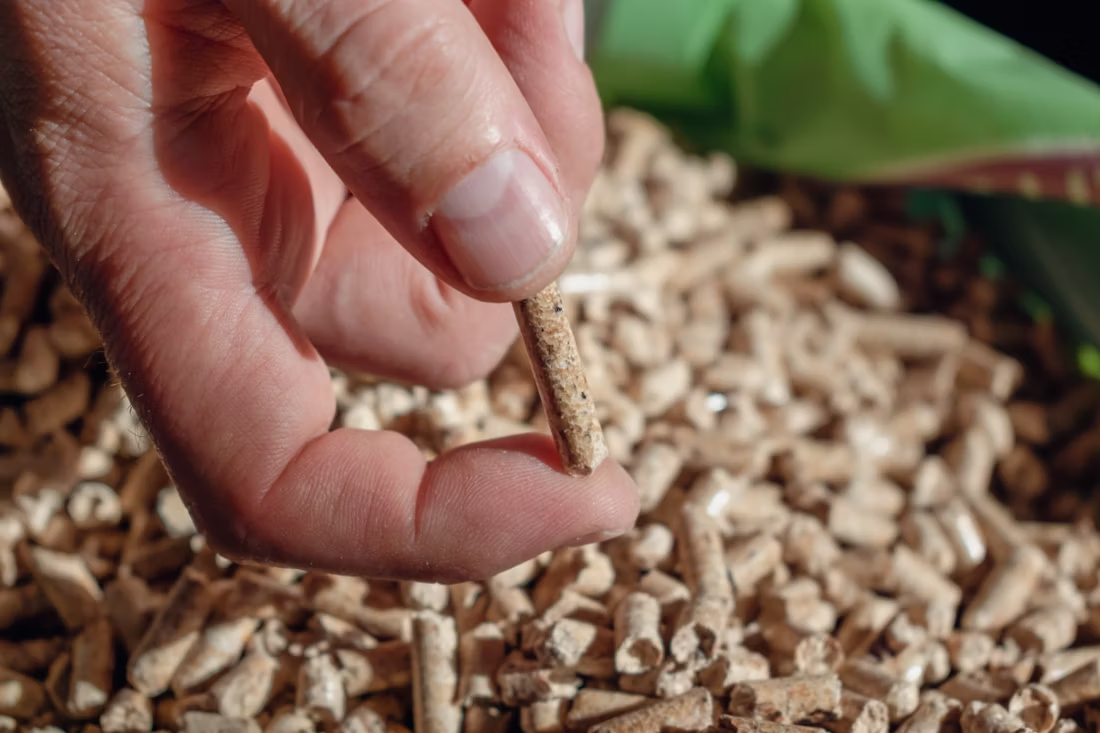
Air quality here isn't the constraint it is in other parts of the country—there's no non-attainment designation or inversion issue in Itasca County—so the appeal of pellet heat isn't about smoke reduction. It's about consistency and convenience: load the hopper, set the thermostat, and let an auger-fed fire hold a steady burn overnight in a house where outdoor temps can sit in single digits below zero for days. Regional suppliers including Indeck Energy Services, Lignetics, and Somerset Pellet Fuel keep bagged pellets reasonably accessible across the county, which matters when a bad stretch of weather means you're not making a long supply run. The one honest tradeoff: pellet stoves need electricity to run the auger and blower, so a battery backup or generator plan is worth discussing with your installer given how power outages during ice events tend to play out up here.
Three steps. No salesperson until you're ready.
Tell us about your project
Your zip code, your situation, and the fuel you're leaning toward—or let the answers point you to one.
See what's actually available
The brands dealers within 100 miles genuinely carry—real options, never a catalog mirage.
Get your dealer & Project Guide
A trusted local dealer, plus the free Project Guide & Parts List that names every component of the job.
Frequently Asked Questions
How much does a pellet stove installation cost in Itasca County?
Most pellet stove and insert installations run in the neighborhood of $3,000 to $6,000, with the spread driven by whether you're venting through an existing masonry chimney, running new PL-vent through an exterior wall, or need electrical work for a dedicated circuit. Homes in Grand Rapids with straightforward exterior-wall venting tend to land on the lower end; rural properties around Deer River or Bigfork with longer vent runs or older electrical service can push toward the higher end. A local dealer will give you a firm number after an in-home look at your venting path and hopper placement.
What size pellet stove do I need for a house in Itasca County?
With 9,319 heating degree days and winter lows that regularly sit near or below zero, Itasca County homes generally need to size up compared to milder climates. A stove rated for 1,000-1,500 square feet in a mild zone might only comfortably handle 700-1,000 square feet here once you factor in older construction, single-pane windows common in Grand Rapids' housing stock, and the sheer number of hours the stove runs each winter. For homes used as primary heat rather than supplemental warmth, err toward a larger hopper capacity too—fewer refills during a multi-day cold stretch. A local dealer will size based on your square footage, insulation, and whether this is primary or backup heat.
Where can I find certified pellet stove installers near me in Itasca County?
Look for installers with NFI (National Fireplace Institute) pellet specialist certification—it signals training specific to auger feed systems, hopper wiring, and PL-vent clearances, which differ from wood stove installation. Certified dealers serving Itasca County typically cover Grand Rapids, Deer River, Coleraine, and Bigfork, with a modest travel charge for more remote rural addresses. Because pellet stoves involve an electrical component alongside the venting, it's worth confirming your installer handles both rather than subcontracting the wiring separately.
What's the difference between a pellet stove and a pellet insert?
A pellet stove is a freestanding unit that sits on a hearth pad and vents through an exterior wall or existing chimney—it can go almost anywhere with the right clearances. A pellet insert is built to slide into an existing masonry fireplace opening, converting an old wood-burning fireplace into an automated, thermostat-controlled heat source. For Itasca County homes with an existing masonry fireplace that's rarely used because tending a wood fire is impractical for daily heat, an insert is often the more practical upgrade. Homes without an existing fireplace opening are usually better suited to a freestanding stove.
Do I need a permit to install a pellet stove in Itasca County?
Yes—a building permit is required for new pellet stove installations through your local jurisdiction, whether that's the City of Grand Rapids or Itasca County for unincorporated areas, and the appliance needs to meet current EPA emissions standards. Most local dealers handle the permit application as part of the installation, so it's rarely something you manage yourself. Because Itasca County has no air quality non-attainment designation, there are no burn curtailment periods to work around—pellet stoves can run whenever you need them.
What's the best pellet stove for Itasca County's climate?
For a climate zone 7 winter with lows near -2°F and long stretches of sub-freezing weather, prioritize hopper capacity and BTU output over aesthetics. Larger-hopper models that can run 24-40 hours on a full load reduce the number of times you're refilling during an overnight cold snap or when you're away from the house for a day. Look for models with a reliable auger feed system and a proven service network—since pellet stoves have more moving parts than a wood stove, having a dealer nearby who stocks common replacement parts (igniters, auger motors) matters more here than in milder regions. Ask your local dealer which models they see holding up best through a full Itasca County winter.
How much maintenance does a pellet stove need?
Pellet stoves need more routine attention than people expect, even though they're often marketed as low-maintenance. Plan on emptying the ash pot every few days during heavy winter use, a full glass and burn pot cleaning weekly, and an annual professional service that checks the auger motor, exhaust blower, and gaskets. For a stove running as primary heat through an Itasca County winter—potentially six or more months of continuous use—the annual service is worth scheduling before the season starts rather than after something fails on a January night.
Where can I buy pellet fuel in Itasca County?
Regional pellet brands including Indeck Energy Services, Lignetics, and Somerset Pellet Fuel are available through hardware stores, farm supply retailers, and hearth dealers serving the county. Pricing fluctuates seasonally and by brand, so it's worth calling around in late summer or early fall—before demand and prices climb with the first cold snap—to lock in a supply for the winter. Buying a season's worth at once also protects you from mid-winter shortages, which can happen when a hard freeze drives up regional demand all at once.
Pellet stove vs. wood stove—which is right for my Itasca County home?
Wood stoves work without electricity, which matters given how outages tend to accompany the ice storms and heavy snow that hit Itasca County, and self-cut firewood from a Chippewa or Superior National Forest permit (typically $10-$20 per cord) keeps fuel costs low if you're willing to cut and split oak, maple, birch, or aspen yourself. Pellet stoves trade that off for convenience: no splitting, less ash, a steady thermostat-controlled burn, and cleaner glass—but they need a working electrical circuit to run the auger and blower. Many Itasca County households end up with both: a pellet stove for daily, hands-off heat in the main living space, and a wood stove or fireplace as backup for extended outages.
What's the difference between an insert and a zero-clearance fireplace?
An insert is a fireplace that slides into a pre-existing wood-burning fireplace—if you don't have one, there's nothing to insert it into. A zero-clearance fireplace is built into a framed wall, which makes it the answer for remodels and new construction. Simple test: existing masonry fireplace means insert; blank or framed wall means zero-clearance.
How often does a pellet stove need cleaning?
A clean pellet stove is a happy pellet stove. Plan on cleaning the burn pot about once a week when you're burning regularly—ash and clinkers gum up the air holes just like a pellet barbecue. Most pellet stove problems trace back to skipped cleaning that nobody explained up front. Some designs make it easy with a trapdoor burn pot: pull a lever and the gunk drops into the ash pan.
Can a fireplace actually lower my heating bill?
Yes—by creating a comfort zone. A furnace heats every square foot of the house just to warm the one room you're in; a gas fireplace on low burns roughly a sixth of the gas a typical furnace does. Set the furnace around 55–60 degrees as a baseline, then heat the rooms your family actually uses. Families who heat this way commonly save $20–$60 a month.
What is an in-home preview and do I need one?
It's a visit where a hearth professional measures your space, confirms the model you picked actually works in your home, and walks the specs—framing, gas line, venting, finish work—before anything is ordered. Some details you just can't know until you see the house. Never make a down payment without one; it's the single most-skipped step that burns buyers.
Stove and Fireplace Dealers in Itasca County
Fantastic Fireplaces Of Bemidji
Pellet Brands Stocked Around Itasca County
Manufacturers will point you to the nearest stocking dealer.
Find your pellet stove in Itasca County.
Tell us about your home and heating needs, and we'll match you with a trusted local Itasca County dealer plus a free Project Guide & Parts List—the exact parts, including your vent kit, for your pellet stove or insert project.
Find Your Fireplace →