
Heat built for 9,300 heating degree days.
Wood, gas, pellet, and electric fireplace resources for every city and township in Itasca County—from Grand Rapids to Bigfork. Find the right unit for a Zone 7 winter and connect with a trusted local hearth retailer.
Every Project Starts From One of These Five Situations
Zone 7 winters across Minnesota's Iron Range country.
Itasca County sits in Minnesota's Climate Zone 7—the same severe-cold band as Duluth and International Falls—with an average winter low around -2°F and roughly 9,319 heating degree days a year, among the highest heating loads anywhere in the Lower 48. This is oak, maple, birch, and aspen country, with two national forests, Chippewa and Superior, bordering the county and supplying much of the firewood cut under public land permits. Long, hard winters here mean heating systems are sized for real cold, not mild snaps—a wood stove or insert has to hold a fire through a January night that stays below zero, and gas and pellet appliances need to be rated for sustained sub-zero operation.
What you'll find on this hub: hearth retailers, service technicians, and fuel suppliers serving every community in the county—from Grand Rapids and Deer River to the smaller towns of Coleraine, Bovey, Nashwauk, and Bigfork. Pick your fuel below to drill into specifics—local dealers, installation costs, recommended units, and the resources that fit a Zone 7 heating season. Whether you're heating a lake cabin near Trout Lake or a year-round home on the edge of the Chippewa National Forest, this is the starting point.
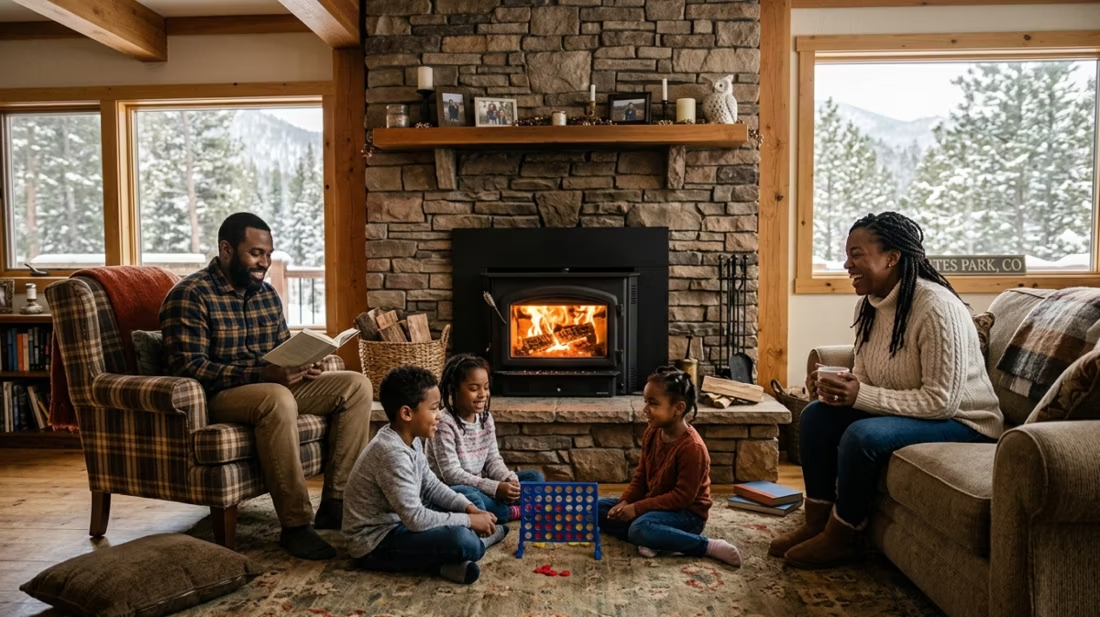
Four fuels. One honest answer for Itasca County.
Three steps. No salesperson until you're ready.
Tell us about your project
Your zip code, your situation, and the fuel you're leaning toward—or let the answers point you to one.
See what's actually available
The brands dealers within 100 miles genuinely carry—real options, never a catalog mirage.
Get your dealer & Project Guide
A trusted local dealer, plus the free Project Guide & Parts List that names every component of the job.
Frequently Asked Questions
Which fuel works best in Itasca County?
With roughly 9,319 heating degree days and winter lows that regularly dip below zero—comparable to Duluth or International Falls—the fuel choice matters more here than in milder climates. Wood remains the backbone fuel for many rural and lake homes: oak and maple burn long and hot, birch lights easily, and Chippewa and Superior National Forest permits keep firewood costs down for those who cut their own. A catalytic or hybrid wood stove can hold a fire through a sub-zero night far better than a standard non-cat unit. Gas is the convenience option where propane service is available, giving instant heat with no wood-hauling. Pellet stoves are a strong middle ground—regional pellets from Indeck Energy Services and Lignetics are widely stocked, though owners should confirm cold-start reliability at extreme lows. Electric fireplaces work well as supplemental or ambiance heat in a bedroom or den, but on their own they aren't enough to carry a Zone 7 winter. Many Itasca County homes run wood or pellet as primary heat with gas or electric backup in secondary rooms.
Do I need a permit to install a fireplace in Itasca County?
In most cases, yes. New wood stoves, wood inserts, gas fireplaces, gas inserts, gas stoves, and pellet stoves typically require a building permit through your local township or the Itasca County building department, depending on where you're located. Gas installations also need a separate gas-line permit and a licensed installer for the fuel connection. Electric fireplaces generally don't need a permit unless the install involves new wiring or a dedicated circuit for a built-in unit. Because permit jurisdiction varies between incorporated cities like Grand Rapids and unincorporated township land, it's worth confirming with your installer before work starts—most local hearth retailers handle this step as part of the installation rather than leaving it to the homeowner.
Are there air quality restrictions on wood burning in Itasca County?
No—Itasca County does not have the winter inversion or non-attainment issues that trigger burn advisories in some western basin communities. There are no county-level restrictions on wood burning tied to air quality. That said, newer wood stoves are still built to EPA emissions standards as a matter of manufacturing requirement, and a well-seasoned load of oak or birch burns cleaner and more efficiently than green or wet wood regardless of local rules. If you're near Grand Rapids' paper mill operations or in a denser residential pocket, being a considerate neighbor about visible smoke is still good practice, even without a formal advisory system in place.
Can one local hearth retailer handle all four fuel types?
Some Itasca County dealers carry wood, gas, pellet, and electric under one roof, which is useful if you're still deciding between fuels and want to see working displays side by side. Others specialize—a dealer focused mainly on wood stoves and inserts may only carry a limited electric line, or a gas-and-propane-focused shop may not stock pellet units at all. Because the county spans Grand Rapids out to smaller communities like Coleraine and Bigfork, coverage and in-stock selection can vary by location. The retailer listings on the fuel-specific pages above note exactly which fuels each dealer carries, so you can find a multi-fuel showroom near you or go straight to a specialist for your chosen fuel.
How does service work in the more remote parts of Itasca County?
Most service technicians are based out of Grand Rapids and travel out to Deer River, Bigfork, and the lake townships for annual sweeps, gas inspections, and pellet stove cleanings. Expect a modest travel fee for calls well outside the Grand Rapids area, and expect that scheduling gets tighter as winter sets in—booking your annual service in late summer or early fall, before the first hard freeze, is much easier than trying to get an emergency mid-January appointment when a chimney or venting issue shows up at -2°F. If you're on a lake property or in a township with limited winter road access, it's worth asking your technician about seasonal scheduling constraints specific to your road.
What's the typical cost range for fireplace installation across all fuel types in Itasca County?
Costs vary by fuel and by how much venting or gas-line work is involved. Wood stove or insert installation: roughly $4,500–$9,500 for a typical install, higher for new masonry chimney work in new construction. Gas fireplace, insert, or stove: roughly $4,500–$11,000, with propane conversions on the lower end when service lines already exist. Pellet stove or insert: roughly $4,500–$7,500 for a standard install. Electric fireplace: $200–$3,000 for the unit itself, plus $400–$1,200 in labor for anything beyond a simple plug-and-play placement. For local pricing detail tied to specific retailers, see the county + fuel pages above.
Can I install a fireplace myself?
If you're putting a fire in your house on purpose, it's best to work with an expert. Unless you're genuinely experienced in framing, gas line, vent pipe, and the national code on clearances to combustibles, have a professional do it—and ideally the same company that sells you the fireplace, so warranty, service, and liability all live under one roof.
How much should I budget for a fireplace?
For an average home—covering the fireplace, the vent pipe, and basic installation—a budget between $3,900 and $5,500 gives you a lot of options across wood, gas, and pellet. By the time you add finish work, gas line, and electrical, the average complete installation lands between $5,000 and $12,000 all-in. In a remodel or new build, a good rule is to put about 2.5% of the total project cost toward the fireplace.
Can a fireplace actually lower my heating bill?
Yes—by creating a comfort zone. A furnace heats every square foot of the house just to warm the one room you're in; a gas fireplace on low burns roughly a sixth of the gas a typical furnace does. Set the furnace around 55–60 degrees as a baseline, then heat the rooms your family actually uses. Families who heat this way commonly save $20–$60 a month.
Wood, gas, pellet, or electric—how do I choose?
Match the fuel to your life, not the other way around. Wood: lowest fuel cost and total power-outage independence, but you're hauling and stacking. Gas: press a button, set a thermostat, no maintenance to speak of. Pellet: wood economics with automatic feeding, in exchange for weekly cleaning and a need for electricity. Electric: plugs in anywhere with honest supplemental heat. Nobody regrets the fuel that fits how they actually live.
Stove and Fireplace Dealers in Itasca County
Listings include WhyFire partner dealers, dealers we have verified as authorized for the brands we recommend, and established local businesses that carry hearth products. Every listing shows which one it is. The ones marked Preferred run on WhyFire's software, so they can show you real pricing and book your appointment right here. No manufacturer pays for placement. How we verify dealers →
Find your fireplace in Itasca County.
Pick your fuel below and I'll match you with a trusted local dealer and send over a free Project Guide & Parts List—the exact parts, including the vent kit, sized for a Zone 7 winter in your part of the county.
Find Your Fireplace →