
Steady, thermostat-controlled heat for Isanti County's long winters.
Reliable, low-maintenance heat for the towns and farms of Isanti County—Cambridge, Isanti, Braham, and everywhere between. Find the right pellet stove or insert and connect with a trusted local dealer.
Every Project Starts From One of These Five Situations
Consistent heat for 8,124 heating degree days a year.
Isanti County sits about forty miles north of the Twin Cities, a mostly rural stretch of farmland, small lakes, and exurban growth anchored by Cambridge, Isanti, and Braham. Winters here run long and genuinely cold—an average winter low near 4°F and 8,124 heating degree days a year, noticeably colder than Minneapolis-St. Paul and closer to the totals you'd see in Duluth's snow belt. For a county built on family farms and acreage homes, a heating season that stretches from October into April is simply part of life.
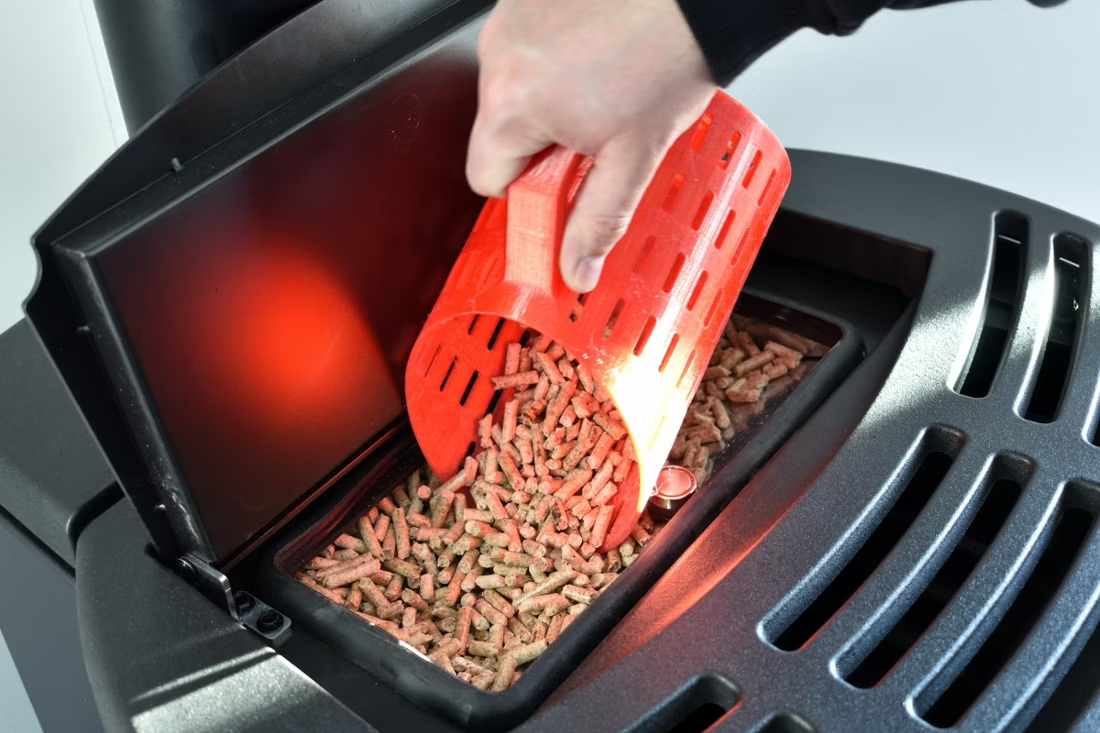
Pellet stoves have caught on across the county as a low-hassle way to add serious heat without the daily wood-handling that oak, maple, birch, and aspen—the common local firewood species—require. Load the hopper, set a thermostat, and the auger feeds itself for a day or more. Regional pellet brands including Lignetics and Somerset Pellet Fuel show up on shelves at farm and hardware stores throughout the area, with Indeck Energy Services supplying bulk product to distributors serving the region. Isanti County has no winter air-quality non-attainment designation, so there's no burn-ban risk hanging over a pellet appliance the way there sometimes is in more urban Minnesota counties. The one tradeoff worth planning for: pellet stoves run on household electricity for the auger, igniter, and blower, so a battery backup or small generator is worth discussing with your dealer given how exposed rural parts of the county are to winter storm outages.
Three steps. No salesperson until you're ready.
Tell us about your project
Your zip code, your situation, and the fuel you're leaning toward—or let the answers point you to one.
See what's actually available
The brands dealers within 100 miles genuinely carry—real options, never a catalog mirage.
Get your dealer & Project Guide
A trusted local dealer, plus the free Project Guide & Parts List that names every component of the job.
Frequently Asked Questions
How much does a pellet stove or insert installation cost in Isanti County?
Across Isanti County—from Cambridge to Isanti to Braham—a pellet stove installation typically runs $3,000 to $6,000, and a pellet insert into an existing masonry fireplace (using a liner kit) usually falls in the $4,000 to $7,000 range once venting and hearth clearances are accounted for. Pellet units need less venting than wood stoves—most run a small-diameter PL-vent pipe straight through an exterior wall rather than a full masonry chimney—which keeps installed costs on the lower end compared to a wood stove retrofit. Costs run a bit higher if your home needs a dedicated electrical circuit added for the auger and blower, which some older farmhouses in the county do.
What size pellet stove do I need for a home in Isanti County?
With an average winter low around 4°F and roughly 8,124 heating degree days a year, Isanti County sits solidly in the demanding end of pellet-stove territory—colder than the Twin Cities forty miles south, though not quite up to Duluth's snow-belt totals. Small pellet stoves (under 1,000 sq ft) suit a cabin or single room; medium units (1,000-1,800 sq ft) cover most farmhouse living areas and ranch homes common around Cambridge and Stanchfield; larger, high-output stoves are worth considering if you're using pellet heat as a primary source rather than a supplement to propane or a forced-air furnace. Older, less-insulated homes need to size up regardless of square footage. A local dealer will walk your home and size it properly rather than going by square footage alone.
Where can I find a certified pellet stove dealer near me in Isanti County?
Look for a dealer who's an authorized service center for the brand they sell—that matters more with pellet stoves than wood stoves, since the auger, igniter, and control board are mechanical parts that eventually need factory-trained service. Isanti County is a mostly rural stretch between the Twin Cities metro and the Mille Lacs region, so most dealers serving the county are based in or near Cambridge or draw from the broader Anoka/Chisago County hearth market. A dealer who handles both the sale and the installation—including pulling any required permit—will also be positioned to service the unit for the life of the appliance, which is worth more than a marginally lower price from an online retailer with no local support.
What's the difference between a pellet stove and a pellet insert?
A pellet stove is a freestanding unit that sits on its own hearth pad and vents through a wall or existing chimney—it can go almost anywhere in a room with the right clearances. A pellet insert is built to slide into an existing masonry fireplace opening, using a stainless liner run up the old chimney, and is the more common upgrade for Isanti County farmhouses that already have a wood-burning fireplace they rarely use. If you have an existing fireplace you want to convert to easier, thermostat-controlled heat, an insert is usually the better fit. If you're starting from an open wall with no fireplace, a freestanding stove is simpler and generally less expensive to install.
Do I need a permit to install a pellet stove in Isanti County?
Yes—a building permit is required for a new pellet stove or insert installation, issued through Isanti County's building department for homes in unincorporated areas, or through the city building office if you're within Cambridge, Isanti, or Braham city limits. The permit process checks hearth clearances, venting termination distance from windows and doors, and—if you're adding a new electrical circuit for the auger and blower—an electrical inspection. Most established local dealers include the permit in their installation quote, so you generally don't have to file it yourself.
What's the best pellet stove for Isanti County's climate?
With winters that regularly sit near or below 0°F and 8,124 heating degree days to cover, look for a pellet stove with at least a 40-pound hopper—60 pounds if you want to get through a cold night without a refill—and a heat output in the 40,000 to 50,000 BTU range if you're leaning on it as a primary heat source rather than a supplement. Brands like Harman and Quadra-Fire have a strong track record in upper-Midwest cold climates for auger reliability, which matters more here than in milder regions since a jammed auger on a sub-zero night is a real problem. Because pellet stoves depend on electricity to run the auger, igniter, and combustion blower, ask your dealer about a battery backup or small generator setup—worth the investment given how exposed rural Isanti County is to winter storm power outages.
How often does a pellet stove need to be cleaned and serviced?
Pellet stoves need more frequent attention than people expect—the ash pan should be emptied every few days during heavy winter use, the glass wiped down weekly, and the burn pot scraped out regularly to keep combustion efficient. Beyond routine ash removal, plan on a full professional service once a year—typically before burning season starts in the fall—to clean the exhaust venting, check the auger motor, inspect gaskets, and vacuum out the hopper and internal cavities where fine pellet dust accumulates. Isanti County's long burning season, roughly October through April in most years, means more total burn hours than milder parts of the state, so don't stretch the annual service interval.
Where can I buy pellets locally in Isanti County?
Bagged pellets from regional producers like Lignetics and Somerset Pellet Fuel are the most common bags you'll find at farm supply and hardware stores serving the county, and Indeck Energy Services supplies pellets on a larger commercial and bulk-delivery scale to distributors in the region. Softwood pellets burn hotter and cleaner and are the standard choice for most stoves; hardwood-blend pellets exist but are less common locally. Since Isanti County has no winter air quality restrictions or non-attainment designation, there's no burn-ban risk with pellet appliances the way there sometimes is with open wood burning in more urban Minnesota counties—one more reason pellet has caught on here as a low-hassle secondary heat source.
Pellet stove vs. wood stove—which is right for my Isanti County home?
Wood stoves burn local hardwoods—oak, maple, birch, and aspen are all common around Isanti County—and keep working with zero electricity, which matters when a winter storm knocks out power across a rural stretch of the county. Pellet stoves trade that off for real convenience: load the hopper, set a thermostat, and let the auger feed itself for a day or more without tending—but the auger, igniter, and blower all run on household electricity, so a pellet stove goes cold in an outage unless you've got a battery backup or generator. For a primary heat source in an exurban or rural part of the county where power reliability is a real concern, wood keeps an edge. For homes closer to Cambridge or Isanti proper who want low-maintenance, thermostatically controlled heat without wood handling and ash cleanup, pellet is usually the better daily-use choice. It's common in this county to see one of each—pellet for daily convenience, a wood stove or fireplace as backup.
What does it take to replace an existing fireplace?
Fireplaces are like icebergs—bigger behind the wall than in front of it. Replacement means removing the surrounding tile or stone (the finish material laps onto the fireplace face), pulling the old unit, setting the new one in the same enclosure, and re-finishing the wall. A hearth professional can determine what's behind your wall without demolition during an in-home preview.
Why is a fireplace insert so efficient?
An insert does two things: it seals the chimney completely, so you stop losing air you already paid to heat, and it radiates warmth into the room through the firebox and glass. Most add a heat-exchange fan that pulls cool room air underneath, wraps it around the hot firebox, and pushes it back out warm. Your home is more efficient before you've even lit the first fire.
Can I install a fireplace myself?
If you're putting a fire in your house on purpose, it's best to work with an expert. Unless you're genuinely experienced in framing, gas line, vent pipe, and the national code on clearances to combustibles, have a professional do it—and ideally the same company that sells you the fireplace, so warranty, service, and liability all live under one roof.
Can a fireplace actually lower my heating bill?
Yes—by creating a comfort zone. A furnace heats every square foot of the house just to warm the one room you're in; a gas fireplace on low burns roughly a sixth of the gas a typical furnace does. Set the furnace around 55–60 degrees as a baseline, then heat the rooms your family actually uses. Families who heat this way commonly save $20–$60 a month.
Stove and Fireplace Dealers in Isanti County
Pellet Brands Stocked Around Isanti County
Manufacturers will point you to the nearest stocking dealer.
Find your pellet stove in Isanti County.
Tell us about your home and heating goals, and we'll match you with a trusted local dealer serving Isanti County—plus a free Project Guide & Parts List with the exact parts, including the vent kit, for your pellet project.
Find Your Fireplace →