
Built for Isanti County's Long, Cold Minnesota Winters.
Wood, gas, pellet, and electric fireplace resources for every city and township in Isanti County—from Cambridge to Braham. Get matched with a trusted local hearth retailer who knows what actually holds heat through an 8,124-degree-day winter.
Every Project Starts From One of These Five Situations
Cold-climate heating in east-central Minnesota.
Isanti County sits about 40 miles north of the Twin Cities, a landscape of farm fields, lake country, and hardwood woodlots in USDA climate zone 6A. Winters here are long and genuinely cold—average lows near 4°F, and the county racks up roughly 8,124 heating degree days a year, putting it in the same heating-load territory as Minneapolis but colder. The heating season typically stretches from October into April. Oak, maple, birch, and aspen grow throughout the county's woodlots, and cutting, splitting, and burning your own cordwood remains a common way locals keep the utility bill down through a Minnesota winter.
This hub rounds up hearth retailers, service technicians, and fuel suppliers serving every community in the county—Cambridge, Isanti, Braham, and the townships around them, including Stanchfield and Wyanett. Pick your fuel below to see local dealers, installation costs, and the units that actually make sense for an 8,000+ HDD climate. Whether you're heating a farmhouse outside Braham or a lake cabin near Isanti, this is the starting point.
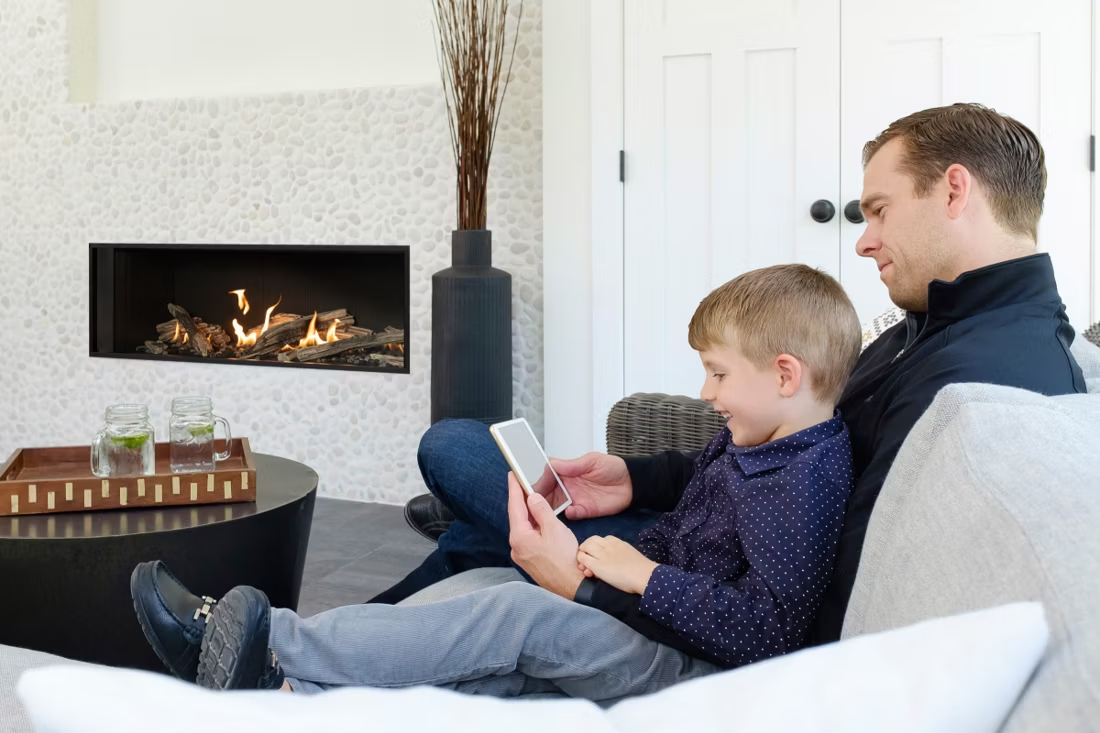
Four fuels. One honest answer for Isanti County.
Three steps. No salesperson until you're ready.
Tell us about your project
Your zip code, your situation, and the fuel you're leaning toward—or let the answers point you to one.
See what's actually available
The brands dealers within 100 miles genuinely carry—real options, never a catalog mirage.
Get your dealer & Project Guide
A trusted local dealer, plus the free Project Guide & Parts List that names every component of the job.
Frequently Asked Questions
Which fuel works best for an Isanti County home?
It depends on your setup and priorities. Wood is deeply rooted here—oak, maple, birch, and aspen are all common in local woodlots, and a well-loaded catalytic or non-cat stove can hold a fire through a 4°F overnight low without much trouble. It's also the fuel of choice for anyone worried about power outages during a January storm. Gas is the low-maintenance option for homes with piped natural gas in Cambridge or Isanti, or propane in the outlying townships—no wood to split or stack, instant heat. Pellet is a strong middle ground for this climate: brands like Lignetics and Somerset Pellet Fuel are readily stocked regionally, and a pellet stove gives you wood-like heat without the chainsaw and woodpile. Electric is realistic as supplemental heat for a bedroom or finished basement, but on its own it won't keep up with an 8,124-HDD winter as a primary heat source. Most Isanti County homes end up running wood or pellet as the workhorse and gas or electric for backup and secondary rooms.
Do I need a permit to install a fireplace or stove in Isanti County?
In almost every case, yes. New wood stoves, wood inserts, gas fireplaces, gas inserts, gas stoves, and pellet stoves all require a building permit under the Minnesota State Building Code, plus a separate gas permit and licensed gas-fitter for any propane or natural gas connection. If you're inside Cambridge, Isanti, or Braham city limits, the permit is issued by that city's building department; in the surrounding townships, it typically runs through the Isanti County Planning & Zoning office. New wood-burning appliances need to be EPA-certified. Electric fireplaces generally skip the permit process unless you're hardwiring a built-in unit into a new circuit. Most local hearth retailers pull the permit for you as part of the installation quote, so you're rarely filing the paperwork yourself.
Are there wood-burning restrictions in Isanti County?
No—unlike the Twin Cities metro core, which occasionally issues air quality alerts during winter inversions, Isanti County doesn't have a wood-burning ban, curtailment program, or non-attainment designation. There's no local ordinance limiting when you can run a wood stove or fireplace. That said, installing an EPA-certified stove is still the smarter move: it burns roughly a third of the wood for the same heat output, produces far less smoke and creosote, and holds up better through the kind of nightly burns an 8,124-HDD winter demands. It's just not a legal requirement here the way it is in some metro or non-attainment counties.
Will one dealer carry wood, gas, pellet, and electric, or do I need to shop around?
It varies by dealer. Many hearth retailers serving Isanti County carry three or four fuel types under one roof, which is useful if you're still deciding between, say, a wood insert and a pellet stove and want to see both burning in a showroom. Others specialize—a supplier focused on Lignetics or Somerset Pellet Fuel may be strong on pellet stoves and pellet fuel but not stock wood or gas units, and a fuel-oriented supplier may not install anything at all. Before you drive out, it's worth calling ahead to confirm a dealer carries and installs the specific fuel you're after—that's exactly what our matching process checks before we send you a recommendation.
How does service and installation work out in the townships around Cambridge and Braham?
Most technicians and installers are based in or near Cambridge and travel out to the surrounding townships—Stanchfield, Wyanett, Athens, and the rest of the county's rural grid. Expect a modest trip fee for calls well outside town, and expect scheduling to tighten up fast once the weather turns—the smart window for annual chimney sweeps, gas inspections, and pellet stove service is late summer through early fall, before the first hard freeze. If you're on a gravel road or a long driveway, mention that when you book so the crew can plan for it.
What does fireplace or stove installation typically cost across fuel types in Isanti County?
Costs vary by fuel and by how much venting or gas line work is involved. Wood stove or insert: typically $4,000–$8,500, more if you're running new chimney chase through two stories. Gas fireplace, insert, or stove: roughly $4,000–$10,000 depending on whether you already have a gas line to the room or need one run. Pellet stove or insert: usually $4,000–$7,000 installed. Electric fireplace: $200–$3,000 for the unit itself, plus $300–$1,000 in labor for anything beyond a plug-and-play install. These are starting ranges—your actual quote depends on the specific unit, venting path, and any electrical or gas work your home needs, which is exactly what a local dealer walks through with you.
Wood, gas, pellet, or electric—how do I choose?
Match the fuel to your life, not the other way around. Wood: lowest fuel cost and total power-outage independence, but you're hauling and stacking. Gas: press a button, set a thermostat, no maintenance to speak of. Pellet: wood economics with automatic feeding, in exchange for weekly cleaning and a need for electricity. Electric: plugs in anywhere with honest supplemental heat. Nobody regrets the fuel that fits how they actually live.
What is an in-home preview and do I need one?
It's a visit where a hearth professional measures your space, confirms the model you picked actually works in your home, and walks the specs—framing, gas line, venting, finish work—before anything is ordered. Some details you just can't know until you see the house. Never make a down payment without one; it's the single most-skipped step that burns buyers.
Can I install a fireplace myself?
If you're putting a fire in your house on purpose, it's best to work with an expert. Unless you're genuinely experienced in framing, gas line, vent pipe, and the national code on clearances to combustibles, have a professional do it—and ideally the same company that sells you the fireplace, so warranty, service, and liability all live under one roof.
Does a fireplace add value to my home?
On average, a fireplace adds back to the home about the same amount you spent installing it. Add the monthly savings from heating the rooms you actually use instead of the whole house—often hundreds of dollars a year—and the value case is strong before you even count what a fire does for how your family uses the room.
Stove and Fireplace Dealers in Isanti County
Listings include WhyFire partner dealers, dealers we have verified as authorized for the brands we recommend, and established local businesses that carry hearth products. Every listing shows which one it is. The ones marked Preferred run on WhyFire's software, so they can show you real pricing and book your appointment right here. No manufacturer pays for placement. How we verify dealers →
2nd Generation Chimneys
Glowing Hearth & Home - Coon Rapids
Fireplace Gallery, Inc.
Custom Fireplace & Chimney Care
Comfort By Design- Osceola
Minnesota Chimney
Condor Fireplace & Stone
DJ's Heating & Air Cond. Inc.
DJ's Home Services
DJ's Companies
Fireside Hearth & Home - Maple Grove
Fireside Hearth & Home - Roseville
Get Matched With a Local Isanti County Hearth Dealer.
Tell us about your project and we'll match you with a trusted local retailer and send over a free Project Guide & Parts List—the exact parts, including the vent kit, and the dealer we recommend for your home in Isanti County.
Find Your Fireplace →