
Steady heat that doesn't need a woodpile, built for a 9,305-degree-day winter.
Hubbard County's lake country winters run long and cold—average lows near -3°F and a heating season that stretches from September through April—and a pellet stove offers thermostat-set heat without daily wood splitting. I'll match you with a trusted local dealer near Park Rapids who knows hopper sizing, venting, and what actually holds a burn through an unattended cabin weekend.
Every Project Starts From One of These Five Situations
Convenience heat for a county built on lakes, cabins, and long winters.
Hubbard County sits in Minnesota's lake country, anchored by Park Rapids and bordered by Chippewa National Forest near the Mississippi headwaters at Itasca State Park. It's a small county—just over 5,000 year-round residents—but the housing stock skews heavily toward lake cabins and second homes alongside full-time residences. Winters here are severe: climate zone 7, a long, brutal heating season, and an average winter low of -3°F put Hubbard County in the same cold-climate tier as International Falls, one of the coldest towns in the Lower 48. The heating season stretches from September through April in most years, and oak, maple, birch, and aspen—all common on the county's forested land—have traditionally kept homes warm through it.
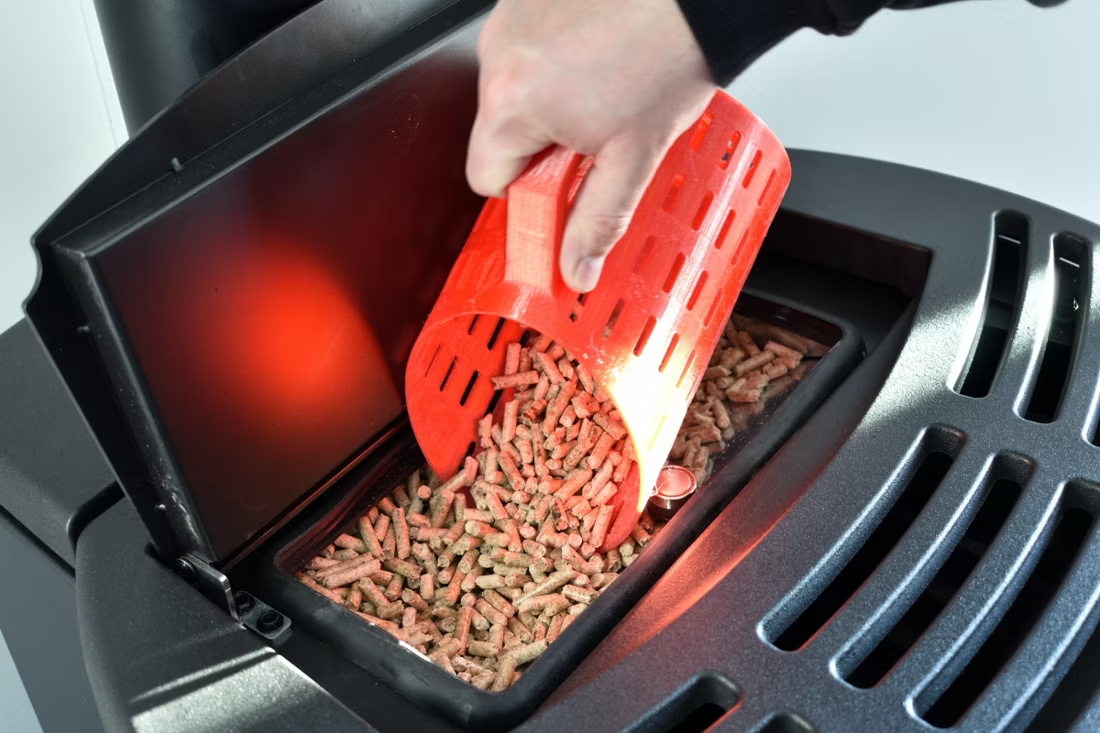
Unlike parts of the country dealing with non-attainment zones or winter inversion advisories, Hubbard County has no listed air quality concerns, so pellet heat's appeal here isn't about emissions compliance—it's about convenience. A hopper-fed pellet stove holds a steady, thermostat-controlled burn without the daily splitting and stacking that wood requires, which matters for cabin owners who aren't on-site every day and for full-time residents who want backup heat that doesn't demand constant tending. Regional pellet suppliers—Indeck Energy Services, Lignetics, and Somerset Pellet Fuel—keep bagged fuel available through area dealers, though rural delivery routes mean it pays to stock up before winter roads set in.
Three steps. No salesperson until you're ready.
Tell us about your project
Your zip code, your situation, and the fuel you're leaning toward—or let the answers point you to one.
See what's actually available
The brands dealers within 100 miles genuinely carry—real options, never a catalog mirage.
Get your dealer & Project Guide
A trusted local dealer, plus the free Project Guide & Parts List that names every component of the job.
Frequently Asked Questions
How much does a pellet stove installation cost in Hubbard County?
Pellet stove and insert installs in Hubbard County typically land in the $3,000 to $6,000 range once you account for the hearth pad, venting through an exterior wall, and any electrical work for the stove's auger and blower. Homes converting an existing wood-burning fireplace to a pellet insert usually come in lower, since you're reusing the chimney chase for the vent pipe. A stand-alone stove in a lake cabin without existing venting runs higher once wall penetration and weatherproofing are factored in. Because Hubbard County has no dedicated air-quality curtailment rules, the cost driver here is almost entirely the physical install, not emissions compliance paperwork.
What size pellet stove do I need for my home?
Hubbard County sits in climate zone 7 with a long, demanding heating season and an average winter low of -3°F—colder, on paper, than International Falls in a typical year. A pellet stove rated for 1,500 to 2,000 square feet handles most year-round homes here, but if you're heating a seasonal lake cabin that sits closed and cold for stretches, plan for a stove with a larger hopper so it can recover heat faster and run longer between refills once you're back on-site. Undersized units in this climate end up running on high nonstop and still lose ground on the coldest nights; a local dealer sizing the stove to your actual square footage and insulation level matters more here than in milder parts of the state.
Where do I buy pellet fuel in Hubbard County, and how should I store it?
Regional pellet brands available to Hubbard County include Indeck Energy Services, Lignetics, and Somerset Pellet Fuel, sold by the ton through area hearth and hardware dealers. Because the county is rural and lake-cabin heavy, plan your fuel purchase ahead of the season rather than waiting for the first cold snap—delivery and pickup logistics around Park Rapids and the surrounding townships can slow down once winter roads set in. Store bags off the ground and away from moisture; a damp pellet swells and jams the auger, which is the single most common service call pellet stove owners in this climate run into.
Do I need a permit to install a pellet stove in Hubbard County?
Yes—a new pellet stove or insert installation needs a building permit through Hubbard County's Planning & Zoning office, and most local hearth dealers handle that paperwork as part of the installation. One advantage of pellet heat here: Hubbard County has no listed air quality concerns or winter curtailment periods, unlike some western non-attainment counties, so once your stove passes inspection there are no burn-ban restrictions to track through the season.
What happens to my pellet stove during a power outage?
This is worth planning for. A pellet stove's auger and combustion blower both run on standard household current, so a power outage shuts the stove down completely unless you've got backup power—a real consideration in a rural county like Hubbard where winter storms can knock out lines for hours or longer. Some homeowners pair a pellet stove with a small generator or battery inverter sized for the stove's low wattage draw; others keep a wood stove or fireplace as a no-electricity backup, especially on lake properties that sit unattended for stretches during the coldest months.
Pellet stove vs. wood stove—which makes more sense in Hubbard County?
Both are viable here. Wood cut under a Chippewa National Forest personal-use permit runs $10 to $20 per cord with a May-through-October cutting season, and oak, maple, birch, and aspen are all common species on permit-eligible land—for full-time residents willing to split and stack, that's a low-cost way to heat through a long, harsh winter. Pellet stoves trade that labor for convenience: load the hopper, set the thermostat, and walk away, which is a real draw for lake cabin owners who aren't on-site daily or homeowners who want more consistent, hands-off heat without a woodpile taking over the yard. Some households run both—wood as the primary heat source and a pellet stove in a secondary space.
How often does a pellet stove need cleaning and service?
Plan on emptying the ash pan every few days during steady winter use and a full deep-clean of the burn pot, exhaust, and hopper at least once a month through a Hubbard County heating season that often runs from October into April. An annual professional service—checking the auger motor, blower, and venting—is worth scheduling in late summer before the season's first cold nights, since local service techs get booked solid once temperatures drop.
What features should I look for in a pellet stove built for this climate?
With average winter lows around -3°F and a heating season that runs the better part of eight months, look for a pellet stove with a larger hopper—60 pounds or more—so it can run a full overnight burn without a refill, and a higher maximum BTU output rather than a compact unit built for milder climates. Larger hopper capacity matters even more for lake cabins that go unattended for a few days at a time—you want the stove holding a burn, not going cold, between visits.
When should I schedule my pellet stove installation or order fuel for the season?
Order your pellet fuel and schedule any installation work before the first hard frost, typically before mid-September in Hubbard County. Local dealers and installers get busy fast once temperatures drop, and rural delivery routes around Park Rapids and the lake townships slow down once winter roads set in. If you're heating a seasonal cabin, plan your pellet stock and stove service around your last visit before ice-in, so the system is ready to go the next time you're back on-site.
Why is my open fireplace making my house colder?
Open fireplaces suck—literally. As the fire burns, it consumes air your furnace already paid to heat and pulls it out through the chimney, so the house is actually colder after the fire goes out than before you lit it. An insert fixes this: it seals the chimney, puts fixed glass across the front, and turns that hole in your house into a real heat source.
How often does a pellet stove need cleaning?
A clean pellet stove is a happy pellet stove. Plan on cleaning the burn pot about once a week when you're burning regularly—ash and clinkers gum up the air holes just like a pellet barbecue. Most pellet stove problems trace back to skipped cleaning that nobody explained up front. Some designs make it easy with a trapdoor burn pot: pull a lever and the gunk drops into the ash pan.
How much should I budget for a fireplace?
For an average home—covering the fireplace, the vent pipe, and basic installation—a budget between $3,900 and $5,500 gives you a lot of options across wood, gas, and pellet. By the time you add finish work, gas line, and electrical, the average complete installation lands between $5,000 and $12,000 all-in. In a remodel or new build, a good rule is to put about 2.5% of the total project cost toward the fireplace.
What is an in-home preview and do I need one?
It's a visit where a hearth professional measures your space, confirms the model you picked actually works in your home, and walks the specs—framing, gas line, venting, finish work—before anything is ordered. Some details you just can't know until you see the house. Never make a down payment without one; it's the single most-skipped step that burns buyers.
Stove and Fireplace Dealers in Hubbard County
Pellet Brands Stocked Around Hubbard County
Manufacturers will point you to the nearest stocking dealer.
Get your free Project Guide & Parts List for a pellet stove in Hubbard County.
Tell me about your home or cabin, how often it's occupied through the winter, and how you plan to use the stove, and I'll match you with a trusted local Hubbard County-area dealer and send a free Project Guide & Parts List—the exact parts, including the vent kit, for your pellet heat project.
Find Your Fireplace →