
Gas heat built for Hubbard County's long winters.
With winter lows averaging -3°F and over 9,300 heating degree days a year, Hubbard County asks a lot of any heat source. Find the right gas fireplace or insert for your home or cabin, and get matched with a trusted local dealer.
Every Project Starts From One of These Five Situations
Instant heat for lake country's harshest winters.
Hubbard County sits in north-central Minnesota's lake country, near the Mississippi headwaters at Itasca State Park, with just over 5,300 residents spread across Park Rapids, Akeley, Nevis, Laporte, and a wide stretch of forest, farmland, and seasonal cabin property. At 9,305 heating degree days, Hubbard County runs colder than International Falls in a typical season—the town famously nicknamed the 'Icebox of the Nation.' Wood heat has deep roots here, cut from the oak, maple, birch, and aspen stands surrounding places like the Chippewa National Forest, but a growing number of homes and lake cabins now rely on gas as their primary or backup heat source.
Because Hubbard County is rural, most homes and cabins run on propane rather than piped natural gas, delivered by regional suppliers and stored in an on-site tank that gets filled several times through the heating season. A propane-fired direct-vent fireplace or insert delivers instant, thermostatically controlled heat without babysitting a fire—useful for a primary residence in Park Rapids, and just as useful for a lake cabin near Long Lake or Portage that only gets used on weekends and needs to warm up fast. Many local homeowners pair gas heat in the main living space with a wood stove elsewhere, keeping wood as backup for the ice storms that occasionally knock out power for days at a time.
Three steps. No salesperson until you're ready.
Tell us about your project
Your zip code, your situation, and the fuel you're leaning toward—or let the answers point you to one.
See what's actually available
The brands dealers within 100 miles genuinely carry—real options, never a catalog mirage.
Get your dealer & Project Guide
A trusted local dealer, plus the free Project Guide & Parts List that names every component of the job.
Frequently Asked Questions
How much does a gas fireplace installation cost in Hubbard County?
Most gas fireplace and insert installations in Hubbard County run roughly $4,500 to $10,500, with the spread driven by whether you're converting an existing masonry fireplace or starting from scratch, how far the unit sits from your propane tank, and how much venting work is involved. Cabins and rural properties often land toward the higher end once you factor in a longer propane line run or a new tank setup, while a straightforward insert conversion in a Park Rapids home with an existing tank and gas line tends to run lower. A local dealer will give you a firm number after seeing the space in person.
Can I convert my existing wood fireplace to gas?
Yes, and it's a common project in Hubbard County's older lake homes and cabins, many of which were built around a wood-burning masonry fireplace decades ago. A gas insert typically slides into that existing opening, using a stainless liner run through your current chimney for venting, and connects to a propane line and tank. The result keeps the look of the original fireplace but trades ash, smoke, and firewood handling for a switch-flip flame—a meaningful upgrade for a cabin that only gets opened up on weekends when you don't want to spend the first hour of a visit hauling wood and getting a fire going.
Do I need natural gas, or is propane the standard here?
Propane is the standard fuel for gas fireplaces and inserts across most of Hubbard County. Piped natural gas infrastructure is limited in this part of north-central Minnesota, so the vast majority of homes and cabins—from Park Rapids out to Akeley, Nevis, and the lakes in between—run on propane delivered and stored in a tank on the property. Nearly every gas fireplace on the market can be configured for propane, so fuel type isn't a limiting factor in what you can install; your dealer will just set up the correct orifice and regulator for propane rather than natural gas.
Will my gas fireplace work if the power goes out?
Most modern gas fireplaces will, which matters in a county where winter storms and ice loading on power lines can knock out electricity for a day or more. Units with intermittent pilot ignition (IPI) run on AA batteries that kick in automatically when the power drops, so the fireplace lights and operates normally off battery power. Valor's gas fireplaces take a different approach—the pilot flame generates its own electricity through a thermocouple, so there's no battery to remember to replace. For a Hubbard County cabin that sits empty for stretches at a time, that self-powered design is worth asking your dealer about specifically.
What's the difference between a gas fireplace, a gas insert, and a gas stove?
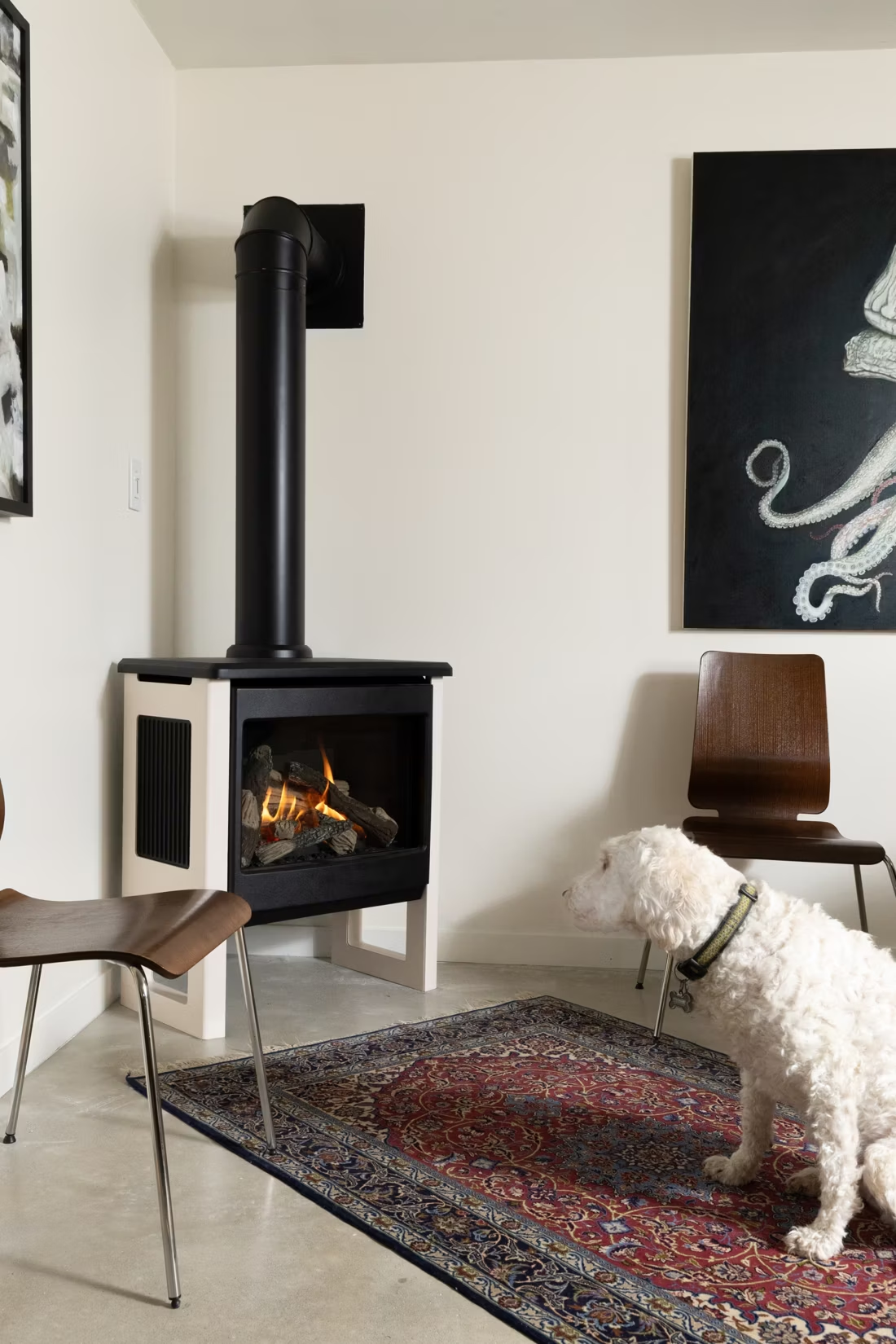
A gas fireplace is a built-in unit framed into a wall, typically chosen for new construction or a remodel. A gas insert is built to slide into an existing masonry fireplace opening, converting an old wood-burning hearth into a sealed, efficient gas unit that vents through the existing chimney. A gas stove is a freestanding unit on its own legs, similar in footprint to a wood stove but running on propane. For the many Hubbard County homes and cabins with an existing wood fireplace already in place, an insert is usually the simplest and most cost-effective path.
Do I need a permit to install a gas fireplace in Hubbard County?
Yes—new gas fireplace and insert installations require a building permit, along with a gas line permit for any new propane line work, issued through Hubbard County's local permitting office. Licensed gas-fitters handle the propane line connection itself, which is one of the main reasons to go through a certified hearth dealer rather than a general contractor: they coordinate the gas work, venting, and inspection sign-off as one job instead of leaving you to manage separate trades.
Should I get a vented or vent-free gas fireplace?
Vented (direct-vent) gas fireplaces pull combustion air from outside and exhaust it back outside through a sealed vent pipe—they're the cleanest and most universally recommended option, and the one most Hubbard County installers default to. Vent-free units burn propane directly into the room without external venting; they're legal in Minnesota but come with strict room-sizing rules and oxygen-depletion safety sensors, and they add moisture and combustion byproducts to indoor air that's already sealed up tight for months at a time in a climate this cold. For most homes and cabins here, a direct-vent unit is the better call—it delivers real heat output without any tradeoff on indoor air quality during a long heating season.
How often does a gas fireplace need to be serviced?
Plan on an annual inspection, ideally before the start of the heating season. A technician checks the burner, pilot assembly, venting, and gas connections, and cleans the glass and interior—a much shorter visit than a wood chimney sweep, but just as important given how many hours a gas unit can log in a Hubbard County winter. For a cabin that sits unused for stretches, it's also worth having the unit checked before the first cold-weather use of the season, since pilot assemblies and battery backups can degrade when sitting idle.
Gas vs. wood—which makes more sense for a Hubbard County home or cabin?
Wood remains a strong option here—Hubbard County sits near the Chippewa National Forest, where cutting permits run $10 to $20 per cord through the May-to-October season, and local oak, maple, birch, and aspen make for solid, efficient firewood. Wood also keeps working with the power out, which matters during winter storms. Gas trades that self-sufficiency for convenience: instant heat at the flip of a switch, no wood splitting or hauling, and a cleaner look, though it depends on a propane supply chain rather than what you can cut yourself. Many homeowners here run gas in the main living space for everyday use and keep a wood stove as backup—the combination that makes the most sense for both year-round homes and seasonal cabins.
Are new gas fireplaces really better than old ones?
Two ways, and they're both big. Looks: modern gas fireplaces are realistic enough that it's hard to believe they aren't burning wood. Cost: old units burn a standing pilot year-round (roughly $200 a year), while new ones use pilot-on-demand ignition and modern burners. Add remote controls and thermostat operation, and the day-to-day experience isn't close.
Does a gas fireplace work when the power is out?
Yes—modern gas fireplaces have a battery backup for the ignition system that lasts for weeks, so no power equals no problem. Your furnace can't say that: no electricity, no blower, no heat. It's one of the most common reasons families add a fireplace, and worth confirming on any model you're considering.
How much should I budget for a fireplace?
For an average home—covering the fireplace, the vent pipe, and basic installation—a budget between $3,900 and $5,500 gives you a lot of options across wood, gas, and pellet. By the time you add finish work, gas line, and electrical, the average complete installation lands between $5,000 and $12,000 all-in. In a remodel or new build, a good rule is to put about 2.5% of the total project cost toward the fireplace.
What is an in-home preview and do I need one?
It's a visit where a hearth professional measures your space, confirms the model you picked actually works in your home, and walks the specs—framing, gas line, venting, finish work—before anything is ordered. Some details you just can't know until you see the house. Never make a down payment without one; it's the single most-skipped step that burns buyers.
Stove and Fireplace Dealers in Hubbard County
Find your gas fireplace in Hubbard County.
Tell us about your home or cabin and we'll match you with a trusted local dealer, plus a free Project Guide & Parts List—the exact parts, including the vent kit, for your gas fireplace project in Hubbard County.
Find Your Fireplace →