
Built for the coldest winters in the Lower 48.
From Elbow Lake to Herman, Ashby, and Wendell, Grant County sits in IECC climate zone 7—some of the harshest, windiest winters in the continental United States. Find the right pellet stove or insert, and get matched with a trusted local dealer.
Every Project Starts From One of These Five Situations
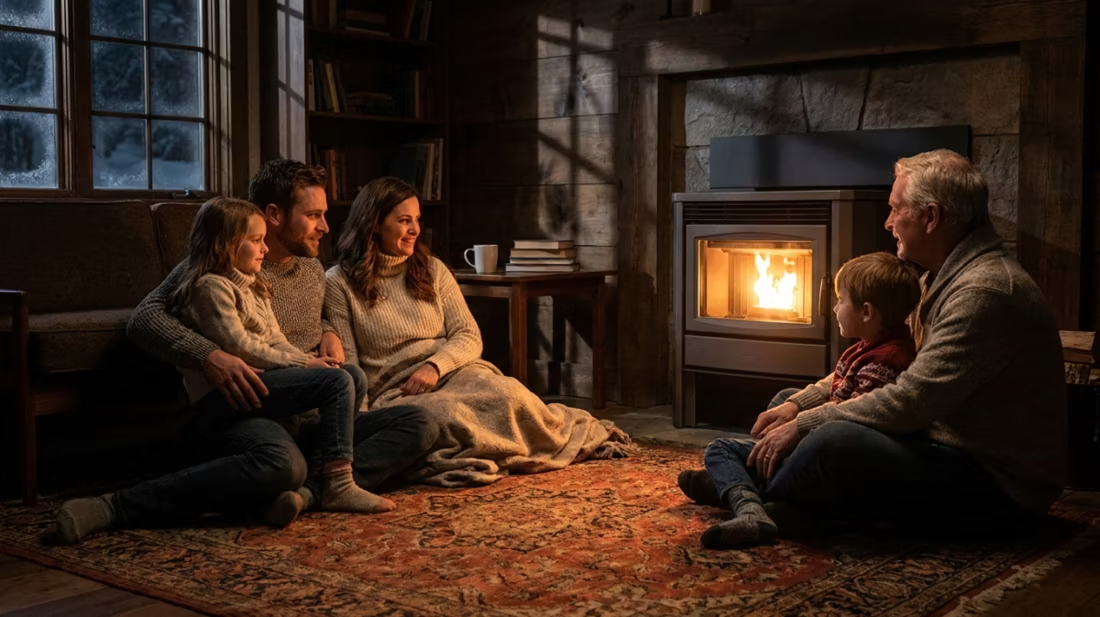
Consistent heat without the woodpile.
Grant County is open prairie and farmland in west-central Minnesota, just east of the North Dakota line—country with the same brutal wind chill and sustained cold that hits Fargo, less than an hour west. Climate zone 7 covers only the coldest slice of the country, and with a population under 3,300 spread across small towns like Elbow Lake, Herman, Ashby, and Wendell, a lot of homes here are older farmhouses that need serious, dependable heat through a long winter that regularly starts before Halloween and doesn't let go until April.
Grant County has no non-attainment air quality designations and no winter burn restrictions, so pellet heat here isn't competing with the smoke advisories that limit wood burning in more populated regions. What it does compete with is inconvenience—hauling and splitting cordwood on a farm where oak, maple, birch, and aspen woodlots are common but time is tight. A pellet stove loads from a bag instead of a woodpile, holds a steady burn on a thermostat, and burns cleaner. Regional suppliers like Lignetics, Somerset Pellet Fuel, and Indeck Energy Services keep pellets reasonably accessible in this part of the state, even though Grant County itself is thinly populated.
Three steps. No salesperson until you're ready.
Tell us about your project
Your zip code, your situation, and the fuel you're leaning toward—or let the answers point you to one.
See what's actually available
The brands dealers within 100 miles genuinely carry—real options, never a catalog mirage.
Get your dealer & Project Guide
A trusted local dealer, plus the free Project Guide & Parts List that names every component of the job.
Frequently Asked Questions
How much does a pellet stove installation cost in Grant County?
Most pellet stove installations in Grant County run in the $3,000 to $6,500 range, depending on the unit, whether you're venting through an existing wall or need new penetration, and whether you're installing into an existing fireplace opening as an insert. Because pellet stoves vent horizontally through a small-diameter pipe rather than requiring a full masonry chimney, installs are typically simpler and less expensive than wood stove installs. Rural properties around Herman, Ashby, and Wendell may see a modest travel charge added if the installer is coming from Fergus Falls or another regional hub, since Grant County itself has a limited number of hearth dealers.
Do pellet stoves work during a power outage in Grant County?
This is worth being direct about: pellet stoves require electricity to run the auger that feeds pellets and the blower that distributes heat, so a standard pellet stove will not run during a power outage unless you have a generator or battery backup. That matters in Grant County, where open prairie and exposed farmland make winter storms and ice-loading on power lines a real risk for extended outages. If backup heat during outages is a priority for your household, ask a local dealer about battery backup options for your pellet unit, or consider pairing a pellet stove with a wood-burning appliance for true off-grid redundancy.
What size pellet stove do I need for a Grant County home?
Climate zone 7 is the coldest heating zone in the Lower 48, so sizing here should lean toward the higher end of a unit's rated capacity rather than the lower end. A small pellet stove (up to 1,000 sq ft) suits a single room or a well-insulated addition; a medium stove (1,000–2,000 sq ft) covers most farmhouse main floors; a large stove (2,000+ sq ft) is often the right call for older, less-insulated homes common around Elbow Lake and the surrounding townships, where drafts and single-pane windows are still common. A local dealer can size your specific home during an in-home visit—oversizing wastes fuel, and undersizing means you're still running a backup furnace on the coldest nights.
What's the difference between a pellet stove and a pellet insert?
A pellet stove is a freestanding unit that sits on its own hearth pad and vents through a wall or existing chimney chase—it can go almost anywhere with proper clearances, which makes it a good fit for a farmhouse mudroom, basement, or shop. A pellet insert is built to slide into an existing masonry fireplace opening, converting an old open hearth into a sealed, thermostat-controlled heat source while reusing the existing chimney for venting. For Grant County homes with an older fireplace that's rarely used because it doesn't produce much heat, an insert is often the more efficient upgrade; for homes without an existing fireplace, a freestanding stove is the simpler install.
Do I need a permit to install a pellet stove in Grant County?
Yes—a building permit is generally required for a new pellet stove installation, whether it's a freestanding unit or an insert, through the Grant County Building & Zoning Office for properties outside city limits, or the relevant city office for installations within Elbow Lake, Herman, or the other incorporated towns. Because pellet venting runs through an exterior wall rather than a full masonry chimney, the inspection is usually straightforward—mainly confirming wall clearances and proper vent termination. Most local dealers handle the permit paperwork as part of the installation, so you typically don't have to file it yourself.
What's the best pellet stove for a climate zone 7 winter?
For Grant County's climate, look for a pellet stove with a large hopper capacity—40 to 80 pounds—so it can run overnight without a refill during the coldest stretches, and a higher BTU output rating (40,000+ BTU) to handle drafty older farmhouses common in the area. Brands supplied by regional distributors like Lignetics and Somerset Pellet Fuel are widely available in this part of Minnesota, which matters for keeping a steady fuel supply through a winter that can run six months long. A local dealer can walk you through hopper size, auger reliability, and glass-cleaning burn technology based on how many hours a day you expect to run the stove.
How much maintenance does a pellet stove need?
Pellet stoves need more regular attention than a gas unit but less than a wood stove's annual chimney sweep. Plan on emptying the ash pan every few days during heavy use, cleaning the burn pot weekly to keep the fire feeding properly, and a full professional cleaning and inspection once a year—ideally before the heating season starts in September or October. Because Grant County's winters run long, a stove used as primary heat may need the burn pot and exhaust fan checked more than once a season. Skipping maintenance is the most common cause of auger jams and reduced heat output, especially with the lower-grade pellets sometimes sold at big-box stores.
Where can I buy pellets in or near Grant County?
Regional suppliers including Lignetics, Somerset Pellet Fuel, and Indeck Energy Services distribute bagged pellets throughout west-central Minnesota, and are typically available through farm supply stores, hardware stores, and hearth dealers in Fergus Falls and other nearby regional hubs, since Grant County's own population base is too small to support a dedicated pellet retailer. Buying a season's supply—often 2 to 4 tons for a home using a pellet stove as primary heat through a Minnesota winter—in the fall before demand spikes is the standard local strategy, since stock can run tight during extended cold snaps.
Pellet stove vs. wood stove—which makes more sense in Grant County?
Wood stoves work without electricity, which is a real advantage on farmland exposed to prairie winds and the outages that come with ice storms—and Grant County has plenty of oak, maple, birch, and aspen in local woodlots and shelterbelts if you're set up to cut and split your own. Pellet stoves are more convenient day to day, hold a steady thermostat-controlled burn, and produce far less ash and mess, but they depend on grid power for the auger and blower. For a primary residence where reliability during a blizzard-driven outage matters most, wood or a wood-pellet combination is worth considering. For homes prioritizing convenience and consistent heat output without wood handling, pellet is generally the easier day-to-day choice.
Why is a fireplace insert so efficient?
An insert does two things: it seals the chimney completely, so you stop losing air you already paid to heat, and it radiates warmth into the room through the firebox and glass. Most add a heat-exchange fan that pulls cool room air underneath, wraps it around the hot firebox, and pushes it back out warm. Your home is more efficient before you've even lit the first fire.
What's the difference between an insert and a zero-clearance fireplace?
An insert is a fireplace that slides into a pre-existing wood-burning fireplace—if you don't have one, there's nothing to insert it into. A zero-clearance fireplace is built into a framed wall, which makes it the answer for remodels and new construction. Simple test: existing masonry fireplace means insert; blank or framed wall means zero-clearance.
How much should I budget for a fireplace?
For an average home—covering the fireplace, the vent pipe, and basic installation—a budget between $3,900 and $5,500 gives you a lot of options across wood, gas, and pellet. By the time you add finish work, gas line, and electrical, the average complete installation lands between $5,000 and $12,000 all-in. In a remodel or new build, a good rule is to put about 2.5% of the total project cost toward the fireplace.
Can I install a fireplace myself?
If you're putting a fire in your house on purpose, it's best to work with an expert. Unless you're genuinely experienced in framing, gas line, vent pipe, and the national code on clearances to combustibles, have a professional do it—and ideally the same company that sells you the fireplace, so warranty, service, and liability all live under one roof.
Pellet Brands Stocked Around Grant County
Manufacturers will point you to the nearest stocking dealer.
Find your pellet stove in Grant County.
Tell us a bit about your home and we'll match you with the right pellet stove or insert for a zone 7 winter, plus a free Project Guide & Parts List—the exact parts, vent kit, and a trusted local dealer to install it.
Find Your Fireplace →