
Find the right fireplace for a Grant County winter.
Wood, gas, pellet, and electric fireplace resources for every town and township in Grant County—from Elbow Lake to Herman and Ashby. Find the right unit for a Zone 7 winter and connect with a trusted local hearth dealer.
Every Project Starts From One of These Five Situations
Cold-climate heating in Grant County, Minnesota.
Grant County sits in the lakes-and-prairie country of west-central Minnesota, with the county seat at Elbow Lake and only about 3,268 residents spread across farmland, shelterbelts, and the Pomme de Terre lake chain. This is Climate Zone 7—some of the coldest building-code territory in the continental U.S., comparable to what homeowners across the border in Fargo, ND deal with each winter. Sustained sub-zero stretches and heavy wind chill off the open prairie are normal from December through February. Wood heat has deep roots here: farm woodlots and shelterbelts supply oak, maple, birch, and aspen, and a lot of rural homes still split and stack their own firewood as a hedge against propane costs and winter power outages.
What you'll find on this hub: hearth retailers, service technicians, and fuel suppliers covering every community in the county—Elbow Lake, Herman, Ashby, Norcross, and the townships between them. Pick your fuel below to get into specifics—local dealers, installation costs, recommended units, and the resources that fit your project. Whether you're heating a farmhouse outside Herman or a lake cabin near the Pomme de Terre chain, this is the starting point.
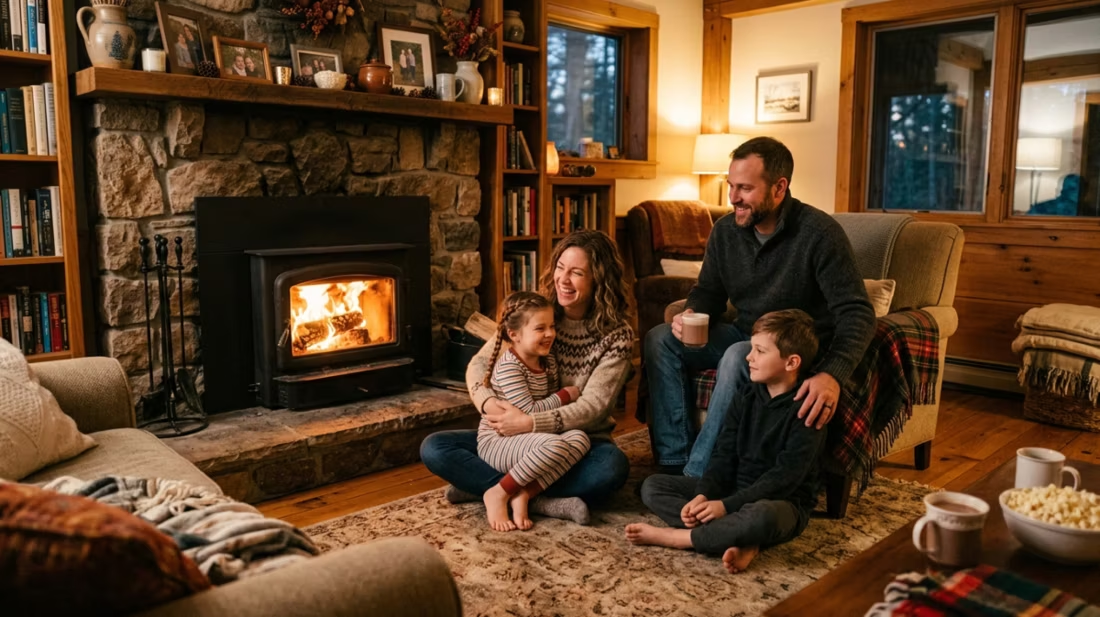
Four fuels. One honest answer for Grant County.
Three steps. No salesperson until you're ready.
Tell us about your project
Your zip code, your situation, and the fuel you're leaning toward—or let the answers point you to one.
See what's actually available
The brands dealers within 100 miles genuinely carry—real options, never a catalog mirage.
Get your dealer & Project Guide
A trusted local dealer, plus the free Project Guide & Parts List that names every component of the job.
Frequently Asked Questions
Which fuel works best in Grant County?
It depends on the home and how remote it is. Wood remains a serious primary or backup heat source in rural Grant County—oak, maple, birch, and aspen are all cut locally off farm woodlots and shelterbelts, and a well-loaded catalytic or non-cat stove can carry a house through a sub-zero night without power. Propane is the practical gas choice for most rural homes, since natural gas mains generally only reach the incorporated towns like Elbow Lake and Herman—propane fireplaces and inserts give instant heat with none of the wood-splitting labor. Pellet stoves are a solid middle ground and regional brands (Indeck Energy Services, Lignetics, Somerset Pellet Fuel) are reasonably available for stocking up before winter. Electric fireplaces are supplemental here—good for a bedroom or den, but not something you'd rely on as your only heat source through a Zone 7 winter. Most Grant County homes end up running two fuels: wood or propane for the bulk of the heating load, pellet or electric for backup and secondary rooms.
Do I need a permit to install a fireplace in Grant County?
In most cases, yes. New wood stoves, wood inserts, gas fireplaces, gas inserts, and pellet stoves typically require a building permit through the Grant County zoning and building office, and gas installations also need the propane line or gas-fitter work signed off separately. Wood-burning appliances should meet current EPA emissions standards—this matters if you're replacing an older stove rather than installing new. Electric fireplaces usually skip the permit process unless you're doing a built-in installation with new wiring. If you're inside Elbow Lake, Herman, Ashby, or Norcross city limits, check with the town first—some smaller municipalities route permits through the county rather than handling them locally. Most hearth retailers who install in the area will pull the permit for you as part of the job.
Are there air quality or burning restrictions in Grant County?
No—Grant County doesn't have the kind of winter inversion or non-attainment issues you see in basin or bowl-shaped terrain out West. This is open prairie country with good air dispersion, so there's no history of mandatory burn curtailment days tied to wood smoke. The one thing to keep in mind is outdoor burning permits, which are a separate matter from indoor wood stoves and typically get restricted or suspended during dry, windy spells when grass fire risk is high—check with the county before burning brush piles or debris, especially in spring and fall. Indoor wood stove and fireplace use isn't affected by those restrictions.
Can one local hearth retailer handle all four fuel types?
Given how small Grant County is on its own, most of the retailers who actually cover Elbow Lake, Herman, Ashby, and Norcross are based in larger regional towns—Fergus Falls, Morris, or Wheaton—and carry a broad mix of wood, gas, pellet, and electric so they can serve whatever a rural customer needs without a second trip. That's worth knowing if you're cross-shopping fuels: a multi-fuel dealer can show you working displays of a wood insert next to a propane unit and walk through the trade-offs for your specific house and woodlot situation. Smaller, more specialized shops do exist but tend to focus on wood or propane rather than carrying all four.
How does service work in rural areas of Grant County?
Technicians covering Grant County are almost always driving in from Fergus Falls, Morris, or another regional hub, so a service call to a farm outside Herman or a lake place near Norcross usually includes some travel time built into the price. Booking ahead of the heating season—August through October—gets you a much easier appointment window than trying to schedule an emergency fix in the middle of a January cold snap, when every propane and wood tech in the region is booked solid. If you're running wood as backup for a propane system (a common setup here given how exposed the prairie is to power outages), get both serviced before the season starts so you're not choosing between them during an actual outage.
What's the typical cost range for fireplace installation across all fuel types in Grant County?
Costs run in line with rural upper-Midwest pricing, adjusted for the venting and clearances a Zone 7 install often needs. Wood stove or insert: roughly $4,500–$9,000 for a standard install, more if new chimney work is involved. Propane fireplace, insert, or stove: $4,500–$10,000 depending on whether a line already runs to the appliance location or new gas piping is needed. Pellet stove or insert: $4,500–$7,500 for a typical install. Electric fireplace: $200–$3,000 for the unit itself, plus $400–$1,200 in labor for anything beyond a simple plug-in setup. Exact numbers depend on your home's layout and how far the installer has to travel—see the county + fuel pages above for cost detail tied to specific local dealers.
Can I install a fireplace myself?
If you're putting a fire in your house on purpose, it's best to work with an expert. Unless you're genuinely experienced in framing, gas line, vent pipe, and the national code on clearances to combustibles, have a professional do it—and ideally the same company that sells you the fireplace, so warranty, service, and liability all live under one roof.
What is an in-home preview and do I need one?
It's a visit where a hearth professional measures your space, confirms the model you picked actually works in your home, and walks the specs—framing, gas line, venting, finish work—before anything is ordered. Some details you just can't know until you see the house. Never make a down payment without one; it's the single most-skipped step that burns buyers.
How much should I budget for a fireplace?
For an average home—covering the fireplace, the vent pipe, and basic installation—a budget between $3,900 and $5,500 gives you a lot of options across wood, gas, and pellet. By the time you add finish work, gas line, and electrical, the average complete installation lands between $5,000 and $12,000 all-in. In a remodel or new build, a good rule is to put about 2.5% of the total project cost toward the fireplace.
Does a fireplace add value to my home?
On average, a fireplace adds back to the home about the same amount you spent installing it. Add the monthly savings from heating the rooms you actually use instead of the whole house—often hundreds of dollars a year—and the value case is strong before you even count what a fire does for how your family uses the room.
Stove and Fireplace Dealers in Grant County
Listings include WhyFire partner dealers, dealers we have verified as authorized for the brands we recommend, and established local businesses that carry hearth products. Every listing shows which one it is. The ones marked Preferred run on WhyFire's software, so they can show you real pricing and book your appointment right here. No manufacturer pays for placement. How we verify dealers →
Ellingson Plumbing & Heating & The Fireplace Store
Cullens Home Center
Find your fireplace in Grant County.
Tell us about your project and we'll match you with a trusted local dealer, plus send a free Project Guide & Parts List—the exact parts, vent kit, and recommended installer for your fuel and your home.
Find Your Fireplace →