
Real ambiance for Dakota County homes—no gas line required.
From condos in Eagan to new-construction homes in Lakeville and Rosemount, electric fireplaces add zone heat and a real flame look without venting, gas piping, or a chimney. Find the right unit and connect with a trusted local dealer.
Every Project Starts From One of These Five Situations
Heat where you actually live, without new venting.
Dakota County sits south and east of the Twin Cities across Eagan, Burnsville, Apple Valley, Lakeville, Hastings, Rosemount, South St. Paul, West St. Paul, and Farmington, with more than 420,000 residents spread across a mix of established suburbs and fast-growing new construction. Winters here are serious business—Climate Zone 6A, an average winter low around 8°F, and a long, demanding heating season, putting Dakota County in the same cold-climate tier as Fargo, ND. In weather like that, the furnace is doing the real work, and an electric fireplace plays a different role: supplemental zone heat and ambiance in the rooms where a family actually spends time, not a replacement for central heat.
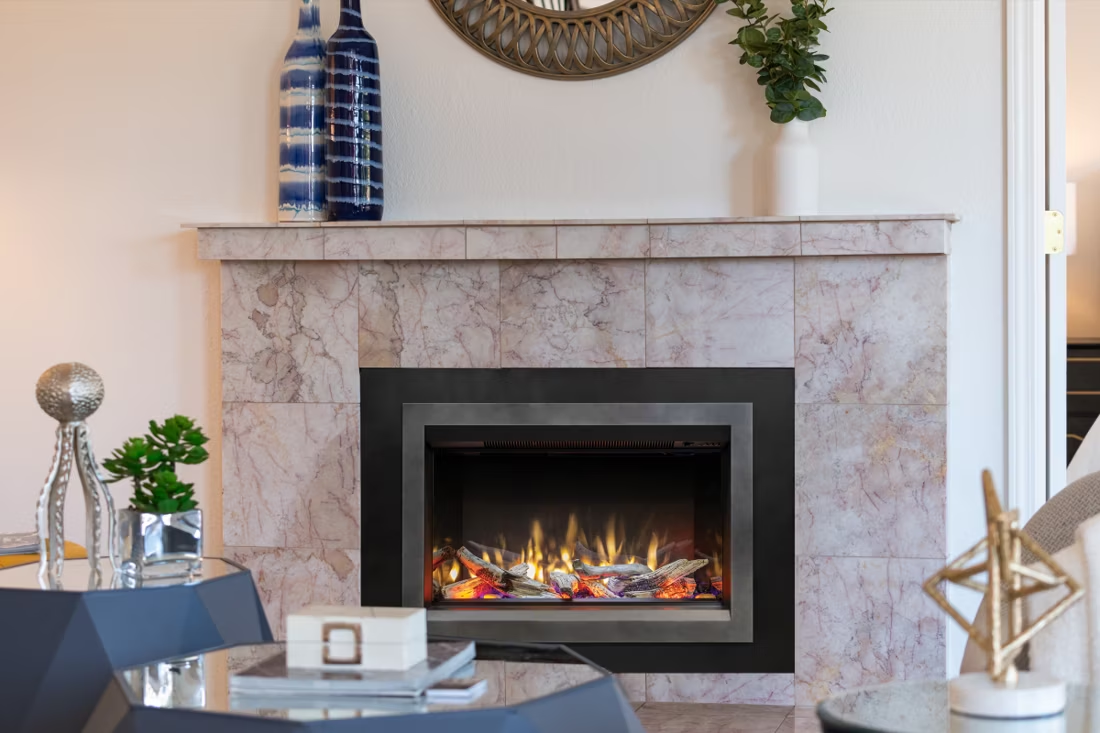
That's exactly where electric shines. A built-in electric fireplace or insert needs no chimney, no gas line, and no combustion air—which matters in the tightly sealed, energy-efficient homes going up in Lakeville and Rosemount, and in the condos and townhomes common across Eagan and Burnsville where venting a gas or wood appliance simply isn't an option. Most units run on a standard 120-volt circuit, install with true zero clearance to combustibles, and can go into a basement rec room, a primary bedroom, or a media wall with far less construction than any vented alternative. For Dakota County homeowners who want real flame appearance and supplemental warmth without opening up a wall for venting, electric is often the most practical fit—and a licensed local dealer will confirm what your specific circuit and space can support.
Three steps. No salesperson until you're ready.
Tell us about your project
Your zip code, your situation, and the fuel you're leaning toward—or let the answers point you to one.
See what's actually available
The brands dealers within 100 miles genuinely carry—real options, never a catalog mirage.
Get your dealer & Project Guide
A trusted local dealer, plus the free Project Guide & Parts List that names every component of the job.
Frequently Asked Questions
How much does an electric fireplace installation cost in Dakota County?
Plug-in electric inserts and freestanding units are the least expensive option, typically $200 to $700 for the unit itself with no electrical work required beyond an existing outlet. Built-in wall units and mantel-surround electric fireplaces run higher—usually $1,200 to $4,000 installed—once you factor in a dedicated 120-volt or 240-volt circuit, an electrician's time, and any framing or trim carpentry. Costs run toward the higher end for homes in older housing stock around South St. Paul and West St. Paul where panel capacity or wiring may need updating, and toward the lower end for new-construction homes in Lakeville or Rosemount where a circuit can be roughed in during the build. A local dealer will give you a firm number after seeing your space and panel.
Can an electric fireplace be my primary heat source in Dakota County?
Not realistically, and any honest installer will tell you that. With a long, demanding heating season and average winter lows around 8°F, Dakota County winters demand a real furnace or heat pump system—electric fireplaces top out around 5,000 to 5,200 BTU of supplemental heat, enough to comfortably warm a single room but not a whole house through a January cold snap. Where electric fireplaces earn their keep is zone heating: taking the edge off a finished basement, warming up a home office or bonus room without running the whole-house furnace harder, or adding backup comfort in a room the furnace doesn't reach evenly. Think of it as a heating supplement layered on top of your existing system, not a replacement for it.
Do I need a permit or an electrician to install an electric fireplace?
It depends on the unit. A plug-in insert or freestanding electric fireplace that uses an existing outlet typically requires no permit at all—it's treated like any other appliance. A built-in wall unit that needs a new dedicated circuit does require an electrical permit in most Dakota County cities, issued through the local building department (City of Eagan Inspections and City of Burnsville Building Safety are two examples homeowners commonly deal with). A licensed electrician pulls the permit and runs the circuit as part of the install, and most hearth dealers coordinate that work directly so you're not managing a separate trade yourself.
Built-in, insert, or freestanding—which type of electric fireplace should I choose?
A built-in electric fireplace is designed to be recessed into a wall or media center for a clean, flush look—popular in new-construction great rooms across Lakeville and Rosemount. An electric insert is sized to slide into an existing masonry or wood-burning fireplace opening, which is a common upgrade for older homes in Hastings or Apple Valley that have a fireplace nobody uses anymore. A freestanding electric stove or mantel unit needs no opening at all and can go virtually anywhere with an outlet, making it the easiest option for condos and rental townhomes where any wall modification is restricted. Your existing structure and whether you're renting or renovating usually points to the right category.
Electric vs. gas fireplace—which is right for my Dakota County home?
Gas fireplaces put out significantly more heat—typically 20,000 to 40,000 BTU—and can genuinely offset furnace load during a Minnesota winter, but they require a gas line (natural gas is widely available across Dakota County's suburban core) or a propane tank, plus venting for most models. Electric fireplaces skip the gas line and venting entirely, cost far less to install, and are the only realistic option in condos, apartments, and HOA communities where exterior venting isn't allowed. For a primary living room in a single-family home where you want real supplemental heat, gas is usually the better long-term choice. For a basement, bedroom, or multi-family unit where ambiance and light zone heat are the goal, electric wins on cost and simplicity.
What size or wattage electric fireplace do I need?
Most residential electric fireplaces are fixed around 1,500 watts (about 5,000 BTU) regardless of the unit's physical size, so sizing is really about matching the flame width and cabinet dimensions to your wall or fireplace opening rather than chasing more heat output. A 36 to 50-inch unit suits most living rooms and media walls; smaller 26 to 30-inch inserts fit bedroom or den-sized fireplace openings common in older Hastings and West St. Paul homes. If the goal is genuine supplemental heat for a finished basement or bonus room, look for a unit with a rated heater fan (most cover 400 to 1,000 square feet) rather than assuming a bigger flame display means more warmth—the two aren't the same thing.
Are electric fireplaces a good option for condos and apartments in Dakota County?
Yes—this is one of the strongest use cases for electric. Dakota County has a substantial amount of multi-family housing across Eagan, Burnsville, and Apple Valley, and most condo associations and rental leases prohibit any exterior venting modification, which rules out gas and wood appliances outright. A plug-in or wall-mounted electric fireplace needs no venting, no gas line, and often no permanent modification at all, which makes it compliant with nearly any HOA or lease agreement. It's also the practical choice for anyone who wants fireplace ambiance without a long-term structural commitment to a unit they might move away from in a few years.
What does it cost to run an electric fireplace in Dakota County?
Most electric fireplaces draw about 1,500 watts on the heater setting, or roughly 1.5 kWh per hour of use. At typical Dakota Electric Association and Xcel Energy residential rates, that works out to somewhere around 15 to 25 cents an hour of heated operation—noticeably cheaper per hour than running a space heater of the same wattage would feel, since you're also getting usable ambiance out of it. Running the flame effect alone, without the heater engaged, draws only a few watts and costs next to nothing, which is why many Dakota County homeowners leave the flame on for evening ambiance without the heat function during shoulder-season months.
How much maintenance does an electric fireplace need?
Very little compared to a wood or gas appliance—there's no chimney to sweep, no gas lines to inspect, and no combustion byproducts to manage. Maintenance is mostly dusting the interior, occasionally cleaning the glass front, and replacing LED light strips or the heater fan after years of use (most units are rated for 20,000+ hours of LED life). There's no annual inspection requirement the way there is for gas or wood units in Dakota County, which is part of why electric appeals to homeowners in Farmington and Inver Grove Heights who want fireplace ambiance without adding another item to the yearly home-maintenance list.
Can I put a TV above my fireplace?
Yes—with an asterisk. Fireplaces are hot and TVs don't like heat. Either put a mantel between them to deflect rising warmth, or choose a fireplace with heat-management technology that creates a cool zone on the wall above—the wall stays around 125 degrees, barely warm, while the room still gets full heat. If you like clean lines and don't want a mantel, heat management is the answer.
Does an electric fireplace need a vent or chimney?
No—that's its superpower. An electric fireplace needs a wall and an outlet, period. No vent pipe, no gas line, no clearances to design around, which is why it works in bedrooms, offices, apartments, and walls where venting a gas or wood unit would be impractical or impossible. Installation is typically the simplest and least expensive of any fireplace type.
Can I install a fireplace myself?
If you're putting a fire in your house on purpose, it's best to work with an expert. Unless you're genuinely experienced in framing, gas line, vent pipe, and the national code on clearances to combustibles, have a professional do it—and ideally the same company that sells you the fireplace, so warranty, service, and liability all live under one roof.
How much should I budget for a fireplace?
For an average home—covering the fireplace, the vent pipe, and basic installation—a budget between $3,900 and $5,500 gives you a lot of options across wood, gas, and pellet. By the time you add finish work, gas line, and electrical, the average complete installation lands between $5,000 and $12,000 all-in. In a remodel or new build, a good rule is to put about 2.5% of the total project cost toward the fireplace.
Stove and Fireplace Dealers in Dakota County
Listings include WhyFire partner dealers, dealers we have verified as authorized for the brands we recommend, and established local businesses that carry hearth products. Every listing shows which one it is. The ones marked Preferred run on WhyFire's software, so they can show you real pricing and book your appointment right here. No manufacturer pays for placement. How we verify dealers →
Fireside Hearth & Home - Eagan
Minnesota Gas Grills & Fireplaces
The Chimney Pro’s Mn
Comfort By Design
Pure Design Environments
Fireside Hearth & Home - Eden Prairie
Fireside Hearth & Home - Roseville
Ferguson Enterprises
Fireside Hearth & Home - Minnetonka
Condor Fireplace & Stone
Scotts Heating And Ac
Streitz Heating & Cooling
Find your electric fireplace in Dakota County.
Tell us about your home and where you want the warmth, and we'll match you with the right electric fireplace or insert—plus a free Project Guide & Parts List and a trusted local dealer to install it.
Find Your Fireplace →