
Add Warmth and Ambiance Without the Venting Hassle.
No chimney, no gas line, no permit scramble—just plug-in or hardwired warmth for a Farmington bedroom, basement, or living room. Find the right unit and connect with a trusted local dealer.
Every Project Starts From One of These Five Situations
Instant ambiance, zero clearance, no permit headaches.
Farmington sits in Dakota County in climate zone 6A, with average winter lows around 8°F and a heating load comparable to Duluth—a heating load in the same range as Duluth. That kind of cold means most homes here rely on a furnace for whole-house heat, but it also means a lot of Farmington homeowners want supplemental warmth and visual comfort in specific rooms: a finished basement, a primary bedroom, a home office that the furnace never quite reaches evenly.
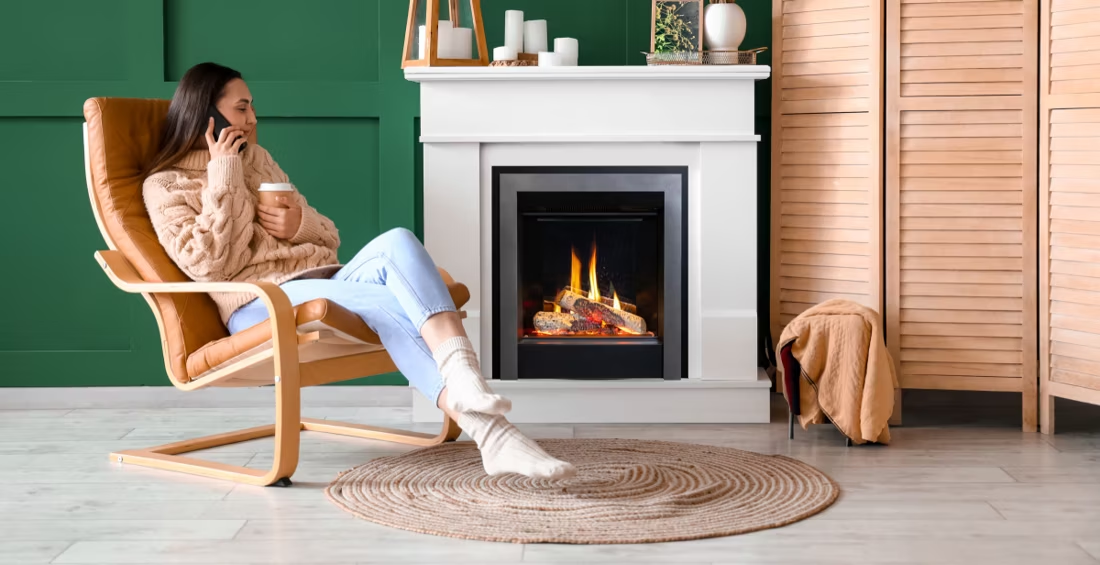
That's where electric fireplaces earn their place. Dakota Electric Association serves most of Farmington (with a small northeastern sliver served by the City of St. Paul), and at roughly $0.14 per kWh, running a 1,500-watt electric insert costs about 21 cents an hour—cheap zone heat for the rooms that need it most. Because most units are plug-in or simple 120V/240V hardwire jobs, there's no chimney, no venting, and in many cases no building permit at all—a real advantage over wood or gas options in a tight suburban lot.
Three steps. No salesperson until you're ready.
Tell us about your project
Your zip code, your situation, and the fuel you're leaning toward—or let the answers point you to one.
See what's actually available
The brands dealers within 100 miles genuinely carry—real options, never a catalog mirage.
Get your dealer & Project Guide
A trusted local dealer, plus the free Project Guide & Parts List that names every component of the job.
Frequently Asked Questions
How much does an electric fireplace installation cost in Farmington?
Plug-in electric inserts and freestanding stoves typically run $300 to $900 installed, since most just need a standard outlet and a mantel or surround. Built-in wall units or larger linear electric fireplaces that require dedicated 240V wiring run higher, generally $1,200 to $2,500 once an electrician runs a new circuit and a carpenter frames the surround. Because there's no chimney or gas line involved, electric installs in Farmington are almost always the least expensive hearth option—local dealers can usually quote a firm number after seeing your room and outlet situation.
Will an electric fireplace actually heat my Farmington home?
Not as a whole-house solution—and any dealer being straight with you will say the same. With Farmington's heating load comparable to Duluth and average winter lows near 8°F, your furnace needs to carry the real heating load. Most electric fireplaces top out around 1,500 watts (about 5,000 BTU), which is enough to noticeably warm a single room—a bedroom, a basement rec room, a den—but won't keep pace with a Minnesota cold front across an open floor plan. Think of electric as targeted comfort heat, not a furnace replacement.
What does it cost to run an electric fireplace with Dakota Electric Association rates?
At Dakota Electric Association's residential rate of about $0.14 per kWh, a standard 1,500-watt unit running on high costs roughly 21 cents an hour, or about $5 for a full 24 hours of continuous use. Most households run theirs a few hours a night rather than around the clock, which keeps the monthly cost of ambiance and supplemental warmth well under what a comparable amount of propane or firewood would run—one reason electric units are popular add-ons in finished basements and additions here.
Do I need a permit to install an electric fireplace in Farmington?
In most cases, no. A plug-in electric insert or freestanding stove uses an existing outlet and doesn't require permitting through the City of Farmington's building department. If you're having an electrician add a new dedicated circuit for a larger built-in unit, that electrical work typically does require a permit and inspection—your electrician usually pulls that as part of the job. There's no venting or chimney work involved either way, which is the main reason electric installs move faster than wood or gas projects.
What's the difference between an electric insert and a built-in electric fireplace?
An electric insert is designed to drop into an existing fireplace opening—useful if a Farmington home has an old, unused wood-burning fireplace that a homeowner wants to convert to something simpler and safer. A built-in (or linear) electric fireplace is installed into new framing, often as a focal wall feature in a remodel or basement finish, and usually requires a dedicated electrical circuit for full-size units. Freestanding electric stoves are a third option—no installation at all beyond finding an outlet, which makes them the easiest entry point for renters or anyone who wants to test the idea before committing to a built-in.
What's the best electric fireplace for a Minnesota winter?
Look for units with a real 5,000 BTU heater core (brands like Dimplex, Napoleon, and Touchstone all make models rated for that output) rather than fireplaces marketed mainly for the flame effect. In a Farmington basement or bedroom, a unit with a built-in thermostat lets you set a target temperature and have it cycle automatically, which matters more here than in milder climates since you'll likely run it through several cold months rather than just a few chilly evenings. A local dealer can match wattage and footprint to your specific room.
Will my electric fireplace work if the power goes out?
No—this is the honest tradeoff. Electric fireplaces need grid power to run the heater, blower, and flame effect, so during a winter storm outage in Dakota County, an electric unit goes dark along with everything else. If backup heat during outages is a priority for your household, a gas fireplace with a battery-backed ignition system is the better fit for that specific need. Electric fireplaces are best understood as everyday zone heat and ambiance, not emergency heat.
Why don't more Farmington homes use wood or pellet stoves?
Farmington is a Twin Cities suburb with typical suburban lot sizes, and most homes here were built with central forced-air heat and, where available, natural gas service already in place—there isn't the same rural wood-lot culture or nearby public timber access you'd find farther north in Minnesota. Air quality isn't a local concern, but for most Farmington homeowners, adding a wood or pellet appliance means dealing with fuel storage, chimney work, and ash cleanup for a heat source the furnace already covers—which is exactly the gap electric and gas fireplaces fill instead.
Electric vs. gas fireplace—which makes more sense for my Farmington home?
Gas fireplaces put out real, sustained heat (often 20,000-30,000+ BTU) and can be sized to meaningfully supplement your furnace on the coldest Dakota County nights, plus many models run during power outages. Electric fireplaces cost far less to install, need no venting or gas line, and give you instant on/off ambiance in a room where running new gas line doesn't make sense—a bedroom, an apartment-style basement suite, a rental unit. If you want genuine backup heat capacity, gas is the stronger choice; if you want low-cost, low-hassle warmth and glow in a specific room, electric wins. Some Farmington homes end up with both, split by room.
Does an electric fireplace need a vent or chimney?
No—that's its superpower. An electric fireplace needs a wall and an outlet, period. No vent pipe, no gas line, no clearances to design around, which is why it works in bedrooms, offices, apartments, and walls where venting a gas or wood unit would be impractical or impossible. Installation is typically the simplest and least expensive of any fireplace type.
Do electric fireplaces actually produce heat?
Yes—most put out around 4,800–5,000 BTUs from a standard outlet, which comfortably warms a bedroom, office, or den as a comfort-zone heater. What they won't do is carry a whole house the way wood, gas, or pellet can. Think of electric as ambiance-first with honest supplemental heat: flames on with no heat in July, flames plus warmth in January.
Can I install a fireplace myself?
If you're putting a fire in your house on purpose, it's best to work with an expert. Unless you're genuinely experienced in framing, gas line, vent pipe, and the national code on clearances to combustibles, have a professional do it—and ideally the same company that sells you the fireplace, so warranty, service, and liability all live under one roof.
What is an in-home preview and do I need one?
It's a visit where a hearth professional measures your space, confirms the model you picked actually works in your home, and walks the specs—framing, gas line, venting, finish work—before anything is ordered. Some details you just can't know until you see the house. Never make a down payment without one; it's the single most-skipped step that burns buyers.
Nearby Dealers
Hearth shops serving Farmington and the surrounding area. Every listing shows whether it is a WhyFire partner, a dealer we have verified as authorized for the brands we recommend, or a local business carrying hearth products. No manufacturer pays for placement. How we verify dealers →
Minnesota Gas Grills & Fireplaces
Fireside Hearth & Home - Eagan
Streitz Heating & Cooling
Comfort By Design
Pure Design Environments
Fireside Hearth & Home - Eden Prairie
The Chimney Pro’s Mn
Electric Service in Farmington
An electric fireplace's heater draws about 1,500 watts—pennies per hour at local rates.
Dakota Electric Association
City Of St Paul - (Ne)
Find your electric fireplace in Farmington.
Tell us a bit about your room and how you plan to use it, and we'll match you with the right electric fireplace or insert—plus a trusted local dealer who can install it correctly.
Find Your Fireplace →