
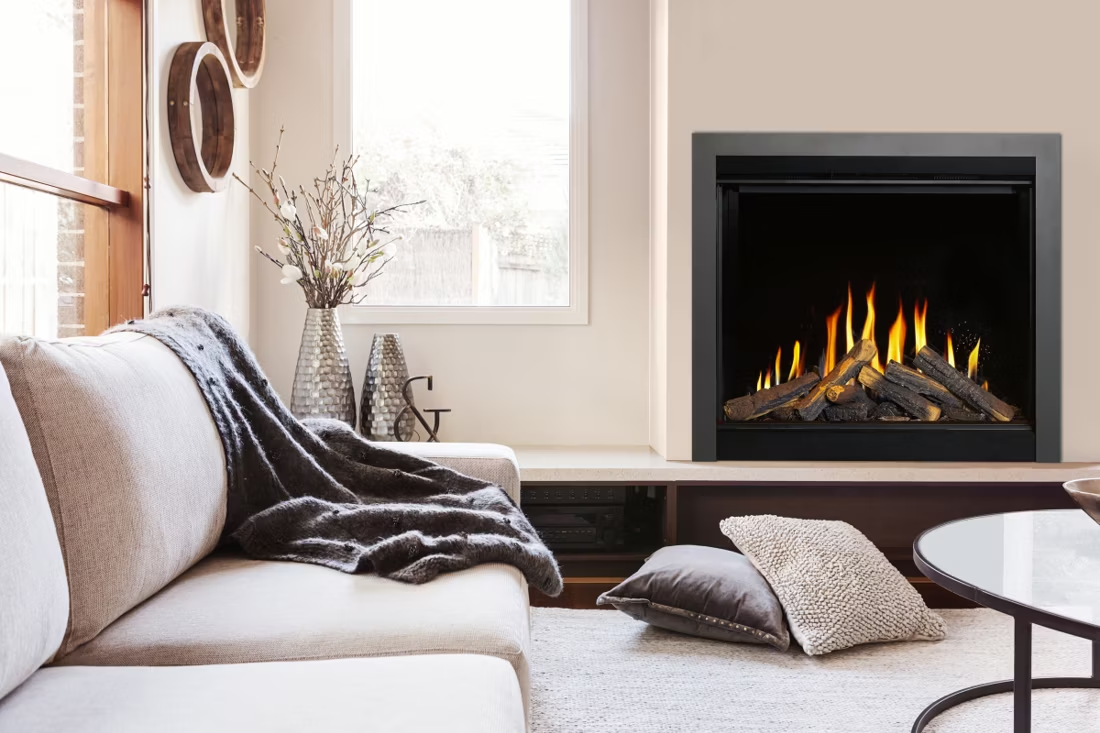
Instant ambiance for Lakeville's long, cold winters.
With winter lows averaging 8°F and a heating season as long and demanding as Fargo, ND's, Lakeville homeowners use electric fireplaces for zone heat and ambiance—no vent, no chimney, no gas line. Find the right unit and a trusted local dealer.
Every Project Starts From One of These Five Situations
Supplemental heat without the vent, chimney, or gas line.
Lakeville sits in Dakota County on the southern edge of the Twin Cities metro, in climate zone 6A at about 1,090 feet elevation. Winters here are long and genuinely cold—average lows around 8°F and a season-long heating load that rivals Fargo, ND. Most homes in Lakeville are newer construction built since the 1980s subdivision boom, with forced-air furnaces doing the primary heavy lifting and central air already run through the ductwork.
That's exactly the setup where electric fireplaces do their best work: as supplemental zone heat and visual warmth in a family room, primary bedroom, or finished basement, without opening a wall for venting or running new gas piping. Electric service in Lakeville runs primarily through Dakota Electric Association, a member-owned cooperative that covers most of the city, with a small northeast pocket served by the City of St. Paul; residential rates run around $0.14 per kWh. Wood heat, by contrast, is essentially absent here—Lakeville's subdivisions, HOA covenants, and lack of nearby public timberland mean almost no one burns cordwood locally, even though oak, maple, birch, and aspen all grow in the region. Electric fills that ambiance gap cleanly.
Three steps. No salesperson until you're ready.
Tell us about your project
Your zip code, your situation, and the fuel you're leaning toward—or let the answers point you to one.
See what's actually available
The brands dealers within 100 miles genuinely carry—real options, never a catalog mirage.
Get your dealer & Project Guide
A trusted local dealer, plus the free Project Guide & Parts List that names every component of the job.
Frequently Asked Questions
How much does it cost to install an electric fireplace in Lakeville?
A plug-in electric insert or mantel package that uses an existing outlet typically runs $300 to $800 installed, since there's no wiring work involved. A built-in wall unit or linear electric fireplace that needs a dedicated 20-amp circuit run by an electrician, plus trim and surround work, usually lands between $1,500 and $3,500. At Dakota Electric Association's residential rate of roughly $0.14 per kWh, running a standard 1,500-watt unit costs about 20 to 25 cents an hour—cheap compared to cranking the furnace to heat one room.
Electric or gas—which makes more sense for a Lakeville home?
Gas fireplaces put out more heat and can genuinely offset furnace use on the coldest nights, which matters given how long and cold Lakeville winters run. Many homes here already have natural gas service, making a gas insert conversion straightforward. Electric makes more sense where running a gas line or venting isn't practical—a finished basement corner, a condo or townhome, a rental, or a bonus room where you mainly want the visual of a fire and a little extra warmth rather than a serious heat source. A lot of Lakeville homeowners end up with gas in the main living area and electric in a secondary space.
Will an electric fireplace actually lower my heating bill in a climate this cold?
Not on its own, and it's worth being direct about that. With average winter lows around 8°F and design temperatures well below zero on the coldest nights, an electric fireplace can't keep pace with a Minnesota home's heat loss the way a furnace does. What it can do is let you turn down the thermostat a few degrees while heating the one room you're actually sitting in—a family room or bedroom—which is where most of the modest savings people report actually come from.
Do I need a permit to install an electric fireplace in Lakeville?
Most plug-in electric fireplace inserts need no permit at all—they use an existing outlet like any other appliance. If you're installing a built-in unit that requires a new dedicated circuit, your electrician will need to pull an electrical permit through the City of Lakeville's Building Inspections Department. There's no chimney or gas line inspection involved, which is part of why electric projects typically move faster than a wood or gas installation.
What size electric fireplace do I need?
Standard electric fireplaces draw around 1,400 to 1,500 watts (roughly 4,700 to 5,000 BTU) and are rated to heat about 400 square feet—enough for a single room. For a finished basement or open-concept great room common in newer Lakeville homes, look at larger linear or built-in units with dual heat zones so you can run ambiance-only in warmer months and full heat output in January. A local dealer can size the unit to your actual room dimensions during a quick consultation.
Will my electric fireplace work during a power outage?
No—electric fireplaces require power to run the heater and, on most models, the flame effect, so they go dark the moment the grid does. That's an important distinction from a wood stove or a gas fireplace with battery-backup ignition, both of which can provide heat during an outage. If backup heat during Dakota County ice storms is a real concern for your household, an electric fireplace should be viewed purely as a comfort and ambiance feature, not a storm contingency—pair it with a generator or a separate wood or gas source if outage resilience matters to you.
What are the different types of electric fireplaces?
Plug-in inserts drop into an existing fireplace opening or a simple frame and need no wiring changes. Wall-mounted linear units hang like a flat-screen TV and create a modern, low-profile look popular in newer Lakeville great rooms. Mantel packages combine an electric insert with a surrounding cabinet or mantel for a more traditional living-room fireplace look. Freestanding electric stoves mimic a wood stove's shape and can be moved room to room. All four are viable in Lakeville homes; the right choice usually comes down to whether you're retrofitting an existing opening or building the look from scratch.
Where can I find a reliable installer for an electric fireplace near Lakeville?
For plug-in units, most local hearth dealers or handy homeowners handle setup directly. For built-in units needing a dedicated circuit, you want a licensed electrician, ideally one who's done fireplace installs before and understands clearance and trim requirements around the unit. Find My Fireplace matches you with a trusted local dealer who knows what's actually available and installable in Lakeville—not just what a big-box store happens to stock—and can coordinate the electrical work if a new circuit is needed.
Why don't more people in Lakeville just burn wood instead?
Wood heat is genuinely rare in Lakeville, even though oak, maple, birch, and aspen all grow throughout Dakota County. The city's housing stock is mostly newer subdivision construction, many built under HOA covenants that don't accommodate wood stove installations, and there's no nearby public forest land offering cutting permits the way there is in more rural parts of Minnesota. Firewood supply and chimney infrastructure just aren't part of daily life here the way electric and gas are. For homeowners who want fire without the wood supply chain, an electric fireplace delivers the visual and some of the warmth with a plug instead of a woodpile.
Can I put a TV above my fireplace?
Yes—with an asterisk. Fireplaces are hot and TVs don't like heat. Either put a mantel between them to deflect rising warmth, or choose a fireplace with heat-management technology that creates a cool zone on the wall above—the wall stays around 125 degrees, barely warm, while the room still gets full heat. If you like clean lines and don't want a mantel, heat management is the answer.
Does an electric fireplace need a vent or chimney?
No—that's its superpower. An electric fireplace needs a wall and an outlet, period. No vent pipe, no gas line, no clearances to design around, which is why it works in bedrooms, offices, apartments, and walls where venting a gas or wood unit would be impractical or impossible. Installation is typically the simplest and least expensive of any fireplace type.
Can I install a fireplace myself?
If you're putting a fire in your house on purpose, it's best to work with an expert. Unless you're genuinely experienced in framing, gas line, vent pipe, and the national code on clearances to combustibles, have a professional do it—and ideally the same company that sells you the fireplace, so warranty, service, and liability all live under one roof.
Can a fireplace actually lower my heating bill?
Yes—by creating a comfort zone. A furnace heats every square foot of the house just to warm the one room you're in; a gas fireplace on low burns roughly a sixth of the gas a typical furnace does. Set the furnace around 55–60 degrees as a baseline, then heat the rooms your family actually uses. Families who heat this way commonly save $20–$60 a month.
Nearby Dealers
Hearth shops serving Lakeville and the surrounding area. Every listing shows whether it is a WhyFire partner, a dealer we have verified as authorized for the brands we recommend, or a local business carrying hearth products. No manufacturer pays for placement. How we verify dealers →
Minnesota Gas Grills & Fireplaces
Fireside Hearth & Home - Eagan
Pure Design Environments
Fireside Hearth & Home - Eden Prairie
Streitz Heating & Cooling
Comfort By Design
Fireside Hearth & Home - Minnetonka
Ferguson Enterprises
The Chimney Pro’s Mn
Timberwall
Fireside Hearth & Home - Roseville
Electric Service in Lakeville
An electric fireplace's heater draws about 1,500 watts—pennies per hour at local rates.
Dakota Electric Association
City Of St Paul - (Ne)
Find your electric fireplace in Lakeville.
Tell us a bit about your home and we'll put together a free Project Guide & Parts List for your electric fireplace project—sized right, wired right, and matched with a trusted local Lakeville dealer.
Find Your Fireplace →