
Keep Your Family Warm and Safe—No Matter What
Most homes in this inner-ring Anoka County suburb heat with gas or electric. If you still want a wood stove or insert, we'll connect you with a local dealer who knows how to make it work on a tight city lot.
Every Project Starts From One of These Five Situations
A Dense, First-Ring Suburb Built for Gas and Electric Heat.
Columbia Heights sits just north of Minneapolis in Anoka County, a streetcar suburb platted in the early 1900s with narrow 40-foot lots and homes built close together. At 913 feet elevation with winters that run long and cold, averaging lows around 8°F, this is genuinely serious cold-climate territory—colder on paper than Madison, WI, and not far off Fargo, ND numbers. But the housing stock here was built and retrofitted for furnace-and-duct heat, and Xcel Energy's Northern States Power infrastructure covers both electric and gas service throughout the city, so the overwhelming majority of homes heat with a gas furnace or electric system rather than a wood-burning appliance.
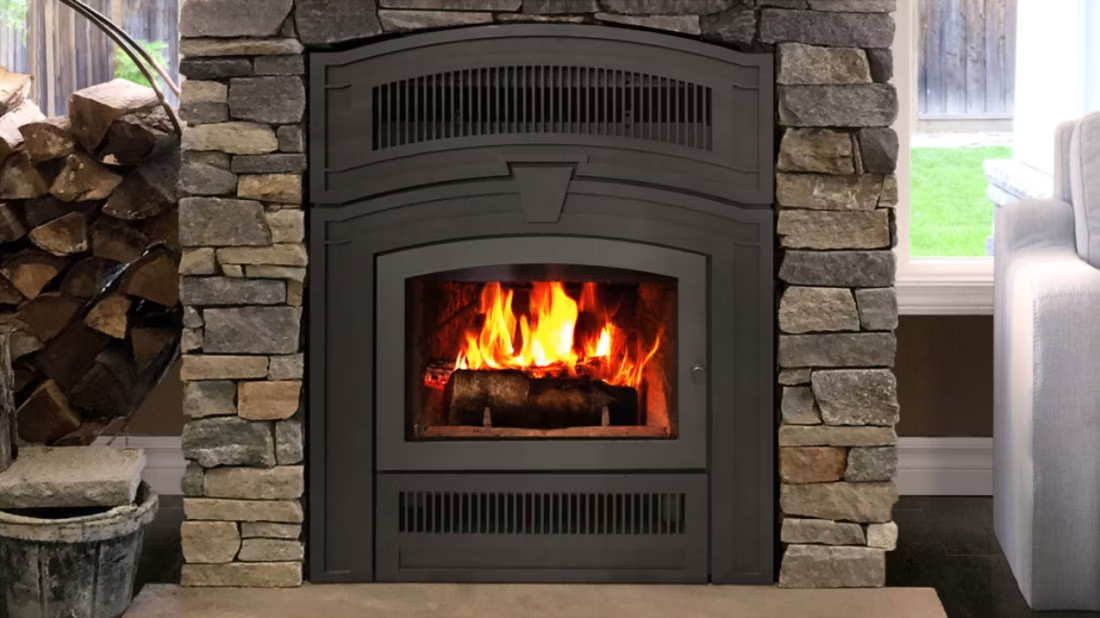
That doesn't mean wood is off the table—it means it's a niche choice here rather than the default. A handful of Columbia Heights homeowners install a wood stove for supplemental heat, ambiance, or as a backup source during winter power outages, particularly on the larger lots near Silver Lake. Because there's no adjacent national forest or public cutting land the way there is in northern Minnesota, anyone burning wood locally is buying seasoned cordwood—oak, maple, birch, and aspen are the common regional species—rather than self-cutting a permit. And because lots here run narrow, clearance-to-combustible requirements and hearth placement matter more than they would on a rural five-acre parcel, which is exactly where a certified local installer earns their fee.
Three steps. No salesperson until you're ready.
Tell us about your project
Your zip code, your situation, and the fuel you're leaning toward—or let the answers point you to one.
See what's actually available
The brands dealers within 100 miles genuinely carry—real options, never a catalog mirage.
Get your dealer & Project Guide
A trusted local dealer, plus the free Project Guide & Parts List that names every component of the job.
Frequently Asked Questions
Is wood heat actually common in Columbia Heights?
No—gas and electric dominate here, and that's by design. Columbia Heights is a fully built-out, first-ring Minneapolis suburb with existing gas and electric infrastructure from Xcel Energy (Northern States Power) reaching nearly every home. Wood stoves and fireplaces are installed by a small minority of homeowners, usually for supplemental heat, ambiance, or as a hedge against power outages during the region's genuinely cold winters. If you're comparing options, know that you'd be choosing wood as a deliberate preference rather than following the neighborhood norm.
Can I even install a wood stove on a narrow Columbia Heights lot?
In most cases, yes, but clearance-to-combustible rules matter more here than in a rural setting. Columbia Heights' housing stock sits on lots as narrow as 40 feet with homes built close together, so a stove's required clearance from walls, windows, and property lines needs to be checked carefully before you commit to a spot. A certified local installer will run the NFPA 211 clearance math for your specific room and can usually reduce required clearances with proper hearth pads and heat shields. This is one area where a DIY install or a generalist contractor is more likely to run into trouble than in a spacious rural home.
How much does a wood stove installation cost in Columbia Heights?
Because wood installs are uncommon here, there isn't the kind of deep local pricing pattern you'd find for gas or electric work in this market. Installers serving the broader Twin Cities metro typically quote $3,500 to $8,000 for a code-compliant wood stove installation, including a hearth pad and Class A chimney pipe, with the final number depending on the stove model and whether your home already has a usable masonry chimney or needs a full through-roof venting run. Get a firm quote from a local dealer after an in-home visit rather than relying on a national average.
Where do I get firewood in Columbia Heights if there's no nearby forest to cut on?
Unlike parts of northern Minnesota with national forest access, Columbia Heights and the rest of Anoka County don't have public land cutting permits nearby, so local wood-burning households buy seasoned cordwood from regional suppliers rather than self-cutting. Oak, maple, birch, and aspen are the species most commonly sold and burned in this part of the metro—oak and maple for longer, hotter burns, birch and aspen for easier-lighting kindling and shoulder-season fires. Expect to pay metro-area cordwood rates, and buy from a supplier who kiln-dries or properly seasons their wood, since green wood burns dirty and builds creosote fast.
Do I need a permit to install a wood stove in Columbia Heights?
Yes—a building permit through the City of Columbia Heights is required for any new wood-burning appliance installation, covering the stove placement, hearth, and chimney or vent work. The good news is that Columbia Heights doesn't carry the winter air-quality burn restrictions you'll find in some Western cities with inversion problems—there are no listed air quality concerns here—so once your stove is installed and permitted, you won't be dealing with seasonal curtailment periods. Most local installers handle the permitting paperwork as part of the job.
What's the best wood stove for Columbia Heights' cold winters?
With winters that run long and cold, averaging lows around 8°F, Columbia Heights sees genuinely demanding cold snaps even if wood isn't the primary heat source in most homes. If you want a stove that can carry a room through an overnight cold stretch, look at catalytic models from Blaze King or Woodstock Soapstone, which are built for extended burn times in this kind of climate. If you're after supplemental or occasional heat rather than an all-night burn, a mid-size non-catalytic stove from Pacific Energy or Lopi is simpler to operate and less expensive up front. A local dealer can size either option to your actual square footage.
Since gas and electric are the norm here, why would anyone still choose wood?
The two most common reasons in Columbia Heights are backup heat and ambiance. Minnesota winters bring occasional ice storms and outages, and a wood stove is one of the few heat sources that keeps working with no electricity and no gas line at all—a real advantage in a climate with long, cold winters. Beyond that, some homeowners simply want the radiant heat and visual warmth of a real fire in a living room that would otherwise be heated entirely by forced-air ducts. If neither of those matters to you, the area's standard gas and electric infrastructure through Xcel Energy is almost certainly the more practical and less expensive path.
Should I consider a pellet stove instead of wood?
Pellet stoves face the same rarity in Columbia Heights that wood stoves do, for similar reasons—this is a gas-and-electric market, not a solid-fuel one. That said, if you're weighing the two: pellet stoves from brands like Lignetics or regional suppliers such as Somerset Pellet Fuel are easier to load and burn cleaner than cordwood, but they need electricity to run the auger and blower, which defeats the outage-proof advantage that draws most Columbia Heights homeowners to wood in the first place. If backup heat during a power outage is your goal, a wood stove is the more reliable choice here.
How do I find someone who actually knows how to install wood heat in a city like this?
That's the real challenge in a market where wood is the exception rather than the rule—plenty of installers around the Twin Cities specialize in gas conversions and central HVAC, but far fewer regularly handle wood stove clearance calculations on a narrow city lot. Find My Fireplace exists to solve exactly this: we match you with a trusted local dealer who genuinely installs wood-burning appliances in dense, first-ring suburbs like Columbia Heights, rather than a big-box installer guessing at clearances. We don't sell stoves ourselves—we hand you a free planning packet and point you to the right local pro.
Why is my open fireplace making my house colder?
Open fireplaces suck—literally. As the fire burns, it consumes air your furnace already paid to heat and pulls it out through the chimney, so the house is actually colder after the fire goes out than before you lit it. An insert fixes this: it seals the chimney, puts fixed glass across the front, and turns that hole in your house into a real heat source.
Why is a fireplace insert so efficient?
An insert does two things: it seals the chimney completely, so you stop losing air you already paid to heat, and it radiates warmth into the room through the firebox and glass. Most add a heat-exchange fan that pulls cool room air underneath, wraps it around the hot firebox, and pushes it back out warm. Your home is more efficient before you've even lit the first fire.
Can I install a fireplace myself?
If you're putting a fire in your house on purpose, it's best to work with an expert. Unless you're genuinely experienced in framing, gas line, vent pipe, and the national code on clearances to combustibles, have a professional do it—and ideally the same company that sells you the fireplace, so warranty, service, and liability all live under one roof.
How much should I budget for a fireplace?
For an average home—covering the fireplace, the vent pipe, and basic installation—a budget between $3,900 and $5,500 gives you a lot of options across wood, gas, and pellet. By the time you add finish work, gas line, and electrical, the average complete installation lands between $5,000 and $12,000 all-in. In a remodel or new build, a good rule is to put about 2.5% of the total project cost toward the fireplace.
Nearby Dealers
Hearth shops serving Columbia Heights and the surrounding area. Every listing shows whether it is a WhyFire partner, a dealer we have verified as authorized for the brands we recommend, or a local business carrying hearth products. No manufacturer pays for placement. How we verify dealers →
Fireside Hearth & Home - Roseville
Condor Fireplace & Stone
Custom Fireplace & Chimney Care
Ferguson Enterprises
Fireside Hearth & Home - Maple Grove
Fireside Hearth & Home - Minnetonka
Glowing Hearth & Home - Coon Rapids
Fireplace Gallery, Inc.
Pure Design Environments
The Chimney Pro’s Mn
Fireside Hearth & Home - Eagan
Fireside Hearth & Home - Eden Prairie
Minnesota Gas Grills & Fireplaces
2nd Generation Chimneys
DJ's Heating & Air Cond. Inc.
Minnesota Chimney
Timberwall
Find Your Wood Stove Option in Columbia Heights.
Tell us about your home and we'll put together a free Project Guide & Parts List—the exact parts, including the vent kit, and a trusted local dealer who can install wood heat correctly on a Columbia Heights lot.
Find Your Fireplace →