
Reliable heat for Columbia Heights winters that don't let up.
Direct heat for a city with a long, demanding heating season. Find the right gas fireplace or insert, and get matched with a trusted local dealer.
Every Project Starts From One of These Five Situations
Steady heat when the mercury drops below zero.
Columbia Heights sits just north of Minneapolis in Anoka County, a tightly built inner-ring suburb where most lots run under a third of an acre and homes date to the postwar boom of the 1940s and 50s. At just under 913 feet of elevation, the city doesn't face the wind-driven extremes of the open prairie, but it still logs a long, cold heating season with an average winter low around 8°F—colder than many people expect from a Twin Cities suburb, and edging toward the kind of winters you'd associate with Fargo, ND or International Falls, MN.
Because most Columbia Heights lots are small and city code leaves little room for cordwood storage or masonry chimney work, new wood-burning installations are essentially not part of the local hearth market here. Gas fills that gap. Nearly every home already has natural gas service running to it for the furnace and water heater, which makes adding a direct-vent gas fireplace or insert a straightforward extension of existing plumbing rather than a new utility hookup. It's clean, doesn't require woodpile space you don't have, and delivers real heat the moment you flip a switch—a genuine advantage on the nights when the thermometer sits at 8 below and splitting kindling in the dark isn't an option.
Three steps. No salesperson until you're ready.
Tell us about your project
Your zip code, your situation, and the fuel you're leaning toward—or let the answers point you to one.
See what's actually available
The brands dealers within 100 miles genuinely carry—real options, never a catalog mirage.
Get your dealer & Project Guide
A trusted local dealer, plus the free Project Guide & Parts List that names every component of the job.
Frequently Asked Questions
How much does a gas fireplace installation cost in Columbia Heights?
Most gas fireplace and insert installations in Columbia Heights fall between roughly $4,000 and $10,000, with the spread driven mainly by venting complexity and whether new gas line work is needed. A direct-vent insert going into an existing masonry fireplace, with a gas line already run to that wall, sits toward the lower end. A new built-in gas fireplace in a remodel—where a technician has to frame an enclosure, run venting through an exterior wall, and extend a gas line from the meter—lands in the middle to upper end. Because most Columbia Heights homes already have gas service for the furnace, the gas line portion of the job is often simpler and cheaper here than in a rural property converting from propane.
Can I convert an old wood-burning fireplace to gas?
Yes, and it's a common project in a city like Columbia Heights, where small lot sizes and city ordinances make cutting and storing cordwood impractical for most homeowners. If your 1950s bungalow has an original masonry fireplace that's more decorative than functional, a direct-vent gas insert can use that same chimney chase (typically with a stainless liner) to deliver real, efficient heat without the ash, smoke, or firewood runs that oak, maple, birch, or aspen cordwood would require. It's the most common way older Columbia Heights homes upgrade a fireplace that's currently just for looks.
Do I need propane, or is natural gas available in Columbia Heights?
Natural gas is the standard fuel here—Columbia Heights is a fully built-out, densely platted city, and virtually every home already has a gas line for the furnace and water heater. That makes natural gas the default choice for a new fireplace or insert, and it's rare that a homeowner in the city needs to install a propane tank the way a rural Anoka County property owner further out might. If you already run gas appliances, adding a fireplace is usually just a matter of tapping into the existing line.
Will my gas fireplace still work if the power goes out?
Most modern gas fireplaces will, provided they use an IPI (intermittent pilot ignition) system with battery backup—the AA batteries inside the unit take over automatically if power from Xcel Energy (Northern States Power) or, for homes on the city's northeast edge, the City of St. Paul's electric service, drops out. That matters here: ice storms and heavy snow loads across Anoka County can knock out power for hours at a time in the dead of winter. Valor fireplaces take a different approach—their pilot assembly generates its own electricity through the thermocouple, so there's no battery to remember or replace. Ask your local dealer about the ignition system before you buy if outage backup matters to you.
What's the difference between a gas fireplace, insert, and stove?
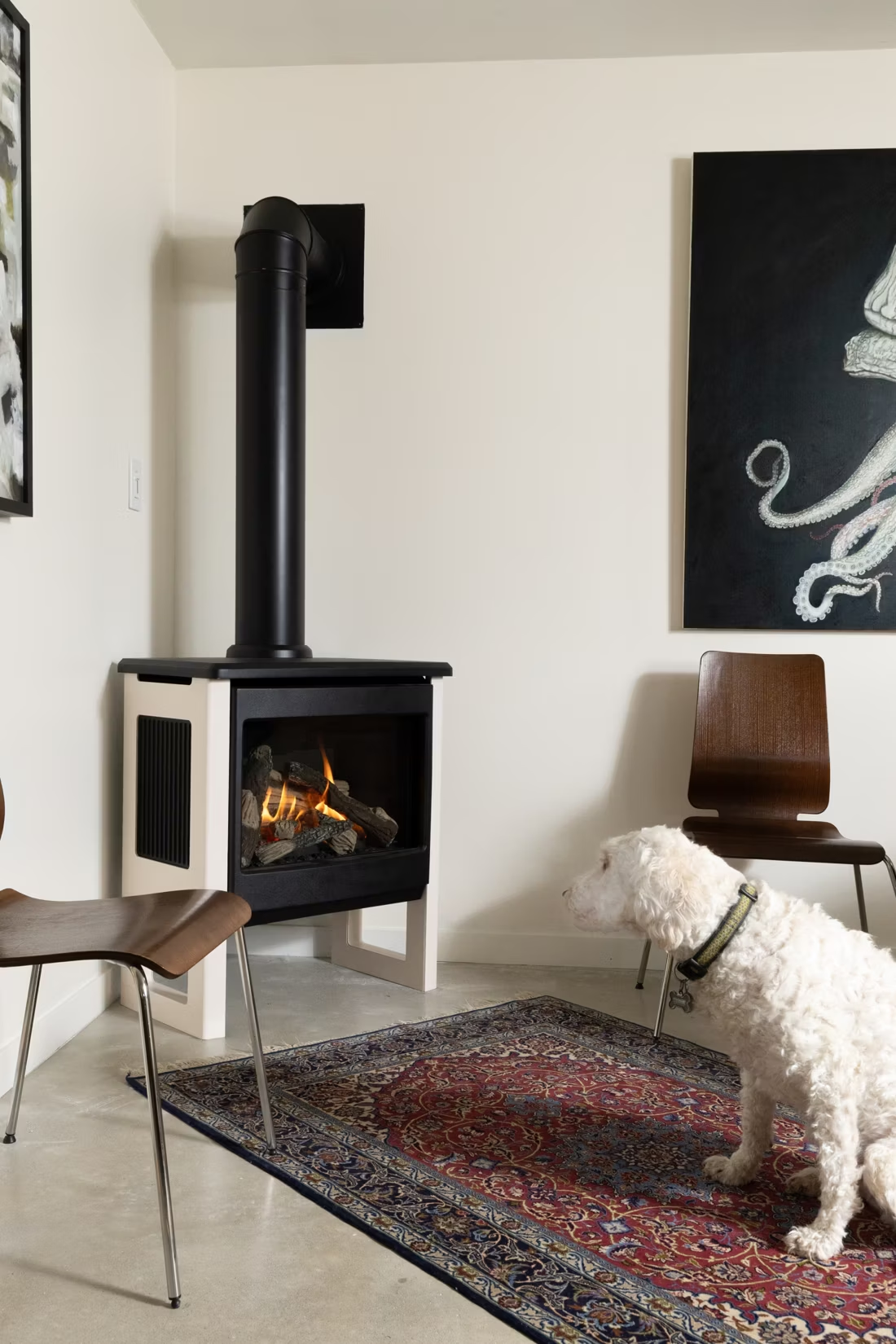
A gas fireplace is a built-in unit framed into a wall—the right call for new construction or a remodel where you're adding heat to a room that never had one. A gas insert drops into an existing masonry firebox, which is common in Columbia Heights's older housing stock, converting an underused wood-burning fireplace into an efficient heat source using the chimney you already have. A gas stove is a freestanding, cast-iron-look unit that sits on the floor and vents through a wall or existing chimney—a good option in a small bungalow living room where a full fireplace remodel isn't practical. Given how many homes in the city are compact postwar builds, inserts and stoves tend to be the more common projects here.
Do I need a permit to install a gas fireplace in Columbia Heights?
Yes. New gas fireplace installations require a building permit and a gas-fitting permit through the City of Columbia Heights building department, and the gas line connection has to be completed by a licensed gas-fitter. Most local hearth dealers handle the permitting and inspection scheduling as part of the installation, so you're not coordinating separate trades yourself. Because Anoka County cities each administer their own permitting, it's worth confirming with your installer that they're pulling the permit through the city rather than the county.
Should I get a vented or vent-free gas fireplace?
Vented, direct-vent units are the standard recommendation for Columbia Heights homes, and for most homeowners here they're the right answer. A direct-vent fireplace draws combustion air from outside and exhausts it back outside through a sealed pipe, so it doesn't affect indoor air quality—a real consideration in tightly sealed, well-insulated Minnesota homes built to handle a long, demanding heating season. Vent-free units are legal in Minnesota but come with strict room-size and ventilation requirements, and they release some combustion byproducts into the living space. In a small, energy-efficient bungalow, that's a bigger deal than it would be in a drafty older farmhouse. Ask your dealer to walk through both, but expect direct-vent to be the default recommendation.
How often does a gas fireplace need to be serviced?
Plan on an annual inspection, ideally in early fall before the heating season really kicks in. A technician will check the burner, pilot assembly, venting, and any electronic ignition components, and clean the glass. It's a lighter lift than chimney sweeping for a wood-burning unit, but skipping it is still the most common cause of pilot and ignition problems showing up on the first cold night of the year—which in Columbia Heights can arrive as early as October.
Gas vs. electric fireplace—which makes more sense for my home?
Gas delivers more real heat output and a more authentic flame, and it's the better choice if you want a fireplace that can actually supplement your furnace on a sub-zero night. Electric fireplaces cost less to install, need no venting or gas line at all, and can go in almost any room—including apartments and condos, which make up a meaningful share of Columbia Heights's housing. Running cost matters too: with Xcel Energy's residential rate around 17 cents per kWh, an electric unit run for supplemental heat for several hours a night adds up faster than a gas unit would. For a primary living room in a single-family home, gas is usually the stronger long-term investment. For a bedroom, condo, or a homeowner who just wants ambiance without construction, electric is often the simpler answer.
Is my gas fireplace wasting gas?
If it was installed more than 15 years ago, probably. Older gas fireplaces keep a standing pilot light burning all the time, and that little flame can cost a couple hundred dollars a year. Newer models use pilot-on-demand ignition—the pilot lights only when you use the fireplace and goes out when you turn it off.
What's the difference between an insert and a zero-clearance fireplace?
An insert is a fireplace that slides into a pre-existing wood-burning fireplace—if you don't have one, there's nothing to insert it into. A zero-clearance fireplace is built into a framed wall, which makes it the answer for remodels and new construction. Simple test: existing masonry fireplace means insert; blank or framed wall means zero-clearance.
What is an in-home preview and do I need one?
It's a visit where a hearth professional measures your space, confirms the model you picked actually works in your home, and walks the specs—framing, gas line, venting, finish work—before anything is ordered. Some details you just can't know until you see the house. Never make a down payment without one; it's the single most-skipped step that burns buyers.
How much should I budget for a fireplace?
For an average home—covering the fireplace, the vent pipe, and basic installation—a budget between $3,900 and $5,500 gives you a lot of options across wood, gas, and pellet. By the time you add finish work, gas line, and electrical, the average complete installation lands between $5,000 and $12,000 all-in. In a remodel or new build, a good rule is to put about 2.5% of the total project cost toward the fireplace.
Nearby Dealers
Hearth shops serving Columbia Heights and the surrounding area. Every listing shows whether it is a WhyFire partner, a dealer we have verified as authorized for the brands we recommend, or a local business carrying hearth products. No manufacturer pays for placement. How we verify dealers →
Fireside Hearth & Home - Roseville
Condor Fireplace & Stone
Custom Fireplace & Chimney Care
Ferguson Enterprises
Fireside Hearth & Home - Maple Grove
Fireside Hearth & Home - Minnetonka
Glowing Hearth & Home - Coon Rapids
Fireplace Gallery, Inc.
Pure Design Environments
The Chimney Pro’s Mn
Fireside Hearth & Home - Eagan
Fireside Hearth & Home - Eden Prairie
Minnesota Gas Grills & Fireplaces
2nd Generation Chimneys
DJ's Heating & Air Cond. Inc.
Minnesota Chimney
Timberwall
Find your gas fireplace in Columbia Heights.
Tell us about your home and heating goals, and we'll match you with a trusted local Columbia Heights dealer plus a free Project Guide & Parts List—the exact parts, vent kit included, for your gas fireplace project.
Find Your Fireplace →