
Steady, Set-and-Forget Heat for Chisago County Winters.
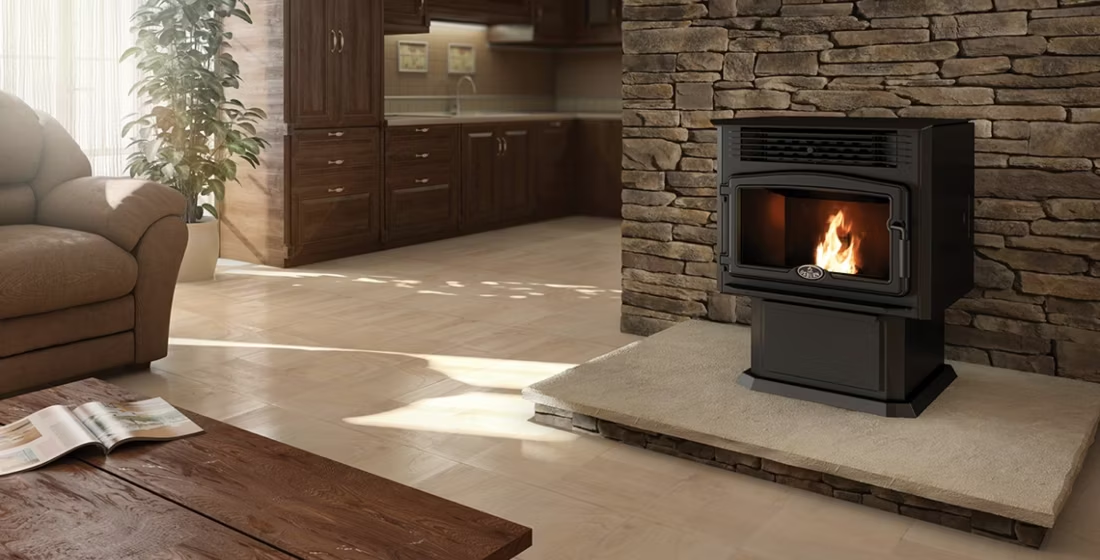
With winters cold enough to bring a long, heavy heating season, Chisago County homeowners are turning to pellet stoves for thermostat-controlled heat that doesn't require splitting cordwood. Find the right unit and connect with a trusted local dealer.
Every Project Starts From One of These Five Situations
Consistent, hopper-fed warmth for a long Minnesota winter.
Chisago County sits in east-central Minnesota, part of the Twin Cities' northern exurbs and home to the Chisago Lakes chain that gives towns like Lindstrom, Center City, and Chisago City their identity. It's also solidly Climate Zone 6A: winter lows average right around 0°F, but the county regularly sees stretches well below zero, and Chisago has a heavy winter heating load—a workload that starts approaching Duluth's totals, about 150 miles to the northeast. Heating season here runs long, from October through April in most years, which is exactly the kind of climate pellet stoves were built for.
Unlike some parts of the country, Chisago County has no winter air-quality non-attainment designation, so there's no curtailment schedule to plan around—you can run a pellet stove whenever the cold calls for it. Regional pellet brands including Indeck Energy Services, Lignetics, and Somerset Pellet Fuel supply the Upper Midwest, and bagged pellets are typically easy to find at farm supply and hardware stores throughout North Branch, Rush City, and the rest of the county heading into fall. For households already burning oak, maple, birch, or aspen in a wood stove, a pellet unit offers the same radiant warmth with automated feed, thermostat control, and far less daily tending.
Three steps. No salesperson until you're ready.
Tell us about your project
Your zip code, your situation, and the fuel you're leaning toward—or let the answers point you to one.
See what's actually available
The brands dealers within 100 miles genuinely carry—real options, never a catalog mirage.
Get your dealer & Project Guide
A trusted local dealer, plus the free Project Guide & Parts List that names every component of the job.
Frequently Asked Questions
How much does a pellet stove installation cost in Chisago County?
Pellet stove installations in Chisago County typically run in the $3,000 to $6,000 range, depending on the unit and whether you're venting through an exterior wall (the standard method for pellet stoves, since they don't require a full masonry chimney) or adapting an existing wood-fireplace chimney with a liner. A pellet insert into an existing fireplace opening usually lands toward the lower end of that range since much of the structural work is already done. Local dealers serving the Chisago Lakes area and North Branch will provide a firm, in-home quote based on your specific layout.
What size pellet stove do I need for my home in Chisago County?
With Chisago County's heavy winter heating load, sizing matters more here than in milder climates. Small pellet stoves (rated for up to about 1,000 sq ft) suit a single room or a lake cabin around Green Lake or South Center Lake used mainly on weekends. Medium units (1,000-2,000 sq ft) cover most single-story homes in North Branch, Lindstrom, or Wyoming. Larger, higher-output stoves are worth considering for older farmhouses or homes with less insulation, since Chisago winters can hold sub-zero lows for days at a stretch. A local dealer will size your stove against square footage, ceiling height, and how tight or leaky your particular home is.
Where can I find certified pellet stove installers near me?
Look for installers holding NFI (National Fireplace Institute) pellet specialist certification, which covers the specific venting and electrical requirements pellet appliances need. The trusted local dealers we match Chisago County homeowners with serve the whole county, from Taylors Falls and Shafer in the east to North Branch and Rush City to the west, and most handle the full job—unit, wall-through venting, and the dedicated electrical outlet the auger and blower need—as a single project.
Pellet stove vs. wood stove—which is right for my Chisago County home?
Wood stoves burn cordwood—oak, maple, birch, and aspen are all common species split and stacked around Chisago County—and they keep working with zero electricity, which matters if you're out near one of the county's lakes where storm-related outages can run longer than in town. Pellet stoves trade that off-grid reliability for real convenience: load the hopper, set the thermostat, and get several days of steady, even heat without tending a fire. For a primary residence in North Branch or Chisago City with reliable power, pellet is often the easier daily-use choice. For a cabin or a home where outage backup matters most, wood—or a hybrid approach with both—tends to make more sense.
Do I need a permit to install a pellet stove in Chisago County?
Yes. If you're within one of Chisago County's cities—North Branch, Lindstrom, Chisago City, Center City, Wyoming, Rush City, Shafer, or Taylors Falls—the permit is issued through that city's building department; in unincorporated parts of the county it runs through Chisago County's planning and zoning office. Because pellet stoves involve both a through-wall vent and a dedicated electrical circuit, most homeowners let their installer pull the permit and coordinate the inspection as part of the job, which is standard practice among the dealers we work with.
How much do wood pellets cost, and where do I buy them in Chisago County?
Bagged pellets from regional producers such as Indeck Energy Services, Lignetics, and Somerset Pellet Fuel are widely stocked at farm and hardware stores throughout the county, and across Minnesota typically run in the $250 to $320 per ton range (a ton is usually fifty 40-pound bags), with prices firming up as fall approaches. Buying early—before the first hard freeze—and buying by the ton rather than by the bag are the two easiest ways to save. A local dealer can also tell you which brands burn cleanest in the specific stove model you choose.
Will my pellet stove work during a power outage?
Not without a backup power source. Pellet stoves rely on an electric auger to feed fuel and an electric blower to distribute heat, so a power outage stops the stove even with a full hopper. For Chisago County homes—especially out around the lakes, where winter storms can knock out power for longer stretches than in North Branch or Rush City—many owners pair their pellet stove with a small battery backup or portable generator sized just for the stove's low draw. If reliable heat during outages is the priority, a wood stove burning local oak or maple is worth comparing before you decide.
What venting does a pellet stove need?
Pellet stoves vent through a small-diameter pipe (typically 3 or 4 inches) that can run straight out an exterior wall, which is why they're often easier and less expensive to install than a wood stove requiring a full masonry chimney or Class A pipe through the roof. If you're converting an existing wood fireplace, a pellet insert can also vent up through the existing chimney with a liner sized to the stove. Either way, proper venting length and termination clearance from windows, doors, and grade are code requirements your installer will handle as part of the permit.
Pellet vs. gas—which makes more sense for Chisago County?
Gas fireplaces offer instant on-off heat with no fuel storage at all, which appeals to homeowners on the natural gas lines running through North Branch and the more developed parts of the county, or propane elsewhere. Pellet stoves require storing a season's worth of bagged fuel but generally cost less to run per BTU than propane, and many owners like the visible flame and radiant heat a pellet appliance produces compared with some gas units. If you already have gas service and want the simplest possible operation, gas is hard to beat; if you want a lower-cost heat source with a more traditional fire and don't mind stacking a few tons of pellets before winter, pellet is worth a serious look.
Why is my open fireplace making my house colder?
Open fireplaces suck—literally. As the fire burns, it consumes air your furnace already paid to heat and pulls it out through the chimney, so the house is actually colder after the fire goes out than before you lit it. An insert fixes this: it seals the chimney, puts fixed glass across the front, and turns that hole in your house into a real heat source.
Why is a fireplace insert so efficient?
An insert does two things: it seals the chimney completely, so you stop losing air you already paid to heat, and it radiates warmth into the room through the firebox and glass. Most add a heat-exchange fan that pulls cool room air underneath, wraps it around the hot firebox, and pushes it back out warm. Your home is more efficient before you've even lit the first fire.
Can a fireplace actually lower my heating bill?
Yes—by creating a comfort zone. A furnace heats every square foot of the house just to warm the one room you're in; a gas fireplace on low burns roughly a sixth of the gas a typical furnace does. Set the furnace around 55–60 degrees as a baseline, then heat the rooms your family actually uses. Families who heat this way commonly save $20–$60 a month.
Can I install a fireplace myself?
If you're putting a fire in your house on purpose, it's best to work with an expert. Unless you're genuinely experienced in framing, gas line, vent pipe, and the national code on clearances to combustibles, have a professional do it—and ideally the same company that sells you the fireplace, so warranty, service, and liability all live under one roof.
Pellet Brands Stocked Around Chisago County
Manufacturers will point you to the nearest stocking dealer.
Find your pellet stove in Chisago County.
Tell us about your home and heating goals, and we'll match you with a trusted local dealer plus a free Project Guide & Parts List—the exact parts, vent kit, and recommended installer for your Chisago County pellet project.
Find Your Fireplace →