
Real Ambiance, Zero Venting—Built for Chisago County Winters.
With a long, demanding heating season and winter lows averaging near 0°F, Chisago County homes need serious primary heat—but electric fireplaces earn their place as clean, no-chimney supplemental warmth in lake cabins, finished basements, and condos from Lindstrom to Rush City. Find the right unit and connect with a trusted local dealer.
Every Project Starts From One of These Five Situations
Supplemental heat that just plugs in.
Chisago County sits in east-central Minnesota along the Chisago Lakes chain—Green Lake, South Center Lake, Lindstrom Lake—and the St. Croix River border with Wisconsin. It's climate zone 6A territory, with a long, demanding heating season and winter lows that average right around 0°F, putting it in the same cold-climate tier as Duluth. That's a climate where a furnace, wood stove, or propane system almost always carries the primary heating load, and electric fireplaces play a different, still genuinely useful role: supplemental zone heat and real ambiance without a chimney, gas line, or wood supply to manage.
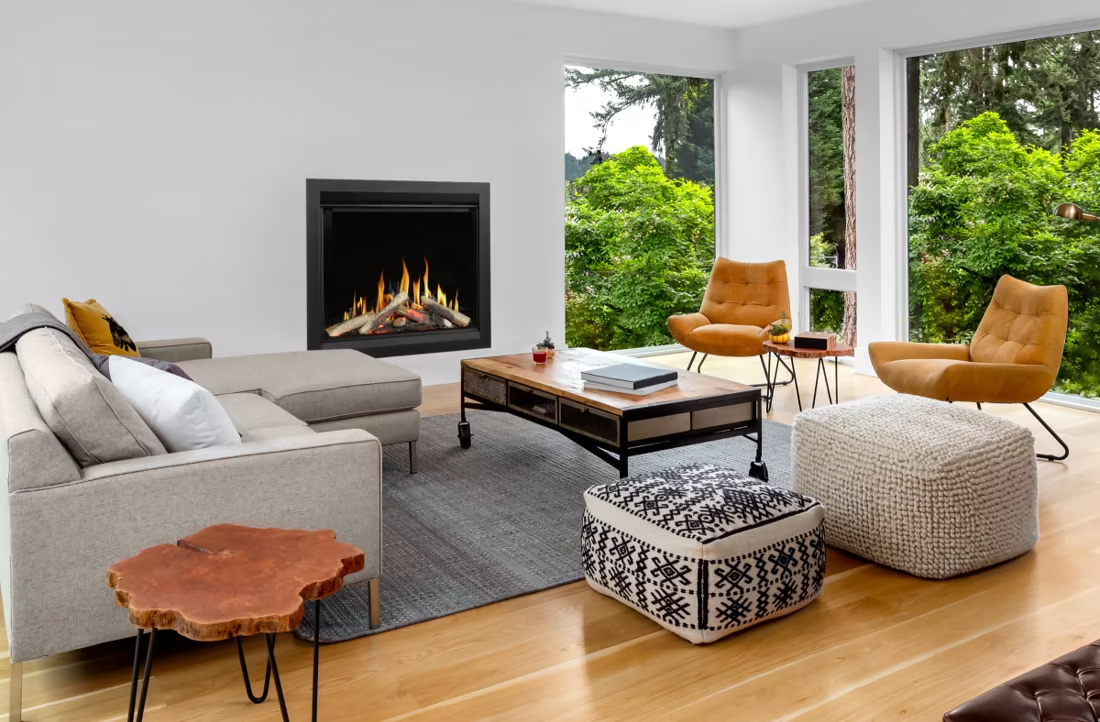
That makes electric a strong fit for exactly the kind of housing stock common around the Chisago Lakes—seasonal and weekend lake cabins that sit empty for stretches in January, finished basements in newer builds around Chisago City and Wyoming, and condos or townhomes in Lindstrom where venting a wood or gas unit through a shared wall isn't practical. No creosote to manage like the oak, maple, and birch cordwood burned across the county, no propane tank to keep filled at a cabin that's dark most weekdays, and no combustion byproducts to worry about—just an outlet and a mantel or wall opening. Local dealers can size the right unit for a supplemental room or advise when your space really calls for a primary-heat solution instead.
Three steps. No salesperson until you're ready.
Tell us about your project
Your zip code, your situation, and the fuel you're leaning toward—or let the answers point you to one.
See what's actually available
The brands dealers within 100 miles genuinely carry—real options, never a catalog mirage.
Get your dealer & Project Guide
A trusted local dealer, plus the free Project Guide & Parts List that names every component of the job.
Frequently Asked Questions
How much does an electric fireplace installation cost in Chisago County?
A plug-in electric insert or freestanding stove that drops into an existing mantel opening typically runs $300 to $900 installed, since there's no venting or gas line to run—often just a licensed electrician confirming the circuit can handle the load. A built-in wall unit with framing, a recessed opening, and a surround runs higher, generally $1,500 to $4,000 depending on finish work. Hardwired units (as opposed to a standard plug) usually mean pulling a dedicated 120V or 240V circuit, which adds a few hundred dollars in electrician time. Local dealers around the Chisago Lakes area can quote a firm number once they know whether you're retrofitting an old wood-burning fireplace opening or building new.
Will an electric fireplace actually heat a room in a Chisago County winter?
It will help, but it shouldn't be your only heat source. With a long, demanding heating season and overnight lows regularly near or below 0°F, Chisago County's heating load is too heavy for most electric fireplace heater elements—typically rated around 5,000 BTU/hour—to carry a whole home. Where they genuinely earn their keep is closing the gap in a single room: a finished basement rec room, a three-season porch converted to year-round use, or a lake cabin bedroom where running the furnace duct is impractical. Homeowners relying on wood or propane as primary heat often add an electric unit specifically for that kind of targeted, supplemental warmth.
Do I need a permit to install an electric fireplace in Chisago County?
Usually not for a standard plug-in unit—since there's no venting, gas line, or structural chimney work involved, most jurisdictions in Chisago County don't require a building permit for a self-contained electric fireplace or insert. If you're having a licensed electrician install a dedicated circuit or a hardwired 240V unit, that portion of the work may require an electrical permit and inspection, which most local electricians pull as a matter of course. Built-in installations that involve framing a new wall opening can also trigger a standard building permit through the county or your local municipality—worth confirming with your installer before work starts.
Electric vs. wood—which makes more sense for my Chisago County home?
Wood remains the workhorse for primary and backup heat in Chisago County, where oak, maple, birch, and aspen are all commonly burned and readily available. A wood stove or insert can genuinely heat a home through a stretch of 0°F nights and keeps working during a power outage—a real consideration given how exposed some of the rural county and lake-cabin properties are to winter storm outages. Electric fireplaces can't do either of those things; they need power to run and aren't sized for whole-home heat. Where electric wins is convenience and zero maintenance—no cutting, stacking, or hauling wood, no chimney to sweep, and no smoke or ash. Many Chisago County homeowners run wood as their real heat source and add electric in a bedroom or basement purely for supplemental warmth and ambiance.
Electric vs. gas fireplace—what's the real difference for a Chisago County home?
Gas fireplaces (propane is the common fuel across much of rural Chisago County, since natural gas mains don't reach every township) put out real heat—often 20,000 to 40,000 BTU/hour—enough to meaningfully warm a room even on the coldest nights, and some models keep working during a power outage with battery backup. Electric fireplaces top out around 5,000 BTU/hour of actual heat and need continuous power, so they're ambiance-plus-modest-warmth rather than a heat source you'd lean on in a cold snap. Electric wins on install simplicity and cost—no gas line, no venting, often a same-day install—which makes it the practical choice for condos, rentals, and rooms where running gas line isn't worth it for supplemental heat.
What will an electric fireplace add to my electric bill in Chisago County?
Most of the county is served by rural electric cooperatives—Connexus Energy and East Central Energy are common providers in the Chisago Lakes area—and residential rates run in a fairly typical range for greater Minnesota. A standard 1,500-watt electric fireplace heater running on high costs roughly 15 to 25 cents per hour to operate at typical cooperative rates, so a few hours of evening use in a basement or bedroom adds a modest amount to a monthly bill rather than a dramatic one. Running it as ambiance-only, with the heater element off, costs a fraction of that. If you're using it as your only heat source in a room during a cold snap, expect the cost to add up faster than a comparable amount of wood or propane heat.
Are electric fireplaces a good fit for lake cabins in Chisago County?
Often yes, for the properties that sit vacant through the week or off-season. A wood stove needs someone tending it, and a propane system risks frozen or gelled lines if a cabin goes unheated for stretches—electric fireplaces avoid both issues since there's no fuel supply to manage and no combustion to monitor while the place is empty. Many owners around Green Lake and South Center Lake pair a baseboard or forced-air electric system for freeze protection with an electric fireplace in the main room for evenings when the family is actually up at the cabin. It won't replace a wood stove for a serious winter weekend, but it's a low-maintenance option for a property that isn't occupied full time.
What size electric fireplace do I need?
Sizing an electric fireplace is less about square footage and more about whether you want heat, ambiance, or both. If the goal is genuine supplemental warmth for a room up to roughly 400 square feet, look for a unit with a rated heater output near 5,000 BTU/hour (most standard 1,500-watt units). If the fireplace is purely for visual effect—common in main living rooms already served by a furnace or wood stove—you can size based on the opening you're filling rather than heating capacity, and simply run the flame effect without the heater engaged. Local dealers serving Chisago County can walk through both scenarios during a quick consultation.
How much maintenance does an electric fireplace need?
Very little compared to wood or gas. There's no chimney to sweep, no annual gas line inspection, and no ash or creosote to manage. Maintenance is mostly dusting the unit, occasionally cleaning the glass front, and replacing the LED flame bulbs or media (glass, logs, or crystals) every several years as they wear. Because there's no combustion, there's also no carbon monoxide risk and no annual safety inspection requirement—one more reason electric shows up in condos and rental properties across the county where low-maintenance systems are a priority.
Does an electric fireplace need a vent or chimney?
No—that's its superpower. An electric fireplace needs a wall and an outlet, period. No vent pipe, no gas line, no clearances to design around, which is why it works in bedrooms, offices, apartments, and walls where venting a gas or wood unit would be impractical or impossible. Installation is typically the simplest and least expensive of any fireplace type.
Can I put a TV above my fireplace?
Yes—with an asterisk. Fireplaces are hot and TVs don't like heat. Either put a mantel between them to deflect rising warmth, or choose a fireplace with heat-management technology that creates a cool zone on the wall above—the wall stays around 125 degrees, barely warm, while the room still gets full heat. If you like clean lines and don't want a mantel, heat management is the answer.
How much should I budget for a fireplace?
For an average home—covering the fireplace, the vent pipe, and basic installation—a budget between $3,900 and $5,500 gives you a lot of options across wood, gas, and pellet. By the time you add finish work, gas line, and electrical, the average complete installation lands between $5,000 and $12,000 all-in. In a remodel or new build, a good rule is to put about 2.5% of the total project cost toward the fireplace.
Can a fireplace actually lower my heating bill?
Yes—by creating a comfort zone. A furnace heats every square foot of the house just to warm the one room you're in; a gas fireplace on low burns roughly a sixth of the gas a typical furnace does. Set the furnace around 55–60 degrees as a baseline, then heat the rooms your family actually uses. Families who heat this way commonly save $20–$60 a month.
Find your electric fireplace in Chisago County.
Tell us about your home—cabin, basement, condo, or main living room—and we'll match you with a trusted local dealer and send over a free Project Guide & Parts List with the exact parts for your electric fireplace project in Chisago County.
Find Your Fireplace →