
Consistent, thermostat-controlled heat for Carver County winters.
From Chaska to Waconia to the farmland around Norwood Young America, Carver County sees a long, cold winter heating season each year. Find the right pellet stove or insert, and connect with a trusted local dealer who can size and install it correctly.
Every Project Starts From One of These Five Situations
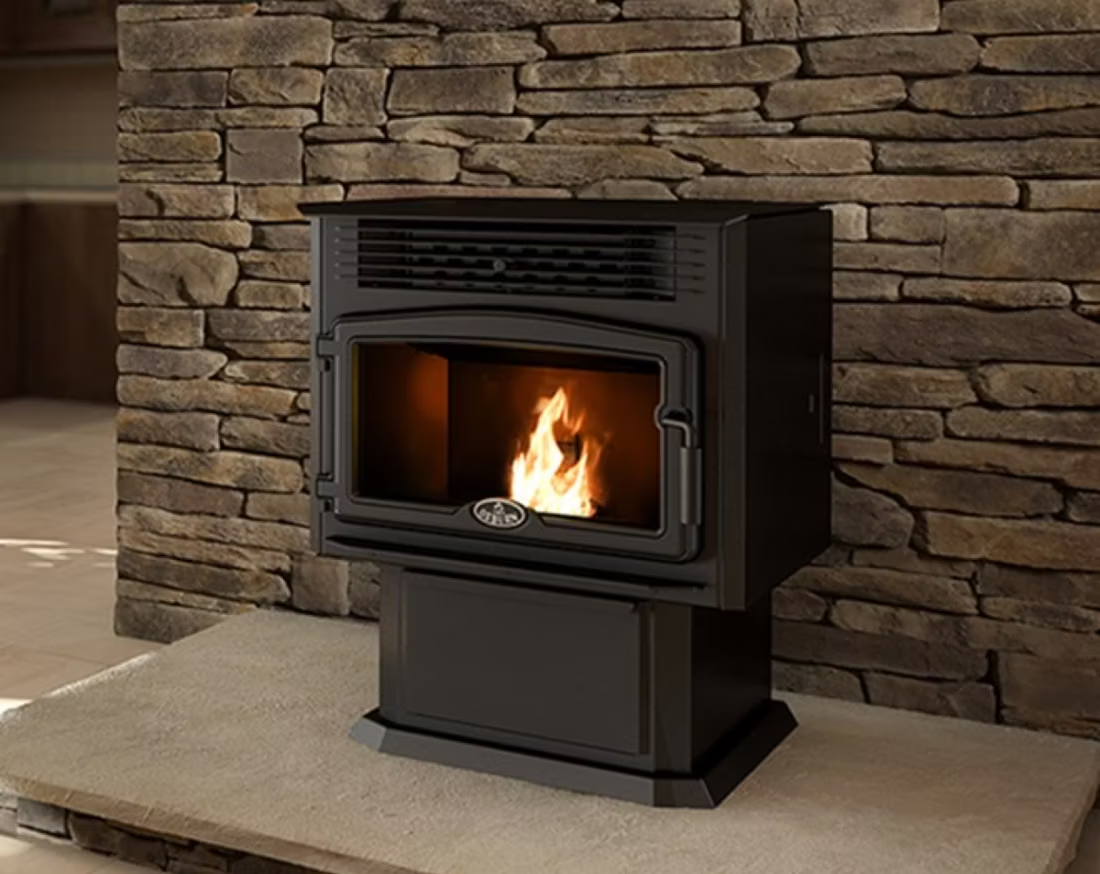
Pellet heat fits the way Carver County actually lives.
Carver County sits just southwest of the Twin Cities, stretching from the growing suburbs of Chaska, Chanhassen, and Victoria out to Waconia, Norwood Young America, Cologne, and Mayer, where the landscape opens into farmland. Winters here average a low around 4°F, with a long, deep heating season that rivals Fargo, ND for sheer cold, even without the wide-open wind. Unlike parts of the country dealing with wood smoke restrictions, Carver County has no listed air quality concerns, so the choice of pellet over wood or gas here comes down to convenience and control, not regulation.
A lot of Carver County housing stock is newer construction on smaller suburban lots—think Chaska and Chanhassen subdivisions where a cord of firewood stacked in the side yard isn't practical, or where an HOA would rather not see one. Pellet stoves solve that: a hopper-fed appliance that runs on a thermostat, burns cleanly, and doesn't require a wood pile or a chainsaw. Regional pellet supply is solid—Lignetics, Somerset Pellet Fuel, and Indeck Energy Services all produce hardwood pellets sold through farm and hardware retailers across the Twin Cities metro, so fuel isn't hard to find even in the depths of a January cold snap.
Three steps. No salesperson until you're ready.
Tell us about your project
Your zip code, your situation, and the fuel you're leaning toward—or let the answers point you to one.
See what's actually available
The brands dealers within 100 miles genuinely carry—real options, never a catalog mirage.
Get your dealer & Project Guide
A trusted local dealer, plus the free Project Guide & Parts List that names every component of the job.
Frequently Asked Questions
How much does a pellet stove installation cost in Carver County?
Most pellet stove installations in Carver County run in the range of local hearth dealers' typical quotes for a freestanding unit with through-wall venting—generally a more affordable install than wood or gas since pellet stoves don't require a full masonry chimney. Costs move up if you're converting an existing wood-burning fireplace into a pellet insert, since that involves fitting a liner through the existing chase, or if an electrician needs to add a dedicated outlet near the install location (pellet stoves need standard household power to run the auger and blower). Get a firm number from a local dealer after an in-home look at your venting path and electrical setup.
What size pellet stove do I need for a Carver County home?
Sizing depends on square footage, insulation, and whether the stove is your primary heat or a supplemental unit for one zone of the house. Given Carver County's long, cold winters, sizing tends to run a notch larger than in milder climates—a stove rated for 1,800 square feet in a warmer state might realistically cover 1,400 to 1,500 square feet here on the coldest nights. Newer, well-insulated homes in Chanhassen or Victoria can often get by with a smaller unit than an older farmhouse near Cologne or Hamburg with less insulation. A local dealer will walk your space and size it properly—undersizing means the stove runs on high constantly and still can't keep up when it's near zero outside.
Where can I find certified pellet stove installers near me?
Look for NFI (National Fireplace Institute) certified technicians, which most established hearth dealers serving the Chaska-Chanhassen-Waconia corridor employ. Pellet stove installs are more straightforward than wood or gas in one sense—no masonry chimney is involved—but the venting still has to be sized and pitched correctly, and the electrical connection has to be done right since these units run on standard household power through Xcel Energy or your local electric co-op. Skipping a certified installer in favor of a DIY approach is where most pellet stove problems trace back to—usually improper venting termination clearances from windows or doors.
What's the difference between a pellet stove and a pellet insert?
A pellet stove is a freestanding unit that sits on its own hearth pad and vents through an exterior wall or existing chimney chase—it can go almost anywhere in a room with the right clearances. A pellet insert is built to slide into an existing masonry fireplace opening, which is common in older Carver County homes around Chaska and Waconia that already have a wood-burning fireplace they'd like to convert. The insert uses the existing chimney as a chase for a new liner, keeps the original fireplace look, and turns a drafty open hearth into a controlled, efficient heat source.
Do I need a permit to install a pellet stove in Carver County?
Yes—new pellet stove installations generally require a building permit, and the process depends on where in the county you are. Homes within Chaska, Chanhassen, Waconia, or one of the county's other incorporated cities go through that city's building department; homes in unincorporated Carver County townships go through the county's building permit process. Because a pellet stove also needs a dedicated electrical circuit, an electrical permit is often part of the package too. Most local dealers handle the paperwork as part of the installation, so you're not coordinating multiple inspections yourself.
What's the best pellet stove for Carver County's climate?
With winters averaging a 4°F low and a long, demanding heating season, look for a pellet stove with a larger hopper capacity so you're not refilling constantly during the coldest stretches—some Harman and Lopi models hold 60+ pounds of pellets, which can burn 24 hours or more on a lower setting. Since Carver County has no local air quality restrictions on solid-fuel appliances, the choice comes down mostly to hopper size, BTU output for your square footage, and how easy the model is to service. Pair whichever stove you choose with hardwood pellets from a regional producer like Somerset Pellet Fuel or Lignetics, both of which are widely stocked at farm and hardware retailers around the metro.
How often does a pellet stove need to be serviced?
Plan on a full professional inspection and cleaning once a year, typically before burning season starts in the fall. Between services, you'll want to empty the ash pot every few days during regular use and clean the burn pot and glass weekly to keep combustion efficient—pellet stoves generate less creosote than wood but still need routine attention to the auger, exhaust fan, and gaskets. A neglected auger or clogged exhaust vent is the most common reason a pellet stove starts underperforming mid-winter, right when Carver County homeowners need it most.
Where can I buy pellet fuel in Carver County?
Hardwood pellets from regional producers like Lignetics, Somerset Pellet Fuel, and Indeck Energy Services are sold at farm supply stores, hardware chains, and some local dealers throughout the Twin Cities metro, including outlets serving Chaska and Waconia. Pricing runs in the low-to-mid $200s per ton depending on brand and how early in the season you buy—buying a full winter's supply in late summer, before demand spikes, is usually the better deal. A typical primary-heat household in a Carver County home burns somewhere between two and four tons over a full winter, depending on square footage and how much supplemental heat you're running alongside it.
Pellet stove vs. wood stove—which is right for my home?
Wood stoves burn oak, maple, birch, or aspen—all common species in this part of Minnesota—and keep working during a power outage, which matters when an ice storm knocks out Xcel Energy service for a day or two. Pellet stoves need household electricity to run the auger and blower, so they go dark in an outage unless you add a battery backup. In exchange, pellet stoves offer thermostat-set, consistent heat with far less daily tending, no splitting or stacking wood, and a cleaner burn with less ash. For Carver County's suburban lots in Chanhassen and Victoria where storing cordwood isn't practical, pellet often wins. For rural properties near Cologne or Mayer with space for a wood pile and a priority on power-outage backup, wood may still make more sense.
Why is a fireplace insert so efficient?
An insert does two things: it seals the chimney completely, so you stop losing air you already paid to heat, and it radiates warmth into the room through the firebox and glass. Most add a heat-exchange fan that pulls cool room air underneath, wraps it around the hot firebox, and pushes it back out warm. Your home is more efficient before you've even lit the first fire.
How often does a pellet stove need cleaning?
A clean pellet stove is a happy pellet stove. Plan on cleaning the burn pot about once a week when you're burning regularly—ash and clinkers gum up the air holes just like a pellet barbecue. Most pellet stove problems trace back to skipped cleaning that nobody explained up front. Some designs make it easy with a trapdoor burn pot: pull a lever and the gunk drops into the ash pan.
Can a fireplace actually lower my heating bill?
Yes—by creating a comfort zone. A furnace heats every square foot of the house just to warm the one room you're in; a gas fireplace on low burns roughly a sixth of the gas a typical furnace does. Set the furnace around 55–60 degrees as a baseline, then heat the rooms your family actually uses. Families who heat this way commonly save $20–$60 a month.
How much should I budget for a fireplace?
For an average home—covering the fireplace, the vent pipe, and basic installation—a budget between $3,900 and $5,500 gives you a lot of options across wood, gas, and pellet. By the time you add finish work, gas line, and electrical, the average complete installation lands between $5,000 and $12,000 all-in. In a remodel or new build, a good rule is to put about 2.5% of the total project cost toward the fireplace.
Stove and Fireplace Dealers in Carver County
Pellet Brands Stocked Around Carver County
Manufacturers will point you to the nearest stocking dealer.
Find your pellet stove in Carver County.
Tell us about your home and we'll match you with the right pellet stove or insert, plus a free Project Guide & Parts List—including the vent kit—from a trusted local Carver County dealer.
Find Your Fireplace →